Step-by-Step Sourdough Baguette Recipe
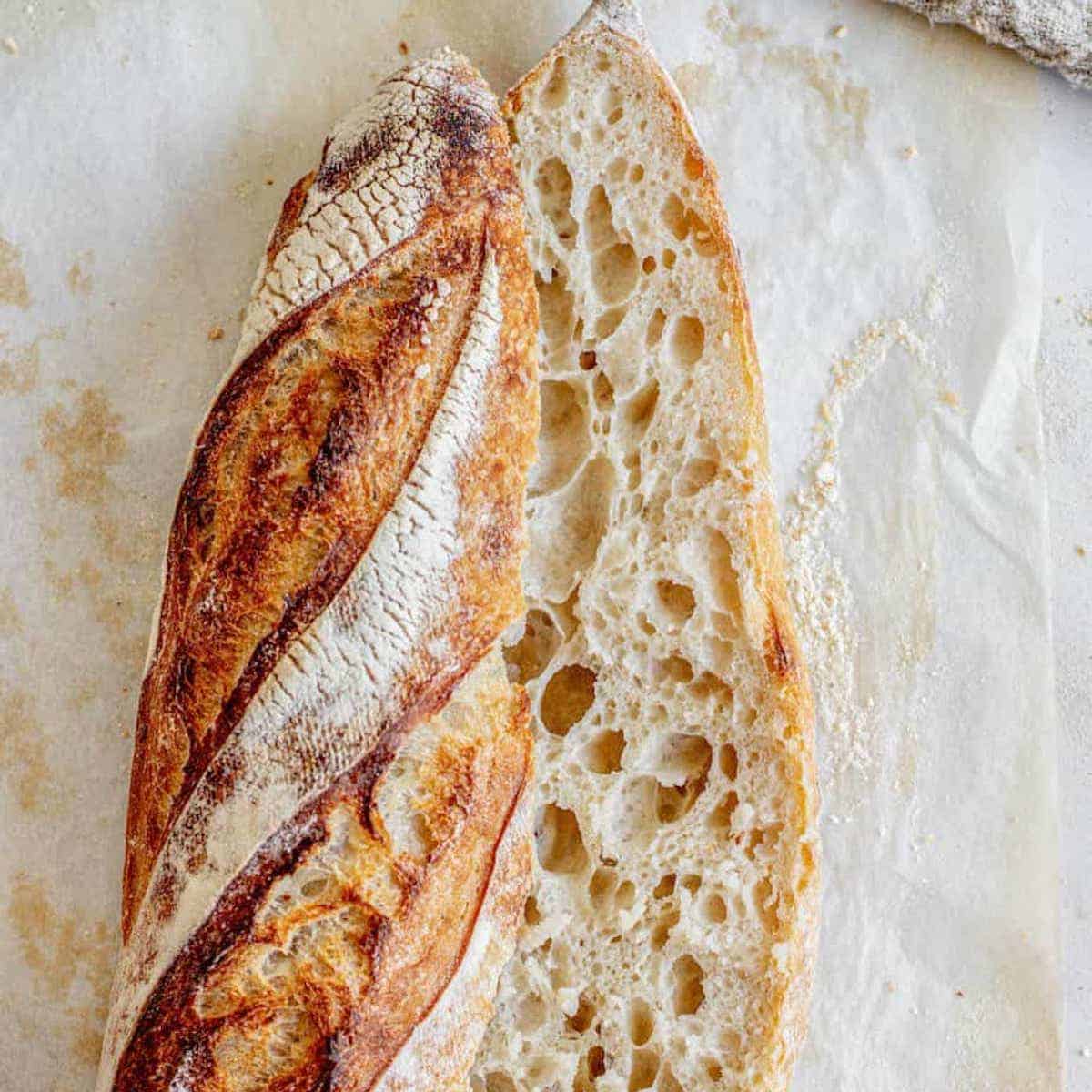
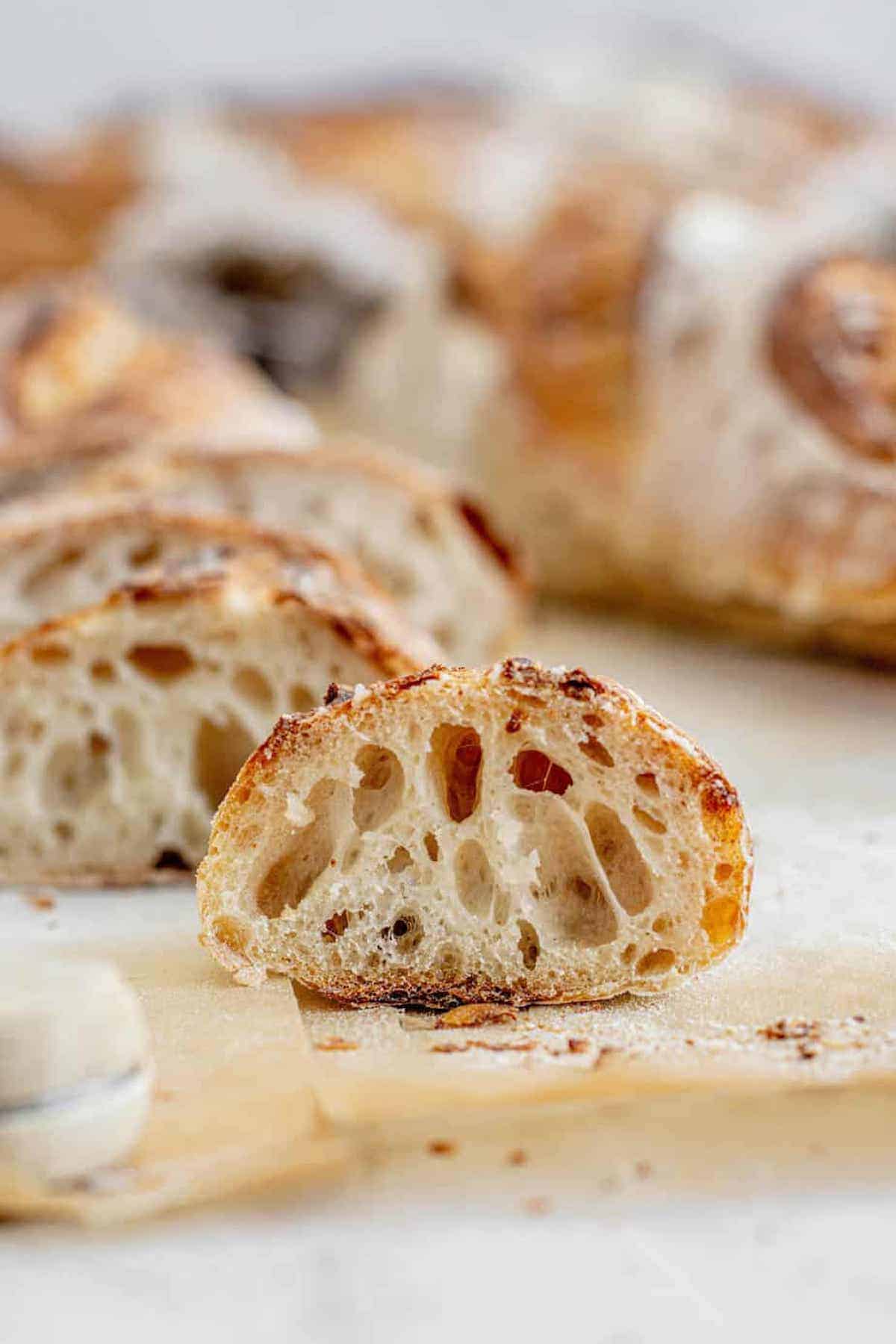
There is something so wonderful about sourdough baguettes. Right out of the oven they have a crackly crispy crust and light, and chewy interior.
What readers say:
Absolutely perfect recipe. I’ve baked these twice, and followed the recipe exactly. The baguettes were beautifully formed, airy, crusty and delicious. Thank you.
Paula
The timing of sourdough baguettes
Making this sourdough baguette recipe is not that hard, and if you read on, you will see.
The timings show a ‘range’ of time to complete these steps. They don’t have to be exact; there is flexibility. The perfect baguette needs time to proof properly so it’s light and airy inside. Then, it needs a hot oven to bake in and some steam to create that crisp crust. I create the steam in my oven using a pan of water or ice cubes. If you love these sourdough baguettes, try this sourdough ciabatta or sourdough fougasse next!
A few ingredients
Your starter needs to be in good condition to make great sourdough bread. Learn more about sourdough starter maintenance, or sourdough bread troubleshooting.
The timing
The timing for homemade sourdough baguettes can be tweaked to suit your schedule, but here is a guide.
- Between 7 am-9 am: Create your levain. The levain can sit and rise for around 4 hours.
- Between 12 pm-2 pm: Autolyze. Flour and water are mixed and left to autolyze in a warm place for about an hour, then the starter and salt are added
- Between 2 pm-7 pm: Bulk fermentation time. First, you will stretch and fold the dough for two hours every 30 minutes. After the last fold, the dough will sit for another 2-4 hours before pre-shaping until it has bulked by around 50%. As with all sourdough, this bulk ferment is very important to achieve an airy crumb, and the timing depends on room temperature.
- Between 7 pm-9 pm: Pre-shape. On a well-floured bench, split the dough into two. Shape each piece into a ball and leave them to sit for 20-30 minutes. Shape into baguettes and place the shaped baguettes in the refrigerator for a cold-proof of at least 8 hours, but up to 24.
- The next morning – Baking day.
High-level method
- Begin by making the levain so it has time rise.
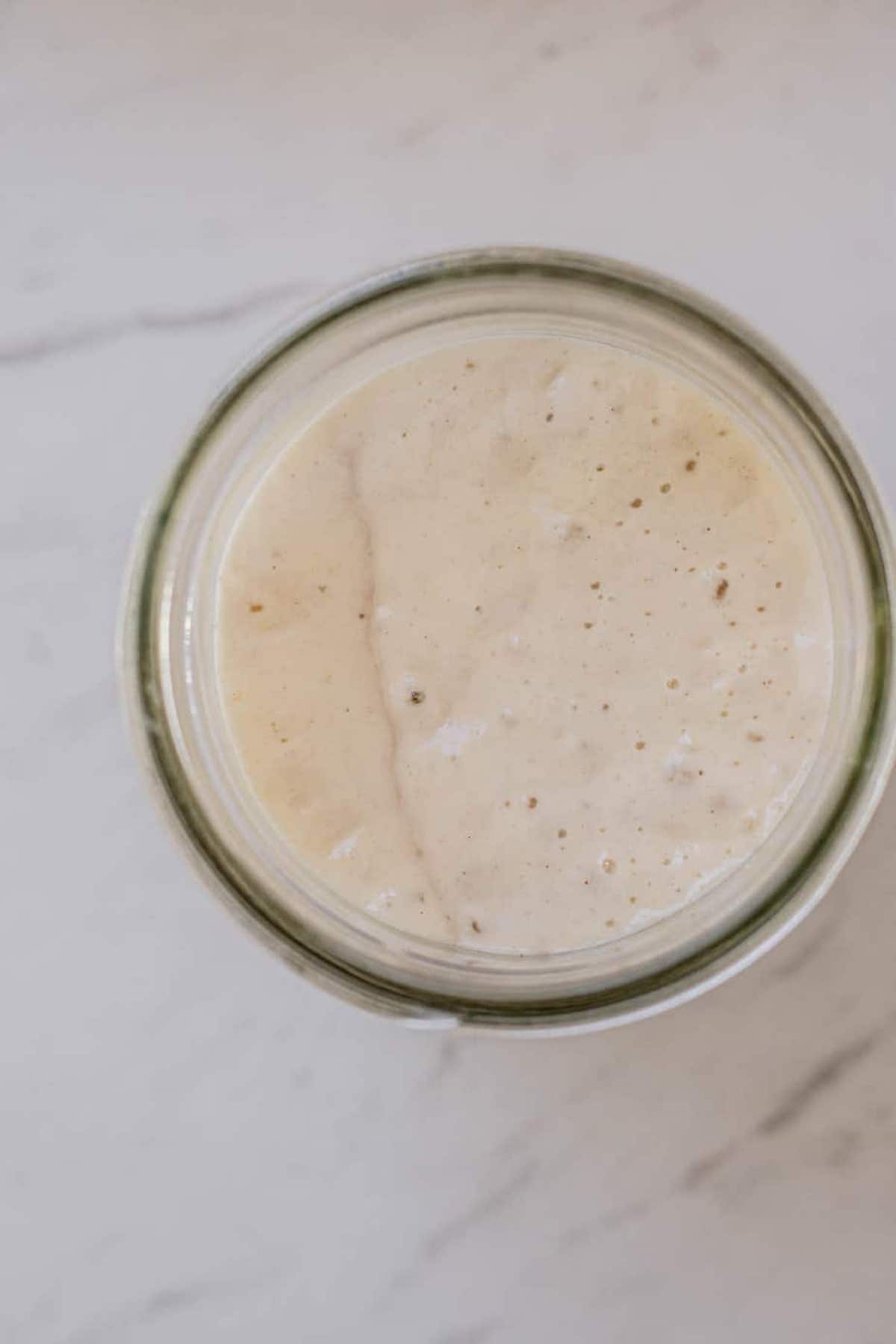
- Leave it to sit until it has at least doubled but not collapsed.
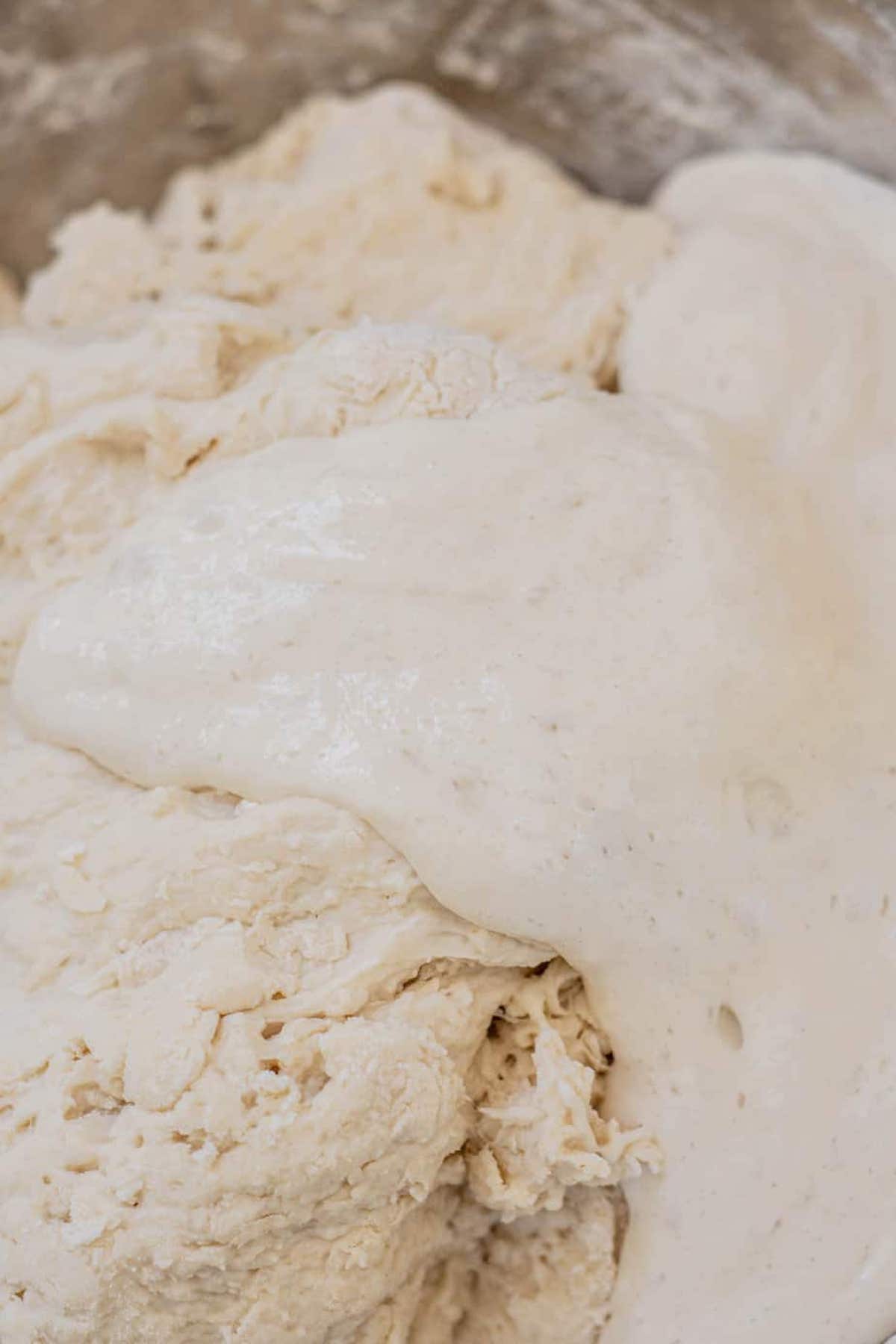
- Mix the main bread flour and water in a large bowl and use wet hands to combine it into a shaggy dough.
- After it has sat and the starter has doubled, add the salt and starter to the dough and mix it well with wet hands. To build gluten structure, give the dough a few slap-and-folds on the counter or let your stand mixer with a dough hook do the work.
- Let the dough rest for 30 minutes, then stretch and fold.
Stretch and folds
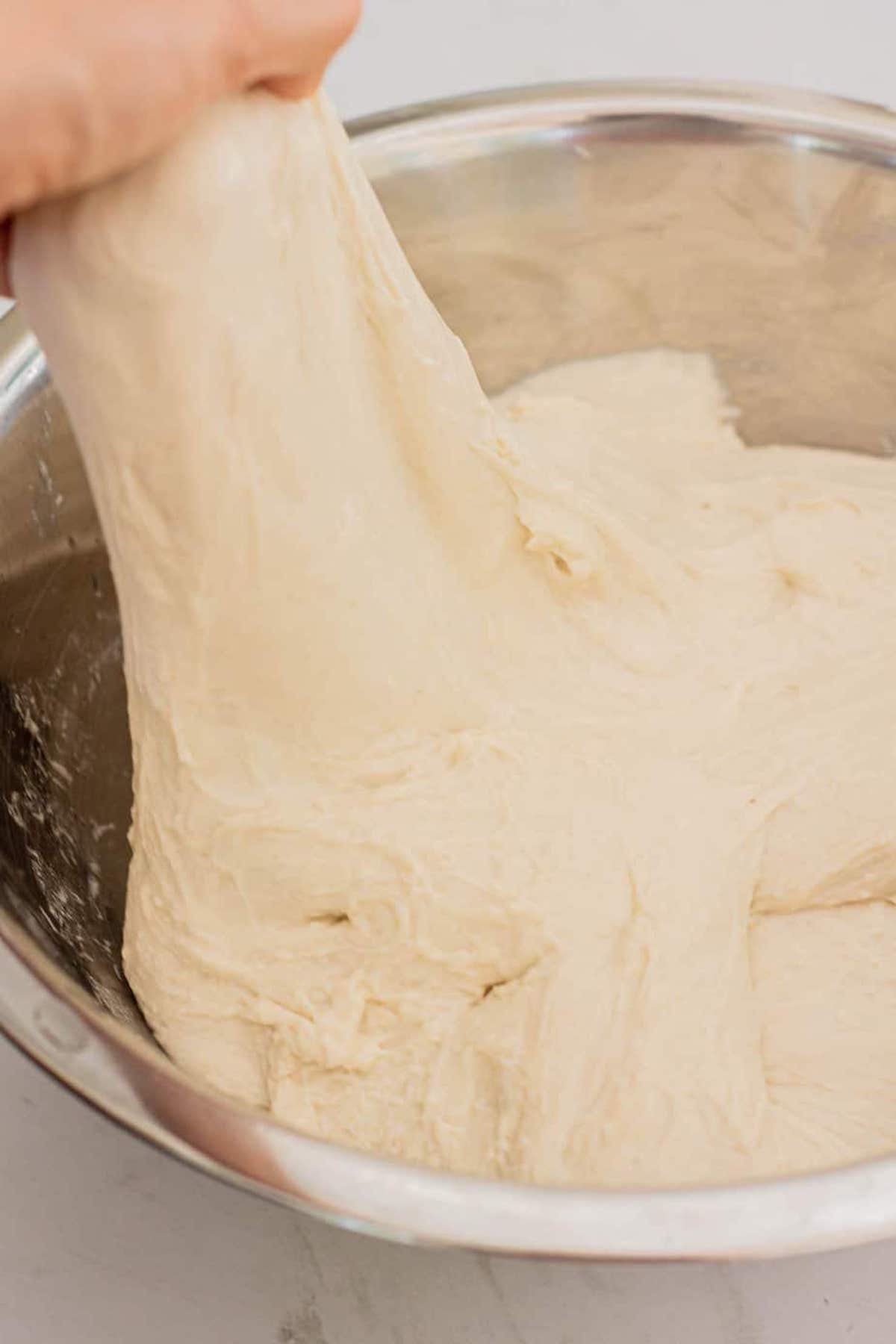
- Using wet hands, take one side of the baguette dough and stretch it up, then pull it over itself. Turn the bowl a quarter turn and repeat this move.
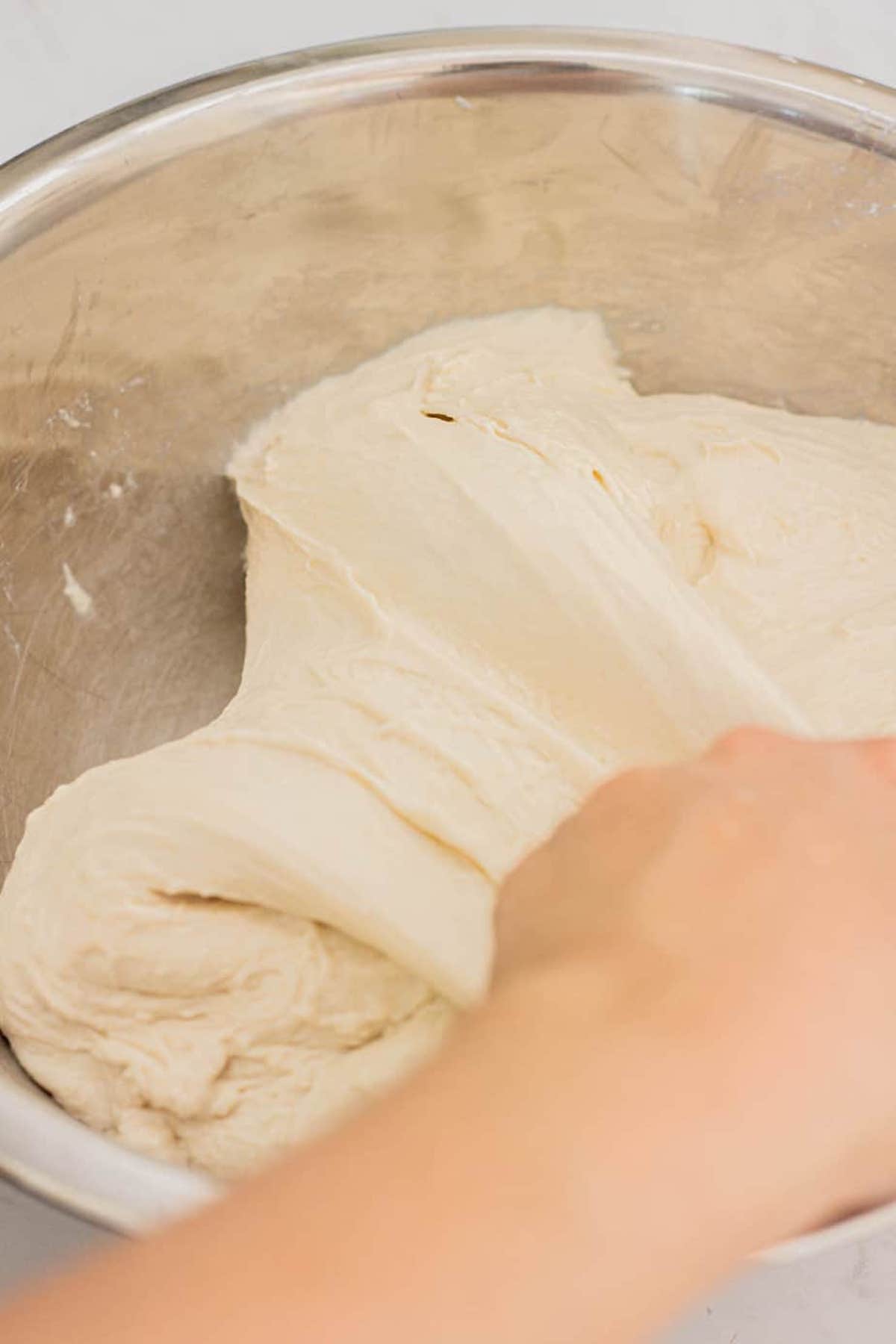
- Continue stretching, folding, and turning the bowl until all sides have been folded.
Coil folds – another option
Coil folds are great when its a wetter dough like this baguette recipe. Using wet hands, coax the sides of the dough up with your fingers and lift it from the middle and back onto itself. Turn the dough and repeat on all sides until it forms a ball. If the dough sticks too much to your hands, wet them again. See coil folding in action.
Bulk fermenting
- When the folds are completed, let the dough rest and continue bulk fermentation until the dough bulks by around 50%. This timing will significantly depend on your room temperature.
Shaping
- Cut the dough into 2 and pre-shape into rounds and let them rest for 30 minutes.
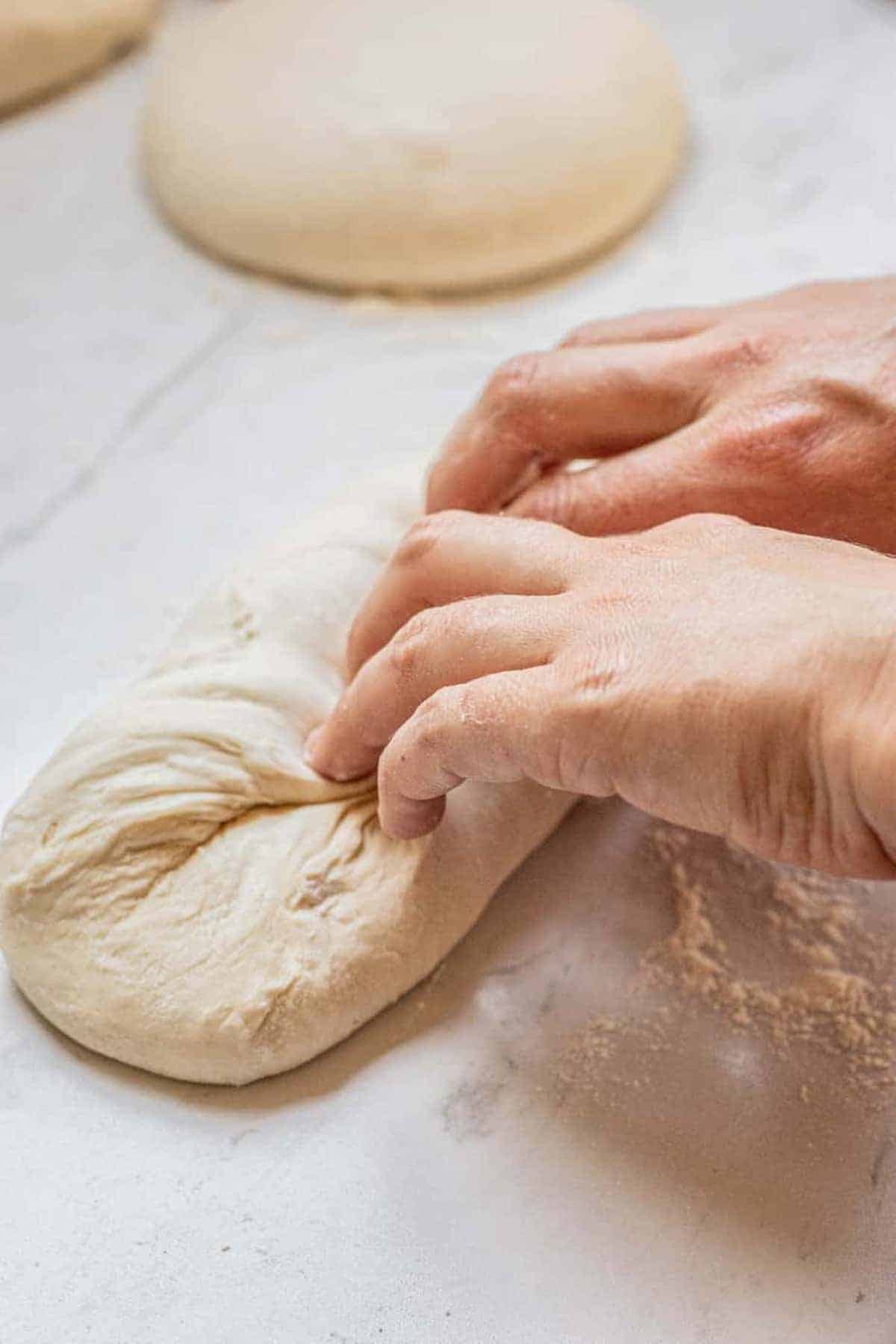
- On a floured surface, pat your dough ball into a rough rectangle. Fold the top third down, seal, rotate 180°, and repeat.
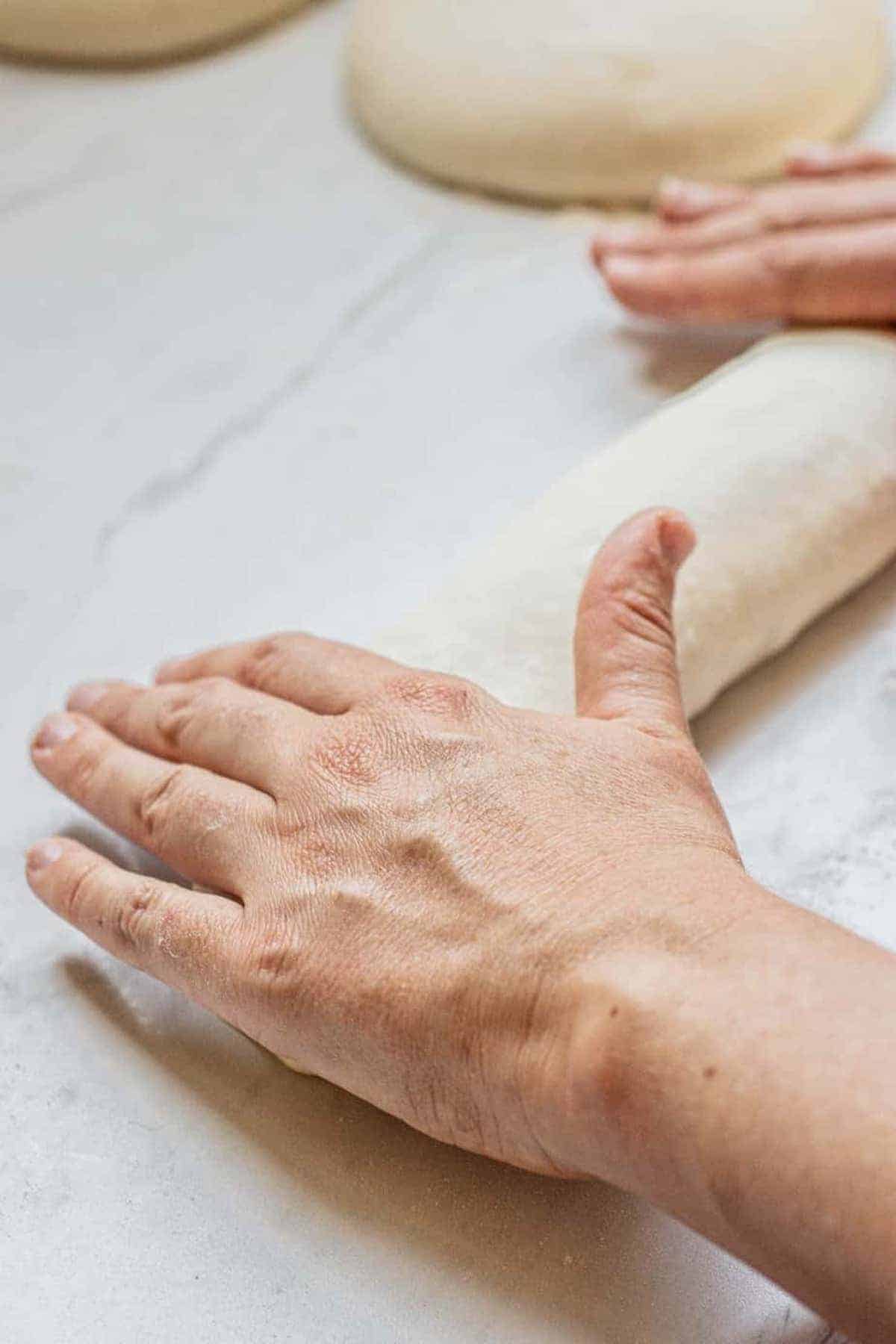
- In small sections, fold a flap over itself, press, and pull gently to lengthen into a 12″ log. Taper the ends by rolling under your palms toward you.

- Place the baguettes seam side up in a baguette pan or in between generously floured kitchen towels or a cloth couche.
Cold Bulk Fermentation
- Cover them with a clean kitchen towel or plastic wrap. Place them in the refrigerator for a cold-proof for 8-24 hours.
Baking
- Preheat your oven to 450 °F (230 °C) with a baking sheet on the middle rack and an empty pan on the bottom.
- Remove your baguettes from the fridge. Dust a board heavily with flour, then invert each baguette onto the floured board. Carefully slide each baguette off the board, onto the hot oven tray. Make at least three angled cuts on each loaf to control where the steam escapes.
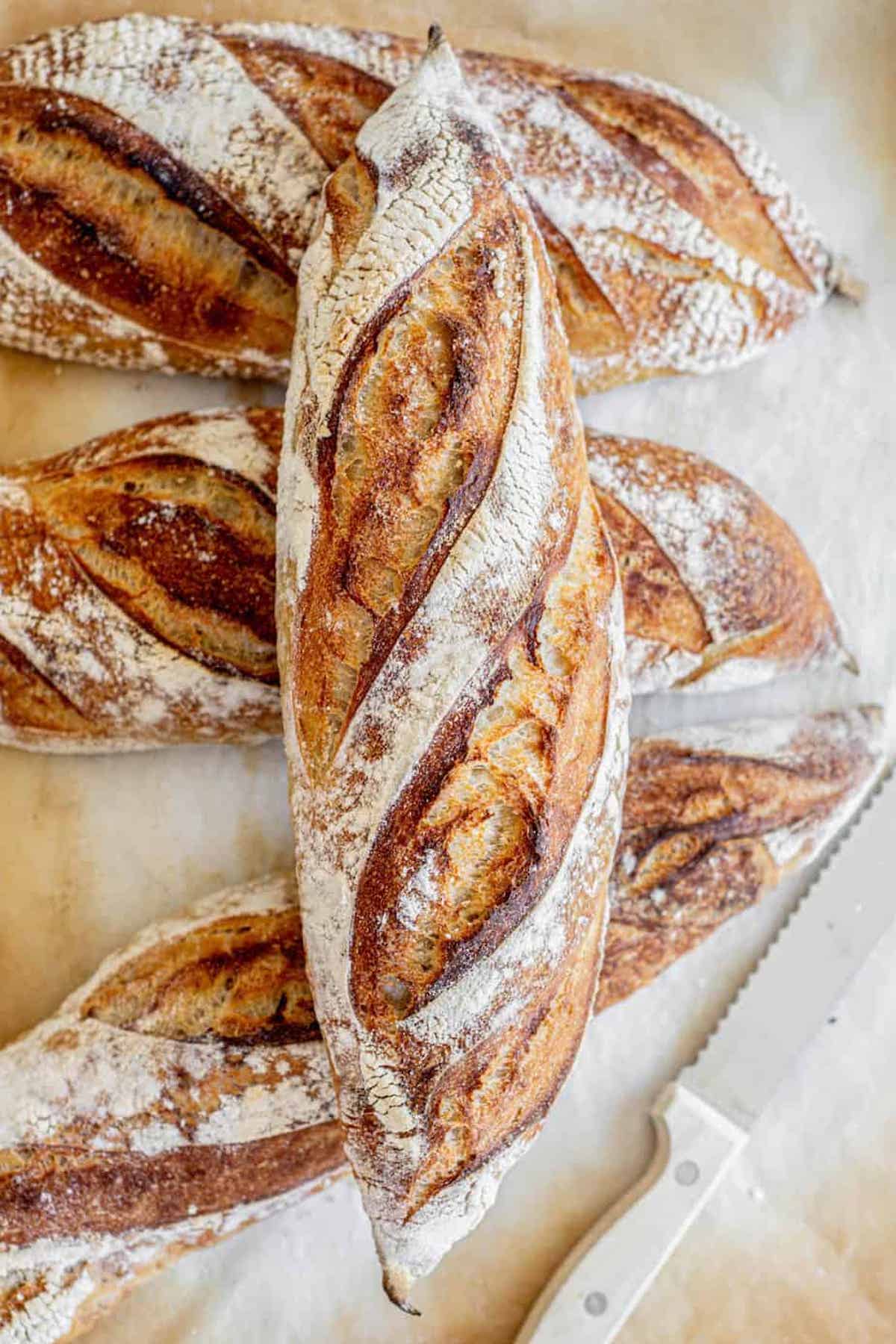
- Pour ½ and inch of water or toss in a few ice cubes in the bottom pan to generate steam. Bake 30–35 minutes until deeply golden, then transfer to a wire rack to cool (or tear straight in if you can’t wait).
FAQS
Dense sourdough baguettes may be due to underproofing, or a starter that wasn’t active enough. Make sure your starter is bubbly and active before you begin, and let your dough proof fully. Also, make sure your oven is super hot, and introducing steam into the oven when you start baking can help the bread rise and form a crispy crust.
To slice a sourdough baguette, use a bread knife with a serrated edge. This helps to cut through the crust without squashing the bread. You can either slice it on a bias for longer pieces, or straight across for shorter slices. Always ensure your bread has fully cooled before slicing to prevent it from getting squished or gummy.
Yes, you can make a sourdough baguette without a baguette pan. You can shape the dough and place it on a baker’s couche (or a floured kitchen towel). Crease up the sides of the towels to create ‘walls’ for the baguettes to rest against.
Sourdough baguettes may split or burst on the sides due to several reasons. The most common one is lack of scoring or improper scoring. Another big reason is underproofing the dough.
More sourdough bread recipes

Sourdough Baguette Recipe
Ingredients
Levain
- 40 g sourdough starter
- 40 g all-purpose flour
- 40 g water
Dough
- 440 g all-purpose flour all-purpose flour, minimum 11% protein
- 320 g water
- All the levain or around 100g active starter
- 9 g salt
Instructions
- In a bowl, stir together your starter, flour, and water until fully combined.
- Transfer to a clean jar, cover loosely, and let sit for at least 4 hours until it’s well-doubled but before it collapses.
The Dough
- When the levain is nearly doubled, begin the autolyse. In a large bowl, mix your main bread flour and water with wet hands into a shaggy mass. Cover and rest for 1 hour.
- Add the levain and salt. Using wet hands, squeeze and fold until everything is evenly incorporated. Using wet hands, knead and squeeze briskly for 2–3 minutes and give it a few slap and folds on the counter to kick-start gluten development.
- Let the dough rest in the bowl for 10 minutes, then perform one set of stretch-and-folds (or coil folds; see notes).
- Every 30 minutes for the next 2 hours, repeat one more set of folds (total of 4).
- Cover and ferment in a warm spot (around 25 °C/77 °F) for 2–4 hours, until the dough has risen about 50%.
Pre-Shape
- Gently turn the dough out onto a lightly floured surface and divide it into two equal pieces.
- Take one piece and pat it into a rough square. Fold each corner into the center to form a parcel.
- Flip it seam-side down, cup it between your hands, and roll in small circles on the bench until a smooth ball forms.
- Place each ball on the floured surface, cover with a tea towel, and rest for 30 minutes until slightly puffed and passing the poke test (a gentle press leaves a slow-closing indentation).
Shaping
- Working one ball at a time, place it seam-side up on a floured board and gently press into a horizontal rectangle.
- Fold the top third down to the center, seal with your fingertips, rotate 180°, and repeat.
- Starting at the top right corner, fold small flaps down in succession. Press with your palm heel and pull slightly to lengthen. Aim for a 30 cm (12″) log.
- Roll the log under your palms toward you, tapering the ends into classic baguette points.
- Transfer each loaf seam-side up into a baguette pan or between heavily floured kitchen towels (use the towel edges as “walls” if you don’t have a pan).
- Dust the tops generously with flour, cover and cold-proof in the refrigerator for 8–24 hours.
Baking
- Preheat your oven to 230 °C (450 °F) with a baking sheet or stone on the middle rack and an empty pan on the bottom.
- Remove the baguettes from the fridge.
- Dust a floured board, invert each loaf seam-side down onto it, and score at least three angled slashes with a razor or sharp blade.
- Dust the baking sheet or stone with flour, then slide the loaves onto it. Pour around 1 cm of water or a few ice cubes into the bottom pan to generate steam.
- Bake 30–35 minutes, until deeply golden. Be cautious when opening the door because steam will rush out.
- Cool on a wire rack before slicing (or tear into that crisp crust while still warm!).




Hi, Ellen. I always turn to your tried and true recipes for sourdough baking. I tried these for the first time and they turned out very flat. I’m an experienced sourdough baker so the issues wouldn’t be what a beginner might experience as far as not a strong starter, etc. I was concerned with such a short, 2-4 hour interval after the initial 2 hours of working the dough, but know baguettes can be different so I went with that. I felt then that the dough wasn’t bouncy and jiggly like I typically experience when adequately proofed, but again that’s with a much longer bulk so I just went with it. Perhaps it was an under fermentation issue? Would improper shaping cause this as well? Thanks, Ellen.
Hey Lori, it could be an under proofing issue so you can extend the dough proof past the time suggested, until you see it bulked out by 50% :).
Another thing might be the baking, baguettes need a very hot oven with lots of steam, if the oven wasn’t quite hot enough it can make them flat too.
I love this recipe, it’s my second time trying it. I have a 5 qt Dutch oven I cook in. How do you go about putting 4 loaves, a foot long into a Dutch oven? You must have a really big one? Last time I tried open baking and it wasn’t hugely successful as I don’t have a pizza stone.
Hey, I don’t have a Dutch oven for this! I just use ice to make steam
Hi! Love this recipe! Quick question: I have the baguettes in my baguette pan in the fridge overnight. Do I have to flip them out of the pan then return them back to the pan bottom side up? Or can I just remove them from the fridge, keep them in the pan, score and bake? Thanks for your help!
Hey! You can bake them in the pan if you want, the only thing is to make sure they don’t stick. If they’re floured super well, or on parchment paper or the pan is non stick it will be okay but otherwise they might stick once baked
Ok thanks. Will try this out then (I am more like 68-70%, so that makes quite a difference. when I usually go higher I need to take quite a different flour type). Maybe I need to find a different flour now… 😉 Thanks again.
Hi there
thanks a lot for posting those recipes. Excellent!
I actually want to try your recipe for baguettes: I myself make them since some time already but I hardly use the autolyse and do the cold proof before shaping. I’ll try your suggestions and see how that changes the result!
One question though: you mention 900g of flour for 650g of water. That’s quite a high hydration level for baguettes, or? I myself use from 620 to 660g of water but that’s for a full 1kg of flour. With what you suggest, it would amount to ~720g of water which would lead (a guess) the dough to be quite “liquid”. Is there something I am missing here? (The levain is not a hard one, so that’s not the solution 🙂 ). I am using a “traditional” flour (65 – French – or 550 – Germany – depending on the country’s numbering scheme).
Thanks again for any tips you may have!
Hey
It’s around 74% hydration which is on the higher side compared to other recipes, but I almost always work with a hydration between 74-75%. As long as your starter isn’t too acidic, and you use good flour, your dough will gain strength and structure and not be liquid 🙂
If I make the dough up at night and do the folds before bed, planning to let it bulk ferment overnight, as these seem to have a shorter bulk ferment time how would I go about this? Could I cold ferment in the fridge overnight instead? And then shape in the morning?
Hey Court, you can cold-proof it overnight and shape in the morning. After shaping the loaves, let them proof at room temperature until a bit puffed before baking 🙂
Hello! So it’s about to be 1:30am in the morning(didn’t read the full instructions on how long it would take lol) I’m done with my last coil folds. I’m reading here that it’s OK to do a cold bulk fermentation in the fridge.? May I ask for how long can it rise in fridge(I don’t wanna leave it in there for too long)? Then once I take it out of the fridge then shape then let it bulk rise for 3 hours? Thank you in advance.
Hey! Yup you can leave it in the fridge overnight, up to 18 hours, then shape and rise in the morning 🙂
I really like this recipe. The instructions are very clear and it comes out perfect every time I’ve made it. I sometimes halve the recipe and that works, too. Last time, I didn’t have room in the frig for my baguette pan, so I put the dough in the frig overnight before shaping. Next morning, shaped and baked and it turned out wonderful!
Im trying your recipe for the first time. One thing Im not clear about- when you lay the baguettes in the cloth for the overnight proof in the frig, they are top up. The next day you flip them over onto the parchment paper and score them. Does this mean the score lines are on the underside of the baguette? I have read this several times and cant work it out!
Also my dough looked good and formed nice tight balls, but I found that when I rested the balls for 20 mins, the rounds lost their shape and became sticky. The baguettes were hard to shape because of the stickiness. The ferment seemed OK (poke test). I used all purpose flour 10.5% – maybe this is the issue?
Thanks for your help
Hey Robyn sorry for the late reply! They do get scored on the underside :). hope they worked out for you!
Forgiving recipe!! I made this over the holiday weekend and my timing was off due to traveling. I did the bulk ferment prior to shaping the dough- 24 hours in the fridge- then let it sit out for 4 hours (chilly still in NY) shaped and baked and they came out beautiful!! Texture is everything. Crusty outside super chewy and airy inside. Great recipe that was forgiving of a busy lifestyle
These were delicious! I am baking them again because I like to have them in the freezer to pull out for a meal! Do you have a recipe for hamburger/ hotdog buns? Your instructions are very clear! I want to try your pie crust next! Thank you so much for sharing!
So happy you enjoyed them, Barb! I do have a hamburger bun post, here is the recipe