Simple Sourdough Pizza Crust
An easy sourdough pizza base made with sourdough starter. Light, airy, and chewy with a crisp edge. This sourdough pizza base keeps things simple and lets the dough do the work. The centre bakes thin and tender, while the edges puff into a chewy, lightly blistered crust.

About the dough
This recipe works best with an active sourdough starter, but it can also be made with sourdough discard.
If using an active starter, it should be bubbly, risen, and at or near its peak when you mix the dough. If using sourdough discard, just allow for a longer fermentation. The dough will take more time to rise and develop flavour, so extend the bulk ferment and cold proof as needed. The final texture will still be light and chewy, especially when baked hot.
Use bread flour or strong all purpose flour with at least 11% protein for the best structure and chew. If you are still getting your starter established, my guide to starting and maintaining a sourdough starter walks through the process step by step. Or, see tips and recipes in my sourdough hub.


When to make the dough
This pizza dough is flexible and works well with an overnight cold ferment. You can adjust the timings to suit your day.
Day 1: Feed starter and mix dough when starter is ready. Bulk ferment at room temperature for 3 to 4 hours then transfer to the fridge
Day 2: Divide and pre shape dough and rest briefly at room temperature. Shape and bake
The cold ferment can be extended up to 36 hours if needed.

Kneading
This dough can be kneaded in a few different ways. You can use slap and folds on the bench for about 5 to 6 minutes, until the dough feels smooth and elastic. Or, use stretch and folds every 15 to 20 minutes over the course of an hour.
A stand mixer fitted with a dough hook also works well. Choose whatever method that suits you best. The goal is to have a dough that feels elastic.
Method
- Mix together the flour and water and rest them briefly.
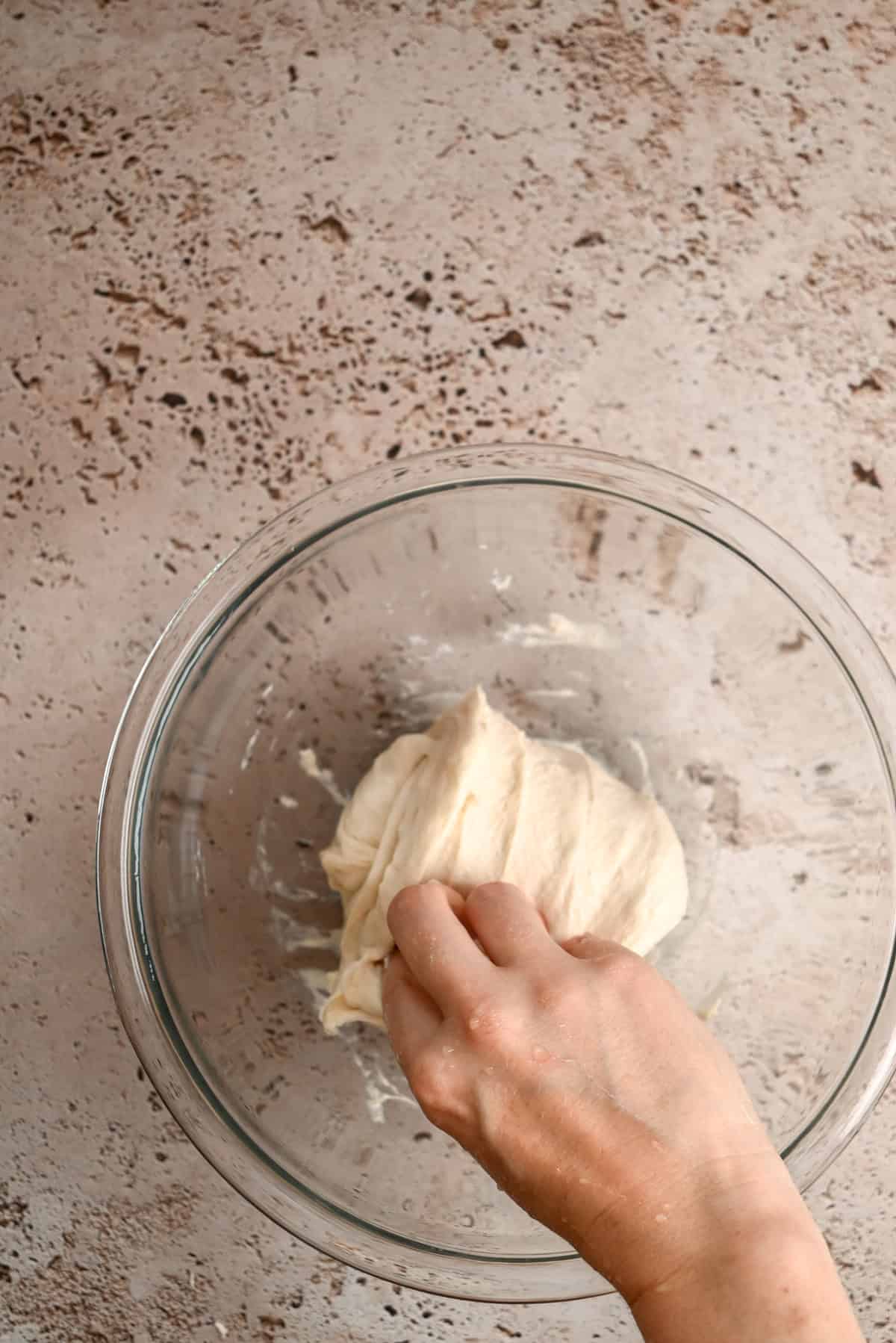
- Add starter and salt and stretch and fold the dough over about an hour.
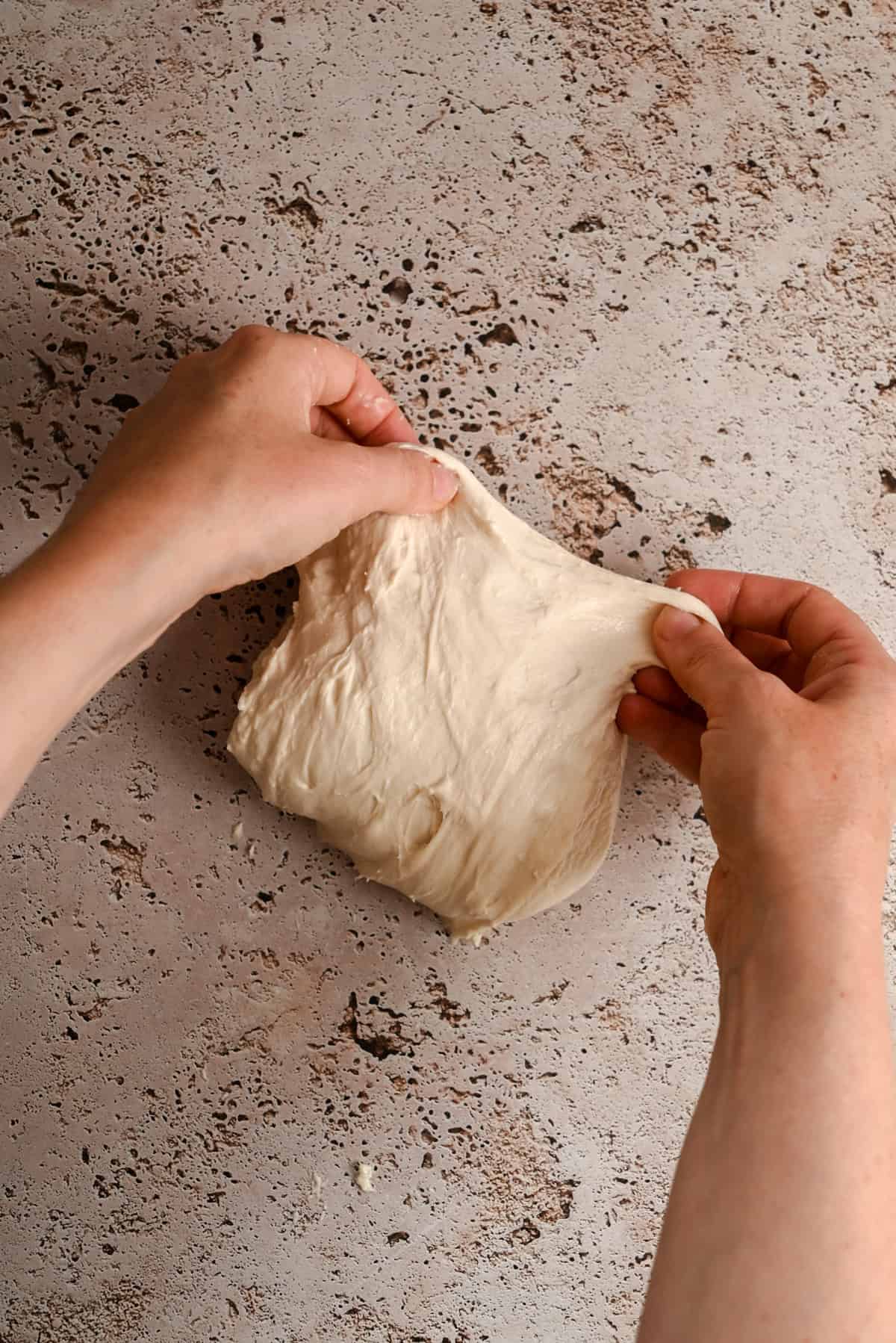
- Alternatively, slap and fold the dough for around 6-8 minutes until it’s elastic.
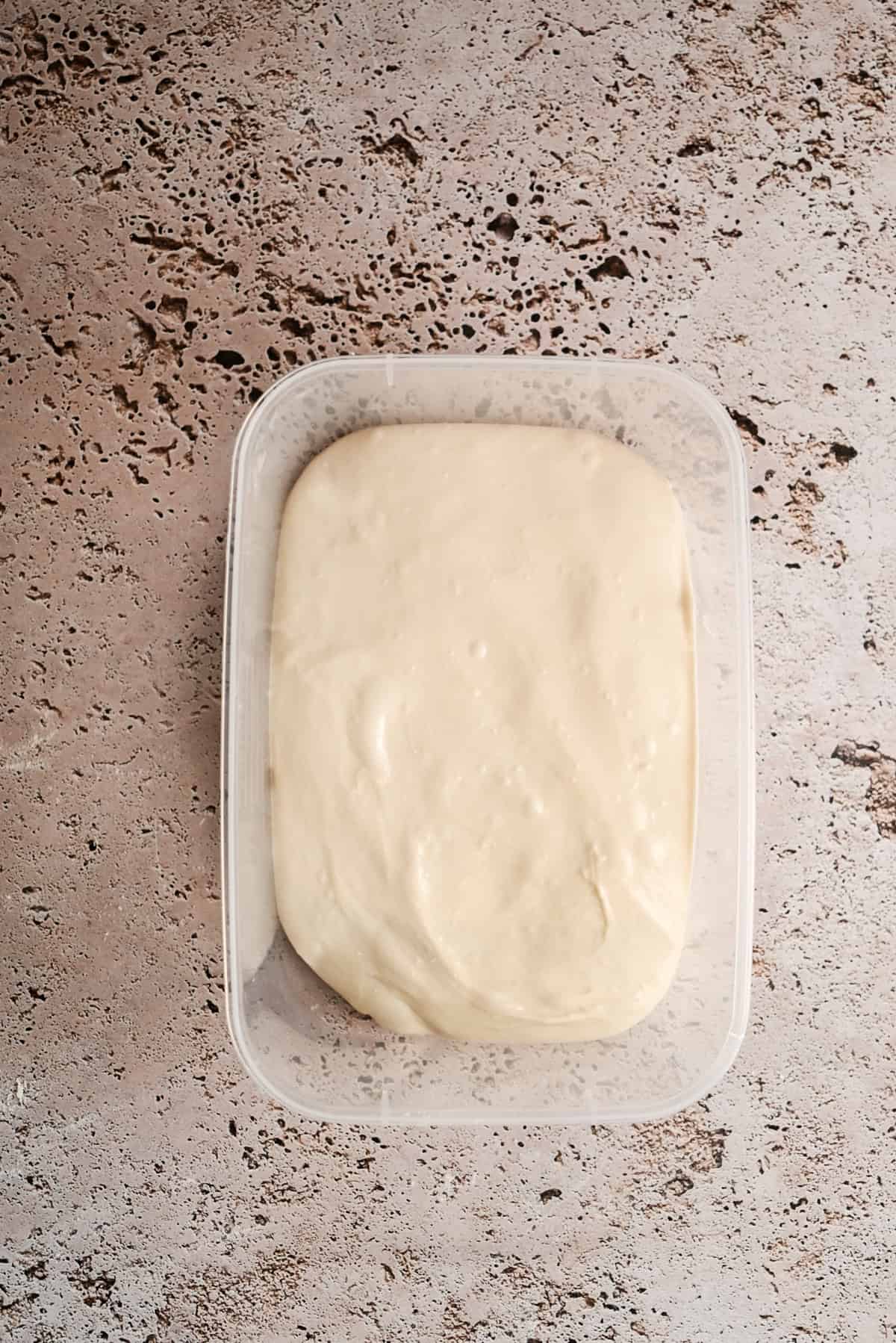
- Place the dough in a container with a lid and bulk ferment at room temperature. Then transfer to the fridge overnight.
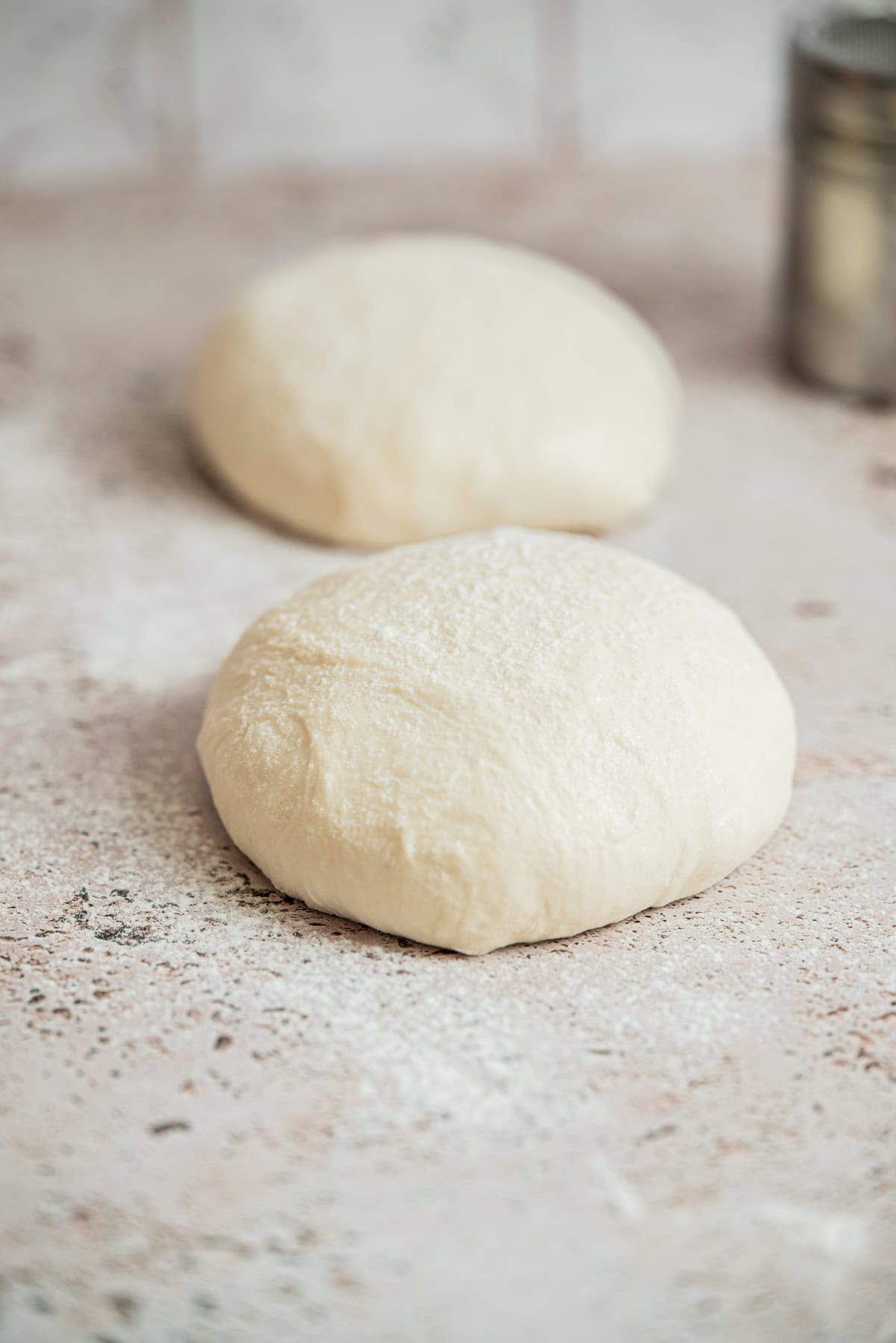
- Divide the dough then shape into rounds and let them rest for 20 minutes.
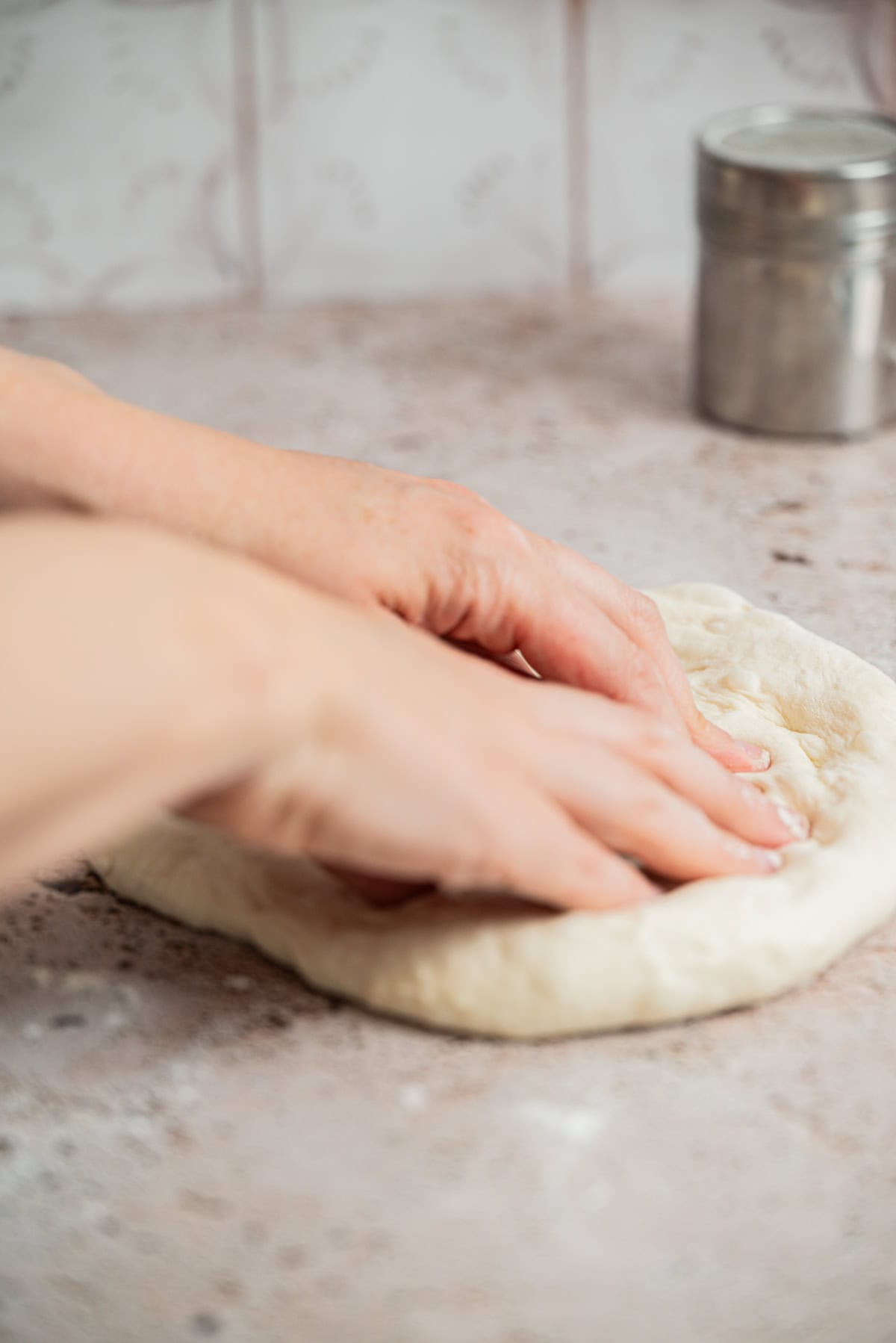
- Using your fingertips, gently press down in the centre of the dough, working outward in small presses.
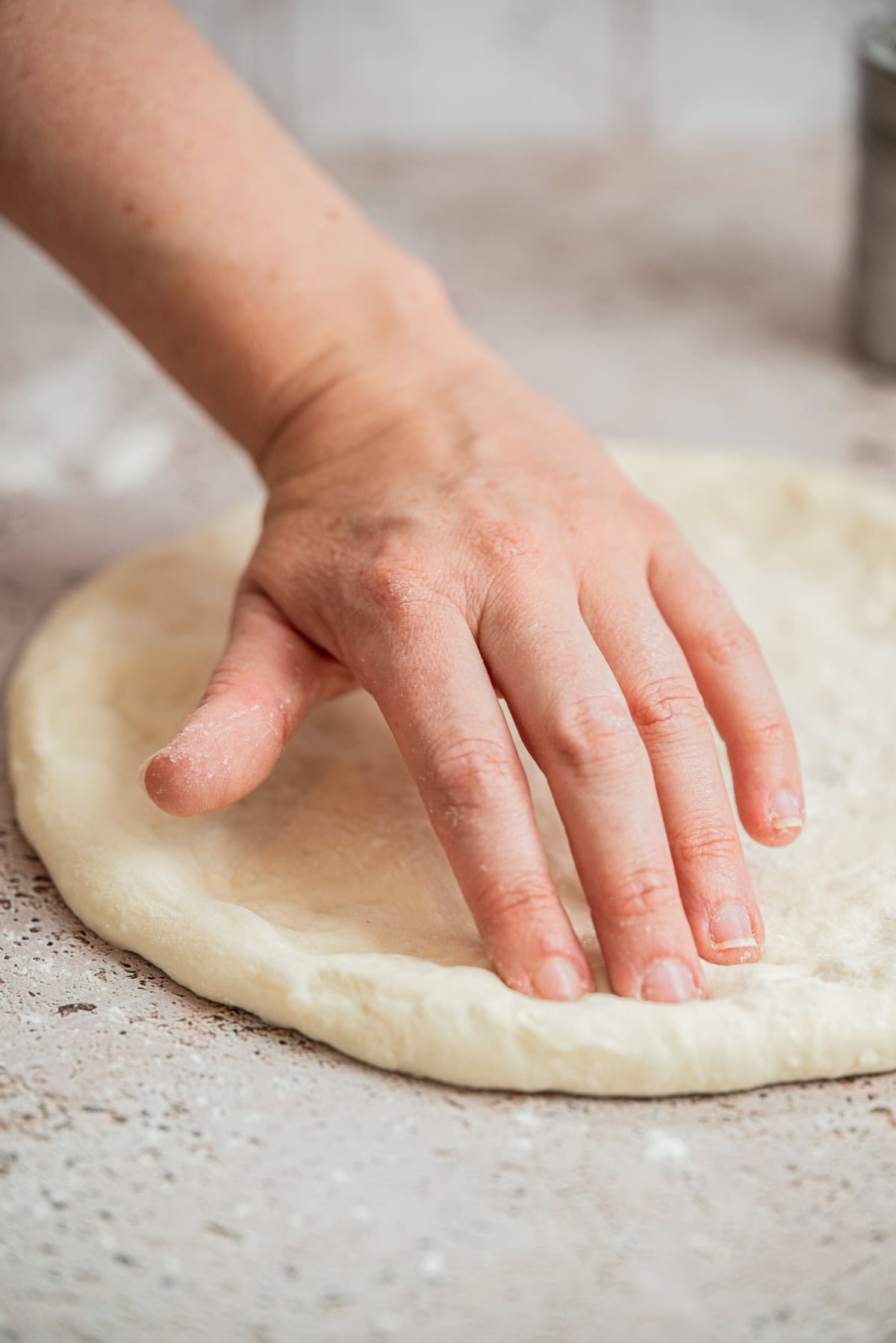
- Continue pressing and stretching the dough from the middle outwards, rotating it as you go, until it forms a round base. The centre should be thinner, with a raised rim around the edge.

Note: If the dough resists, let it rest for a few minutes, then continue shaping
- Transfer the dough to a floured pizza peel or board and add toppings quickly so the dough doesn’t stick, then slide the pizza onto the hot stone or steel.
Baking
- Use really high heat because a hot oven is key to a light, airy crust and good oven spring. Preheat the oven to its highest setting, ideally around 250 C, for at least 30 minutes.
- Bake one pizza at a time. This keeps the oven temperature steady and helps each base cook evenly.
- Keep toppings light. Too much sauce or cheese can weigh the dough down and stop it puffing properly.
- Bake quickly. The pizza should cook fast. A well fermented dough baked hot will puff and blister before it dries out.
- Let it finish on the rack if it’s needed. If the base looks pale underneath, you can slide it directly onto the oven rack for the last minute or two.
- Rest a bit before slicing. Let the pizza sit for a minute after baking so the crumb can settle and the cheese can set slightly.
If you enjoy simple savoury sourdough bakes, you might also like my sourdough focaccia or sourdough fougasse.

FAQs about sourdough pizza dough


Simple Sourdough Pizza Crust
Ingredients
Pizza Dough
- 300 g all-purpose flour with at least 11% protein, or bread flour
- 200 g water
- 100 g sourdough starter active or discard (see notes)
- 8 grams salt
Instructions
- Mix the flour and water for the dough in a bowl until no dry flour remains. Cover and rest for at least 30 minutes. 300 g all-purpose flour, 200 g water
- Add the sourdough starter to the dough, and then the salt. Use wet hands to squish and fold until well combined. 100 g sourdough starter, 8 grams salt
- Turn the dough out onto a clean bench and knead using slap and folds for about 6-8 minutes, until it feels smoother and elastic. You can also knead in a stand mixer fitted with a dough hook, or use stretch and folds every 15 to 20 minutes over one hour.
- Transfer the dough to a container with a lid and bulk ferment at room temperature for 3 to 4 hours, until lightly risen with some puffiness and visible bubbles. In warmer kitchens above 24°C / 75°F, this may take closer to 2 to 3 hours. In cooler kitchens allow up to 4-6 hours.
- Place the covered container in the fridge for 4 to 36 hours to develop flavour and make it easier to handle.
- Remove the dough from the fridge and on a floured bench, divide it into two even pieces. Shape each into a ball and rest at room temperature for about 20 minutes.
- Using your fingers, gently press each dough ball out into a circle about 20 cm wide. Start from the centre and work outward, keeping the middle thinner and the edges slightly thicker. Check that the bottom of the dough isn't sticking to the bench and sprinkle on more flour if needed.
- Lightly dust a pizza peel or board with flour.
- Once the dough is shaped, gently lift it and place it onto the floured peel. If needed, slide your hands underneath and support the dough as you move it so it does not stretch unevenly. Give the peel a small shake. The dough should move freely. If it sticks, lift the edge and add a little more flour underneath.
- Add toppings quickly to avoid the dough sticking, then slide the pizza onto the hot stone or steel.
- Bake quickly at very high heat. Use a pizza oven, or bake on a fully preheated pizza stone or steel at around 250 C/ 480 F until puffed and lightly charred.
- The pizza can also be baked in a preheated cast iron skillet. Press the dough into the hot pan, add toppings, and bake in a very hot oven until cooked through and golden.




If you freeze the dough at what point should you put it in the freezer. Before cold proof or after you shape it into the ball
I’d like to adapt this recipe to use for a cast iron pan. The recipe I currently use states that you make the dough and then refrigerate the dough for 24-72 hours. Can it do this with this dough? The other recipe is not for sourdough, but with a yeast dough.
Thank you!
I love your site!
Carol clemans
Hey Carol! Yes you can do that with this dough 🙂 Thank you!
WOW, these are awesome! I’ve never bothered to comment on an online recipe (though I love reading comments) but have to say these are probably the best pizza crusts we’ve ever had! Preheated gas oven to 500, with cast iron fry pans inside. After oven was fully heated I spread the dough on parchment paper then slid that into the hot pan, applied a homemade sauce, cheese, fresh basil and baked approx 12 minutes. again….awesome! Thanks for posting your great sourdough recipes Elien, I’ve also loved your hot cross buns and your raisin bread too!
So happy you enjoyed them and thanks for the great feedback!! 😄😄
Hi Elien
Can you pls upload a video on how you turn the parcel into a circle? I just could t get this to work with palm of my hand. Ended up shaping into a ball like I do for sourdough. Left in fridge for 24 hours and the balls just went flat. About to roll out to see if they work. Any tips pls as I make your bread really well but not so sure about the pizza dough!! Thanks
Hey Jane, I can pop a video up at some point but my dough balls will also flatten in the fridge. That’s totally normal 🙂
I like to make up dough and freeze it. I was thinking of doing this at the point you would normally cold prove. That way on the day I want to use it I can just take it out of the freezer in the morning and leave it defrost and prove a little. What are your thoughts on this?
Hey yeah you could do that! It might not puff quite as much as if just left in the fridge but I still think it would work well.
My dough didn’t rise on the 4 hour rest put in the fridge for the night , I put my finger in to see if it bounced back , it did not . Will it still be ok for my pizza tonight?
Yup it will be fine, it’s not meant to rise visually very much 🙂
Hi Ellen
I’ve been looking for a sourdough pizza recipe for ages. I’ve tried a few what I was looking for was a recipe that I could make and pre bake and freeze.
We’ve got two kids who can never make there mind up what to have so freezing pizza bases was a go to idea.
I’ve tried a few recipes but yours is amazing I did 5 bases about 12in froze them.
Then got them out the freezer 3 days later defrosted the and cooked them amazing
Hi Ellen
I’ve been looking for a sourdough pizza recipe for ages. I’ve tried a few what I was looking for was a recipe that I could make and pre bake and freeze.
We’ve got two kids who can never make there mind up what to have so freezing pizza bases was a go to idea.
I’ve tried a few recipes but yours is amazing I did 5 bases about 12in froze them.
Then got them out the freezer 3 days later defrosted the and cooked them amazing
That’s awesome to hear Ronnie! Thank you!
Hiya! Am loving your recipes and videos – so easy and straightforward to follow! I was wondering if you think freezing the pizza dough is possible?
Hey I haven’t tried it! I think it may affect the rise a bit but I would try it and see ☺️
Hi Ellen, if you’re adding to your ‘try this’ list, what about Banh Mi Tay buns! I love these and make them about twice a year, but would love to make a sour dough version.
Thanks, Sourdough bread is in the oven, pizza dough is resting on the bench!!
Merry, Merry!