Step by Step Sourdough Ciabatta
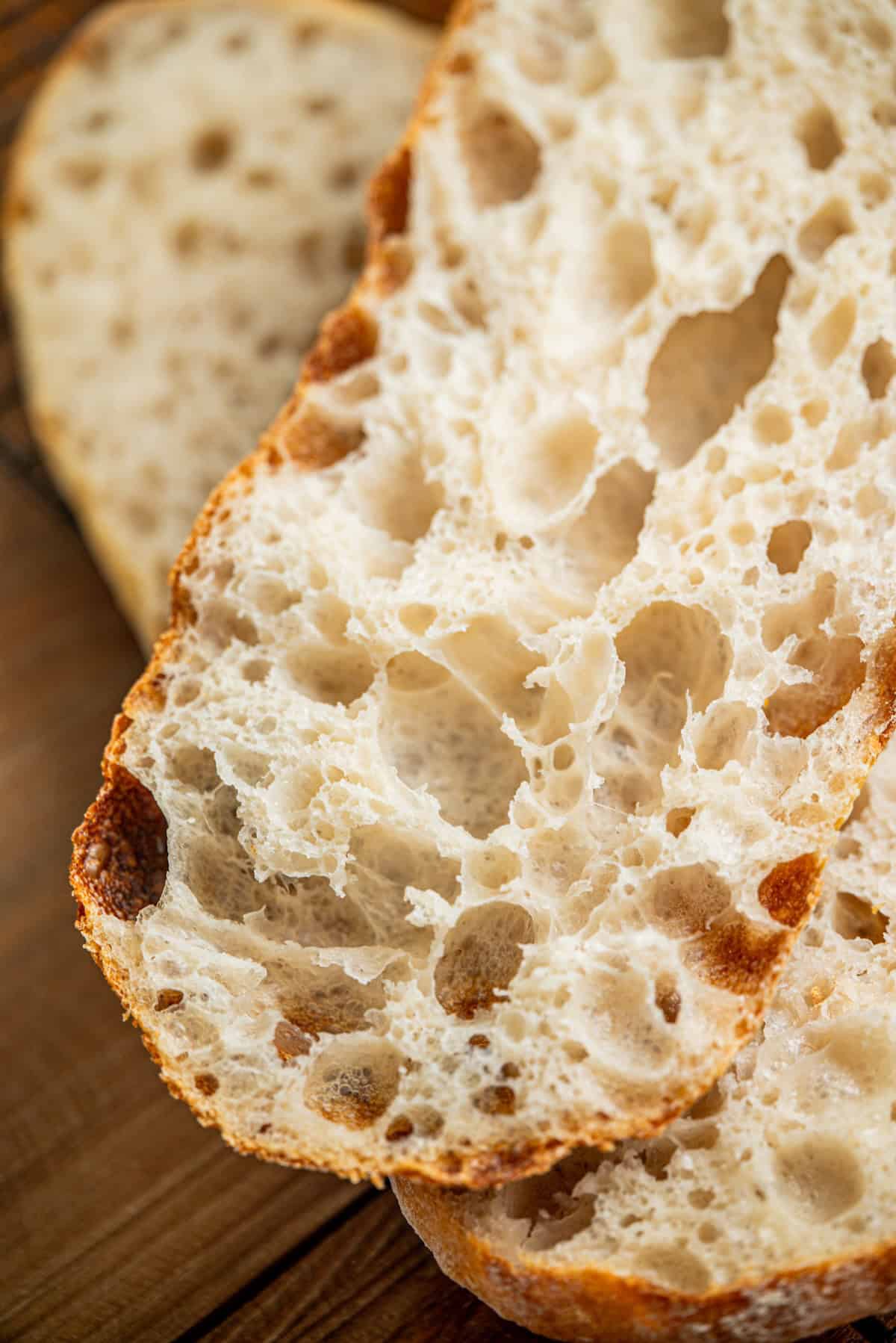
This sourdough ciabatta is rustic, chewy, and full of irregular open holes, with a crisp crust and the signature stretched “slipper” shape. It’s made by hand with no mixer, and the high hydration is what gives you those big and airy holes. Perfect for sandwiches, dunking into soup, or eating warm with olive oil.
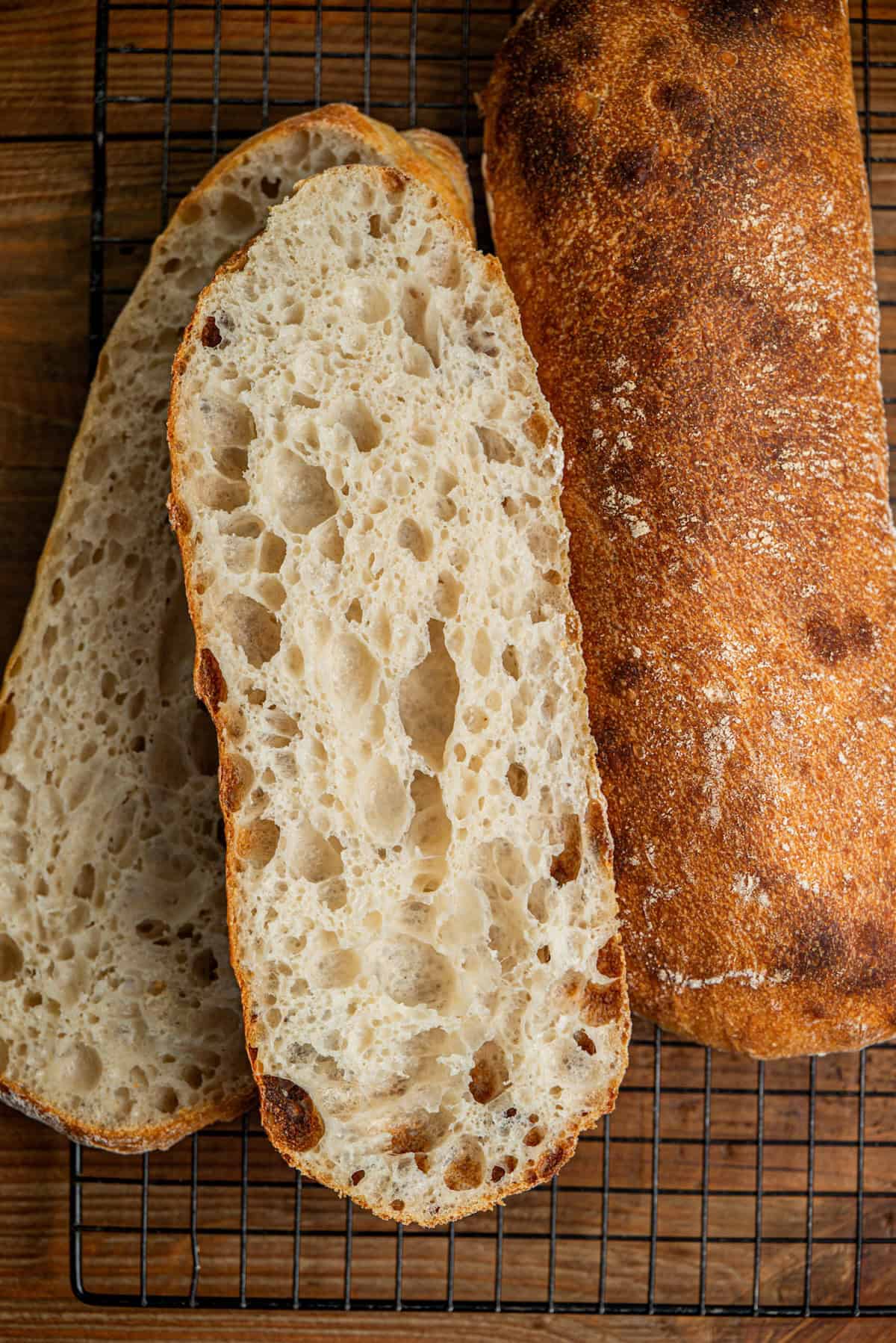
About this sourdough ciabatta
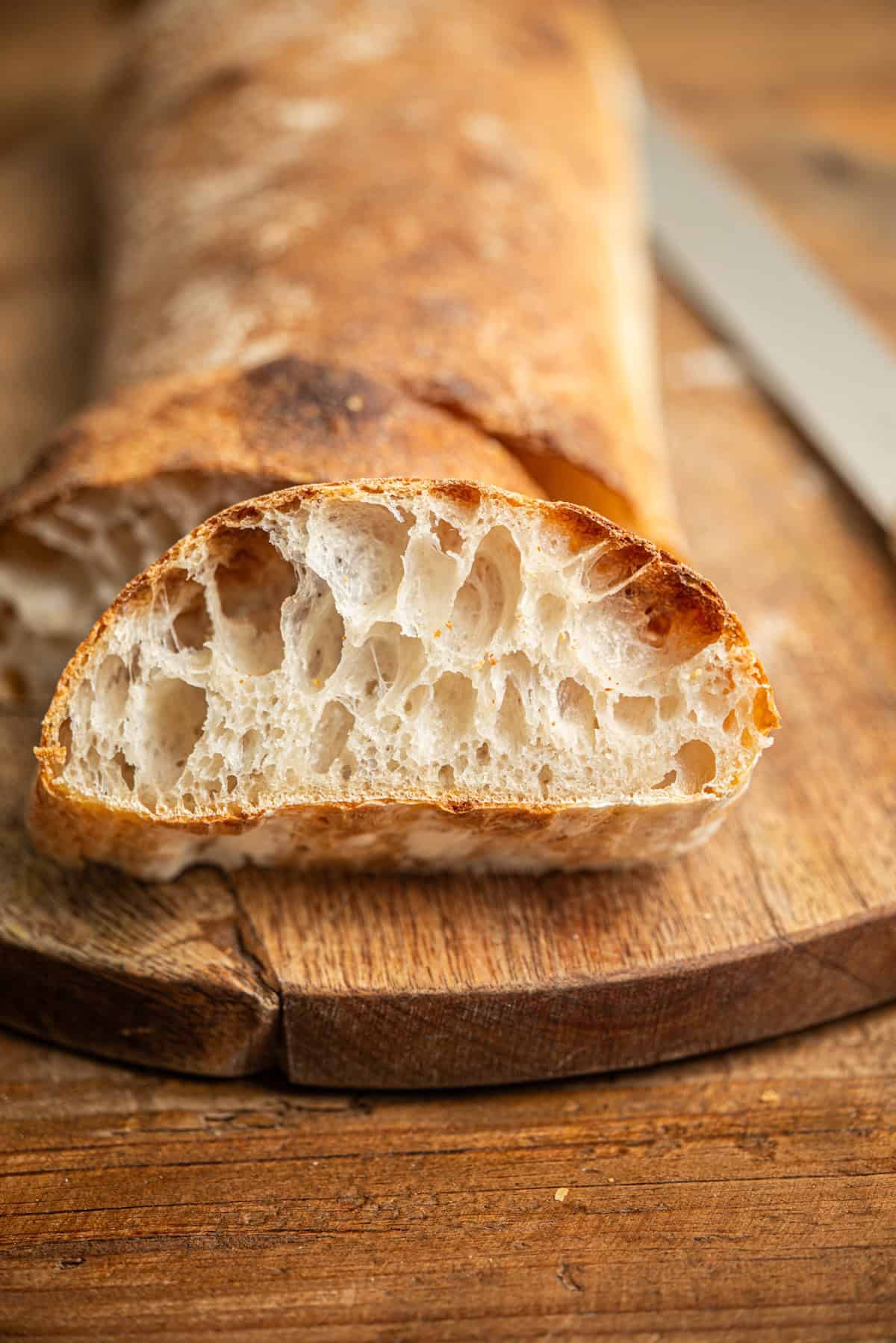
Ciabatta means “slipper” in Italian, and once you see one come out of the oven you’ll see why. It’s a high-hydration dough that spreads out into a long flat shape as it bakes, and the extra water is what gives ciabatta its open, holey crumb.
This recipe sits at around 82% hydration, which is a lot wetter than a standard sourdough loaf, but it doesn’t need a mixer. The dough is built up through a series of stretch and folds (or coil folds), which gradually transforms a slack, sticky mess into a strong, glossy, jiggly dough you can handle. It’s super satisfying to feel the change happen under your hands.
The other thing that sets ciabatta apart from a standard sourdough loaf is the shaping, which is barely shaping at all. After the cold proof, you tip the dough out, gently nudge it into a rectangle, cut it in half, and stretch each piece a little as you lay it on the tray.
Key ingredients
- High-grade flour or bread flour: You want a strong, high-protein flour (at least 11.5% protein) so the gluten can hold all that water and trap the gas for those big holes. A weak flour won’t cope with this hydration.
- Active sourdough starter: As with all my sourdough recipes, the starter needs to be active, bubbly, and at peak. A sluggish starter on a high-hydration dough is asking for a flat ciabatta. I build a fresh leaven for this loaf rather than using starter straight from the jar.
- Olive oil: A small amount of olive oil gives the crumb a bit more of a tender quality.
- Water: The high water content does most of the work for the open crumb.
- Salt: Strengthens the gluten and seasons the loaf.
Baker’s schedule
This is a two-day bake. Both days are short, but the dough needs that time to develop properly. Watch the dough rather than the clock here, the times are a guide and shift with your kitchen temperature.
Day 1: Build the leaven, mix the dough, fold and bulk ferment, then cold proof overnight.
Day 2: Shape, do a short final proof, and bake.
Method
- Begin by feeding your levain so it has time to rise.
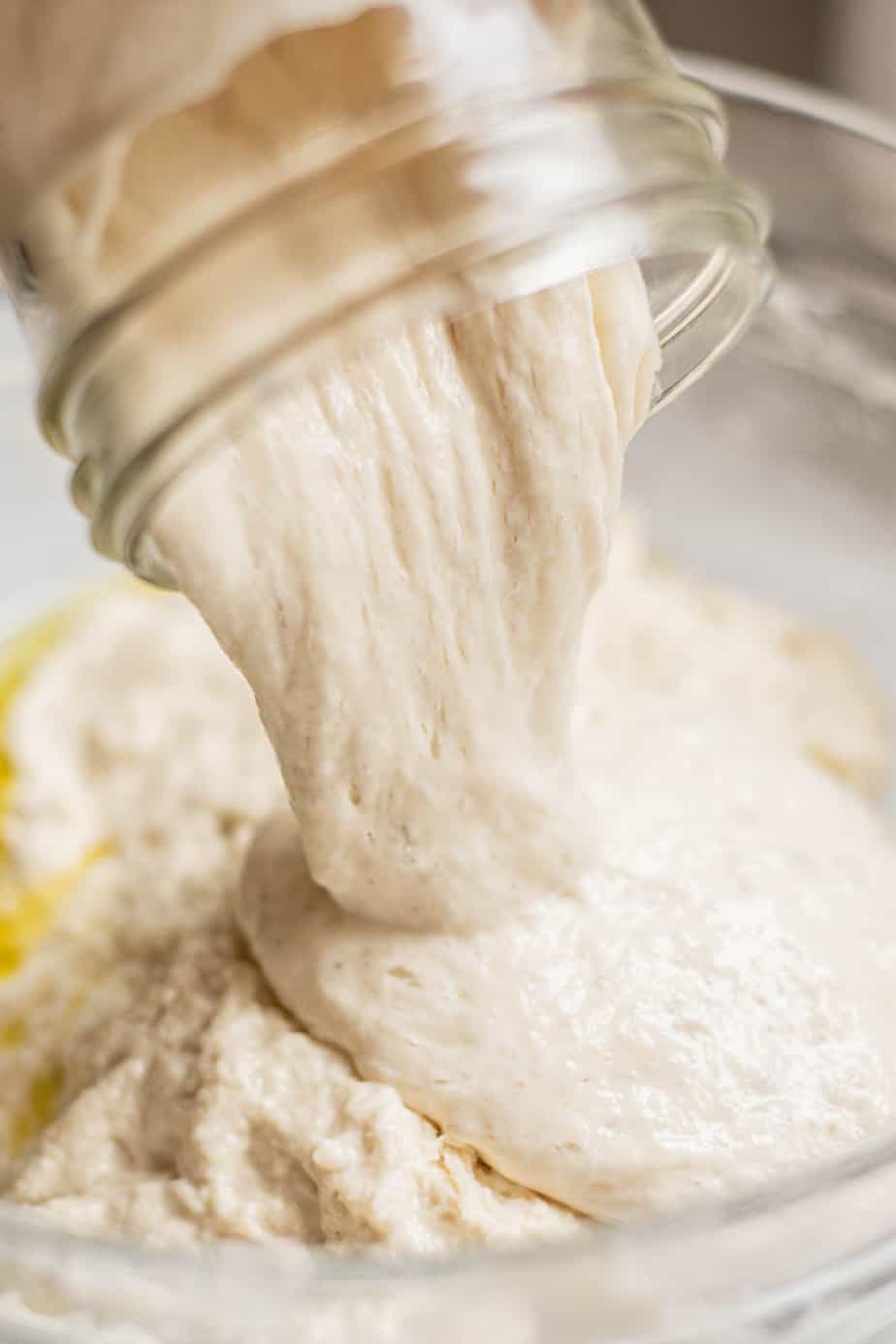
- When it’s nearly ready, mix the flour and water into a shaggy dough and leave it to autolyse for 30 to 60 minutes to hydrate. Then add the leaven, salt, and olive oil and squish it all in with wet hands.
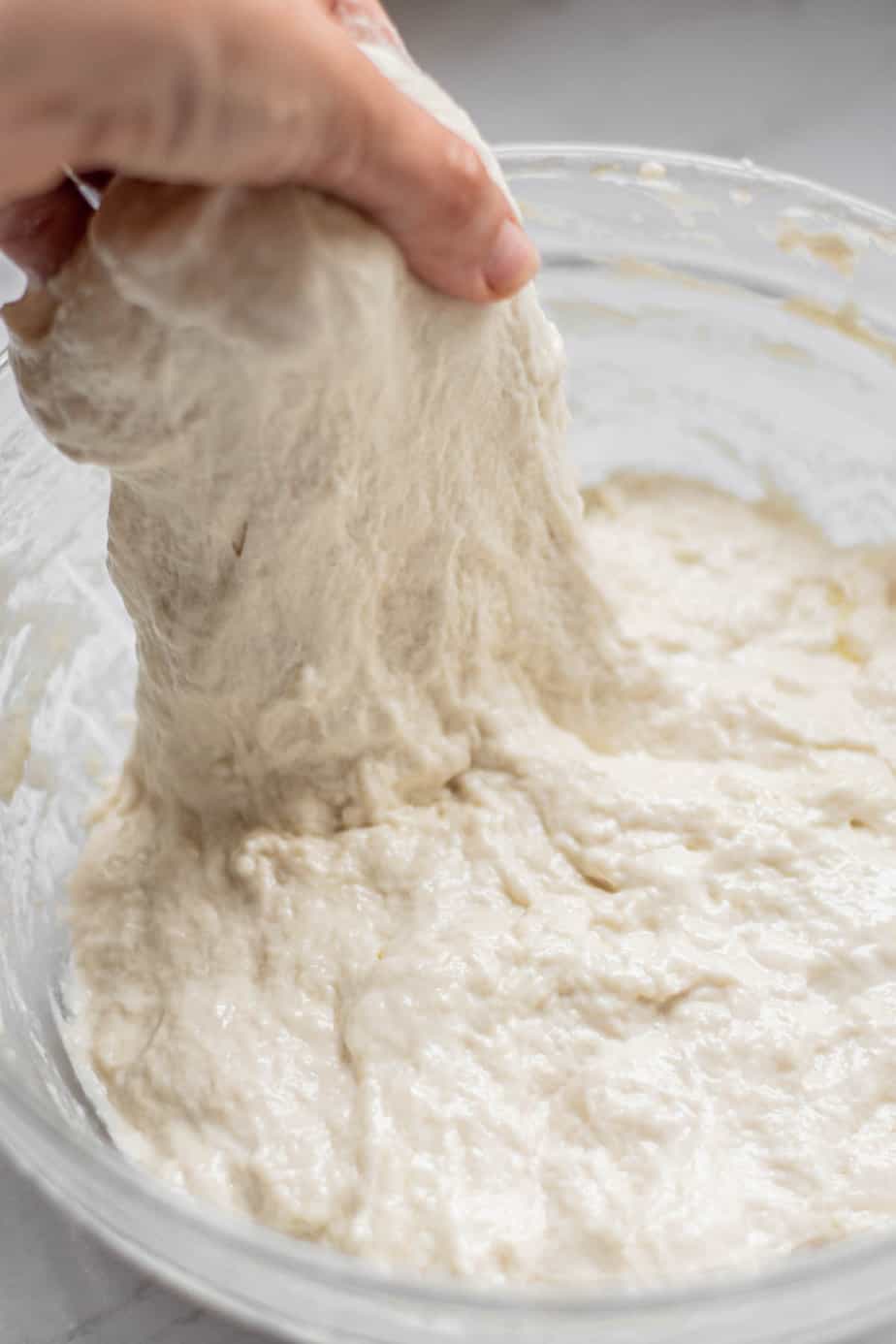
- Next, do a set of stretch and folds (or coil folds) every 30 minutes for 2 hours, 5 to 6 sets in total. The first fold will be really wet and the dough will tear easily.
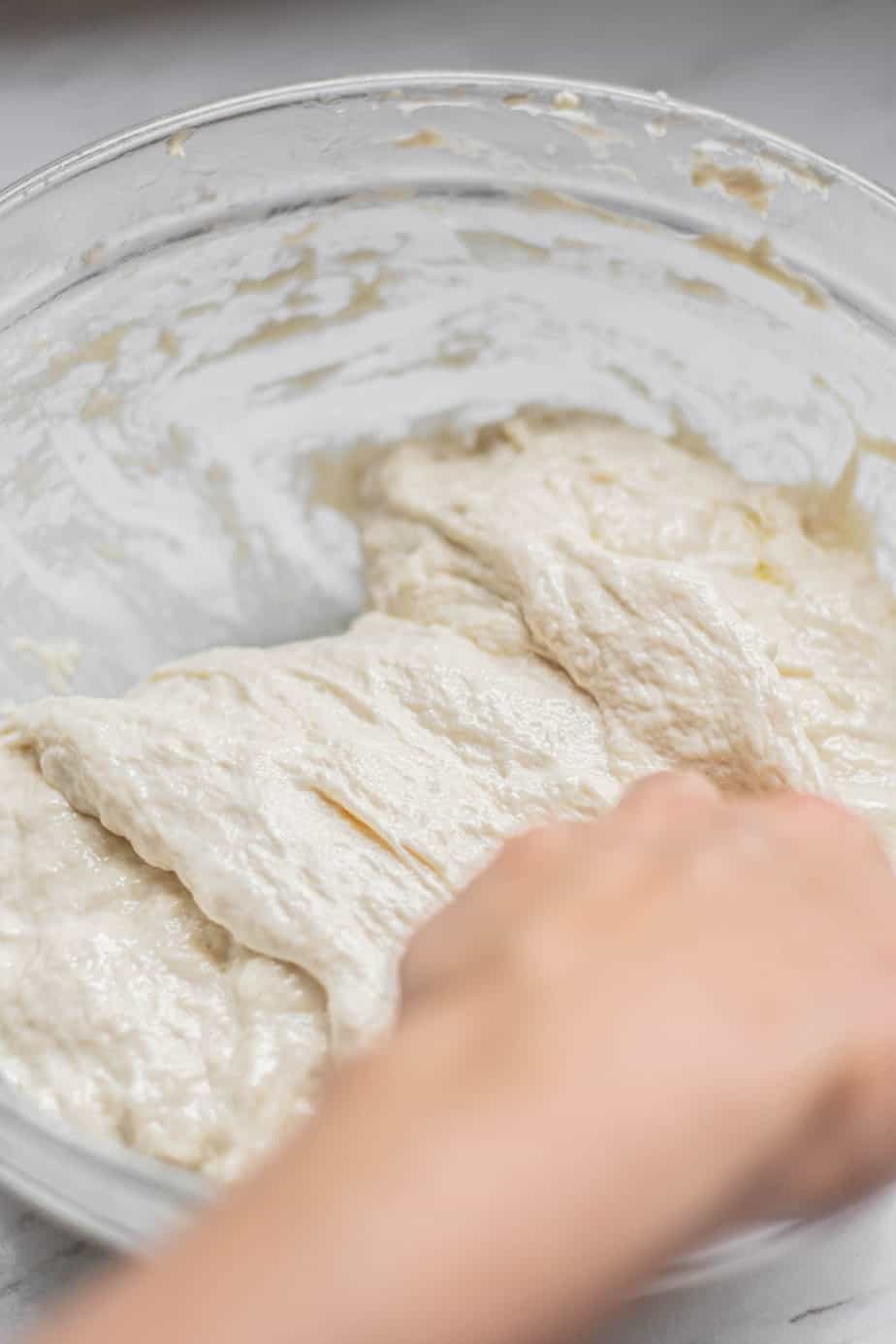
- Over time, the folds will give the dough strength. Continue stretching and folding, turning the bowl until all sides have been folded.
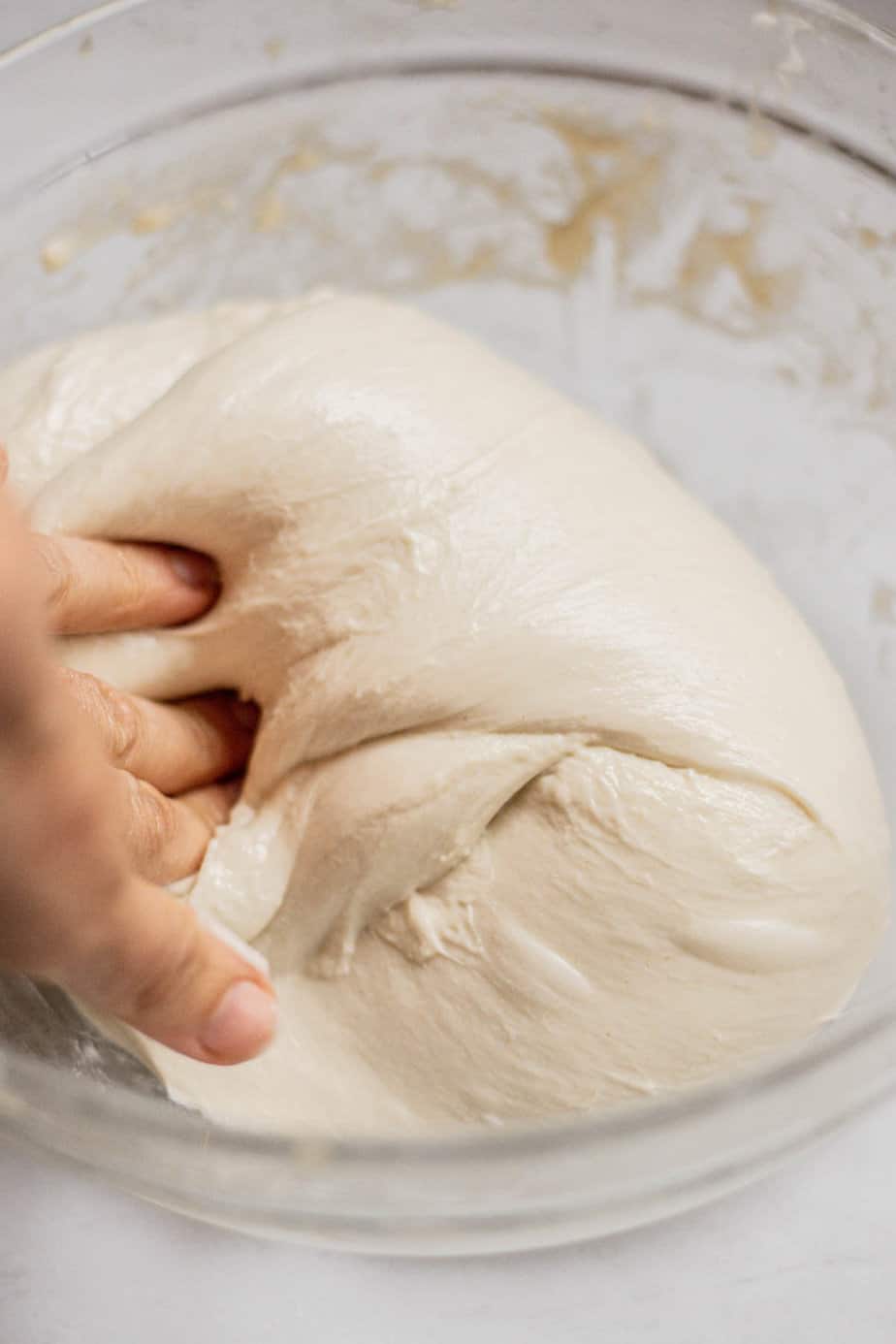
- Even though it will start as a slack dough, if your starter is good, you will notice the incredible changes in the dough as it strengthens and gluten development happens. The first stretch and fold will be rough, but it will soon become a strong, elastic dough.
- After the last fold, leave the dough in a warm spot to finish bulk until it’s risen by 30 to 40%, with bubbles and a soft alive feel. Cover the bowl tightly and transfer to the fridge overnight.
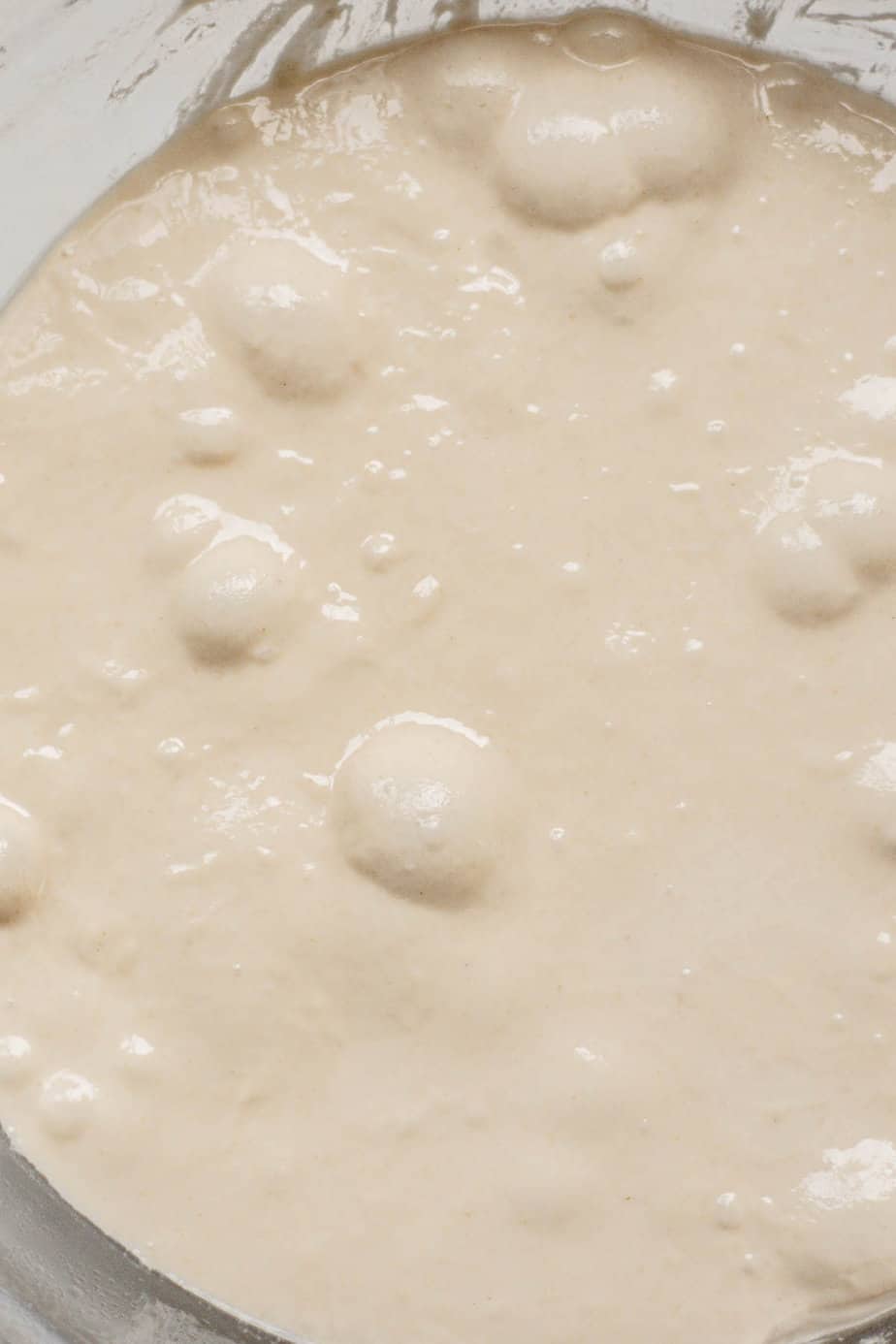
- After the cold proof, there should be plenty of signs of bubbles and fermentation.
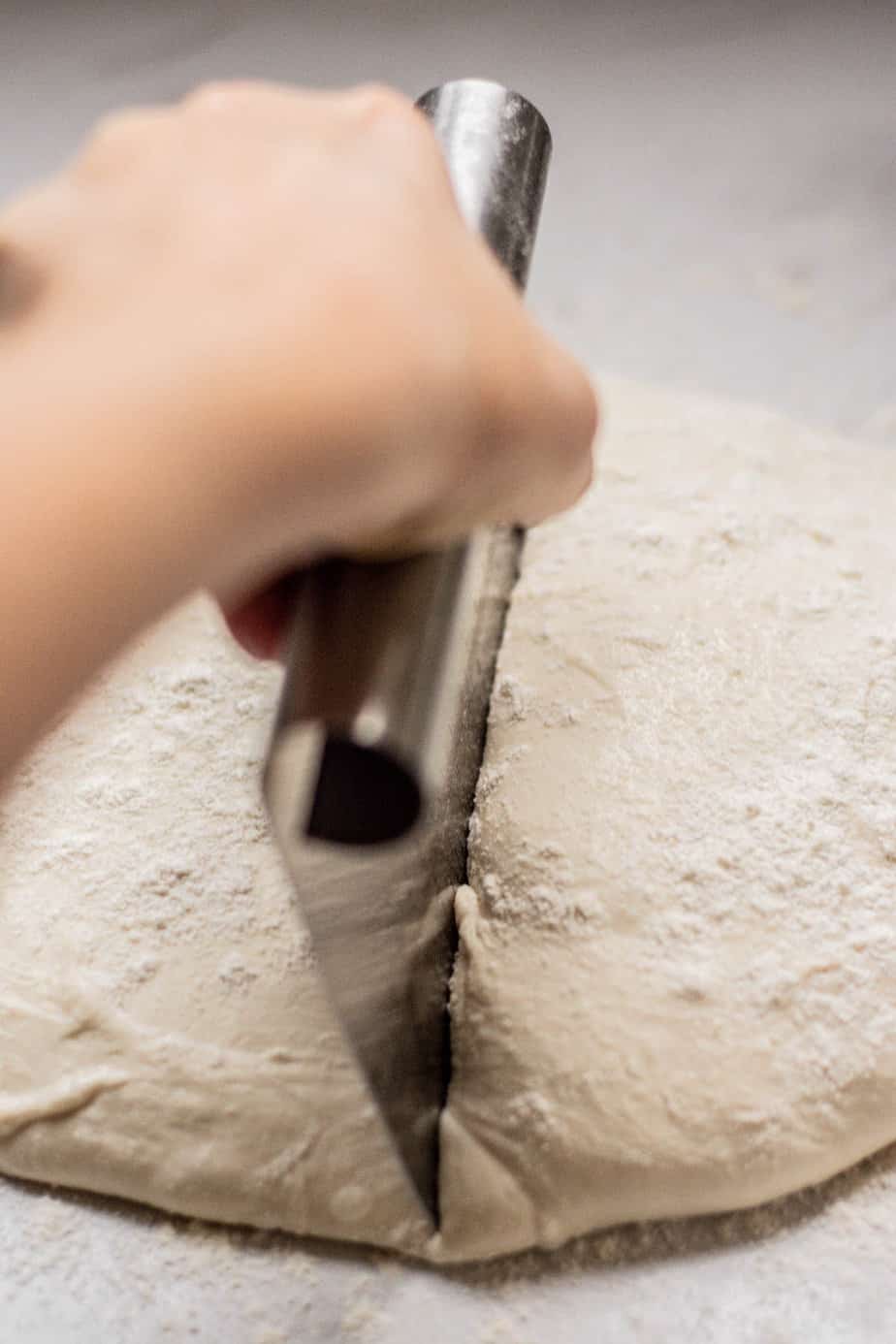
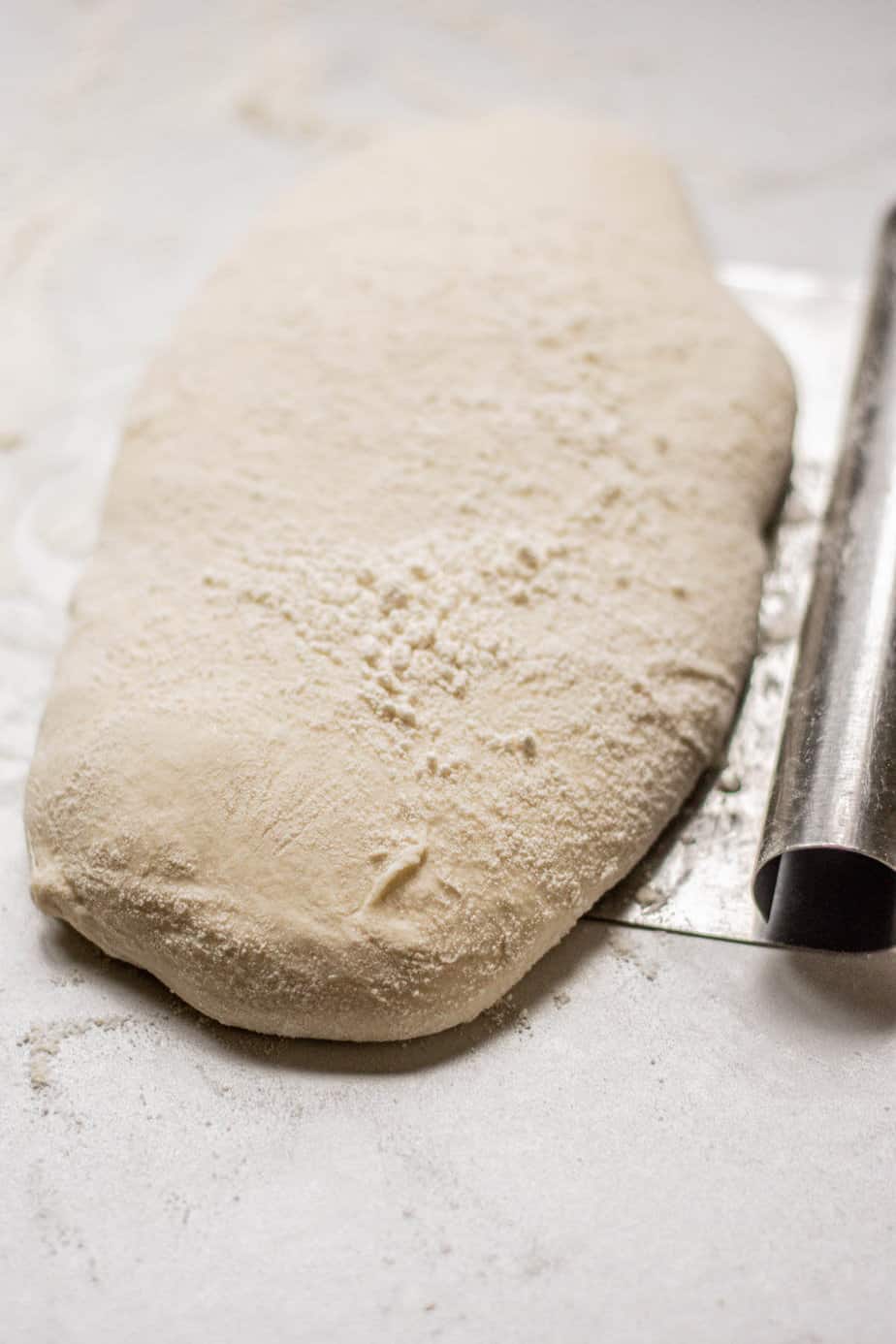
- Tip the cold dough onto a heavily floured bench and dust the top with flour. Use a bench scraper to coax it into a rectangle, cut in half widthwise.
- Then transfer each piece onto its own sheet of baking paper, stretching gently as you lay it down.
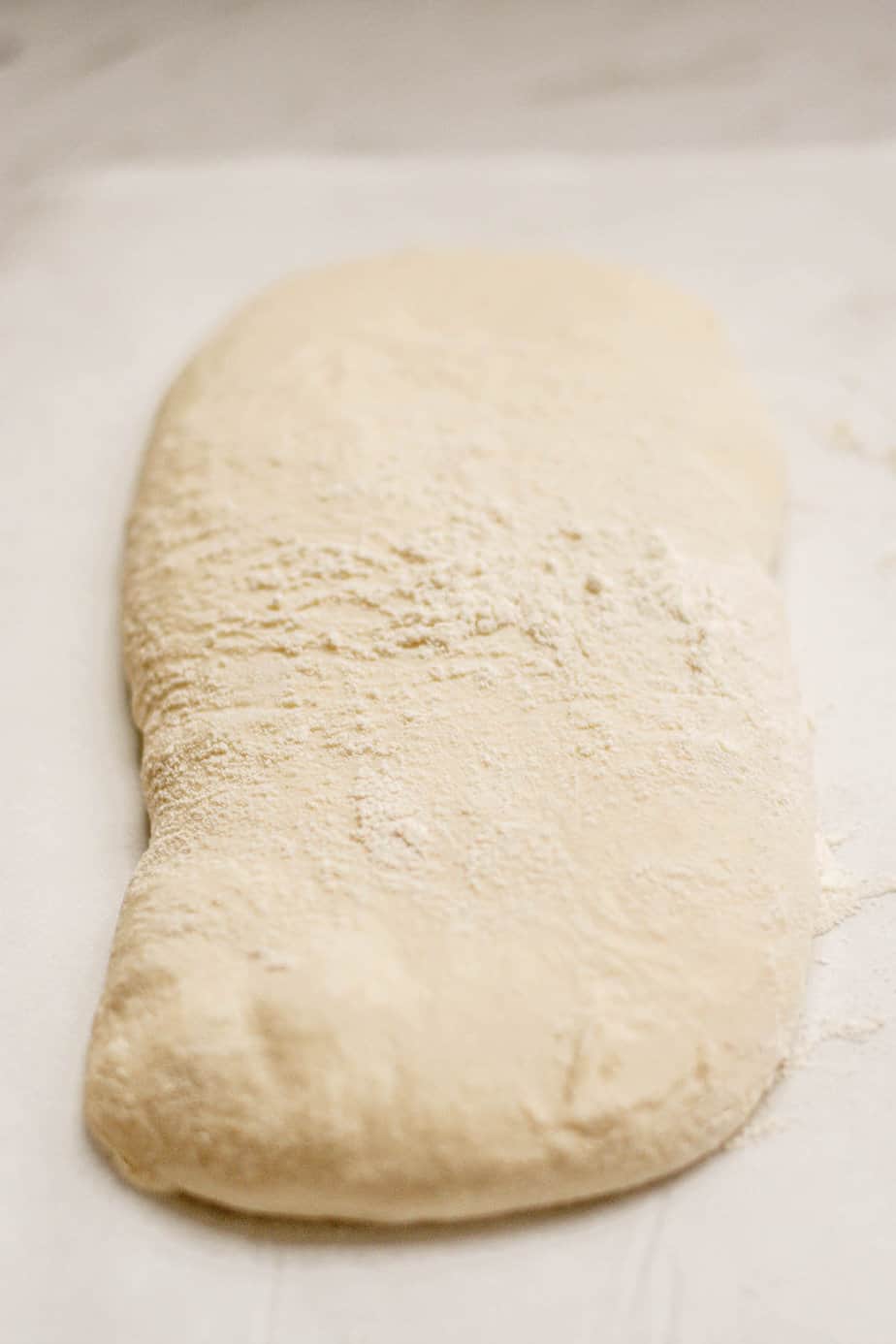
- Cover with a floured tea towel and rest for around 1 hour until slightly puffy.
- Bake at 230°C / 450°F for 25 to 30 minutes on a hot baking sheet with a tray of water on the bottom rack for steam, until deeply golden. Cool on a wire rack for at least an hour before slicing.
Tips for success
- Use plenty of flour at the shaping stage. The dough is very wet and sticky out of the fridge, so a good dusting on both the bench and the dough is what stops it sticking to everything. Don’t worry about excess flour on the loaves, it bakes off and adds to the rustic look.
- Trust the strength change during folds. The first set of folds will feel like trying to wrangle wet glue. By the third or fourth, the dough will be visibly stronger and jiggling like jelly. That transformation is the recipe working.
- Don’t over-shape. Ciabatta is one of the few breads where less handling gives better results. Tipping out, cutting in half, and stretching gently is all you need. Any more and you’ll knock out the bubbles you’ve spent two days building.
- Watch the dough, not the clock. Bulk fermentation times in particular shift a lot with kitchen temperature. A cool kitchen needs hours longer than the recipe while a warm kitchen can mean it’s shorter.
Storage
Ciabatta is best eaten the day it’s baked, while the crust is still crisp. Store any leftovers in a paper bag at room temperature for up to 2 days. The crust will soften, which is normal.
For longer storage, slice and freeze in an airtight bag for up to 3 months. Toast directly from frozen.
Day-old ciabatta is also brilliant for bruschetta, panzanella, or just toasted with olive oil and salt.
Related recipes
If you liked this, you might also like:
- Step-by-step sourdough baguettes
- Soft sourdough dinner rolls
- Sourdough ciabatta sandwich rolls
- Sourdough hamburger buns

Sourdough Ciabatta Bread
Ingredients
Levain/starter
- 25 g sourdough starter
- 50 g all-purpose flour
- 50 g water
Dough
- 420 g bread flour
- 340 g water
- 15 g olive oil
- 10 g salt
- All the levain around 120g
Instructions
Day 1
- Mix the starter ingredients in a clean jar. Leave to peak in a warm spot for 4 to 6 hours, until at least doubled but not collapsed.
- When the starter is nearly ready, mix the flour and water into a shaggy dough in a large bowl. Cover and rest for 30 to 60 minutes.
- Add the risen starter, salt, and olive oil. Squish in with wet hands until fully combined.
- Rest 10 minutes, then do a set of stretch and folds or coil folds, always with wet hands. Repeat 4 to 5 more times over the next 2 hours. The dough will strengthen noticeably as you go.
- Leave the dough to finish bulk in a warm spot (ideally 25°C / 77°F) until risen by 30 to 40% with visible bubbles and a soft, jiggly feel. This usually takes another 2 to 4 hours.
- Cover the bowl tightly and refrigerate for 8 to 24 hours.
Day 2
- Tip the cold dough onto a heavily floured surface and dust the top with flour. Coax into a rectangle with a bench scraper. Cut in half widthwise.
- With floured hands, transfer each piece onto its own sheet of baking paper, stretching gently as you lay it down.
- Cover with a floured tea towel and rest at room temperature for around 1 hour (1½ if your kitchen is cool) until slightly puffy.
- Preheat the oven and a heavy baking sheet to 230°C / 450°F for at least 30 minutes. Place a tray with a couple of centimetres of water on the bottom rack for steam.
- Slide a board under the baking paper and transfer it onto the hot baking sheet. Bake for around 25 until deeply golden and the loaves sound hollow when tapped.
- Cool on a wire rack for at least 1 hour before slicing.
Notes
- Watch the dough, not the clock. Bulk fermentation times shift with kitchen temperature. Trust the visual signs (30 to 40% rise, bubbles, jiggle) over the times listed.
- Don’t slice too soon. Sourdough finishes baking as it cools. Slicing into a warm loaf gives you a gummy crumb.
- Flour generously at shaping. This dough is wet, and a heavily floured bench and dusted top are essential.
- Stand mixer option: After the autolyse, knead in a stand mixer with a dough hook for around 15 minutes until smooth and strong, then bulk on the bench as usual.
- Storage: Best on the day. Keep leftovers in a paper bag for up to 2 days, or slice and freeze for up to 3 months.





Hi there and Happy new year!
My question is if the tray has to be hot when you place the ciabattas in the oven. Thank you!
Hey Flora, I don’t pre heat the oven tray 🙂
Hi just wondering if you would be able to give me any advice, tips on making this recipe GF
Heya I’m afraid I’ve got no experience with gluten free baking sorry!
Hi Elian,
What hydration do you use for your starter? I used a 100% hydration and found my dough a little too wet.
100% too, and it is a very wet dough. Using a starter that’s nice and fluffy and not acidic makes a difference to the dough and makes it easier to handle.
Elien, I wanted to let you know that I added a few sprinkles more flour (trying not to add too much) and continued with the recipe as instructed. Even though it was still very loose and never made a ball as yours, I was able to shape it and once baked it turned out great! It rose as expected and had nice holes in it like your picture. I can only set my oven by 5 degree increments and can’t remember what I baked it at. What would you recommend that I bake at next time, 465 or 460 degrees F? Also, my bread was mildly sour (refrigerated about 15 hours) and I’d like to make it a little more sour. How long would you recommend I leave it in the refrigerator next time to make it more sour but not over-ferment? Thank you!
Hi Camille,
following on from my question of 7 April. I went with the recipe but I baked just one ‘log’ at first, the second I put in the fridge overnight, it was actually in there for 24hours, so that was a total time in the fridge of 38 hours, including the first bulk rise. Both cooked perfectly, no real difference in taste.
TIP: To cure the crust: when the bread is baked return it to the oven, turn the oven off, open the door slightly and leave it to cure for 10-15 minutes….I find the crust is then excellent. Do this with all your Sourdough.
Regards Chris.V
Everything is looking great for the recipe. The dough is perfect texture so far. How long can I leave in the refrigerator?
Somehow I still got a gummy texture and I cut it opened hours after the baking… but the ciabatta is very airy like yours .. what went wrong ?
Hi….the recipe is extremely well presented and explained – thank you.
Before I go ahead a question please; as you use the fridge overnight to bulk rise does this prohibit an overnight proof in the fridge too? Or could the bulk rise be done at room temperature and the proof overnight, if required for convenience?…this is the route I usually use go for my Sourdoughs.
Many thanks Best Wishes Chris.V
Hey the cold fridge proof is mainly for flavour. The bulk rise happens at room temperature the following day when they are shaped. You can definitely try your usual sourdough proofing schedule on this!
Thank you for the recipe but I have a question, can I know how long is the duration of the overnight rest in the fridge is? I had mine popped into the fridge in the noon. Will it be too long for cold fermentation until the next morning?
I cold ferment all the way up to 24 hours sometimes with no problems 🙂
Thank you for the recipe. Worked out very well!