Sourdough Kouign Amann
These sourdough kouign-amann are flaky and caramelised with a crisp sugar shell that shatters when you bite through it and a layered, chewy interior underneath. They’re made with a laminated sourdough-leavened dough and baked in a muffin pan.

About this recipe
Kouign-amann is a laminated pastry made with a lean dough, butter, and sugar. Unlike croissants, cruffins or Danish pastries, there is no milk, no eggs, and no butter in the dough itself. The richness comes entirely from the butter block laminated in, and the sugar folded through on the final turn. The dough gets placed in a buttered and sugared muffin pan and as it bakes, that sugar melts, caramelises, and sets into a crisp shell around the outside while the inside stays tender and layered.
I bake these in two muffin pans, six per pan so every single one gets caramelised edges all the way around. The baker’s schedule runs over two days. Day 1 is the dough mix, bulk ferment, and first two lamination folds. The sugar fold is saved for Day 2 morning, right before shaping. This is because once sugar is in the dough it starts drawing out moisture straight away, and it makes it wet and sticky and harder to work with the longer you leave it.
If you are new to baking with sourdough, my sourdough hub has guides on starters, fermentation, and laminated doughs. If you don’t have a starter yet, start with my sourdough starter guide. If you prefer a quicker version using instant yeast, I have a yeast-based kouign-amann recipe over on Baking With Butter.

Baker’s schedule
The night before: Feed your sourdough starter so it is active and at peak rise by morning.
Day 1
- Morning: Mix the dough and bulk ferment until risen by 30 to 40%.
- Early afternoon: Press the dough flat, wrap, and chill for 2 hours. Make the butter block.
- Mid afternoon: Fold 1, refrigerate 30 minutes.
- Late afternoon: Fold 2, refrigerate overnight.
Day 2
- Morning: Sugar fold, refrigerate 30 minutes.
- Morning: Roll, cut, and shape. Proof til puffy
- Late morning: Bake one tin, then the second.
Key ingredients and why
- Active sourdough starter is the only leavening in this dough, so it needs to be fed and active, not discard. I feed my starter the evening before at 1:4:4 (1 part starter, 4 parts flour, 4 parts water by weight) so it rises overnight and is ready to use in the morning. In a warm kitchen, go up to 1:5:5 so it doesn’t peak too early. You’ll need approximately 120g of active starter. For more on feeding ratios and timing, see my starter maintenance guide.
- All-purpose flour works well here.
- Water is the only liquid. No milk, no eggs. Keeping the dough lean means the butter does all the flavour work during lamination.
- Sugar goes into the dough in a small amount (25g) to feed the starter and add a touch of sweetness. The real sugar moment is the lamination fold, where sugar is sprinkled over the dough before the third fold and also spread in the muffin pan . That sugar caramelises in the oven and creates the crust.
- Salt balances the sweetness and strengthens the dough structure.
- Unsalted butter for the butter block is where the flakiness comes from. I use butter with at least 82% fat. Less water in the butter means cleaner, more distinct layers.
The butter block
Getting the butter block right is one of the most important parts of laminated dough. The goal is a cold, evenly shaped block that is pliable enough to bend without shattering but firm enough that it won’t melt into the dough the moment you start rolling. There are two ways to do it.
Method 1: Bashing cold butter (my preference)
Take 220g of cold butter straight from the fridge. Fold two sheets of baking paper into a 20x15cm (8×6 inch) rectangle to use as a frame. Place the cold butter inside and use a rolling pin to bash it firmly, working across the whole block until it starts to flatten and become more pliable. Roll it out until it fills the frame evenly, then chill it. This method gives you cleaner, more defined layers because there is nothing in the butter to interfere with how it separates from the dough in the oven.
Method 2: Softened butter with flour
Leave 220g of butter at room temperature until softened. Mix in 1 tablespoon of all-purpose flour until combined, then roll it out between two sheets of baking paper into a 20x15cm (8×6 inch) rectangle. Chill until cold. The flour makes the butter a little more stable and forgiving to work with, especially in a warm kitchen.
In both cases, once the butter has chilled and you are ready to use it, give it a few more bashes with the rolling pin to bring it back to pliable before encasing it in the dough. If it cracks when you press it, it is still too cold. Leave it on the bench for 5 minutes and try again.
Method
The night before
- The night before, feed your sourdough starter. By morning it should be domed and bubbly.
Mixing the dough
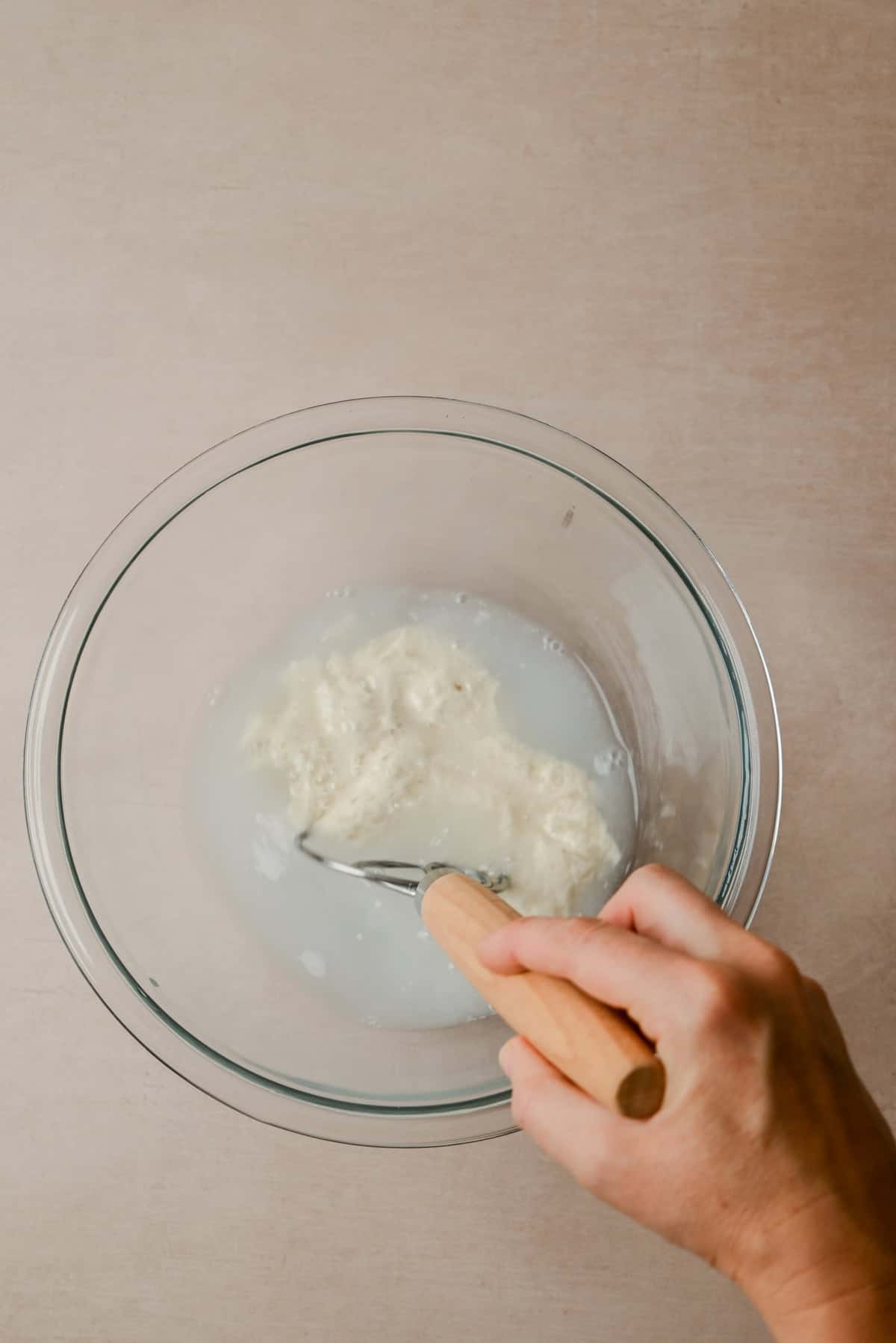
- In the morning whisk the starter with water to loosen it.
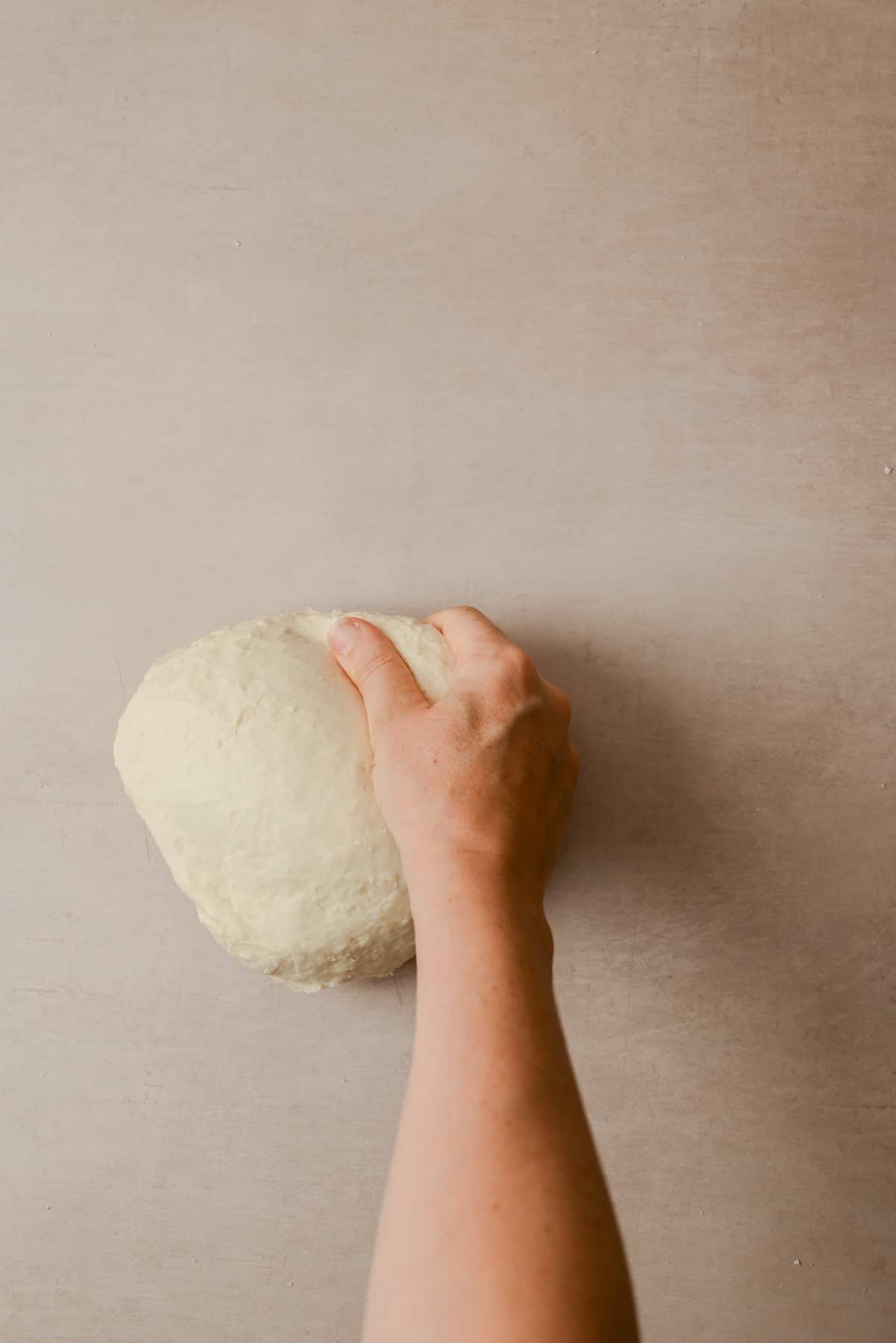
- Add the flour, salt and sugar and knead for 6-8 minutes until it comes together into a smooth ball.
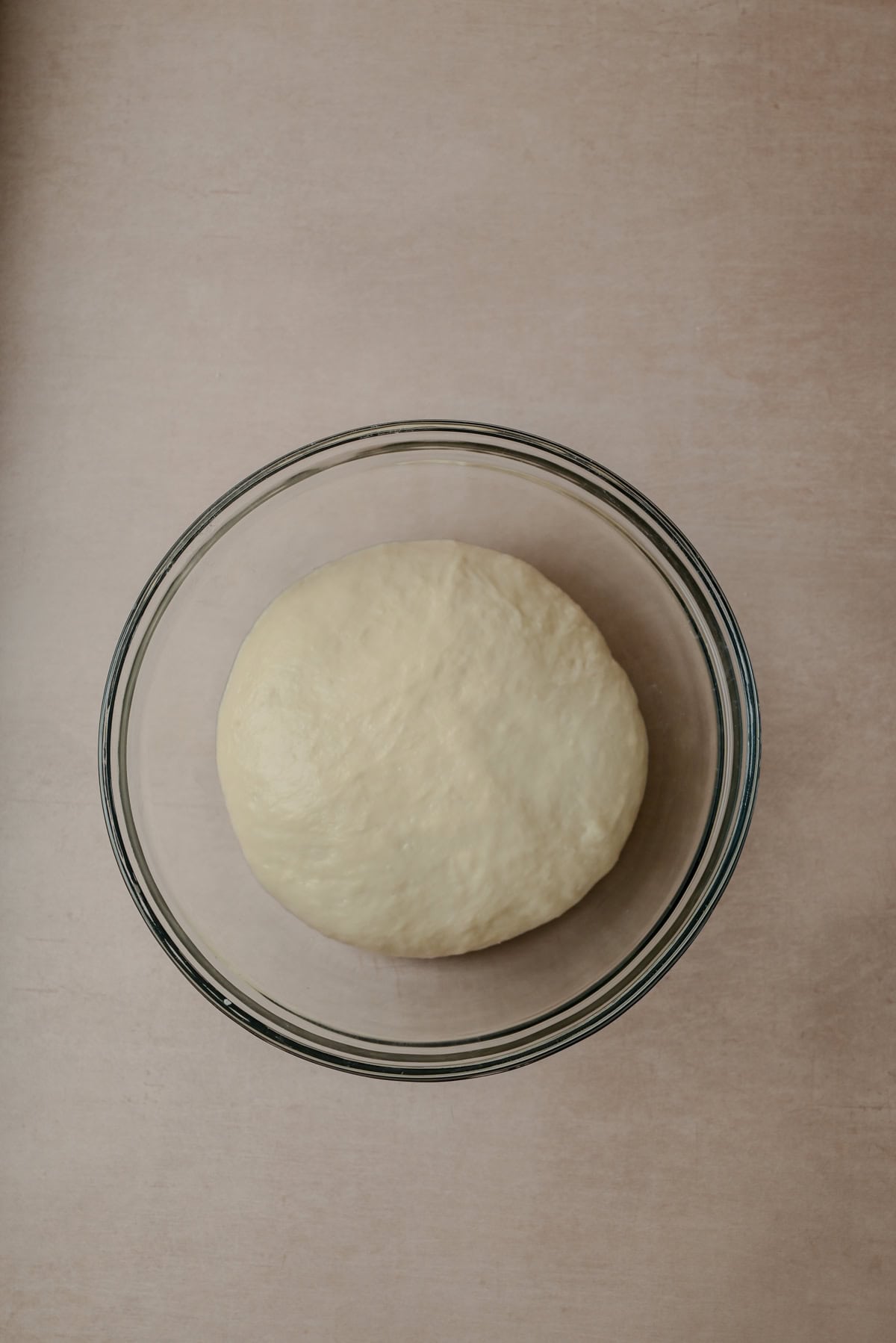
- Leave the dough in a warm spot and watch for it to puff out by 30 to 40%. You are not looking for it to double, just to become noticeably livelier with some air built up. Watch the dough, not the clock.
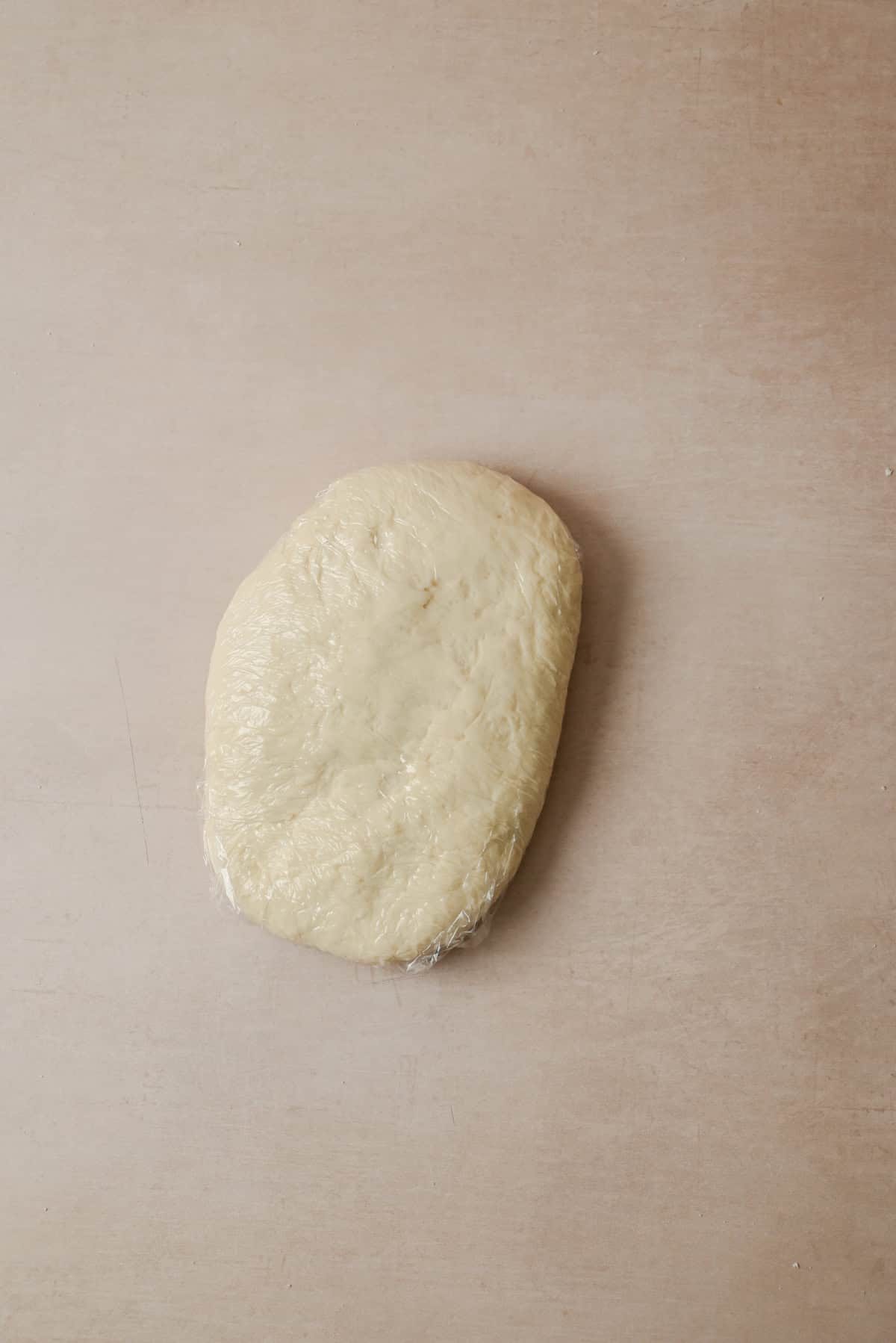
- Once it has reached that rise, pat it into a flat rectangle, wrap tightly, and refrigerate for 2 hours.
Butter block and first two folds
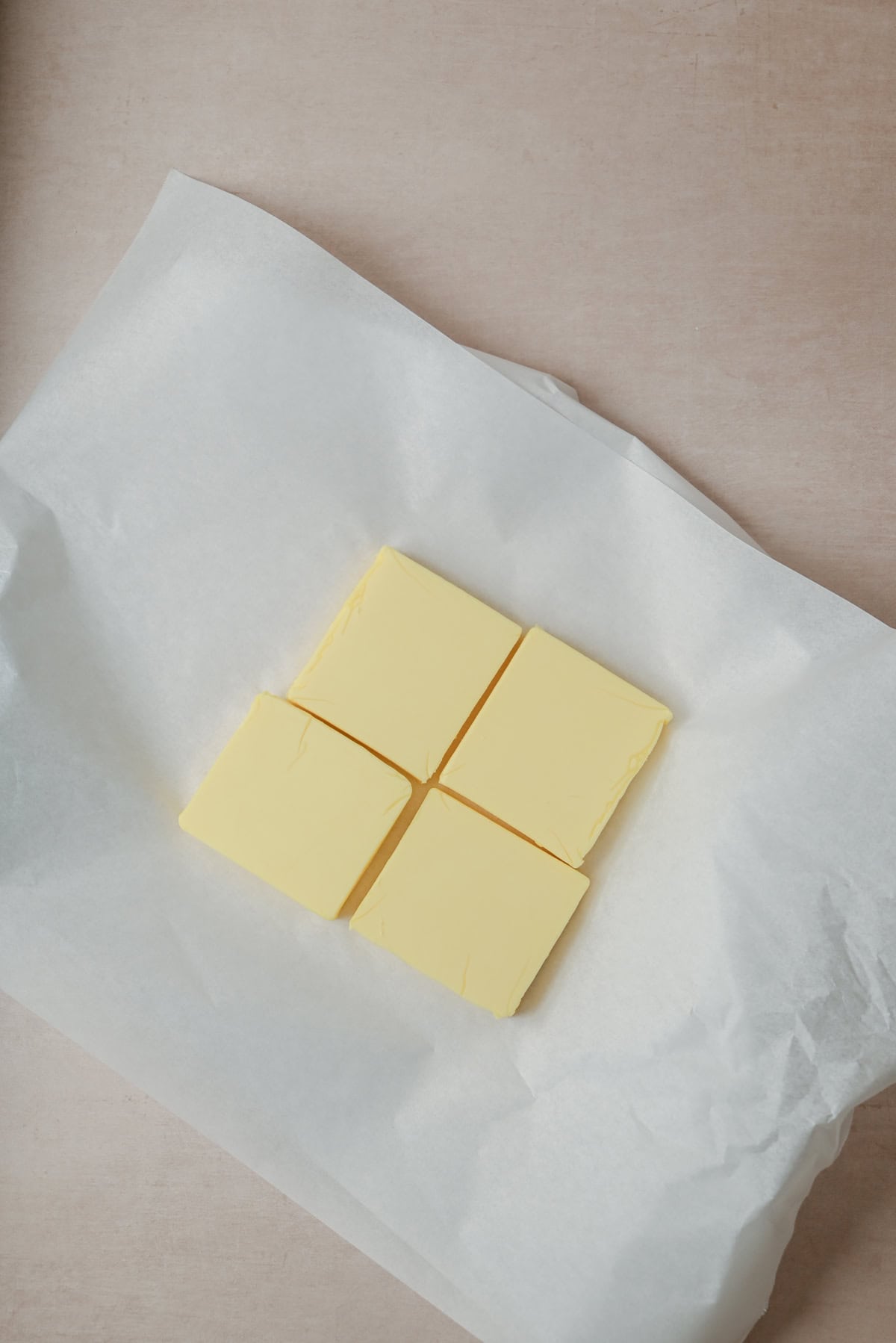
- Cut the cold butter into quarters and place inside a baking paper frame. Cover with a second sheet. To make the frame, fold the sheets of baking paper into a 20x15cm rectangle.
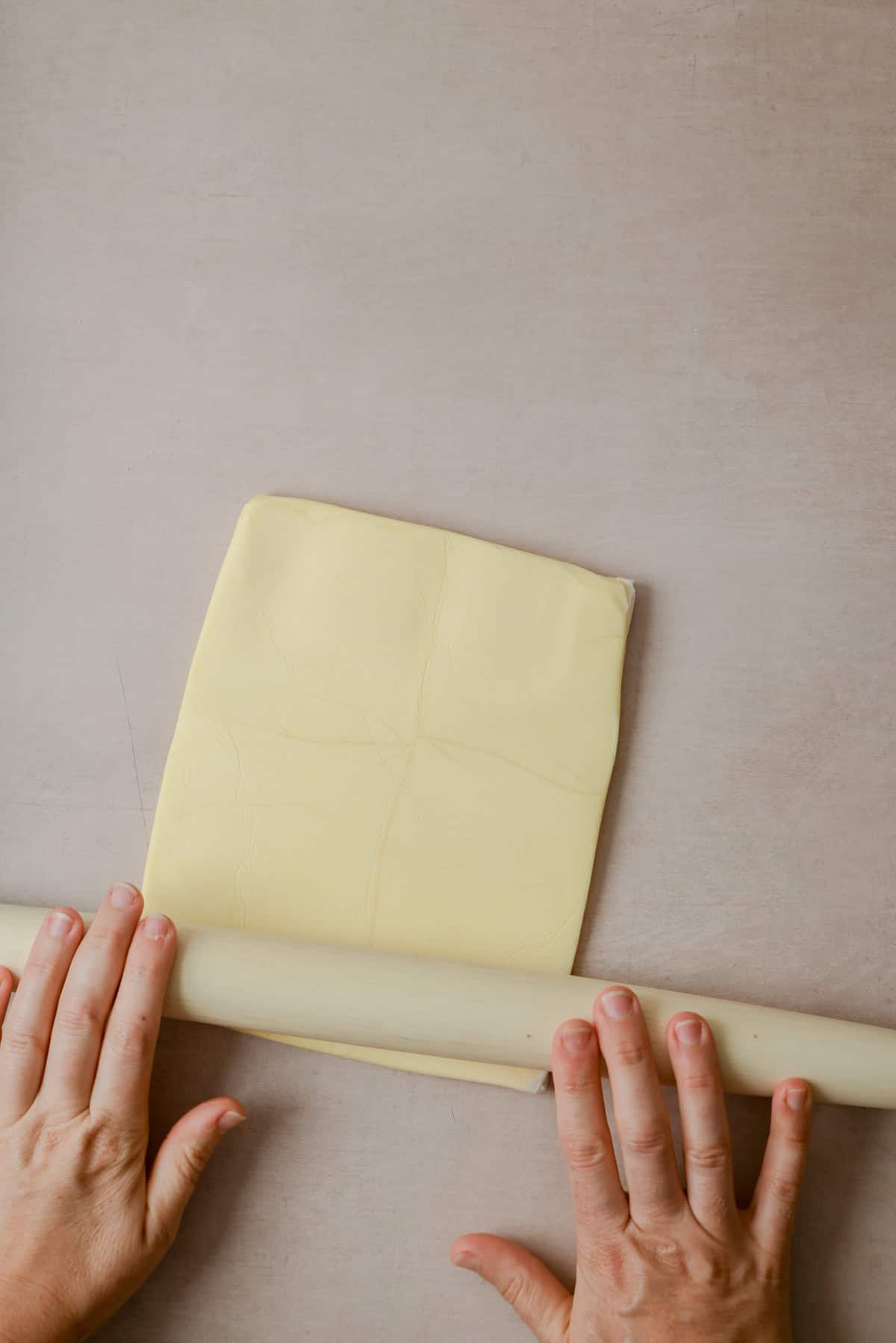
- Bash the butter firmly with a rolling pin to flatten it, then roll it out until it fills the frame evenly on all sides. The folded paper edges keep it neat and square.
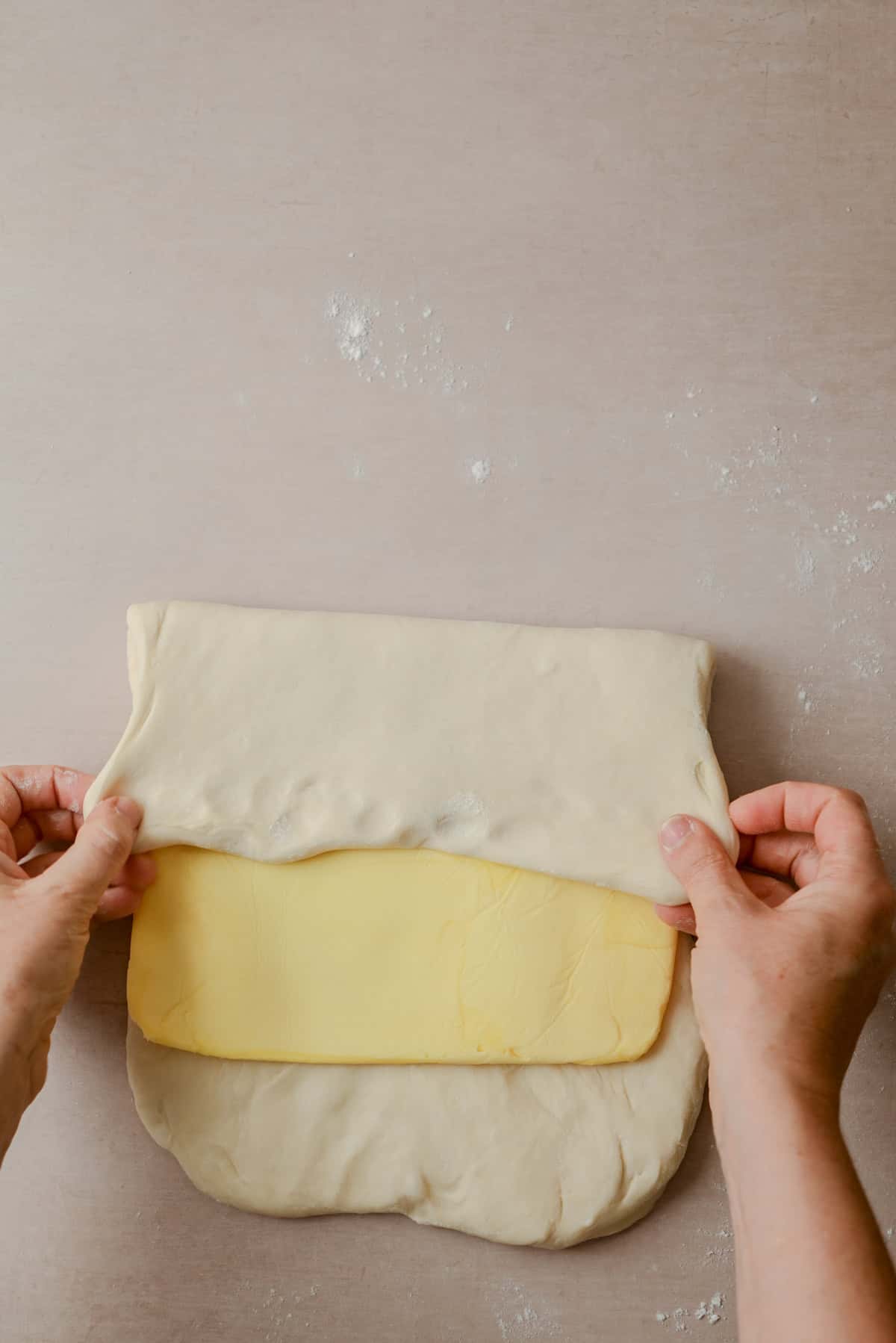
- Take the chilled dough out of the fridge and roll it into a rectangle roughly twice the width of your butter block. Encase the butter in the dough and pinch the edges firmly to seal.
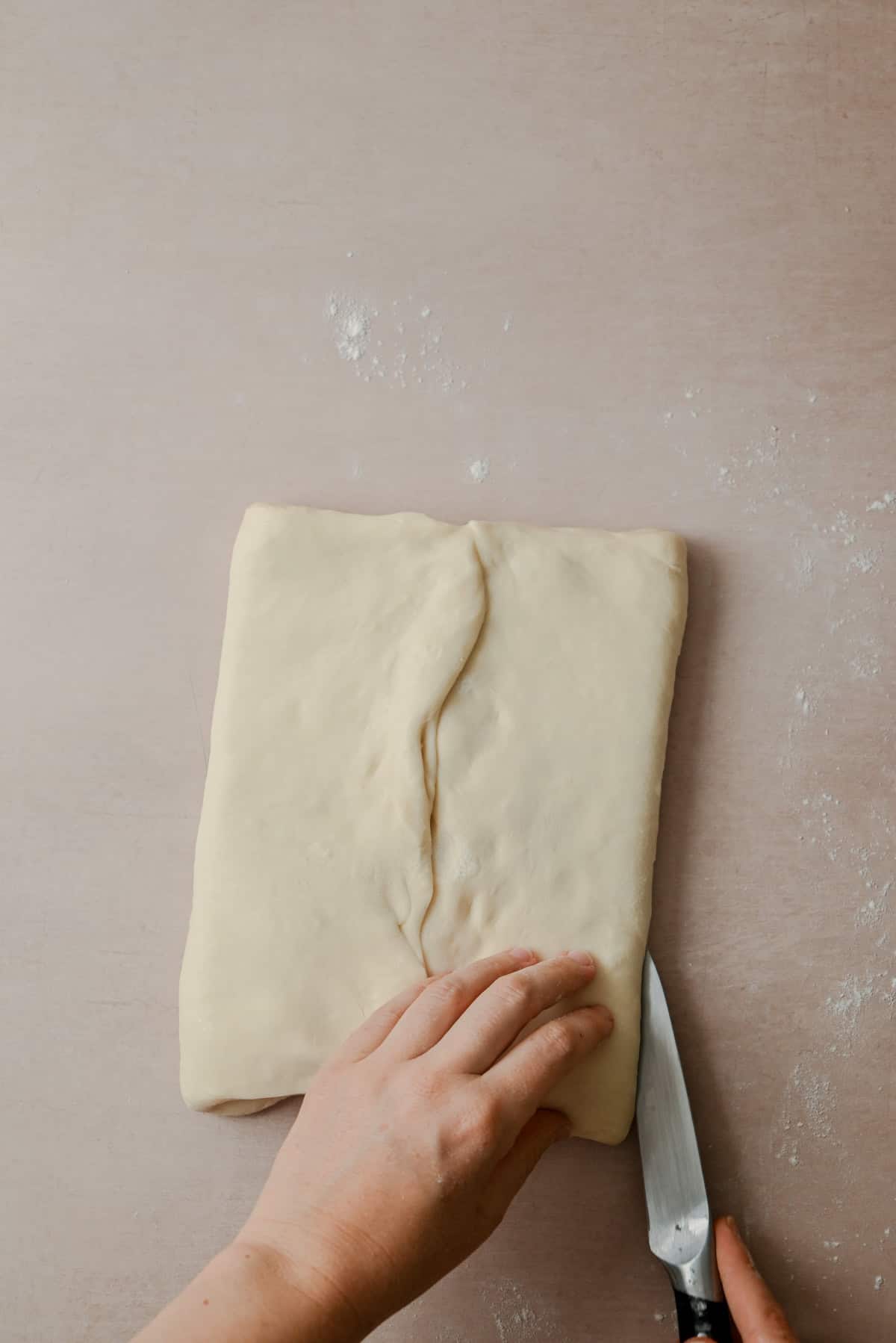
- Turn the dough 90 degrees and make a slit along each long edge of the dough with a sharp knife to relieve any tension that might cause it to spring back or tear when you start rolling.
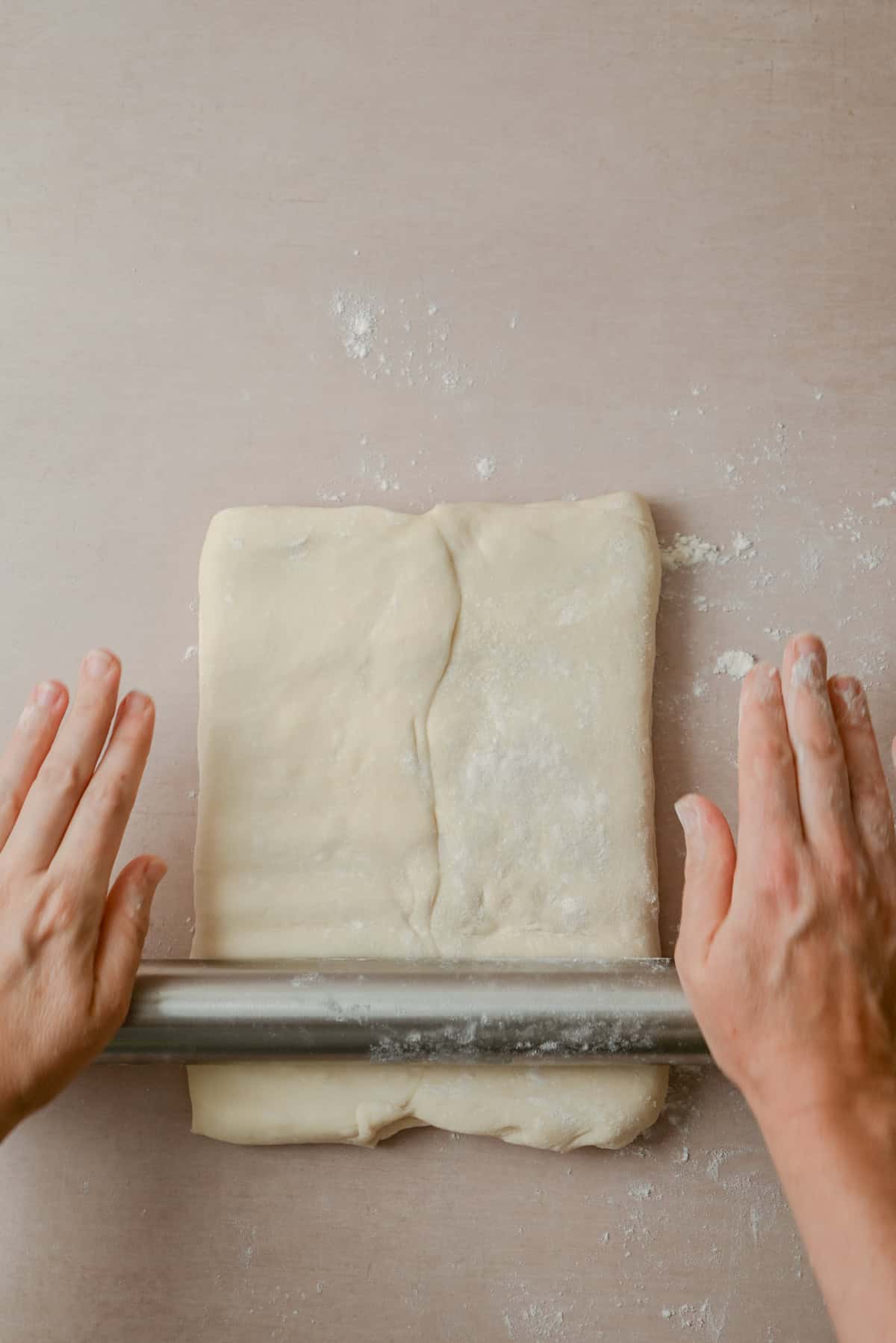
- Roll it out to about 8mm thick, focusing on length not width. Trim the uneven edges.
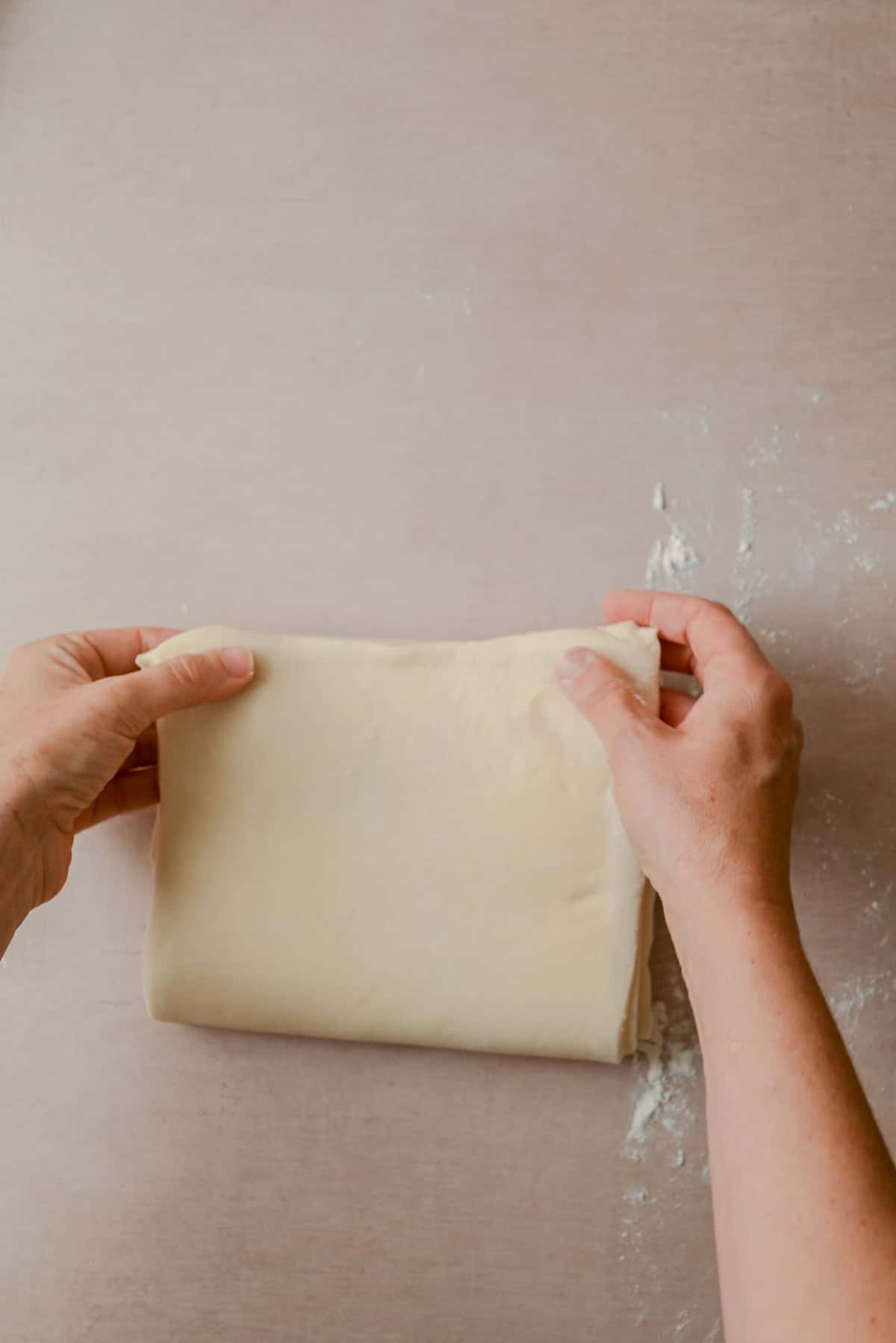
- Fold the top third down and the bottom third up, like a letter. This is your first fold. Wrap and refrigerate for 30 minutes.
- Roll out and repeat the fold. This is your second fold. Wrap well and refrigerate overnight.
Sugar fold and shaping
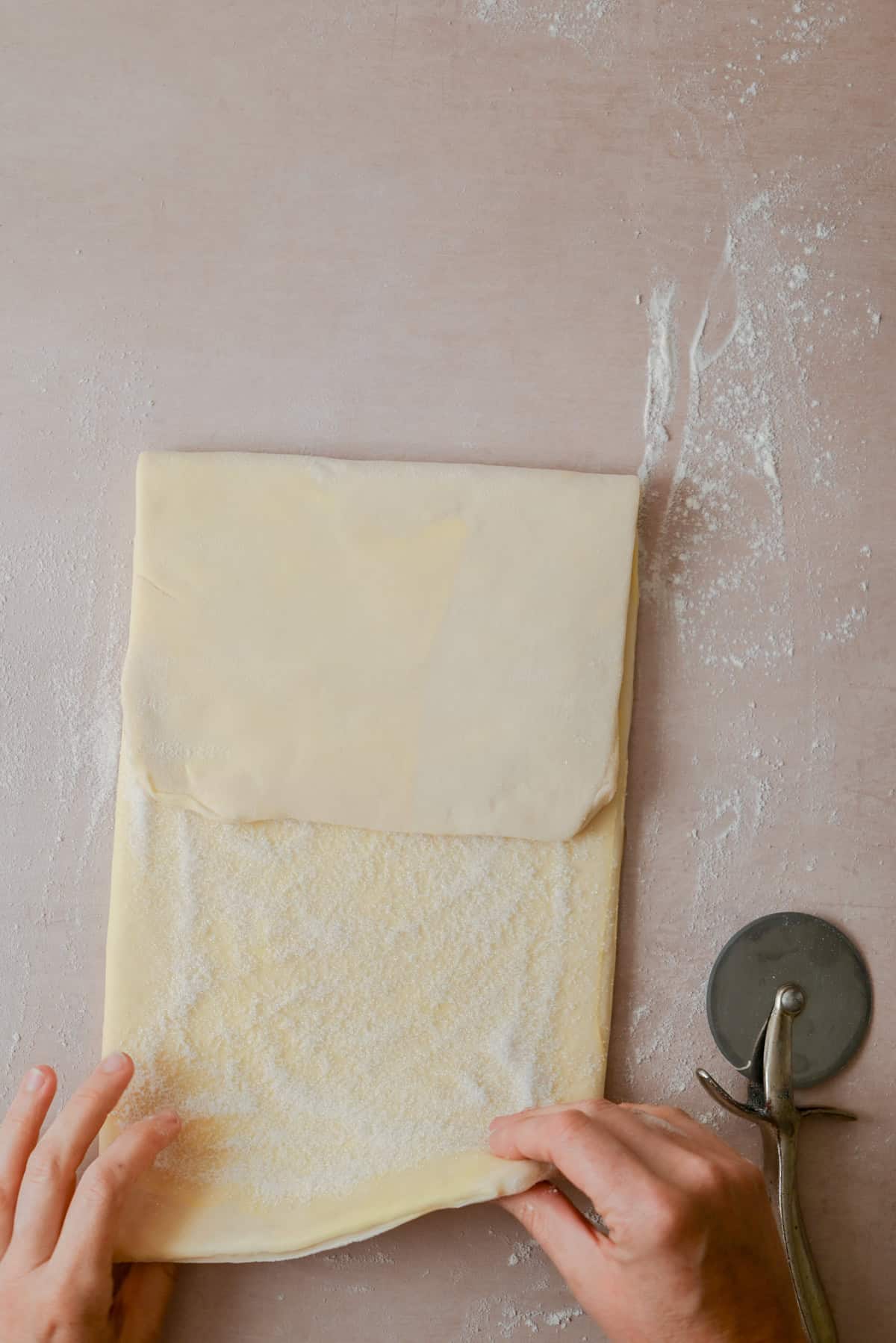
- Roll the dough out to 8mm thick. Sprinkle 40g of the sugar evenly across the surface, then fold into thirds. Wrap and refrigerate for max 30 minutes.
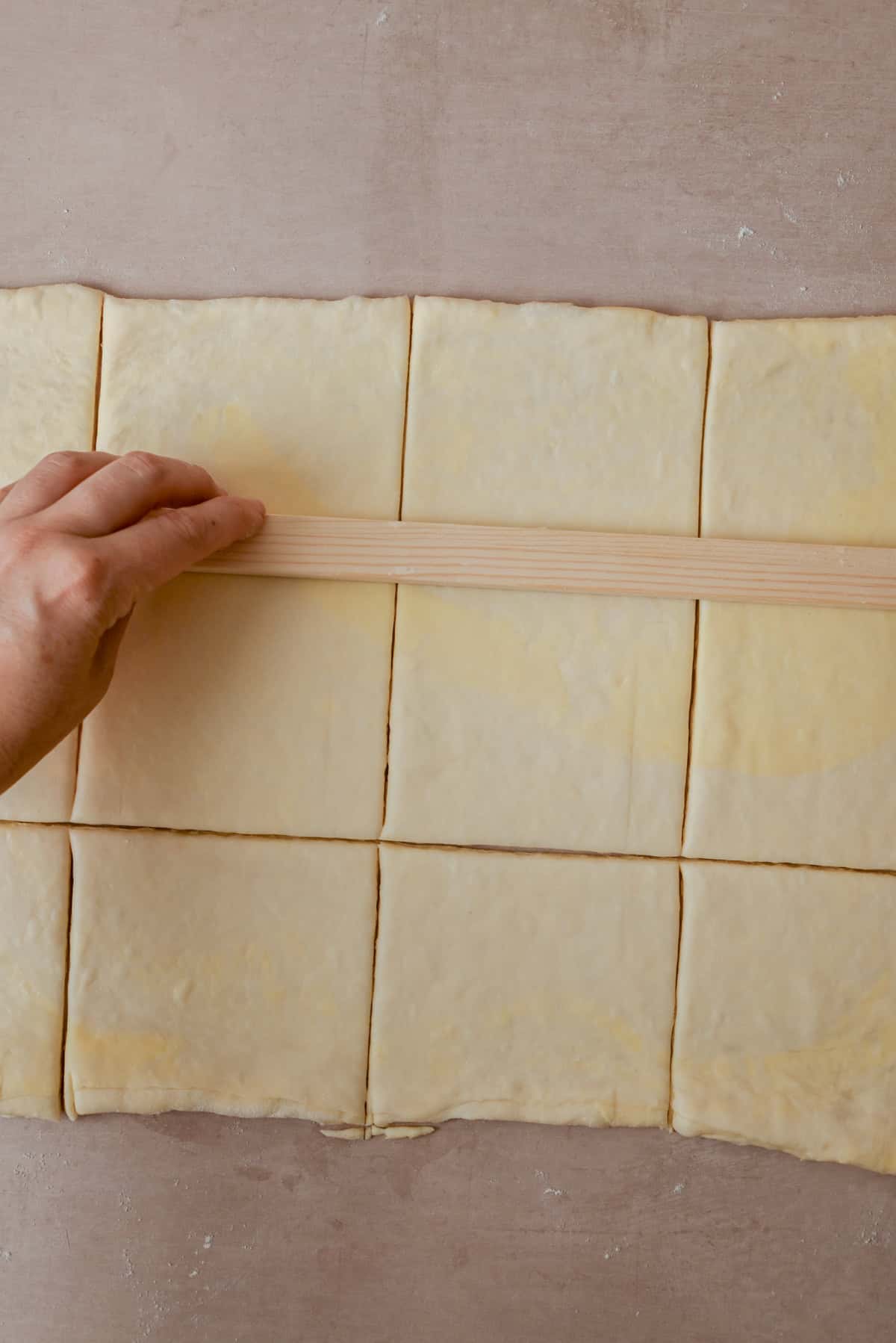
- Roll the dough out to 4 to 5mm thick into a 30x40cm (12×16 inch) rectangle. Make 3 cuts along the 40cm length and 2 cuts across to give you 12 squares of roughly 10x10cm.
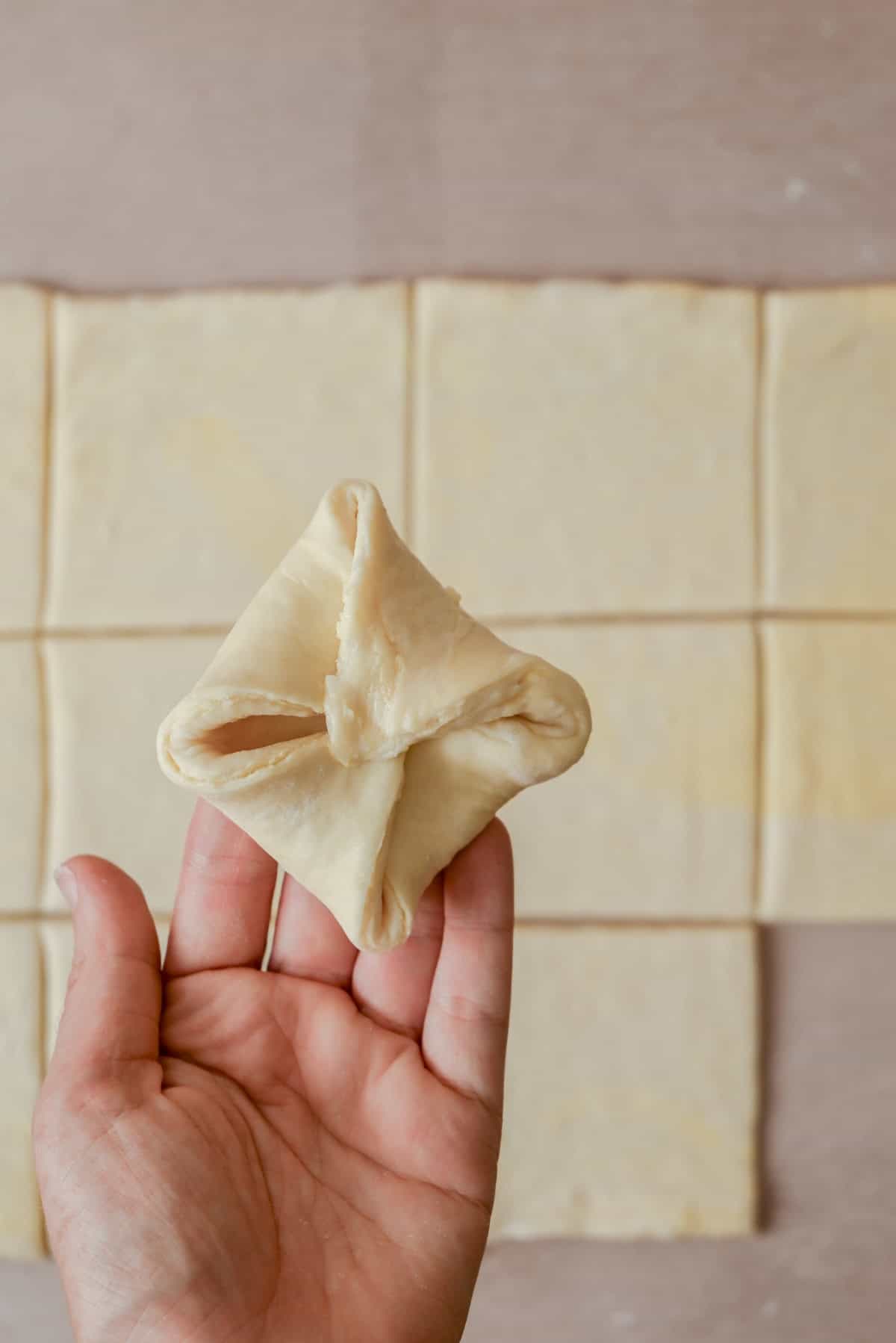
- Fold the corners of each square into the centre, press gently to seal.
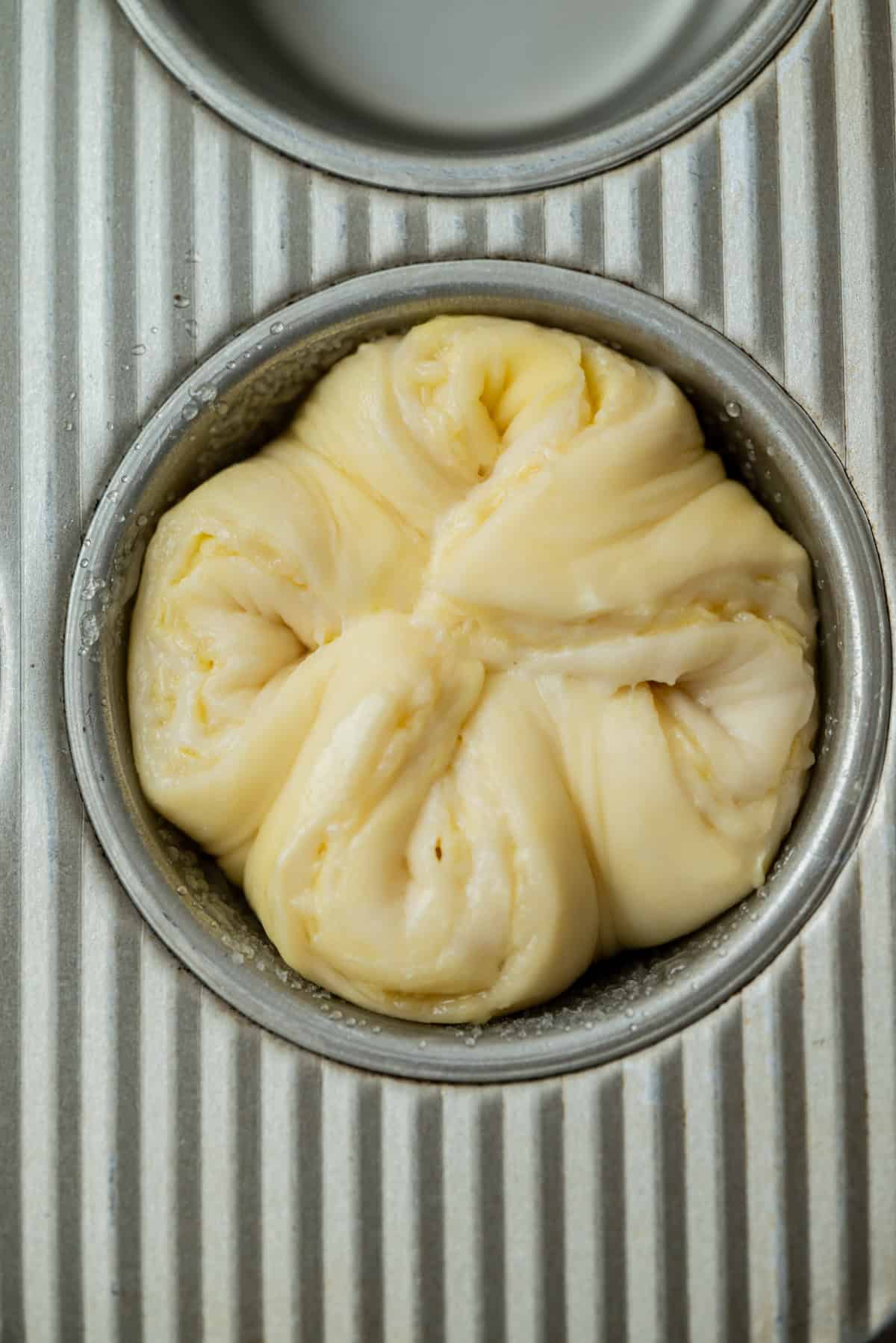
- Add them to greased and sugared muffin cups and proof until visibly puffed and the layers are starting to show.
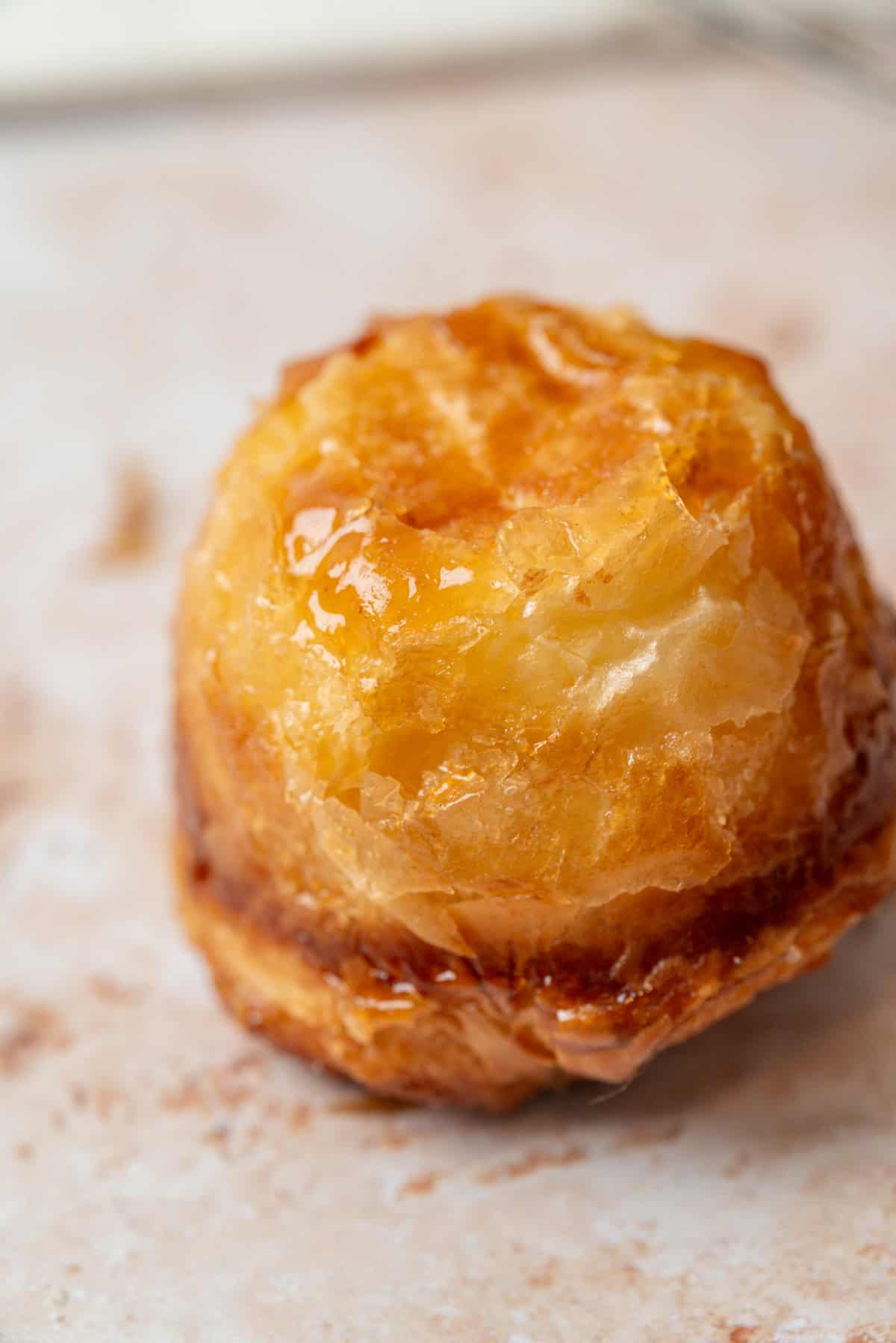
- Bake until deeply browned, then use tongs to carefully remove them from the pans as soon as they come from the oven.

- Cool for at least 10 minutes before eating. The caramel will be extremely hot straight from the oven.
Tips
- Watch the dough, not the clock. Bulk fermentation time will vary depending on your kitchen temperature and how active your starter is. What you are looking for is a 30 to 40% increase in volume with some visible bubbles.
- Keep everything cold during lamination. If the butter starts to feel greasy or smear rather than staying in clean layers, stop and refrigerate the dough for 20 minutes before continuing.
- Work quickly after the sugar fold. Sugar draws moisture from the dough and it becomes stickier the longer you leave it so hape within 30 minutes of that final fold.
- Use a dark muffin tin if you have one. Dark metal conducts heat better and helps caramelisation happen more evenly across all the cups. I don’t have one but I place my muffin pan on a dark pizza steel which also conducts heat really well.
- Bake on a tray. The caramel and butter will bubble up and potentially overflow during baking so put a tray on the rack underneath to catch any spills.
- Don’t pull them too early. If they look just light golden, the caramel hasn’t finished and the inside will be underdone.
- Flip immediately. Have your wire rack or baking paper ready before the timer goes off.
Storing
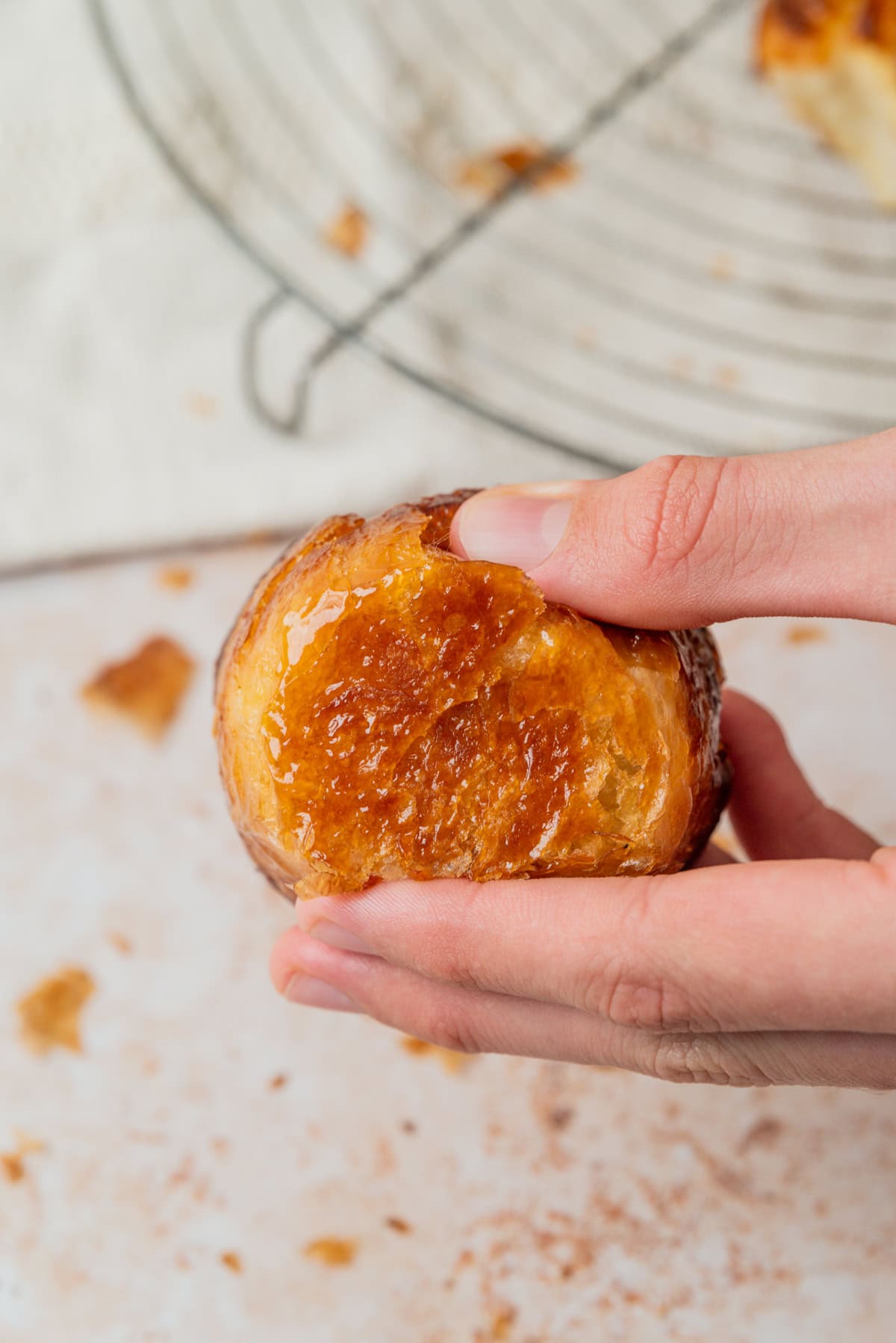
Kouign-amann are best eaten warm, within a few hours of baking, when the caramel is still crisp. After a few hours the sugar absorbs moisture from the air and they soften.
To refresh them, reheat in a 180°C (350°F) oven for 5 to 7 minutes. Don’t microwave them or they’ll go soggy. They keep at room temperature for up to 2 days stored loosely rather than wrapped airtight.
To freeze, cool completely, freeze on a tray until solid, then transfer to a bag or container. Reheat from frozen at 180°C (350°F) for 10 to 12 minutes.

FAQs about Kouign amann

Sourdough Kouign-Amann
Ingredients
Sourdough starter levain
- 15 g sourdough starter
- 60 g all-purpose flour
- 60 g water
Dough
- 220 g water
- all of the above levain approx 120g active sourdough starter
- 450 g all-purpose flour
- 25 g granulated sugar
- 8 g salt
Butter block
- 220 g unsalted butter cold
For lamination and shaping
- 60 g granulated sugar divided
Instructions
Night before: feed your starter
- Combine the starter, flour, and water in a clean jar. Stir well, cover loosely, and leave at room temperature overnight. By morning it should be domed, bubbly, and just at or past its peak. 15 g sourdough starter, 60 g all-purpose flour, 60 g water
Day 1 morning: Mix and bulk ferment
- Add the leaven and water to a large bowl and whisk briefly to loosen the leaven. Add the flour, sugar, and salt and mix until a shaggy dough forms. 220 g water, all of the above levain, 450 g all-purpose flour, 25 g granulated sugar, 8 g salt
- Knead for 6-8 minutes until the dough comes together into a smooth, firm ball.
- Place the dough in a lightly greased bowl and leave to bulk ferment in a warm spot until it has puffed out by 30 to 40%.
- Once the dough has reached the right rise, pat into a flat rectangle, wrap tightly, and refrigerate for 2 hours.
Day 1 afternoon: Make the butter block
- Slice the cold butter and arrange the pieces in a grid on a sheet of baking paper so they sit snugly together. Place a second sheet on top and use a rolling pin to bash and roll the butter into an even, flat block. Fold the paper edges in to form a neat 20x15cm (8×6 inch) rectangle and roll until the butter fills the frame evenly. Refrigerate until cold. 220 g unsalted butter
- Before laminating, give it a few more bashes with the rolling pin to bring it back to a cold but bendy consistency. If it cracks, it is still too cold, so leave it on the bench for 5 minutes and try again.
Day 1 afternoon: First and second folds
- Take the chilled dough out of the fridge and roll into a 20x30cm (8×12 inch) rectangle. Place the butter block in the centre. Fold the sides of the dough over to encase the butter completely and pinch the edges firmly to seal. Turn the dough 90 degrees.
- Make a shallow slit along each long edge with a sharp knife to relieve any tension.
- Roll out to about 8mm thick, trim the short edges, and brush off any excess flour. Fold the top third down and the bottom third up. First fold done. Wrap and refrigerate for 30 minutes.
- Repeat: roll out, fold and wrap to complete the second fold, then refrigerate overnight.
Day 2: Third fold (sugar fold)
- Take the dough out of the fridge. Roll out to about 8mm thick. Sprinkle 40g of the sugar evenly across the surface. Fold into thirds. Wrap and refrigerate for 30 minutes, but no longer, as the sugar will start drawing moisture from the dough making it increasingly sticky.
- Generously butter 12 muffin holes. This can be just 1 muffin pan, but I use 2 pans and spread out 6 per pan so there is airflow around each one. Sprinkle a little of the remaining sugar into the base of each cup.
- Roll the dough out to 4 to 5mm thick into a 30x40cm (12×16 inch) rectangle. Trim the edges to neaten. Make 3 cuts along the long edge (giving 4 strips) and 2 cuts across the short edge (giving 3 rows) to make 12 squares of roughly 10x10cm.
- Fold the corners of each square into the centre, press gently to seal, and place into the prepared muffin cups.
- Cover loosely and proof until visibly puffed and the layers are starting to show. This can take around 2-4 hours depending on temperature.
- Preheat the oven to 205°C (400°F).
- Bake for approximately 20 minutes until deeply golden and the caramel is bubbling all around the edges.
- Use tongs to immediately remove each kouign-amann from the tin onto a wire rack or baking paper. Cool for at least 10 minutes before eating as the caramel will be extremely hot.



I’m excited to see how these go. I’ve looked at so many recipes of Krouign Amann and there are so many versions! 1 had 6 folds! Your cruffin recipe turned out so great which is why I landed on doing yours!
I’m planning to make these in spirals.
Some recipes do book fold for first fold 2 letter folds and then a 4th letter fold with sugar layer. Have you tried these with a 4th fold?
Do you use castor sugar or regular granulated sugar?
Have you ever tried a sugar sprinkle after the cutting before shaping?
Hi Kathy, spirals sound lovely! I haven’t tried a 4th fold and I use regular granulated sugar throughout. I have tried sprinkling sugar on the squares before shapig before but found it left a sticky uncaramelised patch of sugar in the centre once baked, though that could have just been that batch because I didn’t try it again after that. Hope they turn out beautifully!