Flaky Sourdough Croissants – With Step by Step Instructions
These sourdough croissants are buttery and flaky, and leavened entirely with your sourdough starter, no commercial yeast. The process is spread over two days, but it isn’t actually difficult, and this step-by-step guide walks you through every stage!
I haven’t updated this post for a long time, but I took new photos recently so thought it was finally time! The recipe itself is the same one you know and love, I have just done a rewrite to make it much clearer and so you can see exactly what the dough and butter should look like as you go.

About these sourdough croissants
These croissants are made entirely with sourdough starter, with no commercial yeast. The slower fermentation is what gives them their flavour, with just a gentle tang. The outside bakes up crisp and shattery and the inside is soft and layered.
It does take a bit of time, but the steps themselves are simple and once you get the rhythm it doesn’t feel like a big deal. You mix the dough on day one and chill it overnight, then on day two you laminate it with butter using three folds, with a rest in the fridge between each one, before shaping, proofing, and baking. None of the individual steps are hard, there are just a lot of them spread across two days.
The one thing that makes or breaks croissants is keeping the butter cool. The flaky layers come from thin sheets of solid butter trapped between layers of dough, and if that butter warms up and melts into the dough, those layers disappear and you get a bready texture instead. This is why croissants are easiest to make in a cool kitchen. If your room is above 25°C / 77°F, you’ll struggle to keep the butter firm enough as you work, so aim for a cooler day or a cooler spot in the house.
The starter
These croissants rely only on your sourdough starter, so it needs to be active, bubbly, and low in acid. A weak or sleepy starter will give you slow, flat croissants that don’t rise properly, and an over-acidic starter will affect both the flavour and the dough strength.
You’ll need around 140g of fed, active starter at 100% hydration (equal weights of flour and water when feeding). A few tips for getting it right:
- When you feed it depends on which schedule you’re following. For Schedule 1 I feed it in the morning of day 1 and let it peak before mixing.
- For Schedule 2 I feed it the night before so it’s peaked and ready first thing, since day 1 is busier. More on this in the schedule below.
- Refresh your starter regularly using a small amount of seed starter each time. This slows the acid build-up and keeps the flavour mild.
- Use the starter before it passes its peak and starts to collapse. If used after this point, it will be too exhausted and acidic to give good results.
At a room temperature of 21 to 23°C, a starter fed at a 1:2:2 ratio will double or even triple within around 6 hours. Good lamination starts with strong dough, and a well-fed, active starter builds the strength that lets the dough hold all those butter layers. You can read more about acid content in starters if you want to go deeper.

Baker’s schedule
Sourdough croissants are a two-day bake, and there are two ways to split the work. The difference is when you feed the starter, when you laminate, and which dough rests overnight. Both give great results, so pick whichever suits your day.
Schedule 1: laminate on day 2. Feed the starter in the morning of day 1 and let it peak over around 6 hours. Mix and ferment the dough, then chill it overnight. The next day, make the butter packet and laminate with three folds (30 minute chills between each), chill for 2 hours, then shape, proof, and bake. Good if you’d rather spread it out, though day 2 runs long.
Schedule 2: laminate on day 1 (my preferred way). Feed the starter the night before so it’s peaked and ready first thing, since day 1 is the busier day. Mix and ferment the dough, chill it for 2 to 3 hours, then laminate with all three folds the same afternoon and rest the laminated dough overnight. Day 2 is then just shape, proof, and bake, so you get fresh croissants by lunchtime. The overnight rest also relaxes the gluten and makes day 2 rolling much easier.
Watch the dough, not the clock because these timings are a guide and you can shift them to suit your kitchen.
Method
The dough
- Feed your starter so it’s bubbly and active.
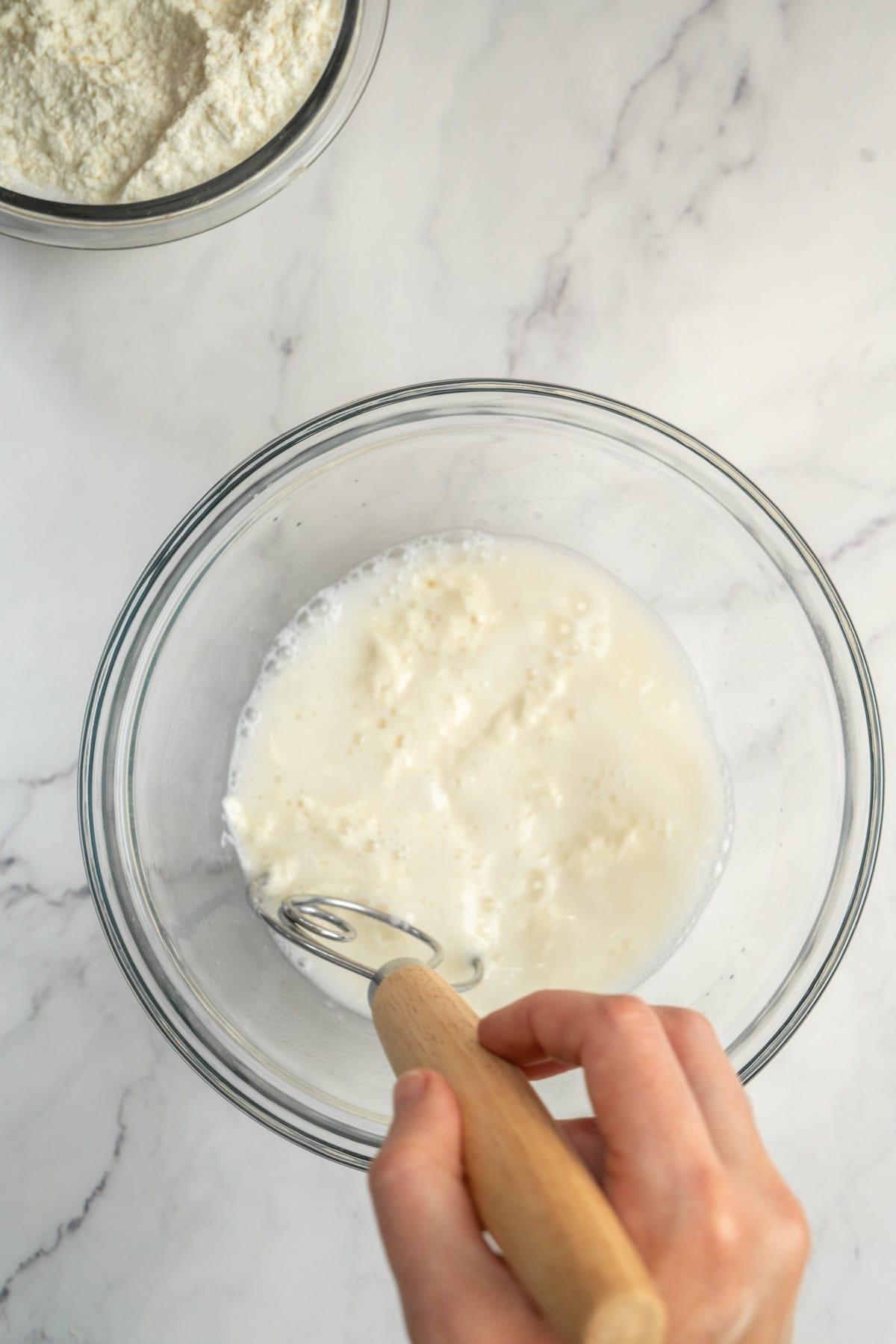
- Whisk water and sourdough starter.
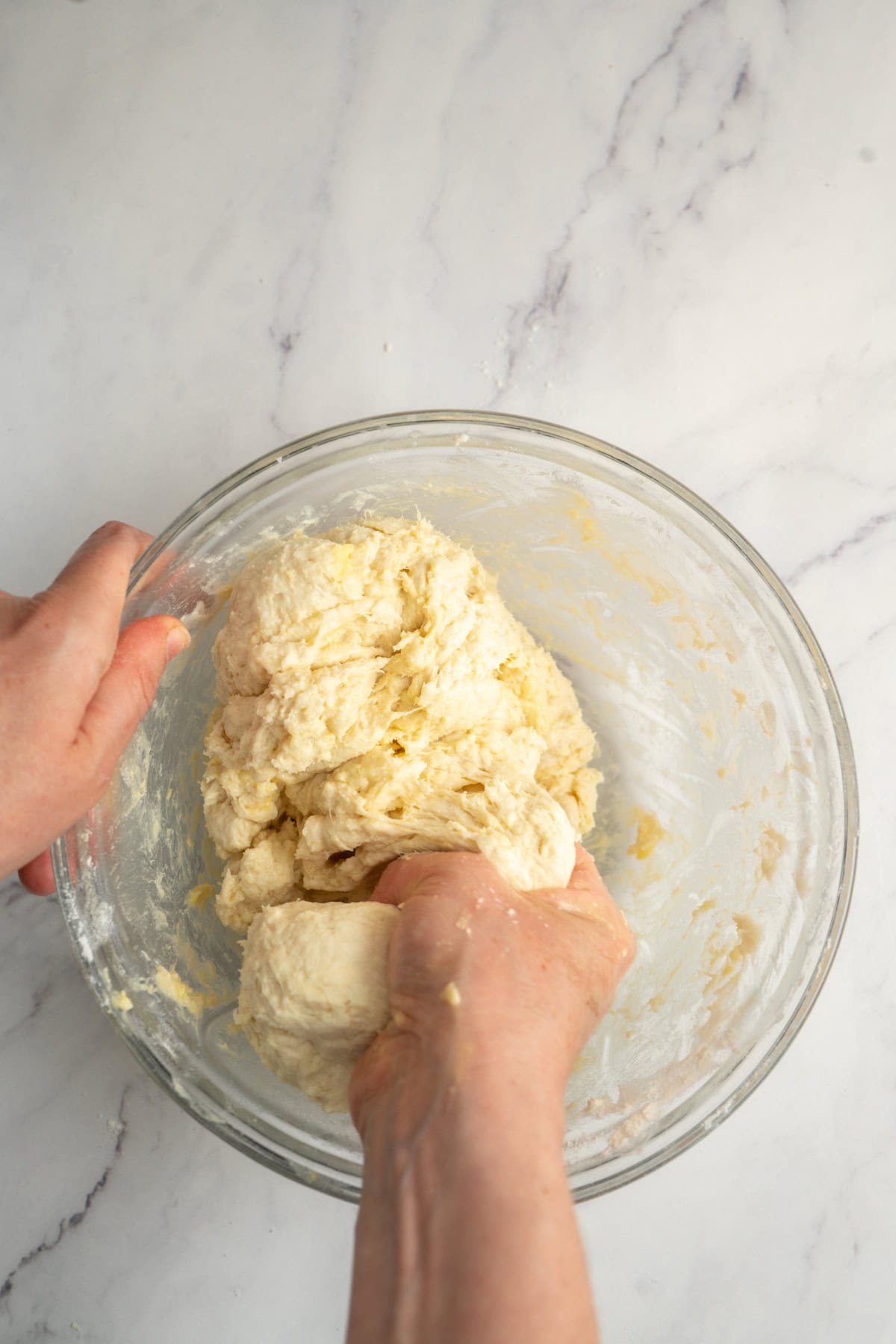
- Add the flour, sugar, salt, sourdough starter, and butter to the bowl. Mix by hand into a sticky ball of dough, then work it further on the bench until smooth.
- Place the dough in a greased bowl, cover, and leave to ferment for 3 hours at 23 to 25°C / 74 to 77°F. If your room is cooler, leave it for 4 hours. The dough should be slightly puffier after fermenting.
- Shape the dough into a flat rectangle, then wrap it tightly or place it in an airtight container and chill in the fridge overnight. Shaping it into a rectangle now means less rolling tomorrow, which keeps the dough cold and relaxed for lamination.
The butter packet
The butter packet is the thin slab of butter you fold into the dough. There are two ways to make it, and which you choose comes down to your kitchen and your butter.
The flour method: Mix room-temperature butter with a little flour (around 1½ tablespoons for 250g butter) until smooth, then roll it between two sheets of baking paper into a rectangle of about 15 x 20cm (6 x 8 inch), then chill it. The flour stabilises the butter so it’s less likely to crack when cold. Good if your butter tends to be brittle or your kitchen is cool.
The just-butter (bashing) method: Slice cold butter and lay the pieces side by side on a sheet of baking paper. Fold the paper into a rectangle to give you clean edges and a size guide, cover with the top sheet, and pound with a rolling pin to soften, then press it out to fill the rectangle evenly. No flour. This gives cleaner layers and a better flaky texture, so it’s my preferred method when I can keep things cool.
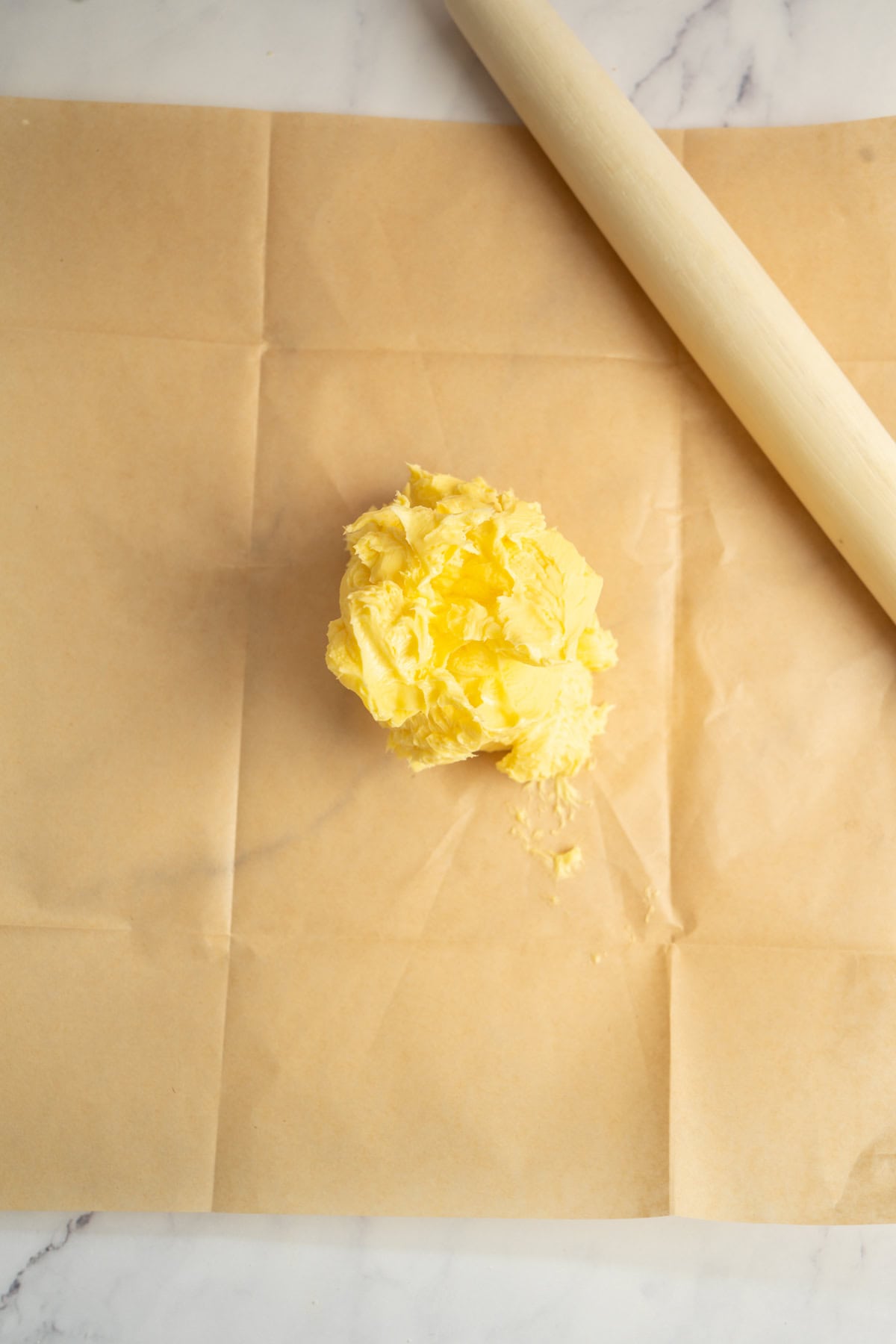
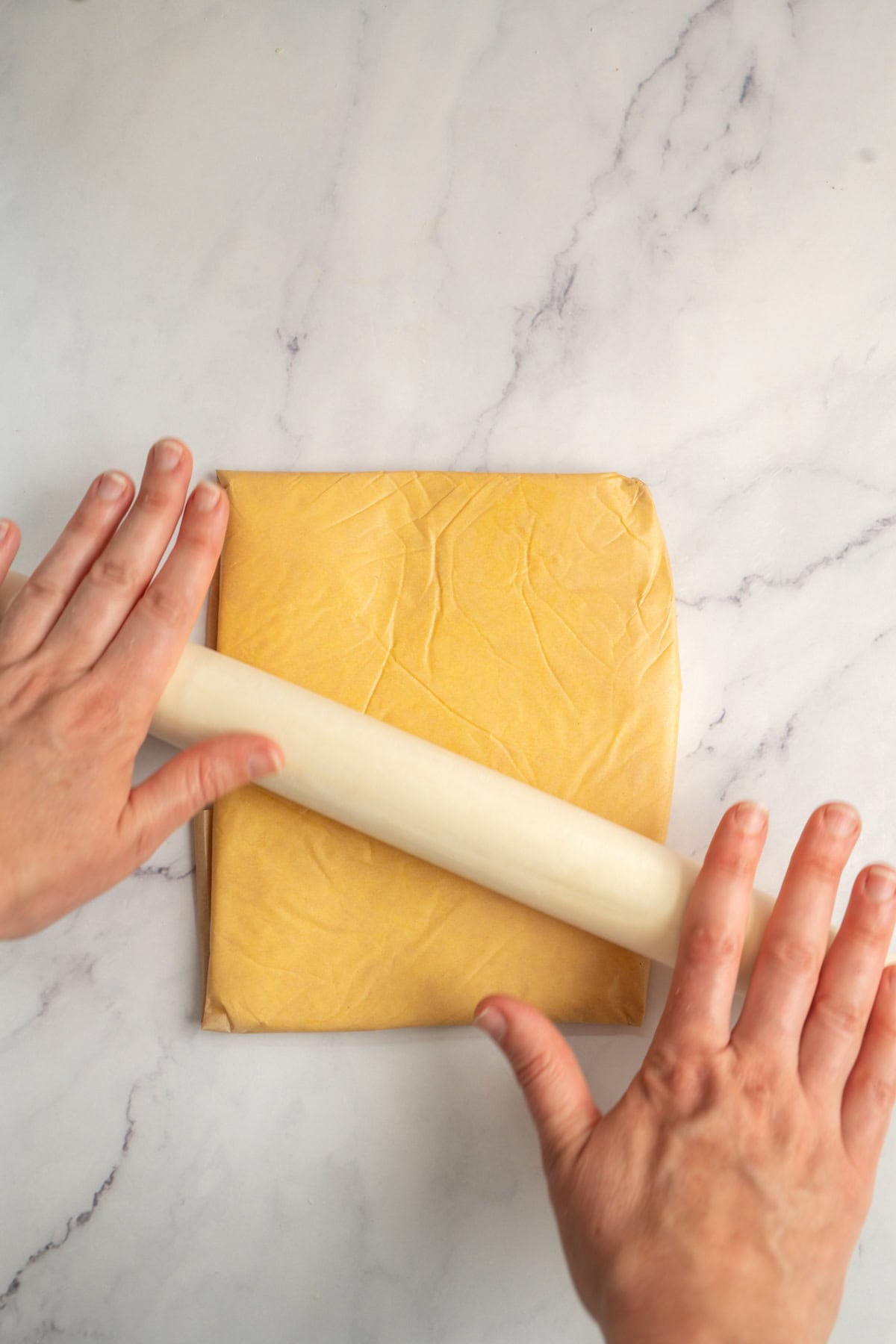
Whichever method you use, you then chill the packet until firm. Just before laminating, you bash it with the rolling pin, which breaks up and rearranges the firm fat crystals that set in the fridge and works them into a smooth, pliable mass without warming the butter. This is what gets the butter to that cold but bendy state, about the same firmness as the chilled dough. Matching those two consistencies is the single most important thing in lamination. Too cold and stiff, and the butter shatters inside the dough; too warm, and it smears in and you lose the layers. Gauging this gets better with practice.

Tip: The two methods want different starting butter. For bashing, keep the butter cold from the fridge. For the flour method, soften it to room temperature first so the flour mixes through easily, then chill it afterwards until firm.
Laminating
Encasing the butter
- Take the butter packet from the fridge and give it a few bashes with the rolling pin to bring it back to a workable, bendy state. You’re aiming for the dough and butter to be a similar consistency, with the dough being cold and firm and the butter cold but bendy.
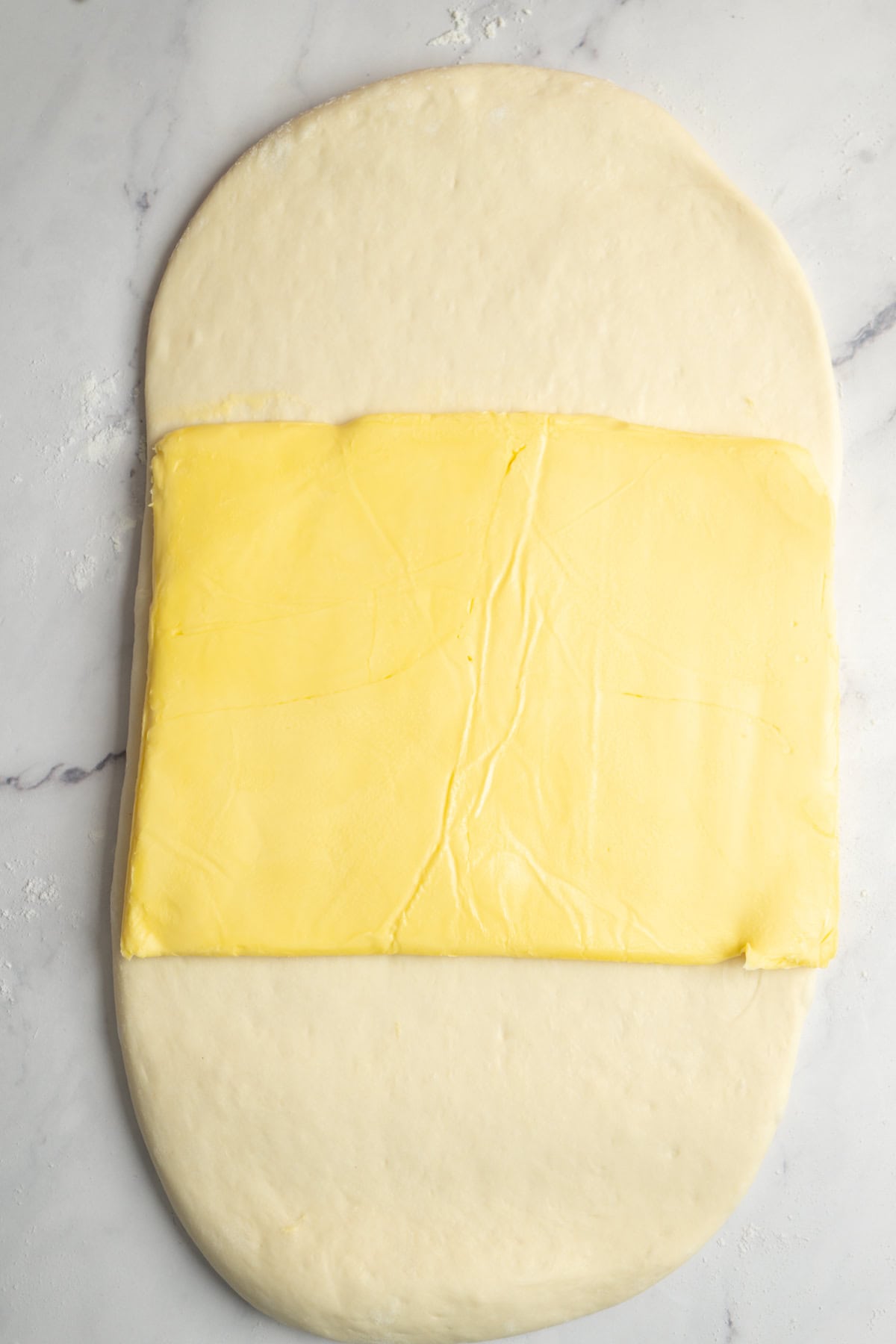
- On a floured bench, roll the chilled dough into a 20 x 40cm (8 x 16 inch) rectangle. Place the cool butter packet in the middle of the dough.
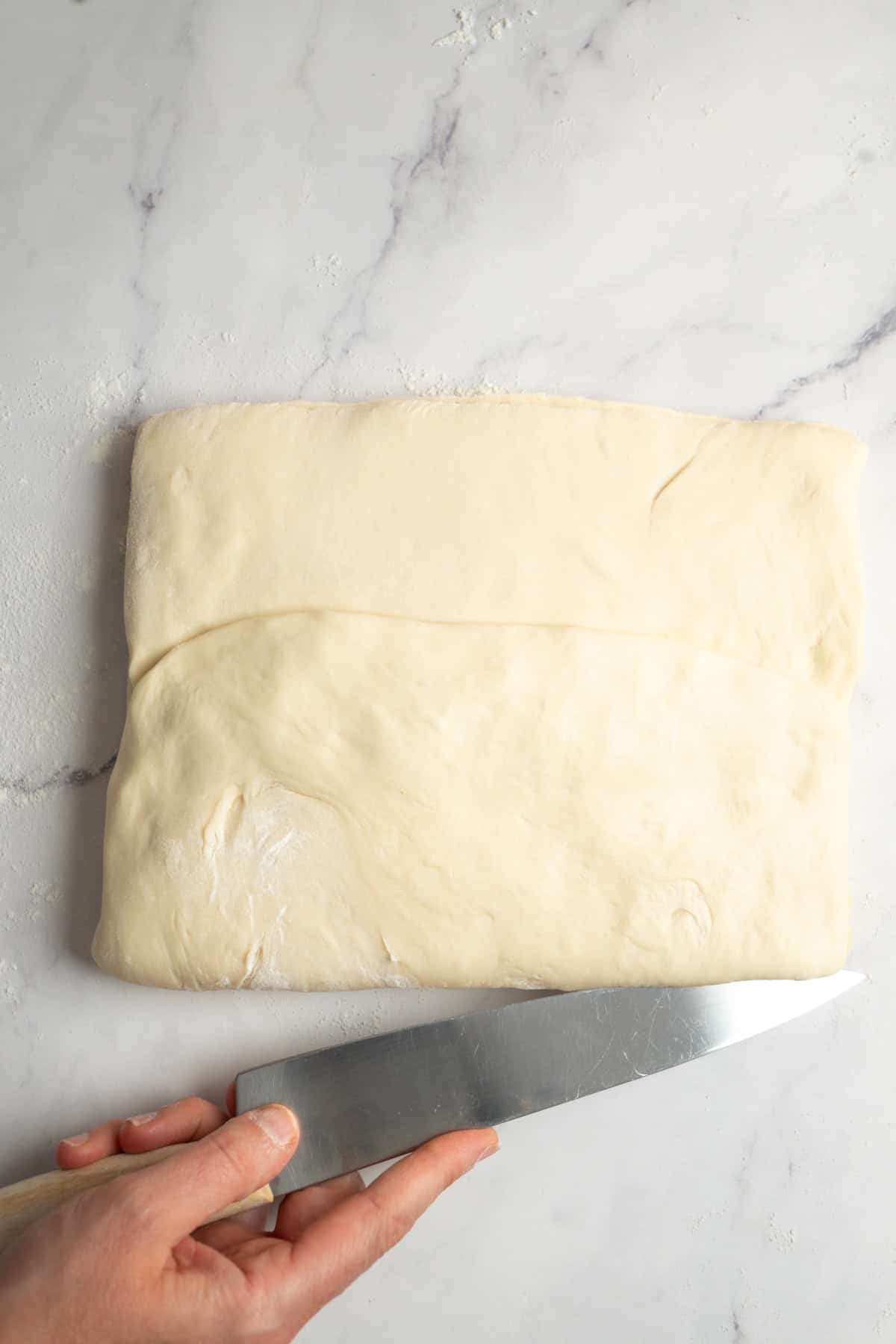
- Bring the top of the dough down and the bottom up to meet in the middle, tucking the butter inside. Use a sharp knife to make a shallow slit along the long edges of the dough, to prevent excessive tension in the dough. Turn the dough a quarter turn.
Fold 1
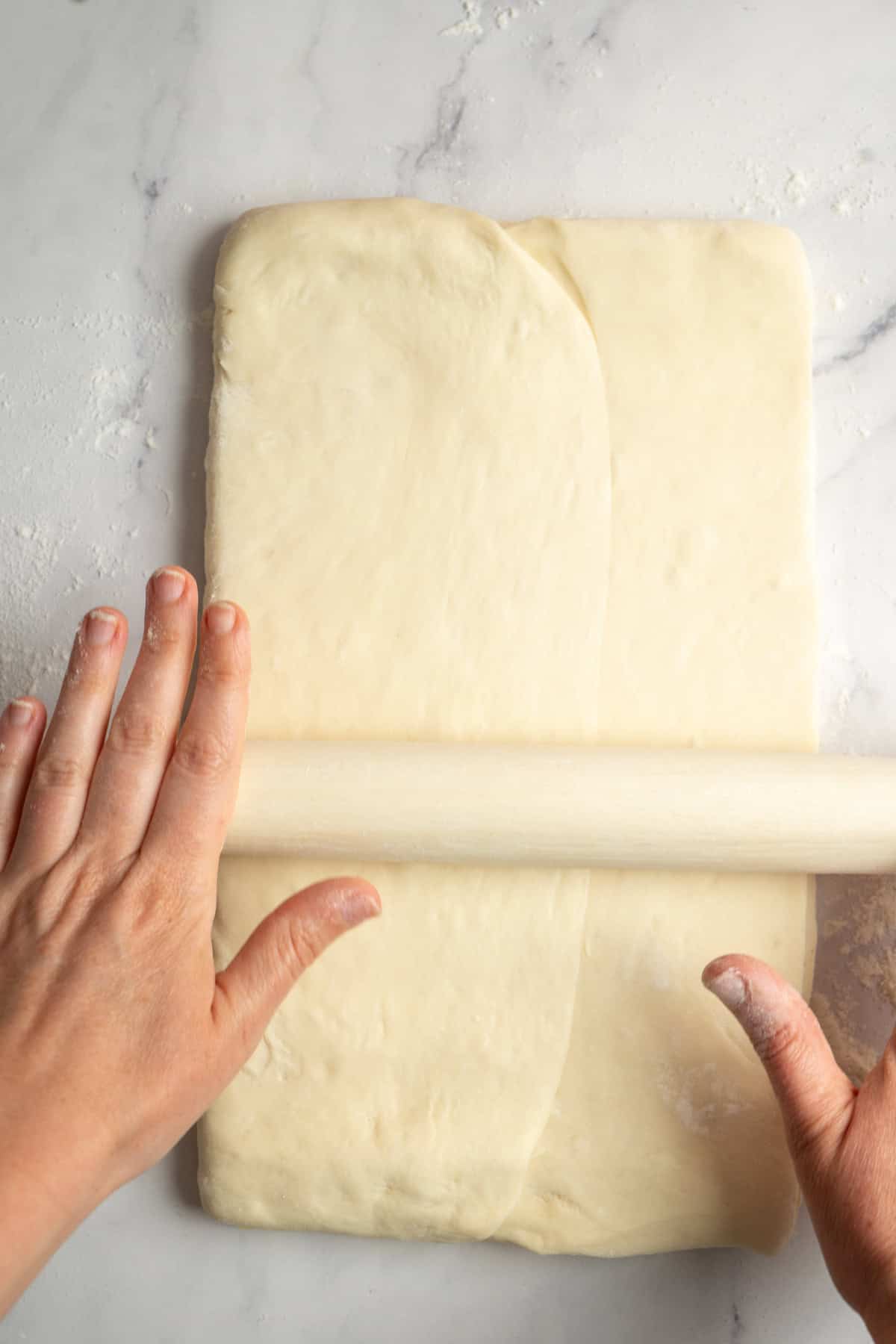
- Use the rolling pin to gently press along the length first to start dispersing the butter, then roll out into rectangle, around 8mm thick, focusing on lengthening rather than widening. Always roll in one direction, away from you, lifting the pin and starting again rather than rolling back and forth, which drags the layers against each other and smears the butter. Dust with flour if it sticks.
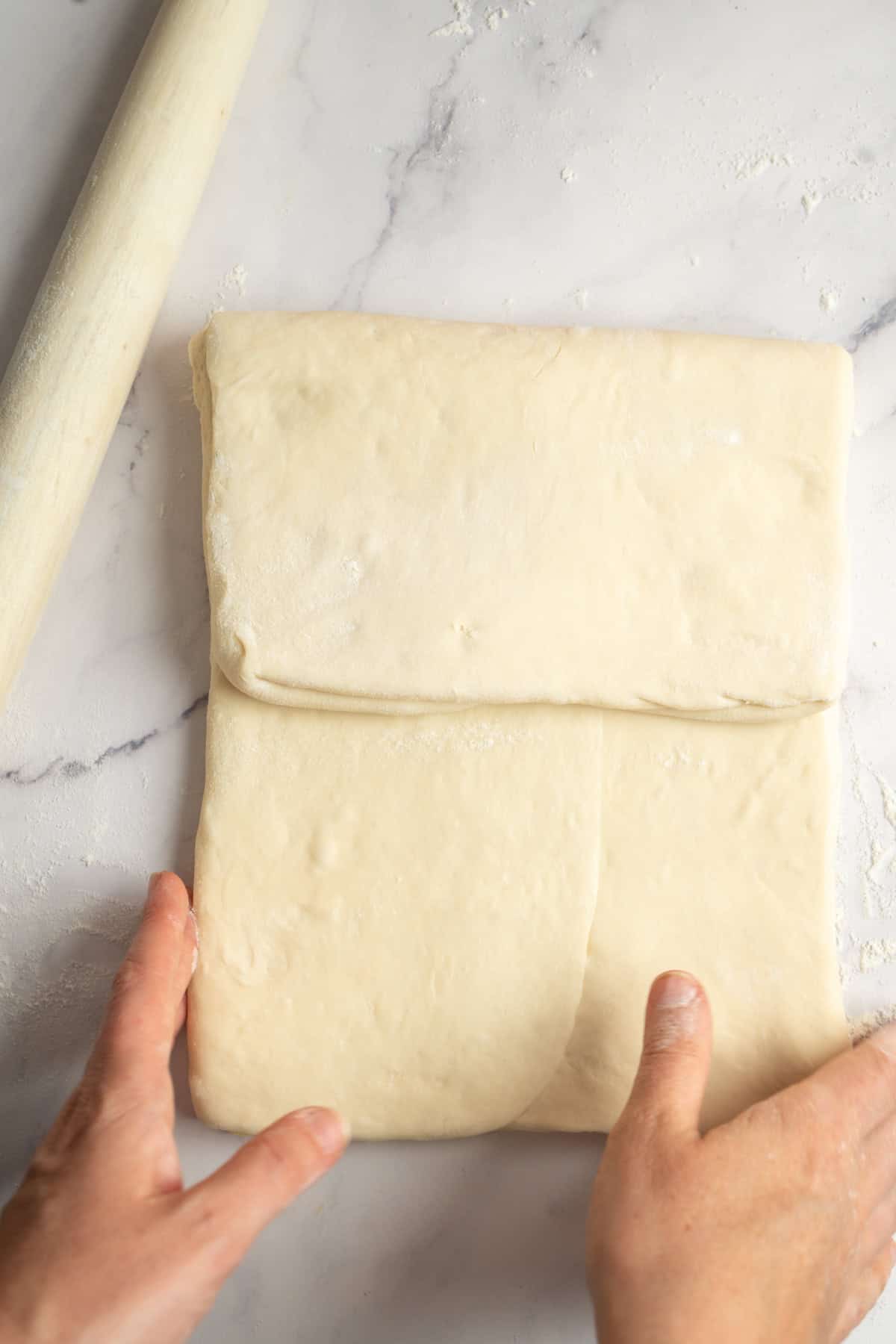
- Fold the dough like a pamphlet, bringing the top third down to the middle and the bottom third up over the top. Wrap tightly or place in an airtight container and rest in the fridge for 30 minutes.
Fold 2 & 3
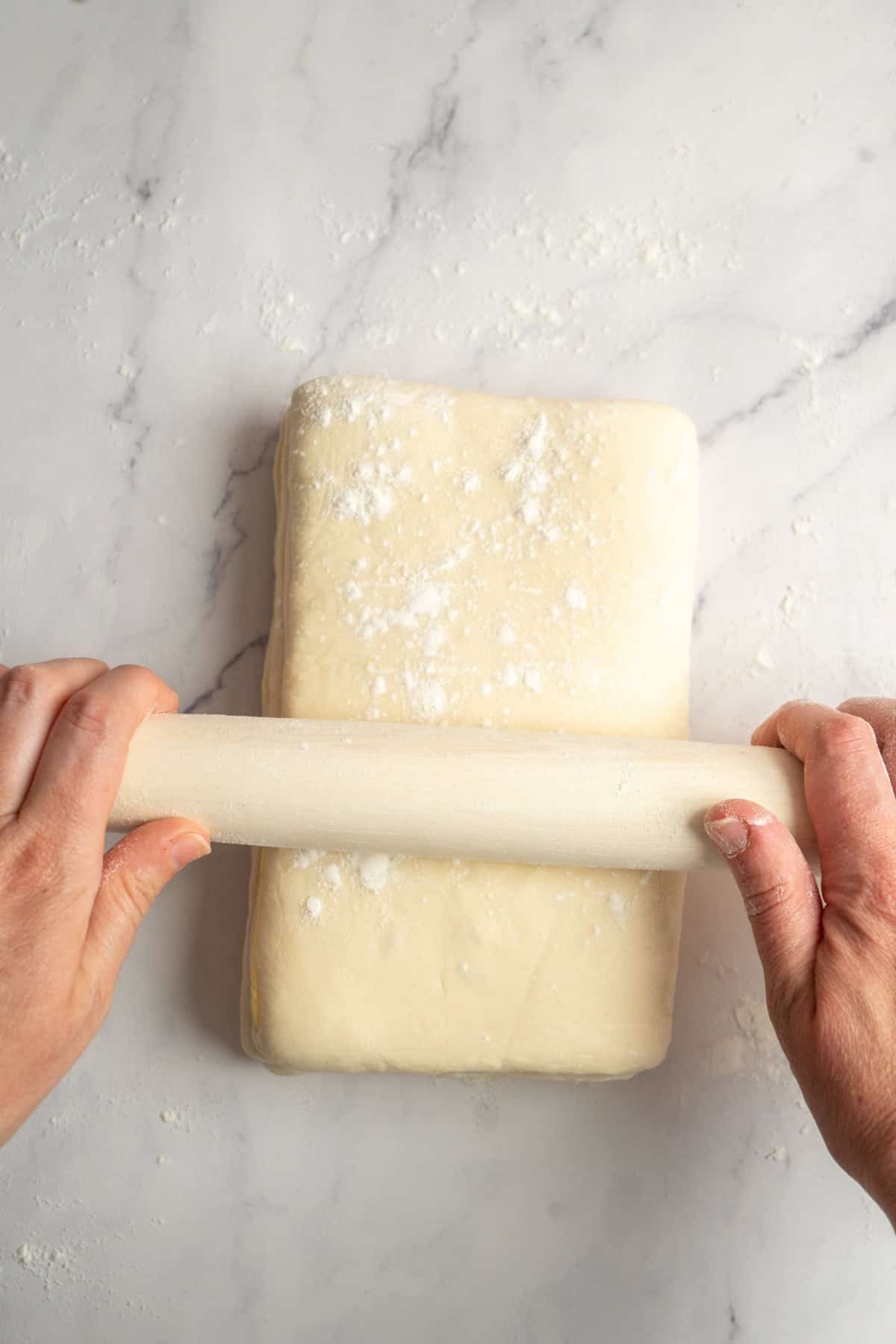
- Turn the chilled dough 90 degrees and roll it out into another rectangle, around 8mm thick. Trim off any scraggly edges to help give you more even layers later. Repeat the pamphlet fold and chill for 20 to 30 minutes.
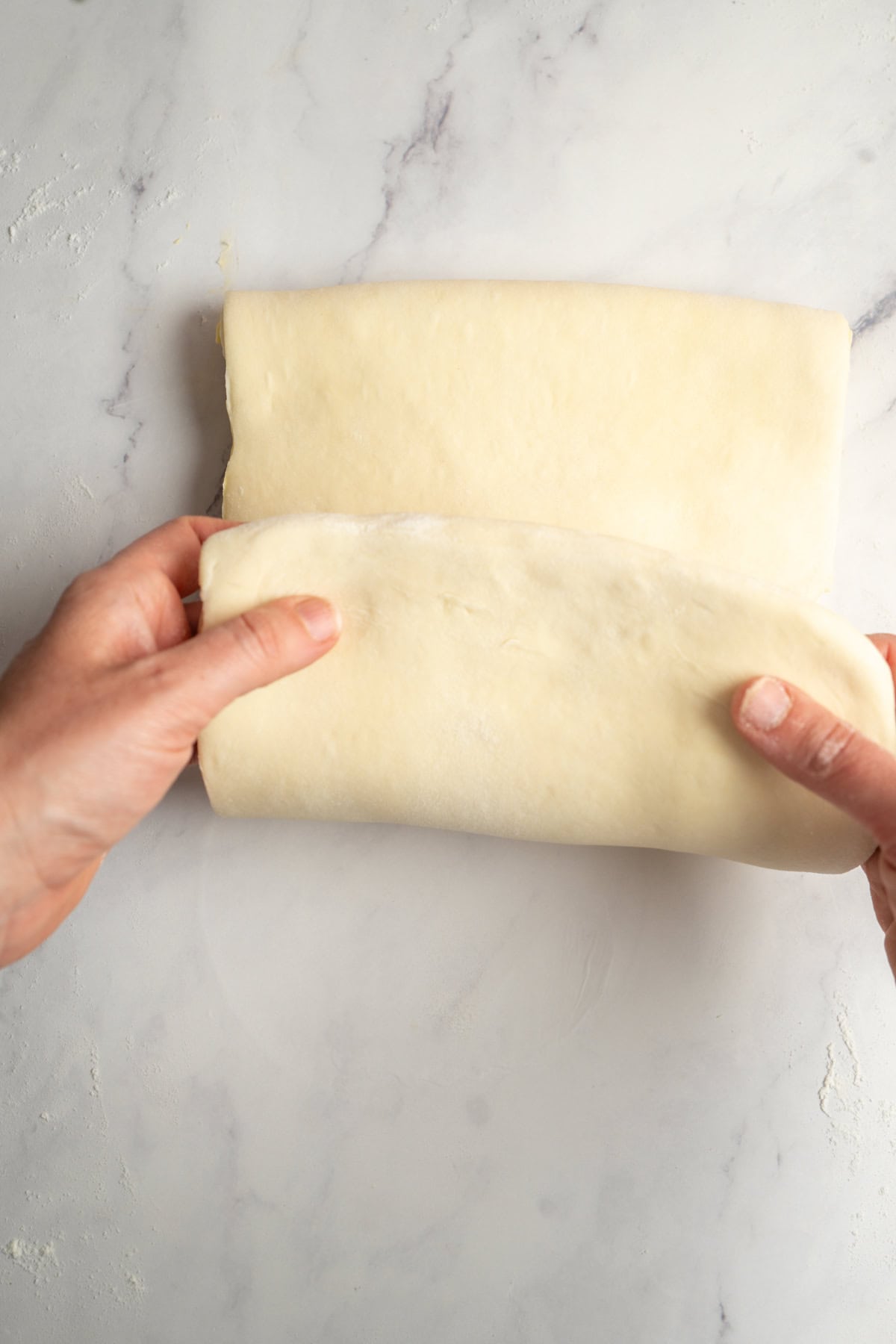
- Repeat the rolling and folding once more. After this third fold, chill the dough for at least 2 hours, tightly covered.
Cutting and shaping
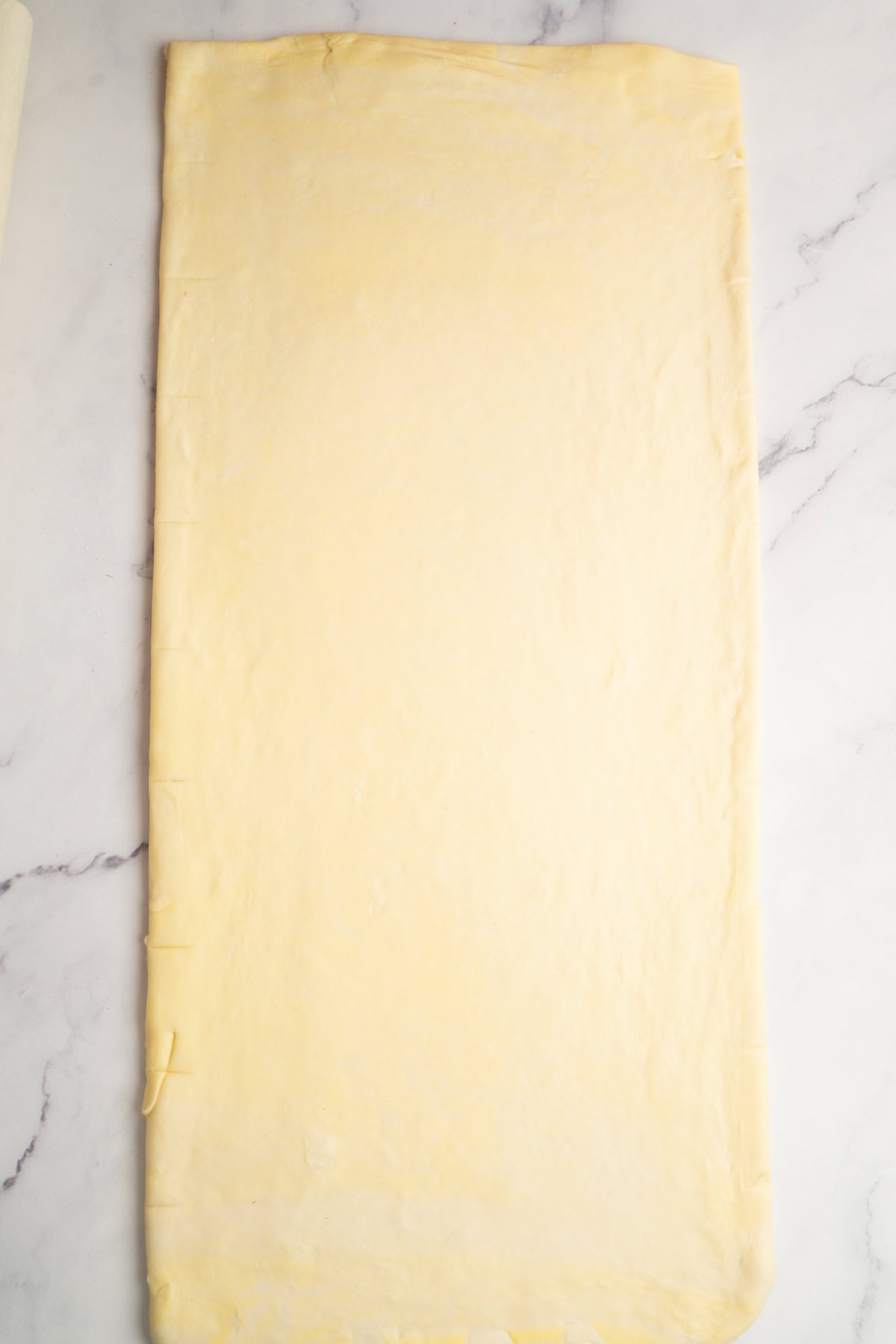
- Roll the chilled dough into a 28 x 60cm (11 x 24 inch) rectangle, around 4mm thick.
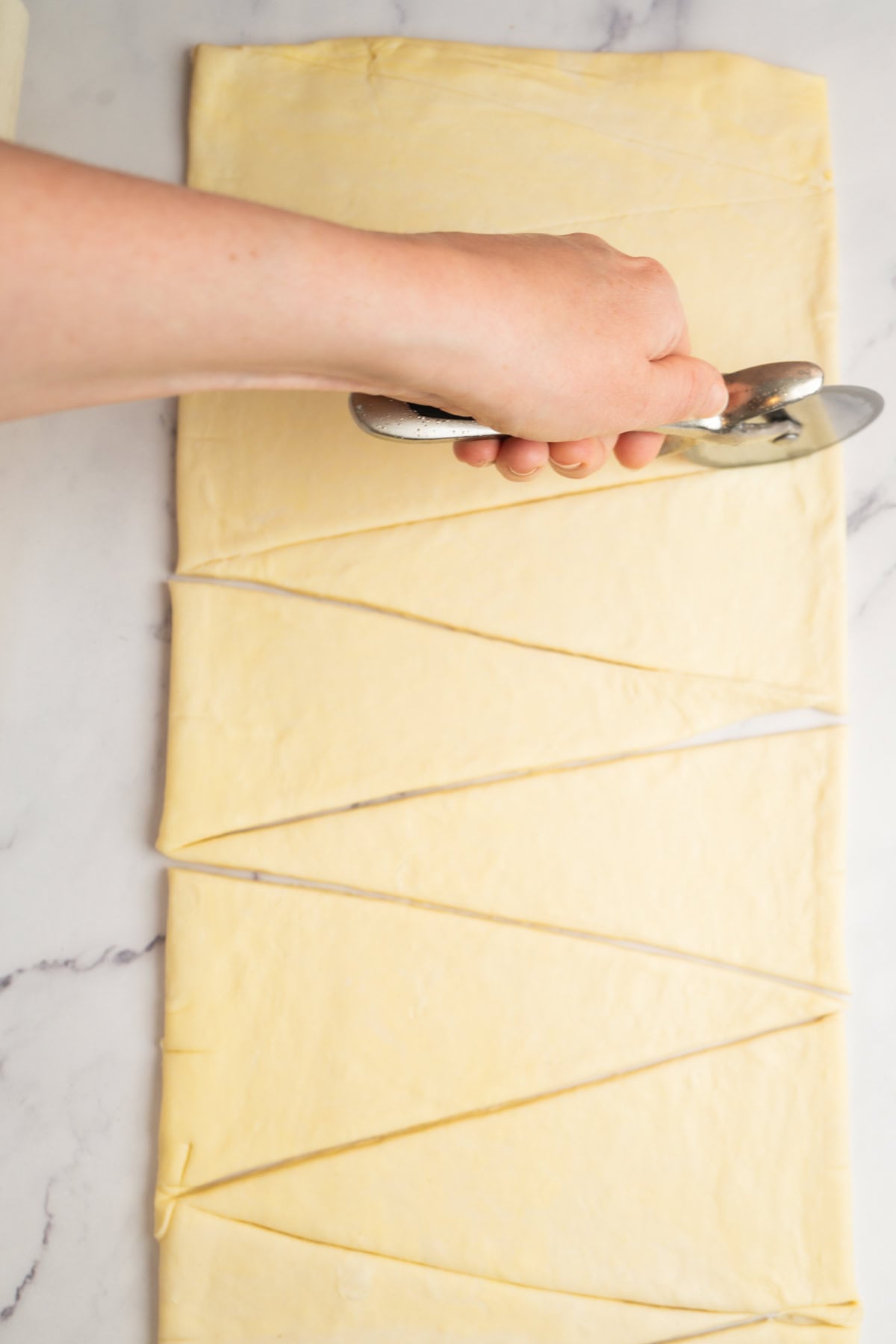
- Mark 5cm (2 inch) intervals along both long edges of the rectangle. Using a pizza cutter or large knife, cut triangles connecting the marks from top to bottom.
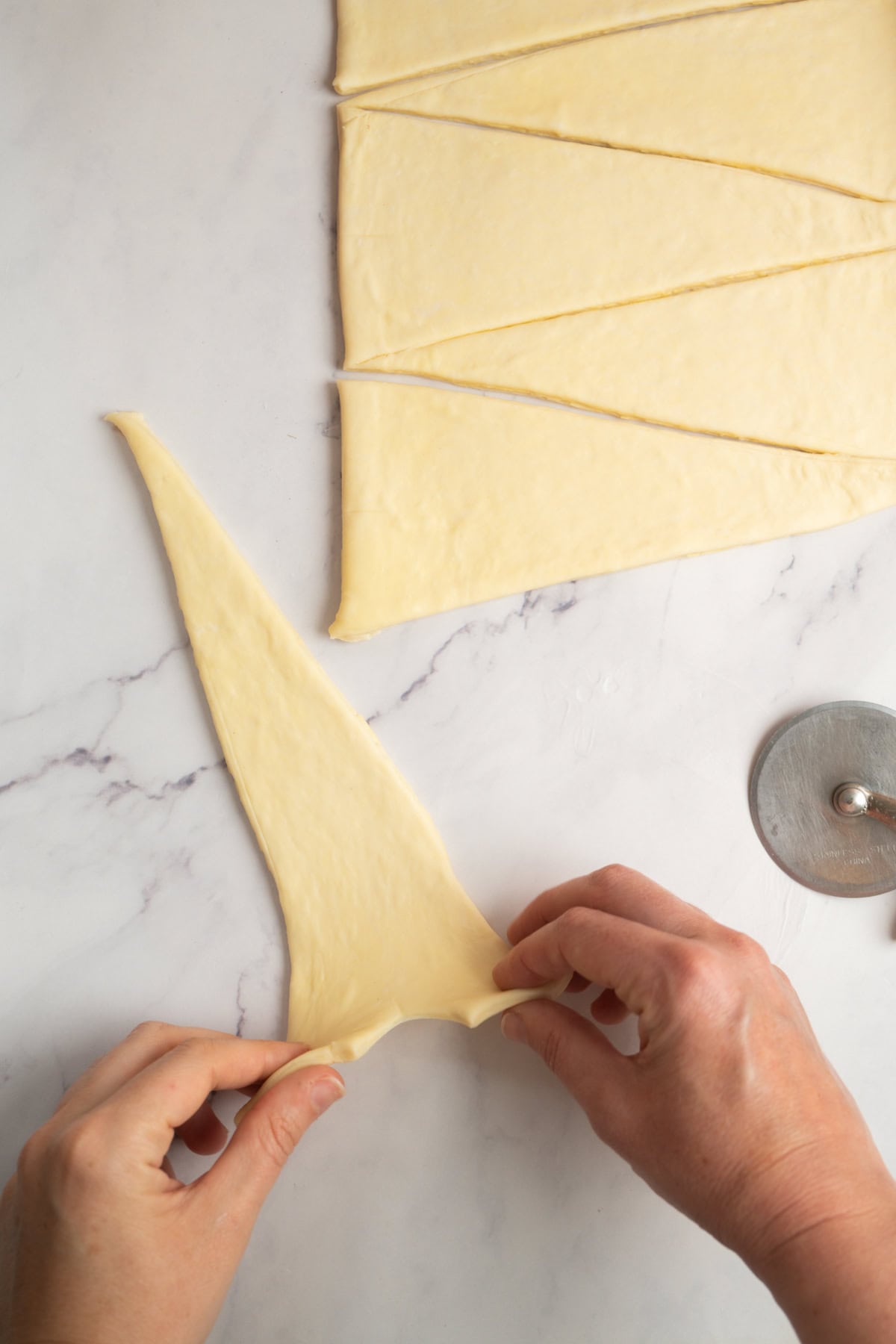
- Stretch the cut at the base of each triangle out a little.
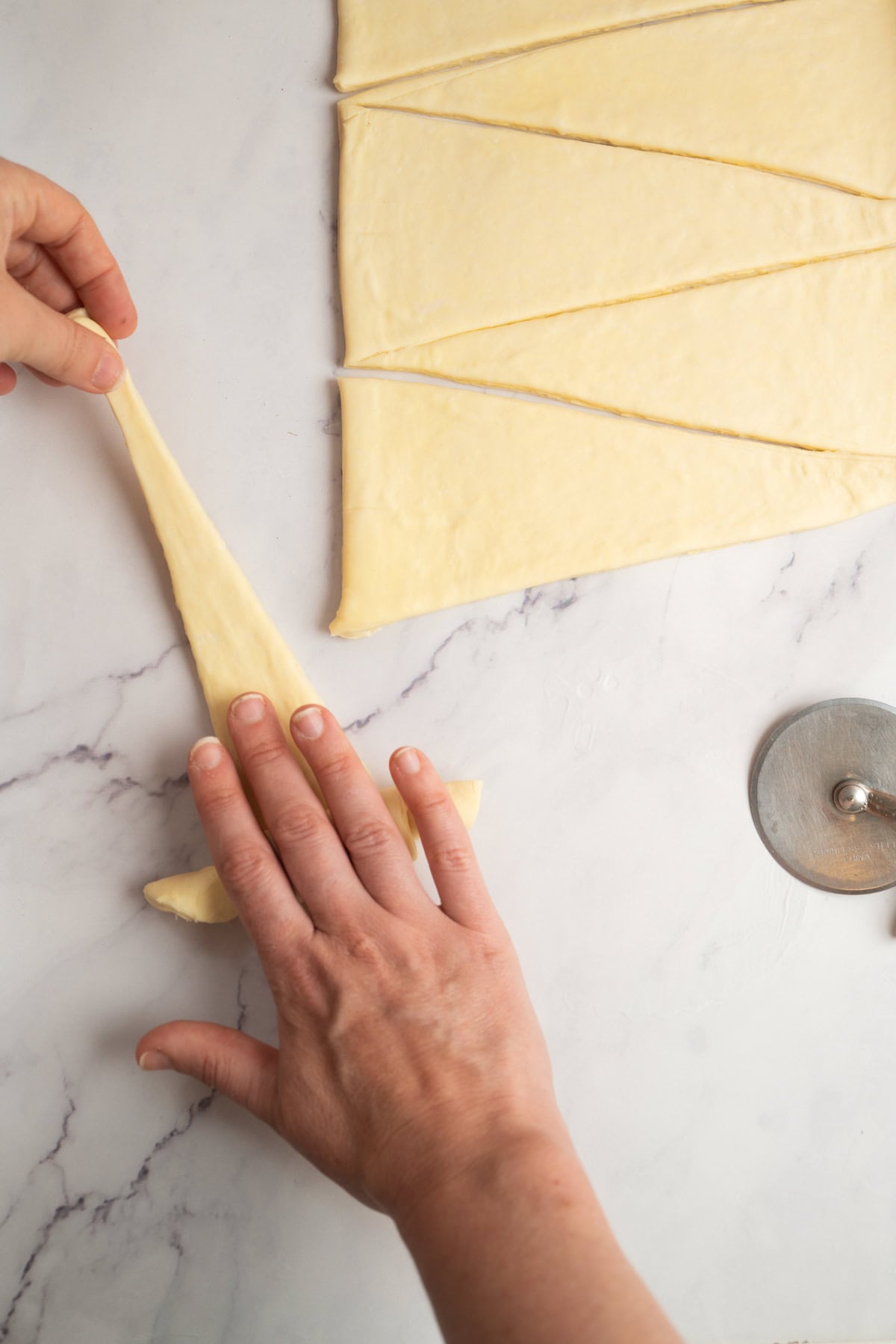
- Roll the triangle up tightly from the base to the tip.
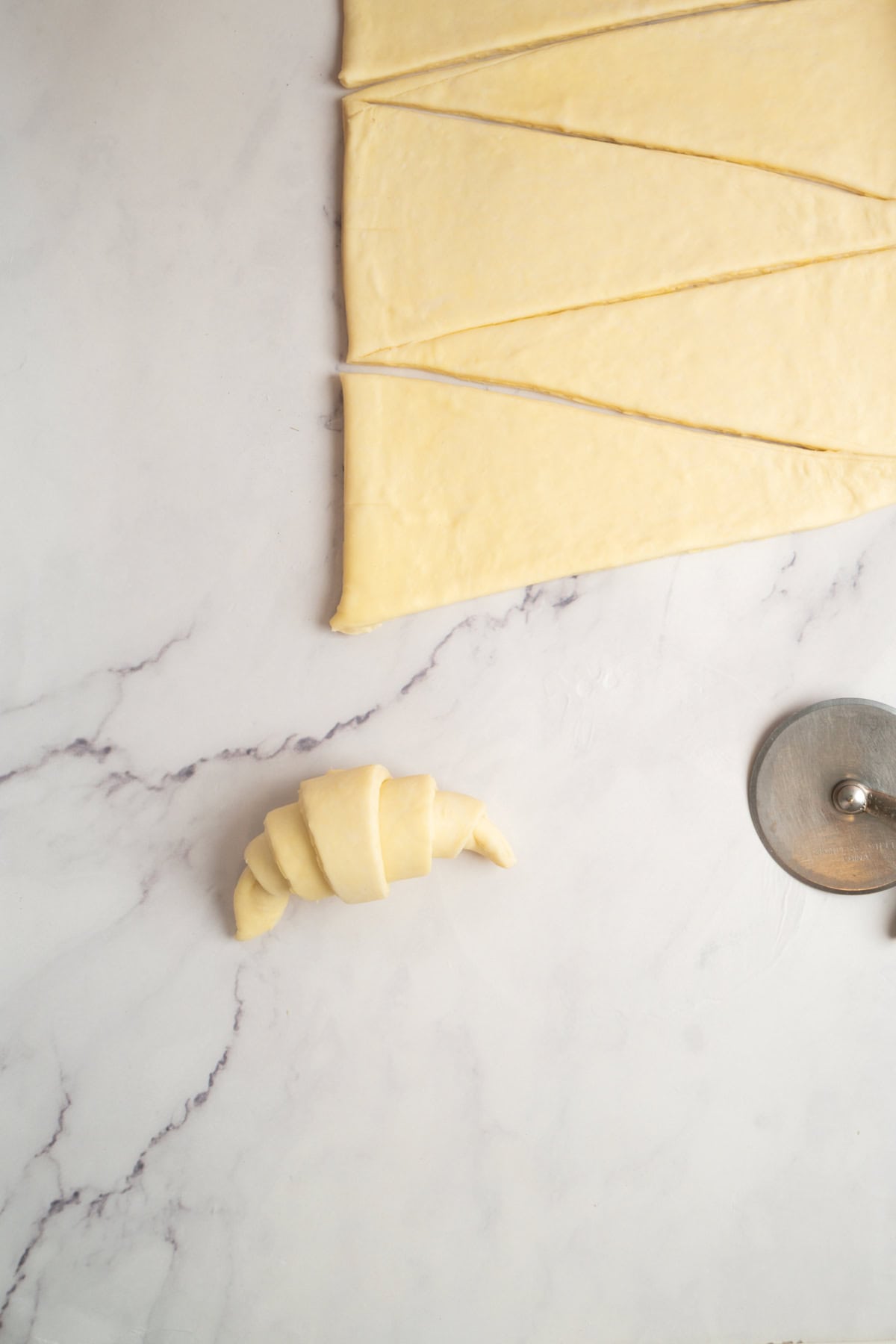
- Bend the ends in slightly to make a crescent, or leave them straight.
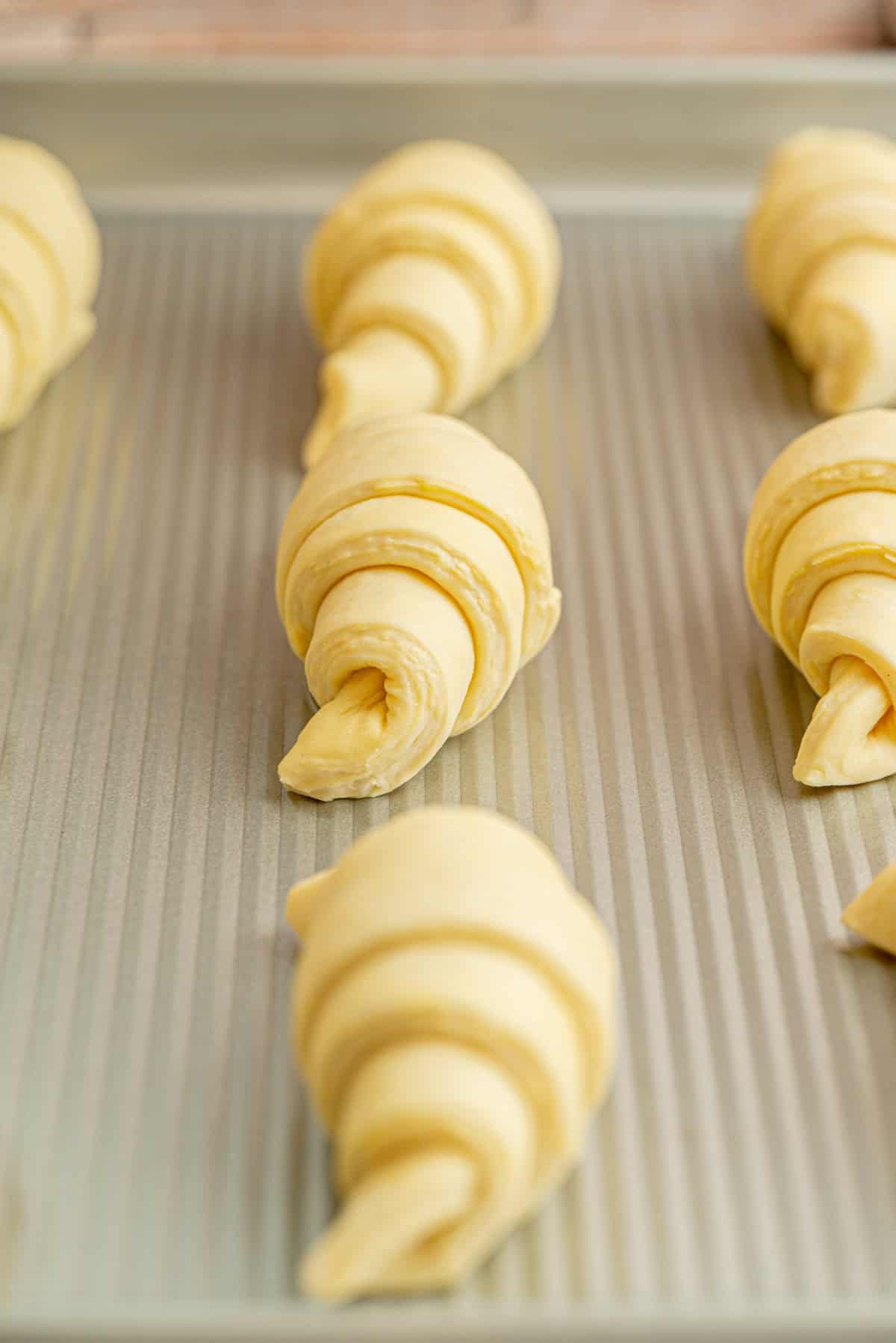
- Place the shaped croissants on parchment-lined trays and proof in a warm but not hot spot until they are puffy, lighter, and jiggle when the tray is gently shaken.
Proofing: The layers in the proofed croissants should be visible. This can take anywhere from 4 to 7 hours depending on your room temperature, so go by the look and feel of them rather than the clock. To stop them drying out, spritz them gently with water, or create a warm, humid spot by placing them in a cold, turned-off oven next to (not above) a cup of hot water. Just make sure the spot doesn’t get too hot, or the butter will melt and ruin your layers.

- Brush the proofed croissants with egg wash.

- Bake at 205°C / 400°F for around 20 minutes, until deeply browned. If they are browning too quickly, turn the oven down a little.
Tips for success

Other ways to use this dough
This same laminated dough is endlessly useful. You can turn it into:
- Sourdough pain au chocolat, with batons of dark chocolate rolled inside
- Sourdough cruffins, twisted into a muffin tin and rolled in sugar
- Sourdough Danish pastries, shaped and filled with custard, fruit, or jam
- Sourdough kouign-amann, caramelised in muffin tins with sugar
Storage and freezing
Croissants are best served fresh on the day they’re baked, and the layers will be most prominent once the croissant has cooled to room temperature before slicing.
Leftover croissants can be stored in an airtight container at room temperature for up to 4 days, or frozen for up to 3 months.
Freezing croissant dough: Freeze the croissants after shaping but before proofing. Place the shaped croissants on a tray without them touching and freeze until solid, then store in an airtight container or bag for up to 2 months. To bake later, place the frozen croissants on a lined tray and let them thaw and proof at room temperature until very puffy, light, and jiggly. This can take 4 to 7 hours depending on your room temperature. Once fully proofed, bake as normal.

FAQs about sourdough croissants

Related recipes
Try these other sourdough recipes:
- Easy sourdough focaccia
- Chocolate sourdough bread
- Sourdough garlic knots
- Sourdough cruffins
- Sourdough fougasse
Love lamination? Try this inverse puff pastry, or if you’re short on time, here’s a rough puff pastry.

Step by Step Sourdough Croissants
Ingredients
Starter
- 30 g starter
- 60 g all-purpose flour
- 60 g water
Dough Ingredients:
- 450 g all-purpose flour
- 8 g salt
- 40 g sugar
- 230 g water
- All the active sourdough starter around 140g
- 50 g unsalted butter room temperature
Butter packet:
- 250 g unsalted butter room temperature or cold depending on method used, see notes
- 1 1/2 Tablespoons all-purpose flour (only for the flour method, see notes)
Egg Wash
- 1 egg + 1 tbsp water
Instructions
Starter
- In the morning, feed your starter by combining the starter, flour, and water in a bowl and mixing until well combined. Tip it into a clean jar and leave until doubled or tripled and at peak.
The dough
- Mix all the dough ingredients together by hand to form a sticky dough ball. Knead on the bench for 5 to 8 minutes until smooth. It will still be a bit sticky, which is fine.
- Place the dough in a greased bowl and cover. Ferment for 3 hours at 23 to 25°C / 74 to 77°F (4 hours if your room is cooler), until puffed by around 30 to 40%.
- Shape the dough into a flat rectangle, wrap tightly or place in an airtight container, and chill in the fridge overnight. Shaping it into a rectangle now means less rolling tomorrow, which keeps the dough cold and relaxed for lamination.
The butter packet
- Make the butter packet using either the bashing method or the flour method (see notes). Roll it into a rectangle of about 15 x 20cm (6 x 8 inch) between two sheets of baking paper, then chill it in the fridge.
Encasing the butter
- Take the butter packet from the fridge and bash it firmly all over with the rolling pin, then give it a roll to bring it into a workable, bendy state. Bashing the cold butter with the rolling pin works the fat into a smooth, pliable state without warming it, so it bends like cold clay instead of cracking.
- On a floured bench, roll the chilled dough into a 20 x 40cm (8 x 16 inch) rectangle. Place the butter packet in the middle. Bring the top of the dough down and the bottom up to meet in the middle over the butter, then pinch the seam where they meet to seal.
- Make a shallow slit along each of the folded long edges (the closed sides where the butter is sealed in, not the open ends), to relieve the tension. Then turn the dough a quarter turn.
Fold 1
- Gently press along the length of the dough with the rolling pin to start dispersing the butter, then roll out to around 8mm thick, focusing on lengthening rather than widening. Always roll in one direction, away from you, lifting the pin and starting again rather than rolling back and forth, which smears the butter. Dust with flour if it sticks.
- Brush off any excess flour, then fold the dough like a pamphlet, bringing the top third down to the middle and the bottom third up over the top. Wrap tightly and chill for 30 minutes.
Fold 2 and 3
- Turn the chilled dough 90 degrees and roll out again to around 8mm thick. Trim off any scraggly edges for more even layers. Brush off excess flour, repeat the pamphlet fold, and chill for 20 to 30 minutes.
- Repeat the rolling and folding once more. After this third fold, chill the dough, tightly covered, for at least 2 hours.
Cutting and shaping
- Roll the chilled dough into a 28 x 60cm (11 x 24 inch) rectangle, around 4mm thick.
- Mark 5cm (2 inch) intervals along both long edges. Using a pizza cutter or large knife, cut triangles connecting the marks from top to bottom. A ruler helps keep your lines straight.
- Stretch the base of each triangle out a little, then roll up tightly from the base to the tip. Bend the ends in slightly to make a crescent, or leave them straight.
- Place the shaped croissants on parchment-lined trays and proof in a warm but not hot spot until puffy, lighter, and jiggly when the tray is gently shaken, with visible layers. This can take 4 to 7 hours depending on your room temperature, so go by the look and feel rather than the clock.
- To stop them drying out, spritz them gently with water or create a warm, humid spot by placing them in a cold, turned-off oven next to a cup of hot water. Don't put the cup directly under the croissant tray, and don't let the spot get too hot, or the butter will melt and ruin the layers.
Baking
- Brush the proofed croissants with egg wash.
- Bake at 205°C / 400°F for around 20 minutes, until deeply browned. If they brown too quickly, turn the oven down a little.
- Let them cool to room temperature before slicing, so the layers stay nice and distinct.
Notes
Baker’s schedule ( 2 ways)
Schedule 1 (laminate day 2): Feed the starter in the morning of day 1 and let it peak (around 6 hours). Mix and ferment the dough, then chill it overnight. Day 2, make the butter packet, laminate with three folds (30-minute chills between), chill 2 hours, then shape, proof, and bake. Schedule 2 (laminate day 1, my preferred): Feed the starter the night before so it’s peaked by morning. Mix and ferment the dough, chill 2 to 3 hours, then laminate with all three folds the same afternoon and rest the laminated dough overnight. Day 2 is just shape, proof, and bake, so you get fresh croissants by lunchtime.The butter packet, two methods:
For the bashing method (my preference), slice cold butter, lay it on baking paper, fold the paper into a 15 x 20cm frame, and bash and roll with a rolling pin to fill it evenly. This gives cleaner, more defined layers. Place it in the fridge to firm back up. For the flour method, mix 250g room temperature butter with 1½ tablespoons flour until smooth, then roll into the same size rectangle. Place it in the fridge to firm back up.Tips
-
- Keep everything cold. Cold butter is what gives croissants their flaky layers. When you bash the butter packet to make it bendy, you’re working it into a pliable state, not warming it. It should stay cold the whole time, just bendy enough to roll out with the dough. If the butter or dough ever feels soft, greasy, or sticky during lamination, chill it for 20 to 30 minutes before continuing. If butter melts into the dough at any stage, from lamination through to proofing, you’ll get a bread-like texture with no layers.
- Roll in one direction. Always roll away from you and lift the pin to start again. Rolling back and forth smears the butter rather than keeping it in clean sheets.
- Underproofed croissants leak a lot of butter in the oven and can be gummy and look undercooked inside. Make sure they are genuinely puffy and jiggly before baking.
- Freezing: Freeze the croissants after shaping but before proofing. Place them on a tray without touching and freeze until solid, then store in a bag for up to 2 months. To bake, place from frozen on a lined tray and let thaw and proof at room temperature until very puffy and jiggly (4 to 7 hours), then egg wash and bake as normal.
- Storage: Best on the day they’re baked. Store leftovers in an airtight container at room temperature for up to 4 days, or freeze baked croissants for up to 3 months.





I love this recipe they are so delicious, BUT I frequently have a doughy center and I cannot seem to fix it. The outsides are perfect. I’ve tried different adjustments to baking time, using convection bake. I now moved to a new house and have a gas stove and this batch was the wordt yet inside. But the outside was AMAZING! Possibly my best 😆Any suggestions to help
So glad you love them! A doughy centre with a perfect outside is almost always underproofing rather than anything to do with the bake, which is why adjusting the oven hasn’t fixed it. If the croissants go in underproofed, the layers haven’t expanded enough, so the centre stays dense and gummy even when the outside bakes up beautifully.The fix is to let them proof longer before baking. They should be visibly puffy, light, and properly jiggly when you gently shake the tray, and you should be able to see the layers. This can take longer than you’d expect, especially in a cooler kitchen, so go by how they look and feel rather than the clock.
I was nervous to try making croissants. I had attempted another recipe and from the second I made the dough I knew it would be a disaster!
This recipe however was a smashing success! They came out beautiful, flaky and with such great layers! I can’t wait to make them again!
These were a labor of love and I was not loving it half way through when I realized how much longer it was going to take. BUTTTT then they were finished and oh my gosh…worth every minute/hour/day. My family was thrilled and sang my praises for these works of art. Will 100% make again but will start a day earlier.
Hi, can I use freshly milled flour for this recipe?
Hey, freshly milled flour is not ideal for this recipe. Croissants need strong, finely milled white flour so the gluten can develop smoothly and the layers stay distinct. Freshly milled flour tends to be coarser and absorbs more liquid, which can make the dough heavier and the lamination more difficult.
Thank you for the recipe. This was my first attempt at croissants. My croissants were beautiful inside. My guess is underproofed.
They were layered. Texture perfect on the outside, but the interior was gummy.
Any hints for next time?
Hey Tammy, that does sound like they were underproofed, which is such a common thing to happen, especially when it’s the first time. Next time, I would extend the final proof after shaping, so they look visibly puffed and doubled in size, and jiggly when you give the pan a shake. The layers should become more visible, too. Temperature plays a big role here. If the room is cool, the final proof can take quite a bit longer. I usually aim for a warm spot around 24C (75F) if possible. The fact that they were layered nicely shows your lamination was great!
Easy to follow recipe that is flexible and forgiving. I had to use bread flour instead of all purpose, and salted butter instead of unsalted. Also, due to time constraints the 2 hour cold rest after the third fold turned into overnight and they still shaped well, rose well and baked perfectly. Made half with semisweet chocolate chips and half regular and both were fluffy and flaky. For being my very first time baking croissants, this recipe made me look like a pro! Family approved!
Does the baking time change if you are baking them from frozen? I am planning on making these ahead for Thanksgiving and am needing to plan out when things need to be in the oven so that everything is ready at the same time.
Hey Michelle, I used to freeze my croissants after shaping and proofing, but I now prefer shaping and freezing them before proofing. Later I just thaw and proof the croissants before baking. The baking time stays the same, the main thing is letting them fully proof before they go into the oven. Since they start so cold, frozen croissants take longer to rise, about 4 to 7 hours, or longer, depending on room temperature. You can thaw them overnight in the fridge or if your room temp isn’t too warm overnight, at room temp too, then in the morning let them finish proofing at warm room temp until they are puffy and jiggly. Keep them covered so they don’t dry out. If you want something quicker or easier around your timings, freezing baked croissants works really well too. You can reheat those straight from frozen at 350F or 180C for 5 to 10 minutes until warmed. 🙂
Ok great! I will freeze them right after shaping them then. Thank you so much for your insight and for responding so promptly! Happy Holidays!
Easy recipe to follow and delicious!
This was my first time making croissants, that being said the butter broke a bit but they still came out delicious and flaky!
Would recommend!
I’m new at baking and sourdough. I took this on as my next challenge. I didn’t do everything perfectly but I learned a lot and they are delicious! Thank you some much for the wonderful recipe.
I loveeeeeeeee this recipe so much! It’s like my 10th time making it and it’s always the star of the show when I bring them to brunch.
I will try to freeze a batch for the first time. Do you have specific instructions for baking them when they are frozen?
Thank you!!
Yay, I’m so glad you love the recipe! You can freeze them before their final rise, then let them thaw and then proof until puffy and jiggly then bake as normal 🙂