How to Make Sourdough Starter
This guide shows exactly how to make a sourdough starter from scratch. Once you understand the process, it’s simple, and it just takes a little time and patience. If you’re troubleshooting, check out my Sourdough Bread Troubleshooting Guide or my post on maintaining a sourdough starter.
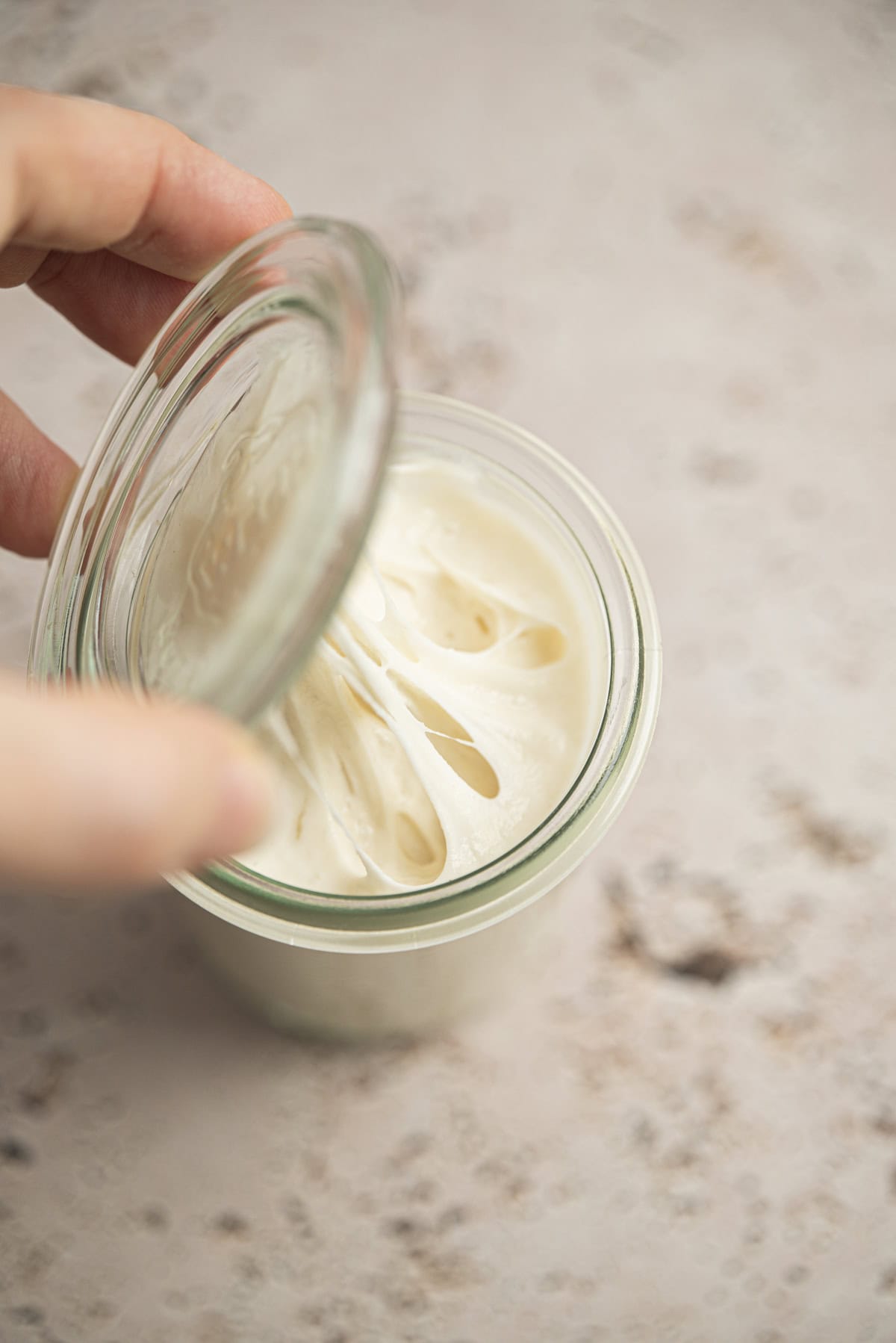
A sourdough starter
A sourdough starter is the foundation of homemade sourdough bread, English muffins, and rolls. It’s a living mixture of wild yeast and bacteria that feed on flour and water. Over time, they form a healthy colony that makes your bread rise without any commercial yeast.
When you first create a starter, you encourage these wild organisms to grow by giving them fresh flour and water every day. Once established, the wild yeast produces carbon dioxide that lifts your dough, while the natural bacteria add that signature tangy flavour.
The bacteria, mainly lactobacilli, produce lactic and acetic acids. This is what gives sourdough its sour flavour.


What you need
Every starter develops a little differently depending on your room temperature, humidity, and even the flour you use.
You’ll need:
- Flour
- Water
- A kitchen scale
It’s best to measure by weight for consistency.
Choosing the flour
Any grain-based flour can work, but unbleached all-purpose or bread flour gives the most consistent results. Rye and whole wheat can be used too, though rye tends to ferment faster because it contains more natural sugars and enzymes.
Rye flour often makes a starter look active early on, but that early bubbling can be misleading. It’s mostly bacterial activity before the yeast really establishes itself. Even if your starter looks bubbly after a day or two, it’s still too young to bake with. A white flour starter can later be used to bake whole grain or rye breads, so it’s a good all-purpose base.
Choosing the water
If your tap water is heavily chlorinated, it can slow fermentation. Filtered water, or tap water that has been boiled and cooled, works best.
Personally, I just use tap water. Mine doesn’t affect my starter or other ferments. If you’re unsure about yours, filtered water is a safe choice.
The best temperature for a sourdough starter
Yeast and bacteria grow best at around 21-26 °C (70-79 °F). If it’s too cold, the process slows right down. In very warm conditions, it will speed up, and your starter may need more frequent feeds.
Cooler temperature tip:
Pop your starter in a cooler bag with a jar of hot water beside it and close the bag to keep the warmth in. It’s a great little warm space for cold winter days. A yoghurt maker also works well. Fill it with a little bit of hot water (making sure it doesn’t touch the starter jar or it can get too hot) and set the starter jar inside so it stays gently warm.
Day-by-day sourdough starter guide
Day 1
- The following uses 30 g flour and 30 g water as a base.

Note: I always mix the flour, water, and starter in a separate bowl first, then scrape the smooth mixture into a clean jar. It keeps the jar tidy and makes level markers easy to see. Old starter sticks like glue, so this saves a lot of scrubbing.
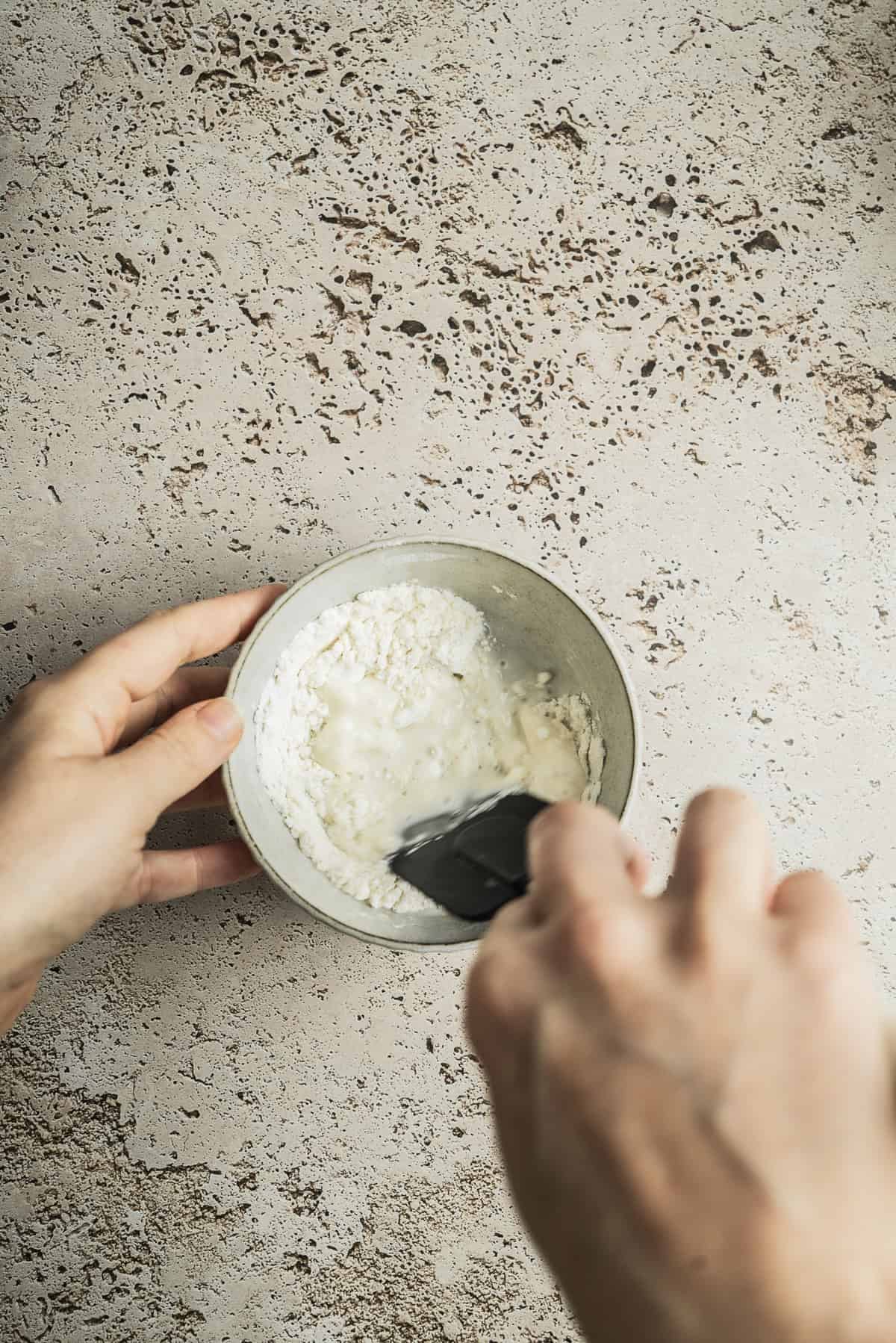
- Mix flour and water in a bowl until combined.
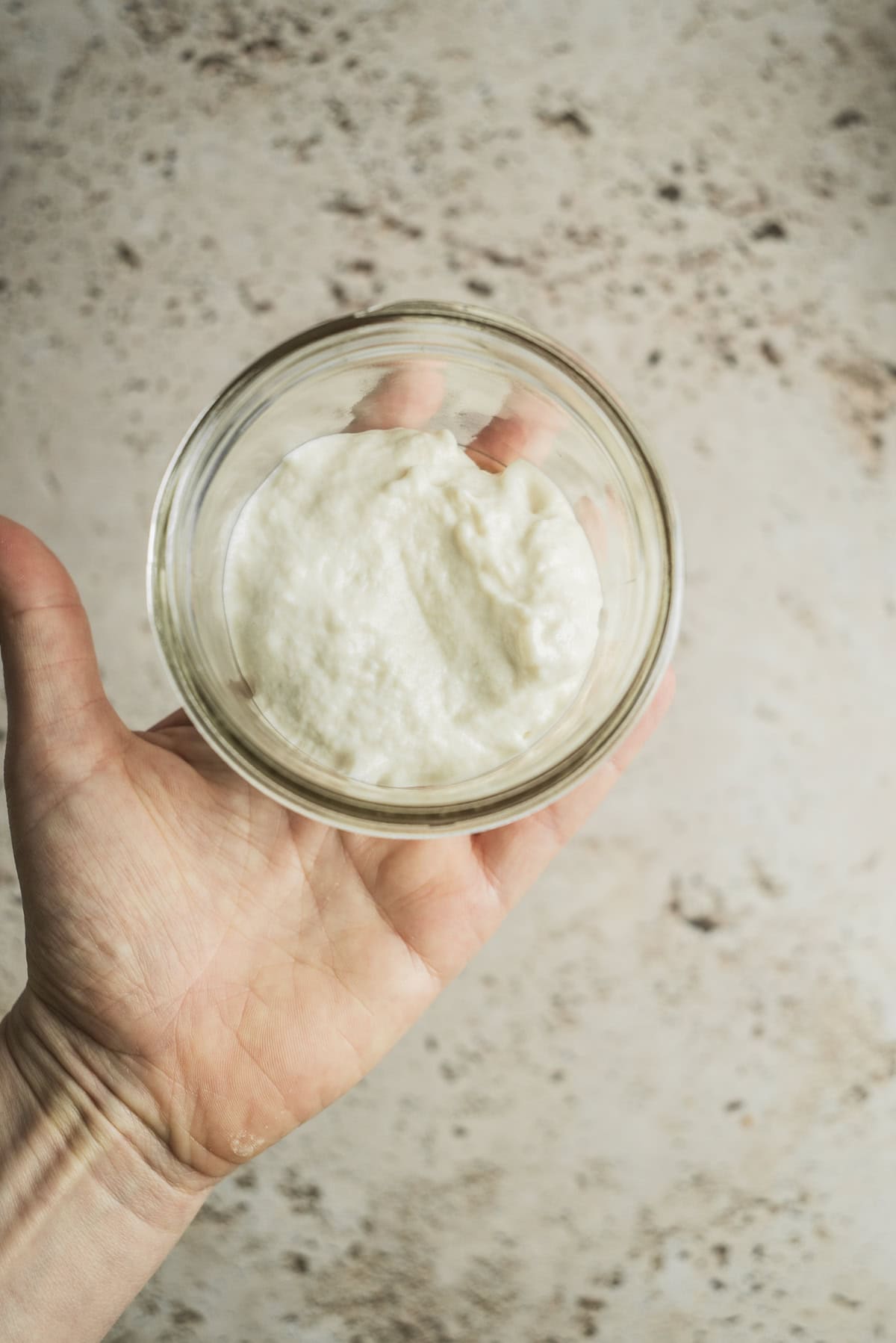
- Put in a clean jar and cover with a balanced lid or cloth.
Day 2
- Tip the starter into a bowl, add 30 g flour and 30 g water, and mix until smooth. Then transfer it to a clean jar.
Day 3
- You might notice bubbles forming after day 2, but this early activity comes from bacteria, not yeast. It’s a good sign that fermentation has started, but your starter still needs more time before it’s ready to bake with.
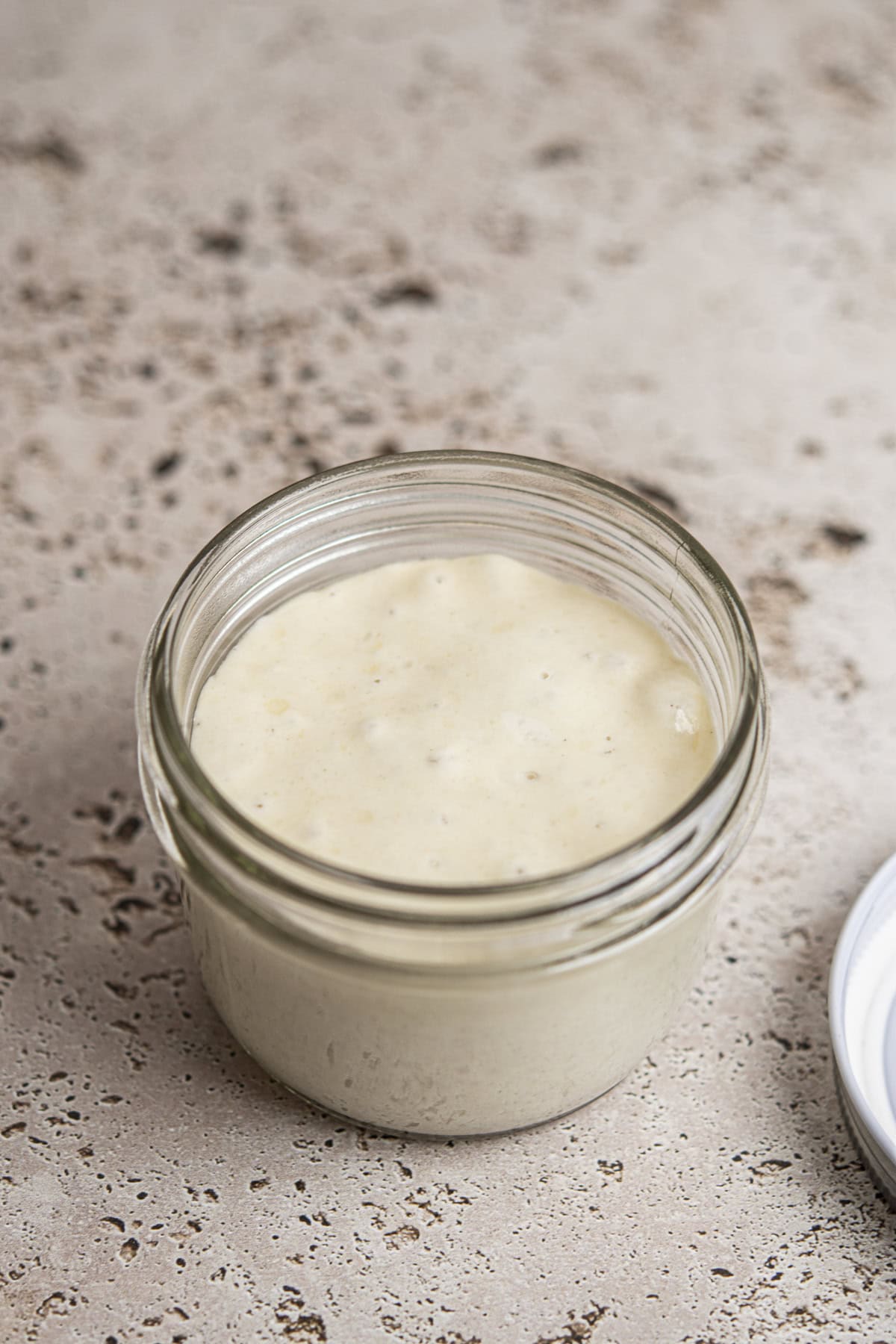
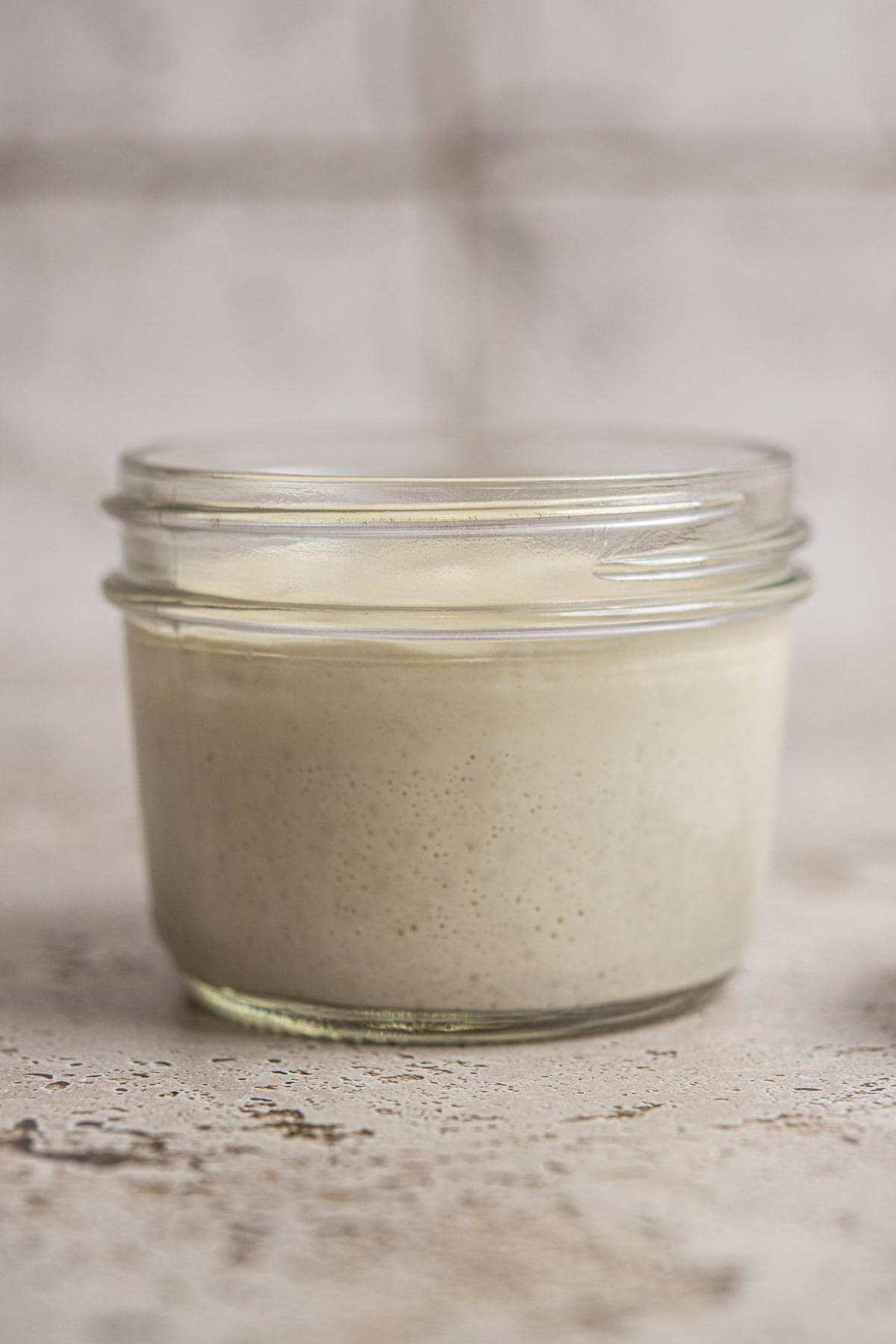
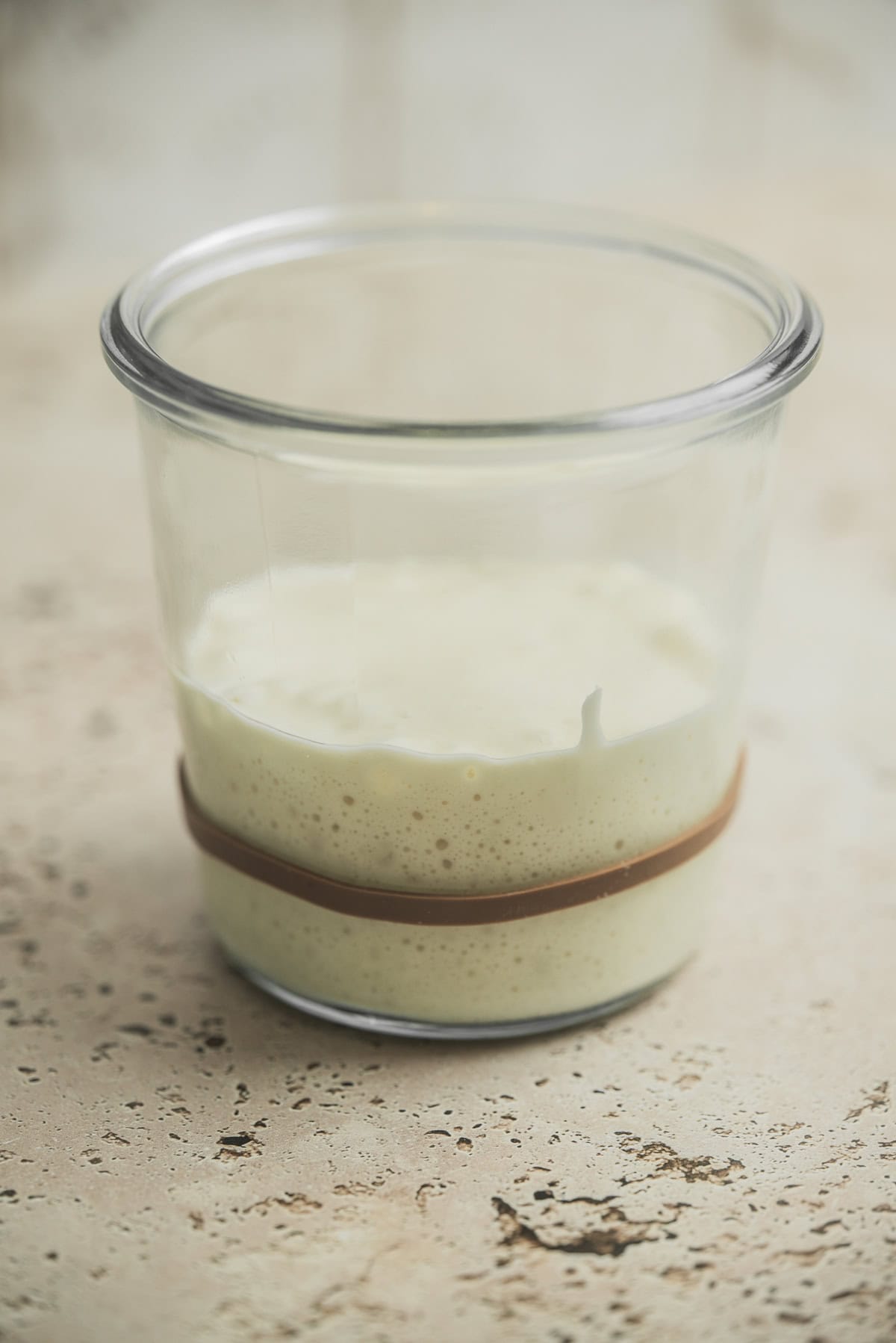
- Pour 30 g of your starter mixture into a new bowl, feed it 30 g of flour and 30 g of water, mix well, then transfer it to a clean jar. Mark the level with a rubber band so you can see how much it rises. Discard the rest.
Days 4–10:
Repeat the same feeding each day: take 30 g of starter, feed it 30 g flour and 30 g water, and move it to a clean jar. Continue discarding the excess.
By day 4 or 5, you should see more bubbles or smell a mild tang. That’s a good sign, though it’s still not ready for bread. You can use some of the discard for recipes like pancakes or cookies.
Discarding is important. It keeps the yeast and bacteria balanced by giving them enough food each time you feed. If you keep feeding the entire jar, it compounds quickly and you’ll burn through a lot of flour.
Keep only a small portion (about 30 g) and feed that each day. Save the rest of your discard in a container for sourdough discard recipes.
Things to watch for
If your starter becomes runny, it’s usually because of the acid and alcohol produced by the bacteria and yeast. That’s normal. Just keep feeding it.
If liquid forms on top or underneath, it’s a sign your starter is hungry. Check the temperature. If it’s too hot, fermentation speeds up. Feed more often, every 12 hours if needed, until it settles.
Feeding ratio
While building your starter, use a 1:1:1 ratio which is equal parts starter, flour, and water by weight. Measuring by weight keeps your starter consistent, as water weighs more than flour.
If your starter is doubling within 6 hours by day 6 or 7, it’s nearly ready. Keep feeding 1:1:1 twice daily until it becomes strong and predictable.
Testing your starter’s strength
To check if your starter is ready to bake with, it should double after feeding it at 1:1:1 within about 4-5 hours at room temperature, 21-26 °C (70-79 °F).
You can also test it by feeding it a higher ratio, like 1:2:2 (one part starter, two parts flour, two parts water). If it can double or triple within 6 hours, it’s strong enough to raise a loaf.
If it’s still slow, keep feeding twice daily for a few more days and test again.
Maintaining your new starter
Once your starter is active and reliable, regular maintenance keeps it strong. Feed it often enough to avoid acid build-up. If you’re keeping it at room temperature, feed 2-3 times a day at 1:1:1, or twice a day at 1:2:2. In warmer weather, you may need to feed more frequently.
When it peaks (meaning it has doubled and just before it starts to fall) that’s when it’s best to use it for baking.
Once it’s well established, you can store it in the fridge. For more details, see my full guide on how to maintain a sourdough starter.
Sourdough starter troubleshooting FAQs
Chances are it was the lactobacillus bacteria in your starter forming those bubbles, and not the yeasts. Bacteria also create bubbles while they are converting sugars to lactic and acetic acid, but it’s the yeasts in the starter that will give rise to your bread. The yeast colony takes a little longer to establish itself. Be patient and keep feeding and refreshing your starter
Be patient and keep regularly feeding your starter and ensure it’s in a warm spot. If you’ve been feeding your starter for at least 6 days and it’s not bubbling you could experiment with an extra feeding, or check your water source and that it’s not hindering the starter.
This is a sign that your starter is hungry. Your starter might be fermenting a little too fast and the yeasts have run out of food. This can happen if the room your starter is in is too hot.
Check the temperature and fix it if it’s too hot before continuing. Then, carry on with the 1:1:1 feeds, but you can switch to 12 hourly feeds if it keeps splitting.
It is normal for a starter to rise, reach its peak, and collapse once it has run out of food. Once your starter can double within 5-6 hours after being fed 1:1:1, switch to 12 hourly feedings.
If it doubles within 4-5 hours with the increased feedings, try the starter activeness test.
Has the temperature changed? If it’s colder your starter will take longer to double. Have you increased the feedings? If you increase the feeds before the starter is ready, it will slow things down a bit.
If you keep up with regular discarding and feeding, in a fresh jar each time, your lactobacillus colony will thrive. As they do, the amount of lactic acid they produce will inhibit mould growth and harmful bacteria.
A contaminated sourdough starter is pretty rare. If you do see mould growing on your starter or it develops a pink, red, or orange tinge, discard it and start again.
Sourdough Starter Recipe
Ingredients
- Unbleached all-purpose flour
- Water*
Instructions
Day 1
- Combine 30 g flour and 30 g water in a bowl and mix very well until smooth. Transfer the mixture to a clean glass jar, cover it with a loose lid or cloth, and leave it in a warm spot around 21-26 °C (70-79 °F) out of direct sunlight.
Day 2
- Tip the starter into a bowl, add 30 g flour and 30 g water, and mix well until smooth. Scrape the mixture into a clean jar. Mixing in a bowl first keeps the jar tidy, since old starter sticks like glue.
Day 3
- Pour 30 g of your starter into a bowl, add 30 g of flour and 30 g of water (a 1:1:1 ratio), and mix well. Transfer it to a clean jar and discard the rest. You might notice some small bubbles by now but these come from bacteria starting to ferment, not yeast just yet.
Day 4
- Pour 30 g of the starter into a bowl, feed it 30 g of flour and 30 g of water, and mix until smooth. Transfer to a clean jar and discard the rest. By this stage, your starter might be bubbling more and smell slightly sour.
Days 5-10
- Each day, pour 30 g of the starter into a bowl, feed it 30 g of flour and 30 g of water, mix well, and transfer it to a clean jar. Discard the rest.
- If your starter is doubling easily within about 4-6 hours of feeding start feeding it 1:1:1 twice a day instead of once, or switch to a higher ratio like 1:2:2 or 1:3:3 once a day. If it’s runny each time you go to feed it, that means it’s getting too hungry between feeds. Increase the ratio or feed twice per day.
Ready for baking
- By around day 10, your starter might be ready to bake with, though sometimes it happens sooner. You’ll know it’s ready when it doubles within 4-6 hours at a 1:1:1 feeding, has a domed top, and is bubbly, spongy, and pleasantly yeasty.
- If you’re feeding it at a higher ratio, like 1:2:2 or 1:3:3, the rise will take longer, usually around 6-10 hours depending on your room temperature. That’s completely normal. The extra flour and water give the yeast more food, so the starter needs more time to ferment and reach its peak.
- If it’s still slow or inconsistent after that, keep feeding daily until it rises and falls predictably after each feed. A strong starter will show a clear rhythm and bounce back quickly after every feeding.
- If it’s still slow or inconsistent after that, keep feeding daily until it rises and falls predictably after each feed. A strong starter will show a clear rhythm and bounce back quickly after every feeding.
Notes
Troubleshooting tips
- No bubbles yet? Be patient. Early activity is usually from bacteria, not yeast. Keep feeding daily, and it will become active.
- Runny or watery starter, or grey liquid (hooch) on top: It’s hungry. Feed more often or increase the ratio (1:2:2 or 1:3:3) so it has more food.
- Strong, vinegary smell: Too much acid build-up. Give it a couple of good feeds at room temperature to rebalance it.
- Slow to rise: Check your room temperature. Starters like it warm (but not too hot), around 21–26 °C (70–79 °F).




Hi Elien,
Thank you for this easy, well explained sourdough starter recipe.
So I tried this recipe twice. The first time I failed to.use filtered water each time so I did it a second time. However, I found the same results. The first and second day showed bubbling and doubling of starter. But by day 3 and 4 there was no bubbling and the water had separated from the flour. And this trend continued for a week.
Any idea what would have gone wrong?
Thank you,
Tahiyya
Hey, don’t give up with that starter just yet. Keep feeding it. Is it splitting or is there just a layer of liquid on the top? If it keeps doing that you might try an extra feeding
Do you have a favourite bread flour? I’m confused about which one to choose for starter AND for making the bread
When the starter is ready, how much of it is needed for a loaf of bread? Also I assume 50g can be kept back to continue growing for future use?
How much is needed will depend on the recipe you’re using, and you can create as much as you need with only a small bit of seed starter, just by feeding it 1:1:1 or, 1:2:2 or even 1:3:3 (starter:flour:water). Yes you always keep a little bit to feed for next time.
I will try that. I am just in central Auckland..
Hi, thought I’d say that your water idea worked. I have used cooled, boiled water and it is working very well. Thank you!
That’s awesome!! I’m so glad!
HI there, i have been following your starter recipe and enjoying seeing if I can make sourdough. It is day 13 now and I have not seen my starter rise really at all. It gets a couple of little bubbles in the very top, but that is all. I have fed it 1:1:1, once a day until about day 8, and then tried 1:1:1 twice a day, but no change. So from day 11 I went back to once a day. I also tried it in the oven at 35 degrees, but still nothing. Most days I fill a thermos with hot water and sit it next to it to stay warm. I have tried adding some wholemeal rye flour, and mixing it with my hands (to add some bacteria), all with no effect. Any suggestions? Should I start again? Thank you.
Hey Justine, I would probably start again. Perhaps it could be your water that affecting the starter? It’s hard to know exactly what’s wrong, often trial and error is needed. You could try with some filtered water, or boiled and cooled water and see if that makes a difference.
I’m into day 11 now of 1:1:1 and although i have some bubbles starting to form, it definitely isn’t anywhere near doubling in volume. I am also getting a skin forming on the top some days which i remove (or should i be leaving this?)
Thanks
Yeah remove that, it sounds like the top is drying out if it’s forming skin. I’m not sure what you’re covering it with but it might need a loose lid. I would suggest feeding it in the morning in a clean jar with a rubber band so you clearly see the rise during the day (if feeding at night sometimes you might miss the rise and fall of the starter.) If it is rising, albeit slowly, just continue what you are doing with 1:1:1 feeds. You could also switch to 12 hourly feeds and see if that helps. Unfortunately starters can differ in how long they take for all sorts of reasons so it can be a bit of trial and error!
when to feed it? what if I missed feed for the day?
Hi! Question…i dehydrated my aged starter bc we were going south for a few winter months. When i tried to reactivate it on our return (as per recipe instructions) it never doubled…only very minor rising so i have continued to feed and just using as discard. It smells good and sour but never rises much. I am afraid to try bread. Any suggestions? Thank-you, Helene
Hey Helene, I wouldn’t use it for bread yet until you get decent rising. You could try some extra 1:1:1 feeds during the day to get it active again.
Hi
I’m in the South Island of NZ and want to start a starter. The daytime temperatures are around 18-20 degrees and drop at night.
How can I maintain a warm environment for the starter?
Thanks
Hey you could pop the starter jar in a freezer bag along with some jars of boiled water to keep it warm in there 🙂
Hi! I’ve made your starter up to day 10 and have used the discard in pizza and crumpets – both fantastic, so thank you. Now it’s going well, can you explain the the process about refrigerating a little bit more? I read your notes above, but I was wondering how often (E.g. once a week?) and how much to feed it each time (is it then 1:2:2 every time?) Do you then carry on discarding? Thank you for sharing! 🙂
Hey, I feed it 1:2:2 before putting in the fridge and it can stay in there for a while. If I use it within a couple of days I’ll just feed it 1:2:2 when I next use it. However if it’s been in the fridge for a longer time and I see it has split and become runny ill feed it maybe twice before using it. Once 1:1:1 to get it active again, and then 1:2:2 to use it. Hope that makes sense!