Sourdough Starter Recipe
A sourdough starter recipe to make your own simple sourdough starter + how to maintain it
Ingredients
- Unbleached all-purpose flour
- Water*
Instructions
Day 1
- Combine 30 g flour and 30 g water in a bowl and mix very well until smooth. Transfer the mixture to a clean glass jar, cover it with a loose lid or cloth, and leave it in a warm spot around 21-26 °C (70-79 °F) out of direct sunlight.
Day 2
- Tip the starter into a bowl, add 30 g flour and 30 g water, and mix well until smooth. Scrape the mixture into a clean jar. Mixing in a bowl first keeps the jar tidy, since old starter sticks like glue.
Day 3
- Pour 30 g of your starter into a bowl, add 30 g of flour and 30 g of water (a 1:1:1 ratio), and mix well. Transfer it to a clean jar and discard the rest. You might notice some small bubbles by now but these come from bacteria starting to ferment, not yeast just yet.
Day 4
- Pour 30 g of the starter into a bowl, feed it 30 g of flour and 30 g of water, and mix until smooth. Transfer to a clean jar and discard the rest. By this stage, your starter might be bubbling more and smell slightly sour.
Days 5-10
- Each day, pour 30 g of the starter into a bowl, feed it 30 g of flour and 30 g of water, mix well, and transfer it to a clean jar. Discard the rest.
- If your starter is doubling easily within about 4-6 hours of feeding start feeding it 1:1:1 twice a day instead of once, or switch to a higher ratio like 1:2:2 or 1:3:3 once a day. If it’s runny each time you go to feed it, that means it’s getting too hungry between feeds. Increase the ratio or feed twice per day.
Ready for baking
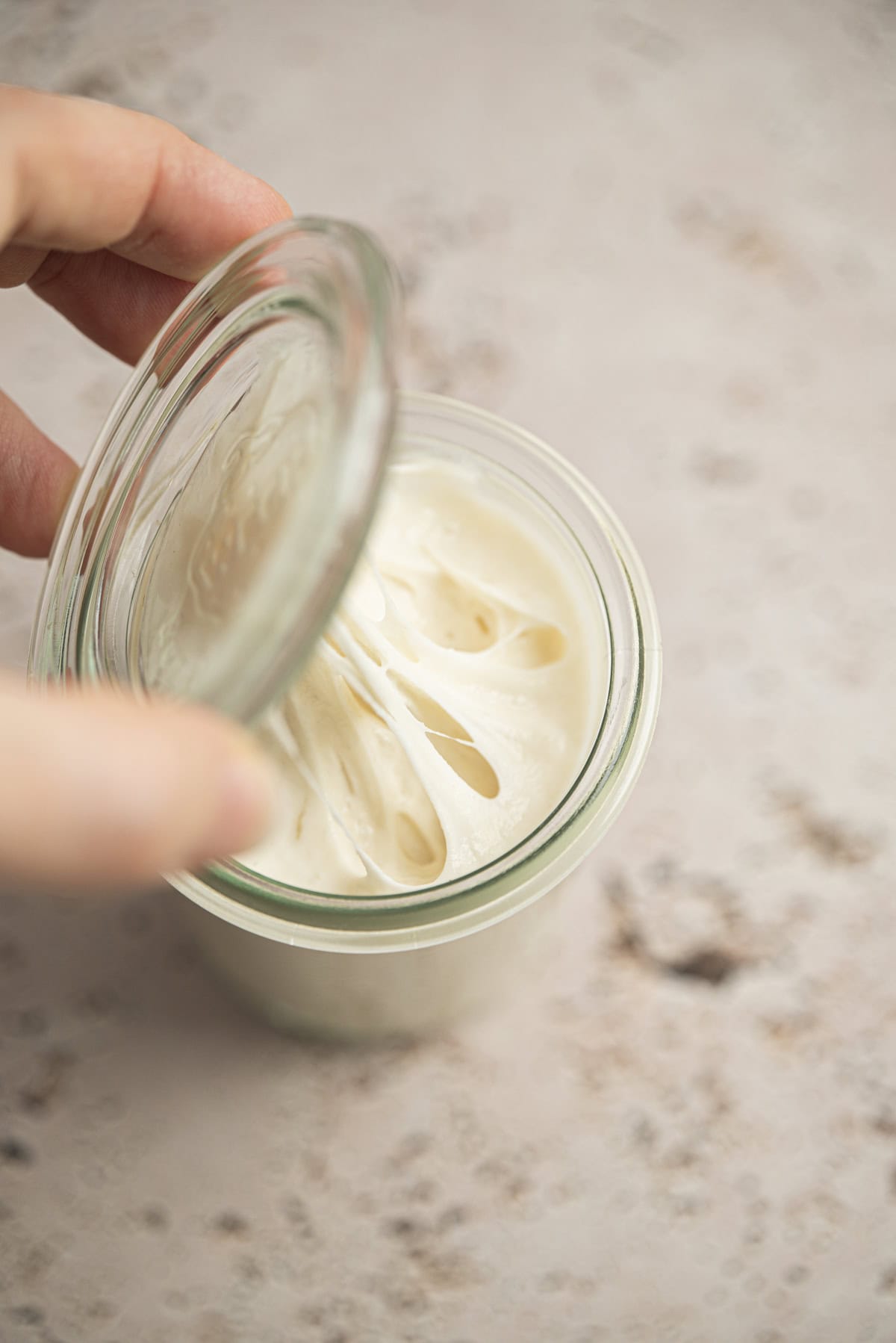
- By around day 10, your starter might be ready to bake with, though sometimes it happens sooner. You’ll know it’s ready when it doubles within 4-6 hours at a 1:1:1 feeding, has a domed top, and is bubbly, spongy, and pleasantly yeasty.
- If you’re feeding it at a higher ratio, like 1:2:2 or 1:3:3, the rise will take longer, usually around 6-10 hours depending on your room temperature. That’s completely normal. The extra flour and water give the yeast more food, so the starter needs more time to ferment and reach its peak.
- If it’s still slow or inconsistent after that, keep feeding daily until it rises and falls predictably after each feed. A strong starter will show a clear rhythm and bounce back quickly after every feeding.
- If it’s still slow or inconsistent after that, keep feeding daily until it rises and falls predictably after each feed. A strong starter will show a clear rhythm and bounce back quickly after every feeding.
Notes
*Water: If your tap water is heavily chlorinated, it can slow fermentation. Filtered water, or tap water that has been boiled and cooled, works best. Personally, I just use tap water. Mine doesn’t affect my starter or other ferments. If you’re unsure about yours, filtered water is a safe choice.
Troubleshooting tips
- No bubbles yet? Be patient. Early activity is usually from bacteria, not yeast. Keep feeding daily, and it will become active.
- Runny or watery starter, or grey liquid (hooch) on top: It’s hungry. Feed more often or increase the ratio (1:2:2 or 1:3:3) so it has more food.
- Strong, vinegary smell: Too much acid build-up. Give it a couple of good feeds at room temperature to rebalance it.
- Slow to rise: Check your room temperature. Starters like it warm (but not too hot), around 21–26 °C (70–79 °F).
Nutrition
Serving: 1g
Tried this recipe?Let us know how it was!