Sourdough Pumpkin Dinner Rolls
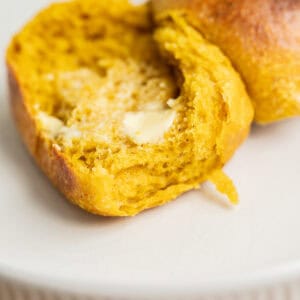
These sourdough pumpkin dinner rolls are soft, pillowy, and gently spiced, brushed with melted butter as soon as they come out of the oven. They’re leavened entirely with a sourdough starter, which gives them a tender crumb and a subtle depth of flavour. Perfect alongside soup or any meal that deserves a really good bread roll.
About these sourdough pumpkin dinner rolls
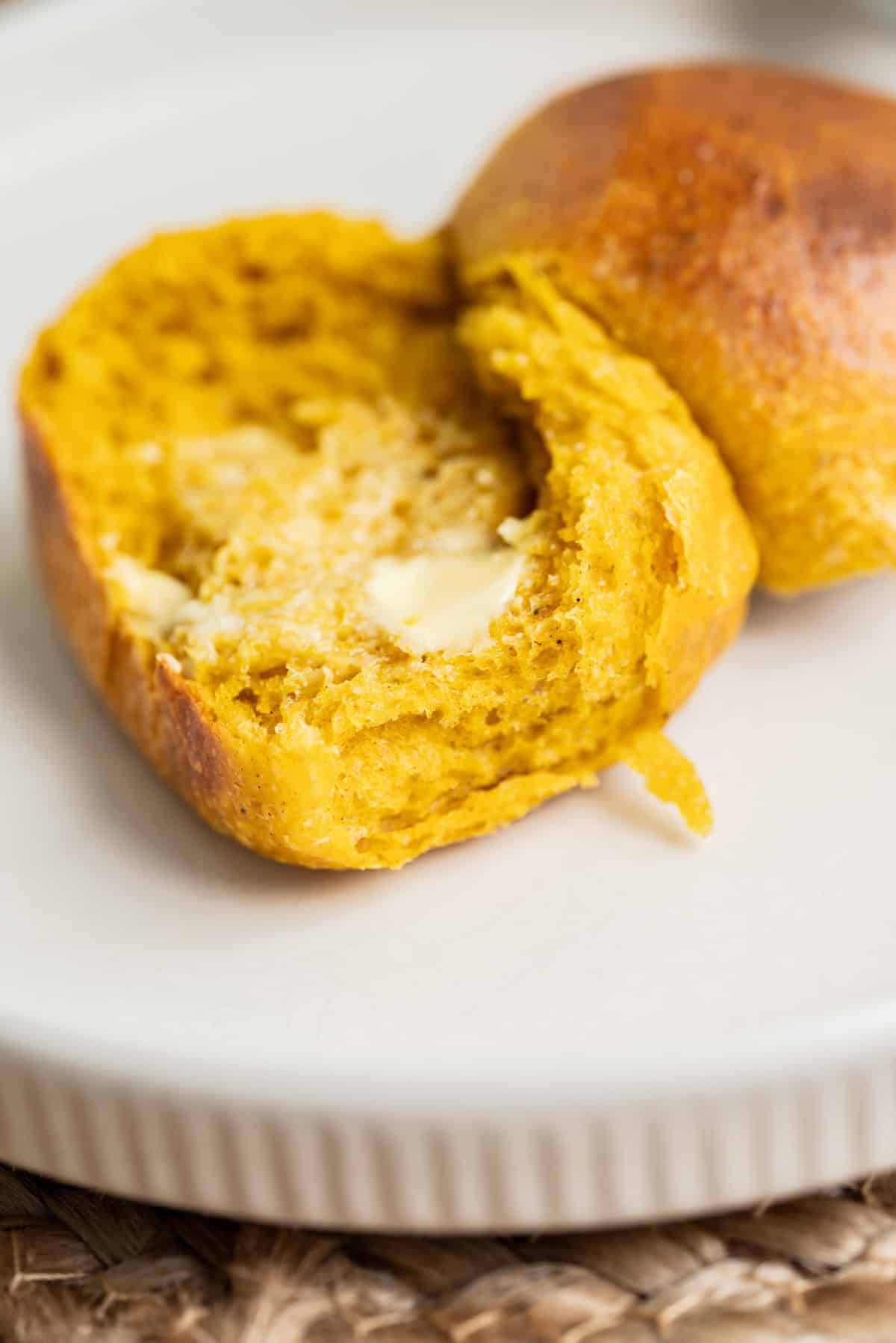
These are a sourdough version of a classic enriched dinner roll, with pumpkin puree added in the dough for moisture and the best colour. They’re gently spiced with cinnamon, ginger, nutmeg, and a touch of cloves.
These are mildly tangy, not strongly sour. The short bulk and overnight cold proof are designed to develop flavour without letting the acid build up. If you let the bulk go too far at room temperature, the rolls will taste much more sour.
The timeline is longer than a yeasted version because sourdough-enriched doughs rise more slowly, with all the fat, sugar, and pumpkin slowing the wild yeast down. Day one is the starter feed, the dough mix, the bulk ferment, and into the fridge for an overnight cold proof. Day two is shaping, the second rise, and baking.
Key ingredients
- High-grade flour or bread flour: A bread flour with at least 11% protein gives the rolls the structure they need to stay soft but hold their shape.
- Pure pumpkin puree: Not pumpkin pie filling, which has added sugar and spices. Tinned pure pumpkin works perfectly, or you can make your own from a roasted pumpkin if you have one.
- Active sourdough starter: As with all my sourdough recipes, the starter needs to be active and bubbly. I build a fresh levain the night before rather than using starter straight from the jar.
- Whole milk: Adds richness and softness to the crumb.
- Egg and butter: A single egg and 70g of butter enrich the dough enough to keep it tender.
- Spices: Cinnamon, ginger, nutmeg, and a small amount of cloves.
Baker’s schedule
This is a two-day bake, mostly hands-off.
- Day 1 (morning): Feed the starter or levain so it’s at peak by the time you mix.
- Day 1 (afternoon): Mix the dough, bulk ferment to a 30 to 40% rise, then cover tightly and refrigerate overnight.
- Day 2 (morning): Shape into rolls, let them rise at room temperature, then egg wash and bake.
Method
- Feed your starter in the morning, or the evening before so it’s ready to go.
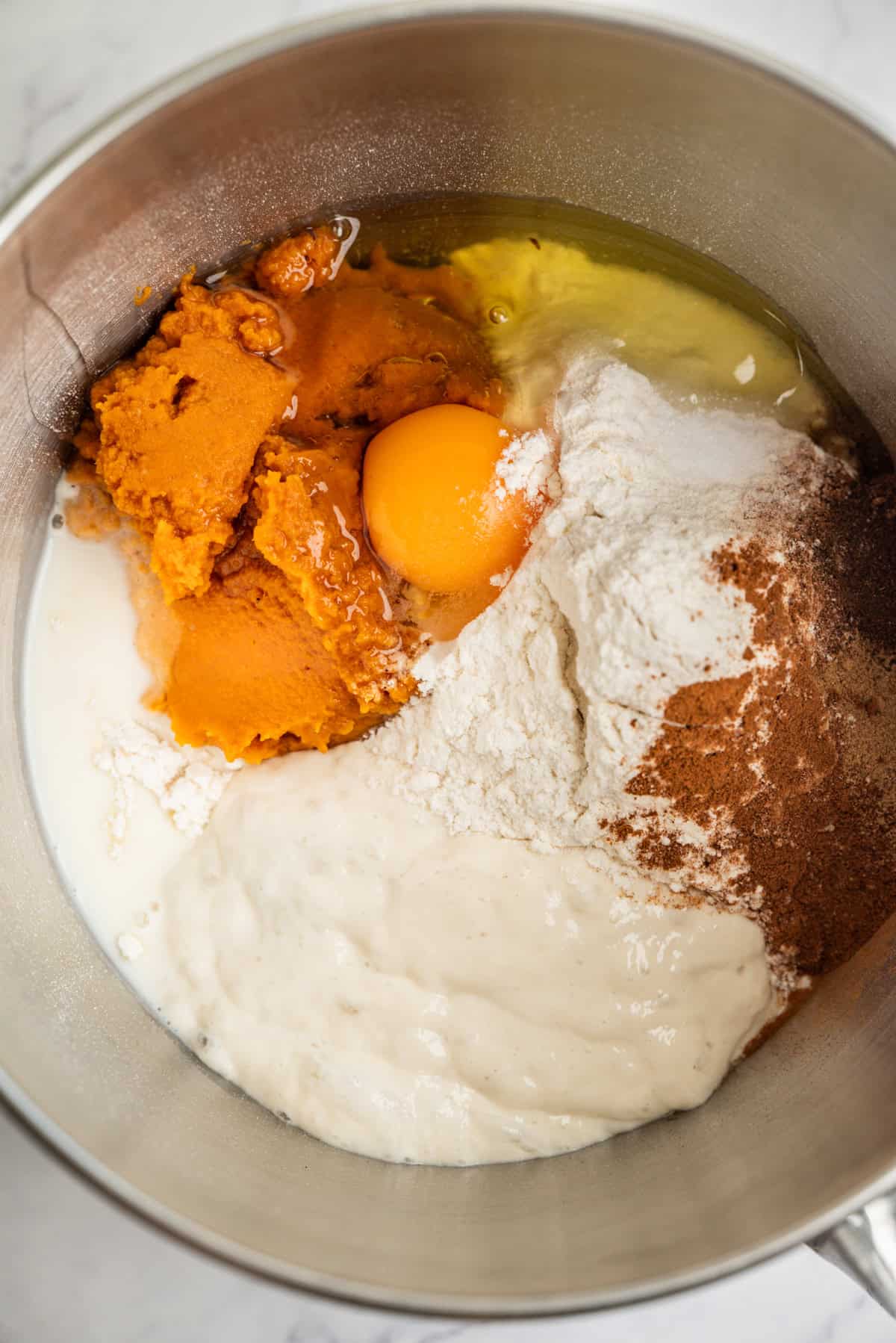
- Combine the milk, levain, sugar, pumpkin puree, egg, flour, spices, and salt and mix into a thick, shaggy dough. Knead for a few minutes to bring it together.
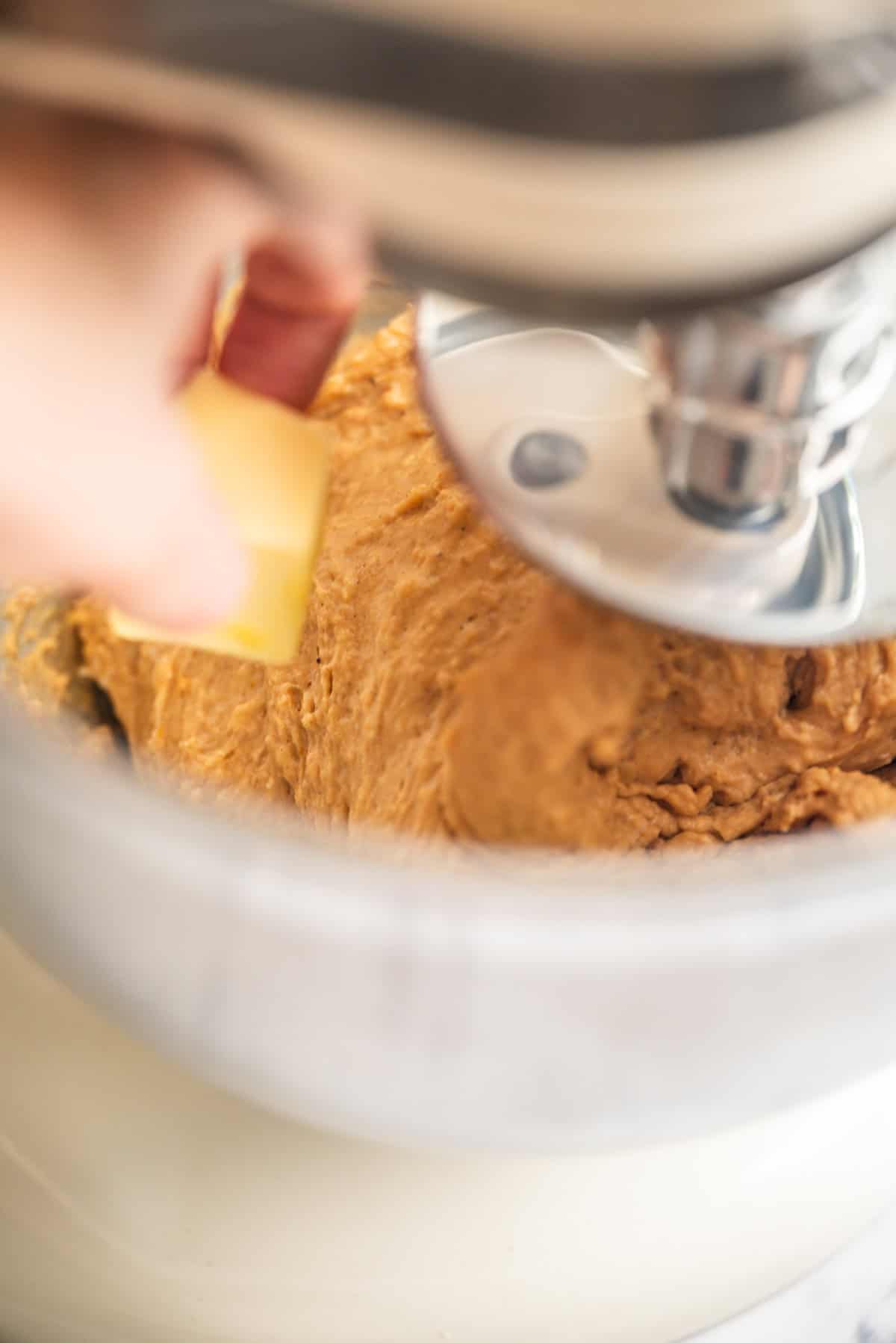
- Work in the softened butter a few cubes at a time.
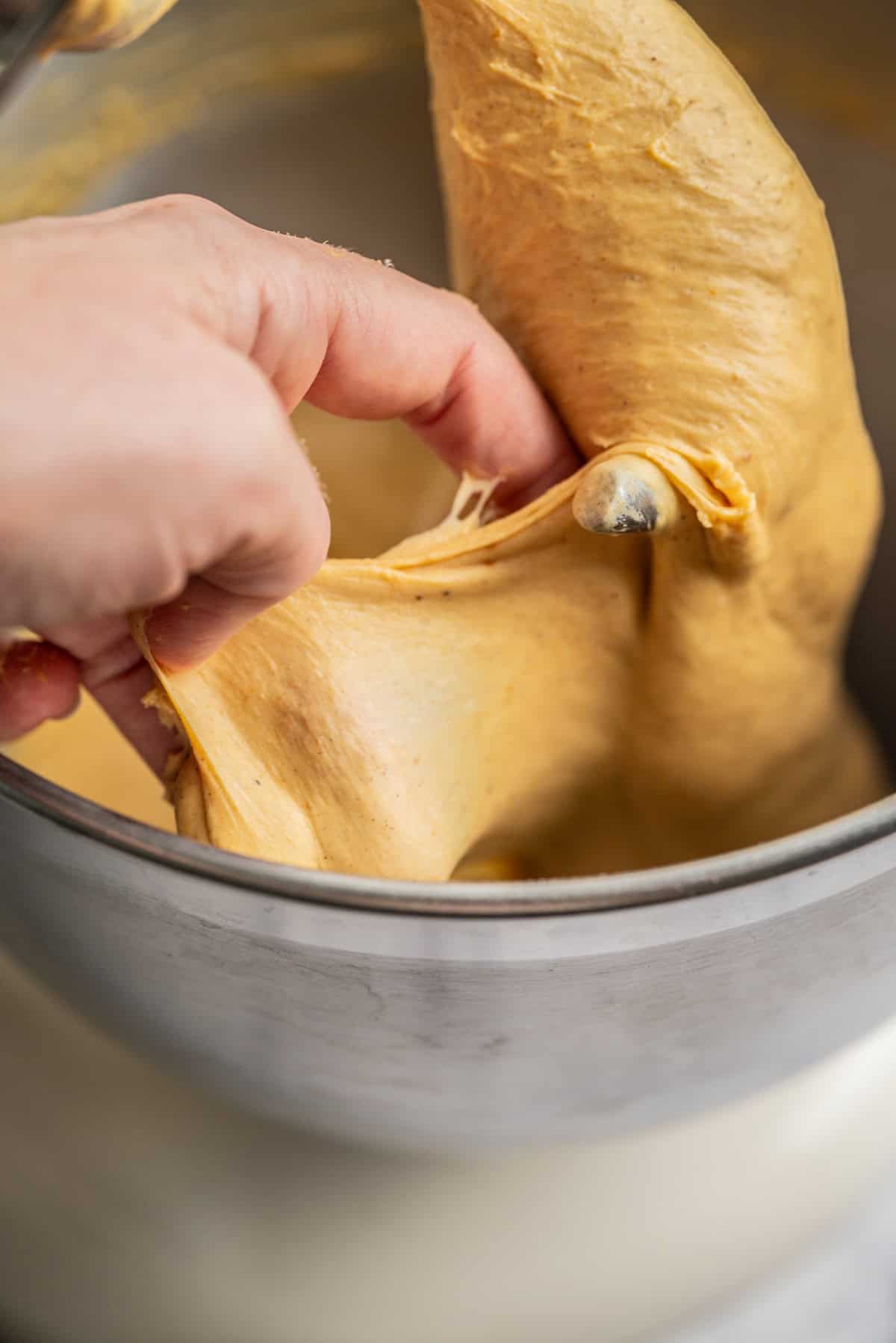
- Continue kneading for 10 to 15 minutes until the dough is smooth, elastic, and passes the windowpane test.
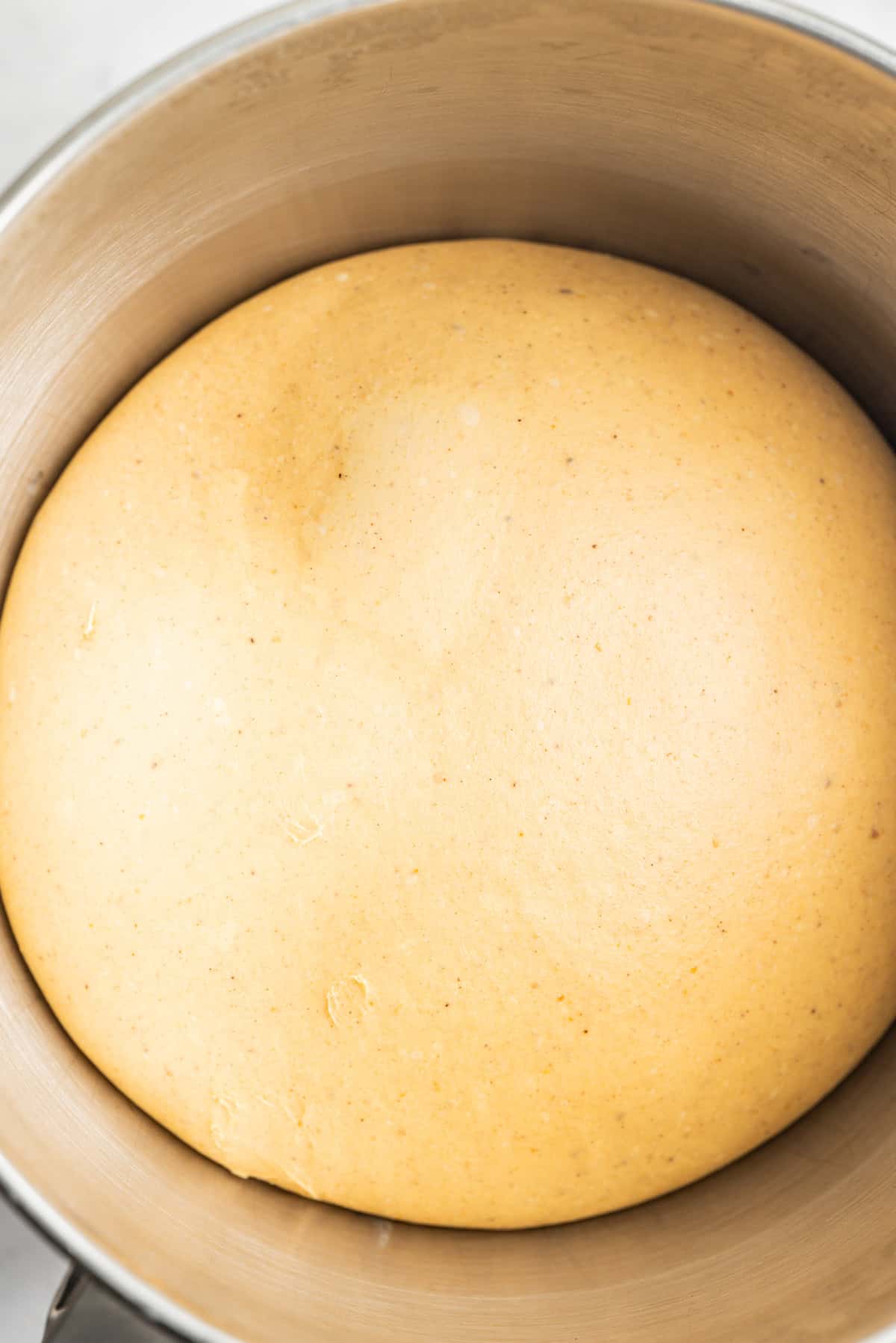
- Leave the dough to bulk ferment in a warm spot until risen by 30 to 40%. Cover tightly and refrigerate the dough overnight, 8 to 12 hours.
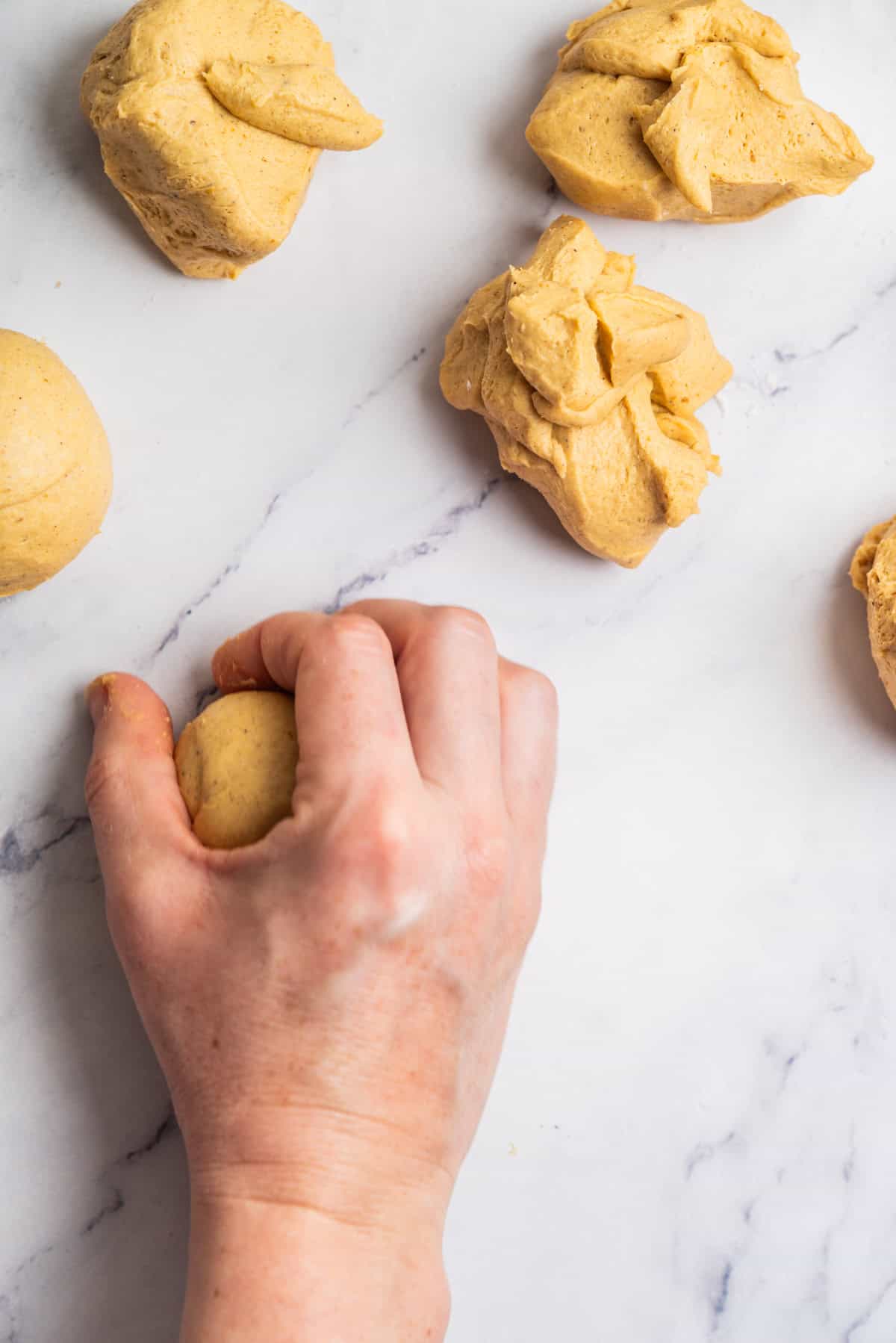
- The next morning, turn the cold dough out onto a lightly floured surface. Divide into 15 even pieces (around 60g each) and roll each into a tight, smooth ball.
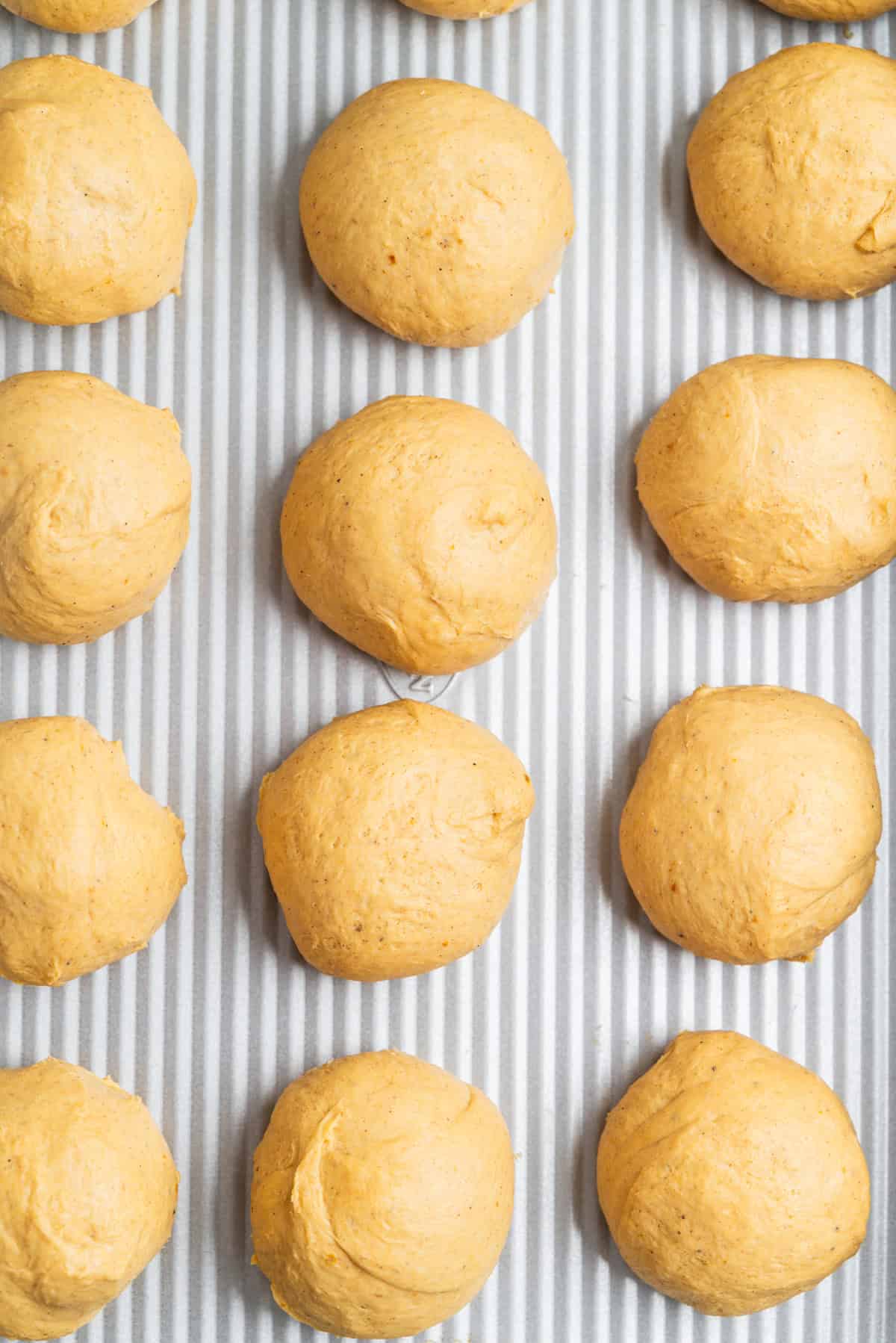
- Arrange in a lined or greased 9 x 13 inch baking dish.
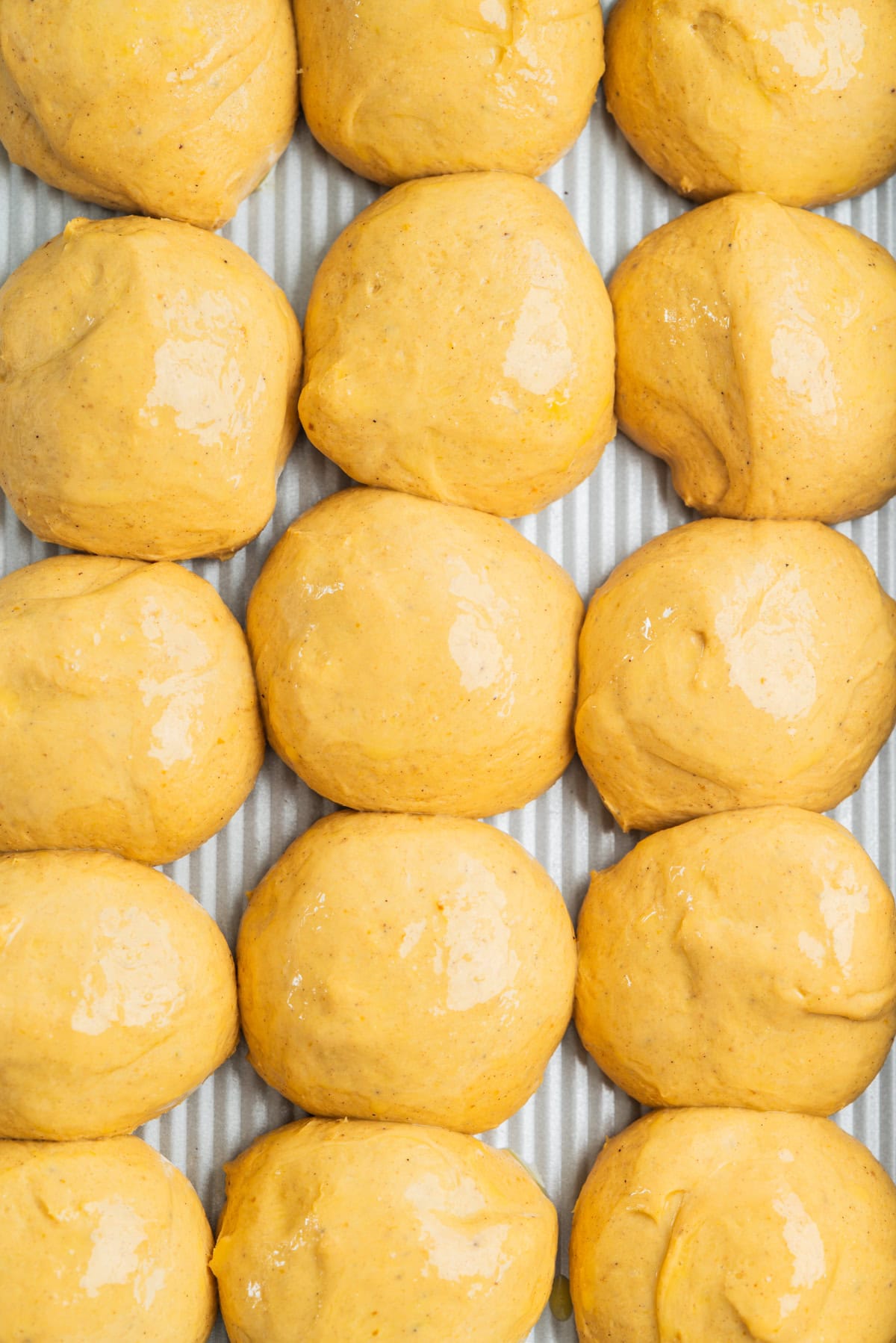
- Cover loosely and let the rolls rise at warm room temperature until almost doubled. Brush with egg wash.
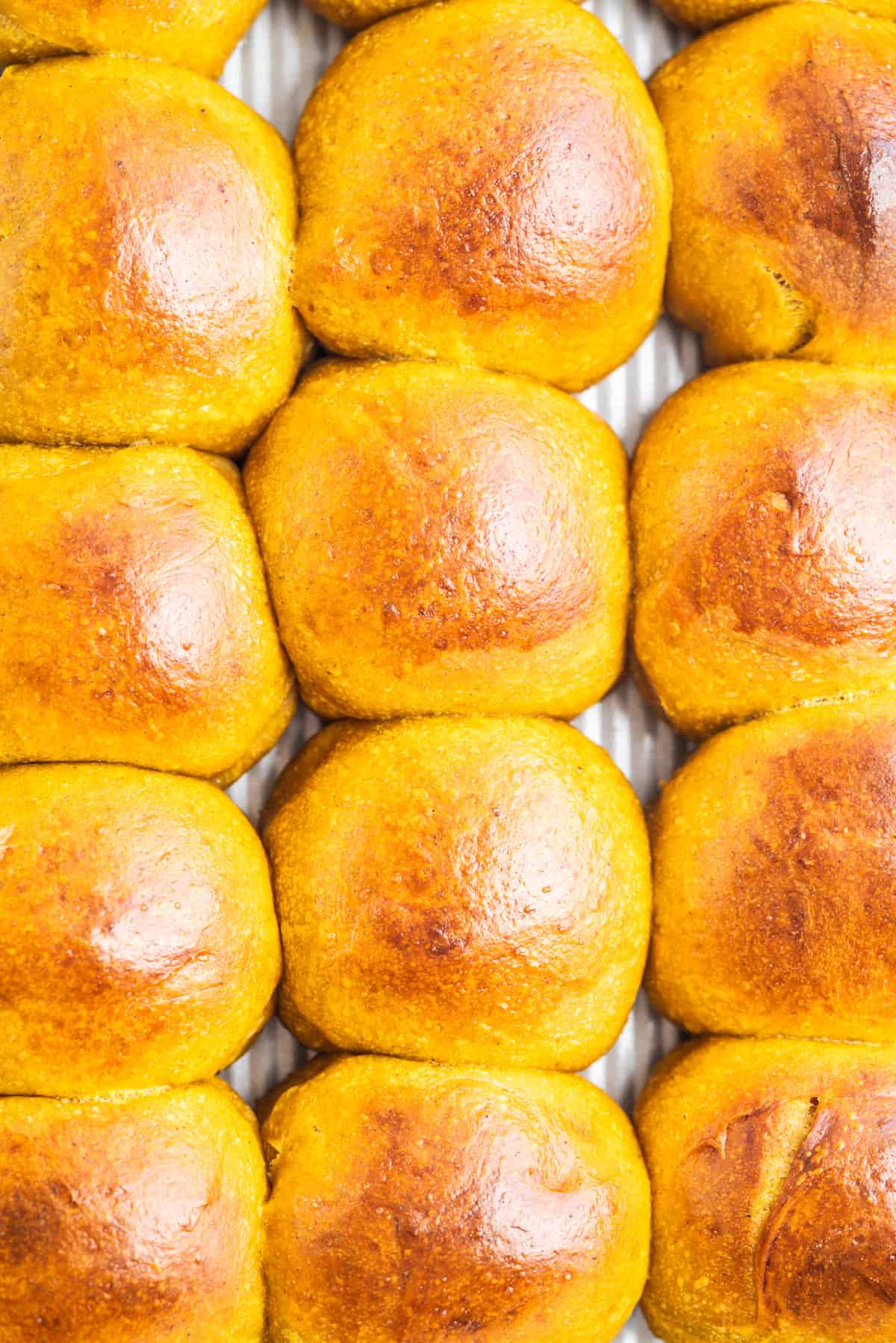
- Bake for 25 minutes until the tops are deep golden brown. Brush the hot rolls generously with melted butter as soon as they come out of the oven, then serve warm.
Tips for success
Use a properly active levain or starter. Sourdough enriched doughs are slow, and a sluggish starter makes them painfully so. The levain should be domed, bubbly, and at its peak when you mix the dough.
Don’t over-ferment the bulk. This is the most important tip for sourdough enriched doughs. Aim for a 30 to 40% rise at room temperature, then move the dough to the fridge. If you let it double on the bench, the rolls will taste much more sour and the structure will be weaker.
The dough will be tacky, that’s fine. The pumpkin adds moisture, so the dough comes together a bit stickier than a standard enriched dough. Don’t be tempted to add extra flour, just keep kneading.
Give the second rise the time it needs. The cold dough takes longer to rise than fresh dough would. They should look almost doubled, puffy, and pillowy before they go in the oven. Underproofed rolls stay dense and tight rather than soft and fluffy.
Don’t skip the egg wash. Sourdough fermentation consumes the sugars on the surface of the dough that normally drive deep browning. Without an egg wash, naturally leavened rolls can come out pale even when properly baked. The egg wash gives you that proper golden colour.
Storage
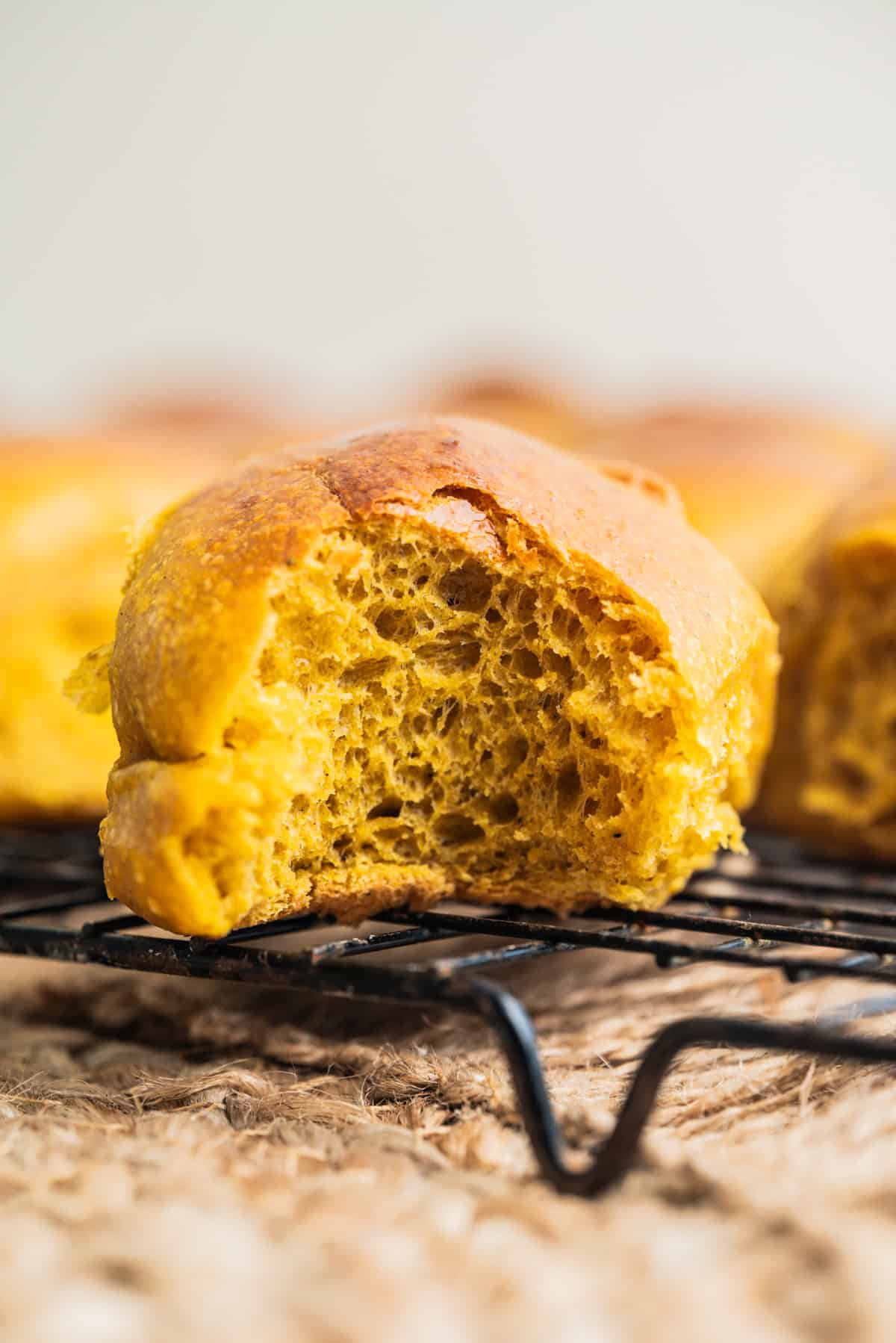
Store leftover rolls in an airtight container at room temperature for up to 4 days. The pumpkin and sourdough keep them moist longer than a yeasted dinner roll. Warm them briefly in the microwave or a low oven before serving to bring back the softness.
For longer storage, freeze the rolls in an airtight bag for up to 3 months. Thaw overnight in the fridge and warm before serving.

FAQs
Related recipes
You might also like:
- Sourdough hamburger buns
- Soft sourdough dinner rolls
- Sourdough garlic knots
- Sourdough cinnamon rolls
- Pumpkin dinner rolls (yeast version)
Sourdough Pumpkin Dinner Rolls
Ingredients
Levain
- 25 g active sourdough starter 100% hydration
- 50 g bread flour
- 50 g water room temperature
Pumpkin Rolls
- 120 g whole milk lukewarm (around 35°C / 95°F)
- 65 g granulated sugar
- 440 g bread flour or strong all purpose, around 11% protein
- 170 g pure pumpkin puree not pumpkin pie filling
- All the levain or around 120g active starter
- 1 large egg room temperature
- 1 tsp salt
- 2 tsp ground cinnamon
- 1/2 tsp ground ginger
- 1/2 tsp ground nutmeg
- 1/8 tsp ground cloves
- 70 g butter salted or unsalted, room temperature, cubed
Egg Wash
- 1 large egg
- 1 tbsp water
Finishing
- 30 g butter salted or unsalted, melted, for brushing
Instructions
Feed the levain
- In the morning, combine the 25g active starter, 50g flour, and 50g water in a clean jar. Mix well, cover loosely, and leave at room temperature until at least doubled and very bubbly (around 5 to 7 hours). Or, for an overnight feed, use a higher ratio like 20g starter, 100g flour, 100g water (a 1:5:5 ratio) so it peaks overnight and doesn't collapse.
Mix the Dough
- When the levain is ready, warm the milk to lukewarm (around 35°C / 95°F). In the bowl of a stand mixer fitted with a dough hook, combine the warm milk, risen levain, sugar, pumpkin puree, egg, flour, spices, and salt. Mix on low speed for 5 minutes until a thick, shaggy dough forms.
- With the mixer running on medium speed, add the softened butter a few cubes at a time. Don't add the next piece until the previous one has been worked in. Continue kneading on medium speed for 10 to 15 minutes until the dough is smooth, elastic, and pulls cleanly from the sides of the bowl. To test, let the dough rest for 5 minutes, then stretch a small piece. It should stretch thin without tearing (the windowpane test).
- To knead by hand: mix with a wooden spoon until a rough dough forms, then turn out onto a lightly floured surface. Knead in the butter a few cubes at a time and continue kneading for 15 to 20 minutes until smooth and elastic. The dough responds well to rest, so take short breaks if needed.
Bulk Ferment
- Shape the dough into a ball and place in a lightly greased bowl. Cover and bulk ferment at warm room temperature (around 24°C / 75°F) for 3 to 5 hours, until the dough has risen by 30 to 40%.
Cold Proof
- Cover tightly and refrigerate the dough overnight, 8 to 12 hours. The cold slows fermentation, develops the flavour without going sour, and makes the dough easier to shape in the morning.
Shape
- The next morning, turn the cold dough out onto a lightly floured surface. Weigh the total dough, divide by 15, and cut 15 even pieces (around 60g each) using a kitchen scale. Roll each piece into a tight, smooth ball by cupping your hand over the dough and moving it in a circular motion against the work surface.
- Arrange the rolls in a lined or greased 9 x 13 inch baking dish.
Second Rise
- Cover loosely and let the rolls rise at warm room temperature (around 24°C / 75°F) until almost doubled and noticeably puffy, around 3 to 5 hours. The second rise takes longer because the dough is starting cold. Preheat the oven to 200°C / 390°F about 30 minutes before the end of the rise.
Egg Wash and Bake
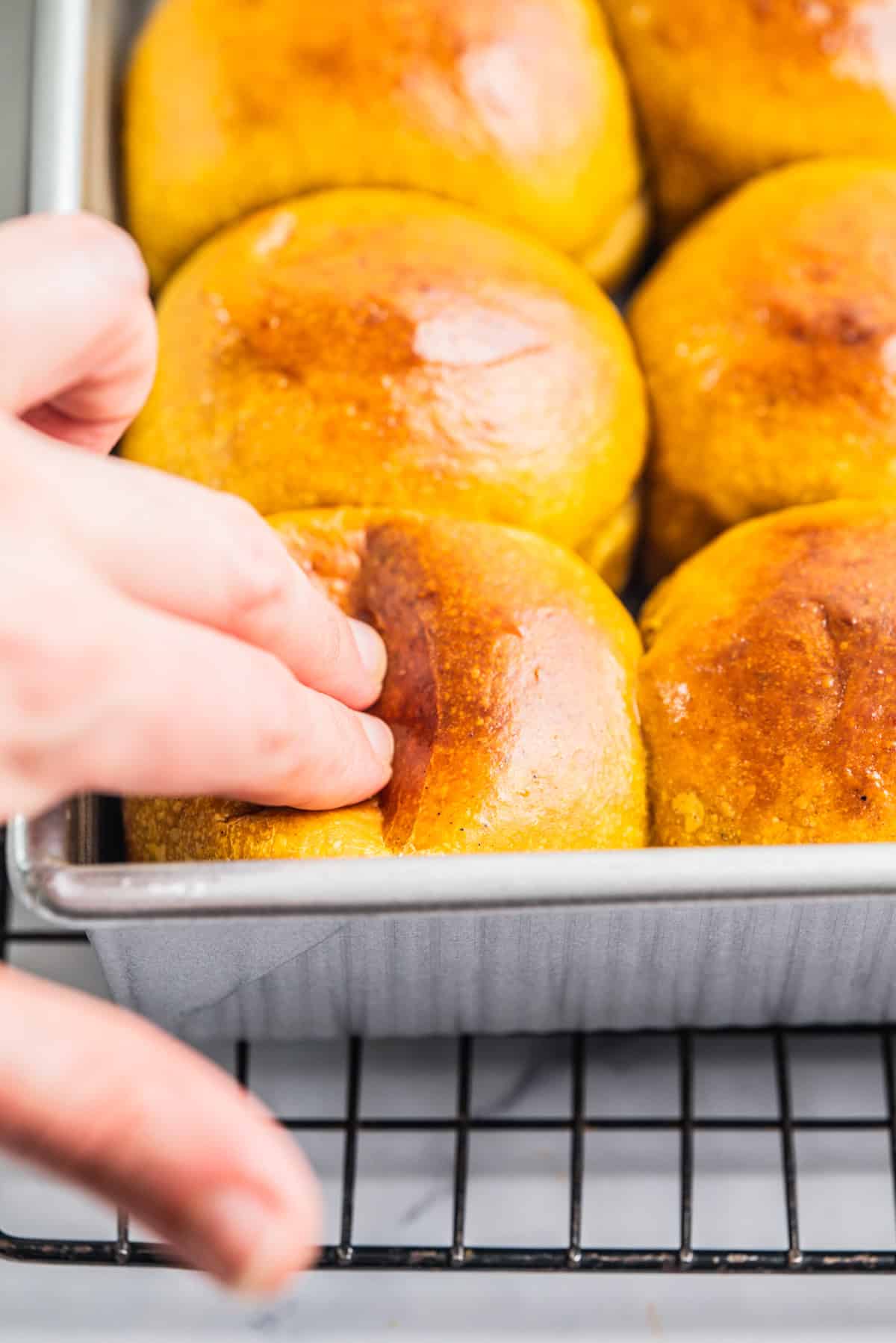
- Whisk the egg and water together for the egg wash. Gently brush the proofed rolls with the egg wash.
- Bake for around 25 minutes until the tops are deep golden brown.
Finish
- Brush the hot rolls generously with the melted butter as soon as they come out of the oven. Serve warm.