Sourdough Marble Cake
This sourdough marble cake is a tender loaf with swirls of vanilla and chocolate batter running through the crumb. The discard keeps the crumb tender and the batter can be baked straight away or fermented overnight in the fridge.
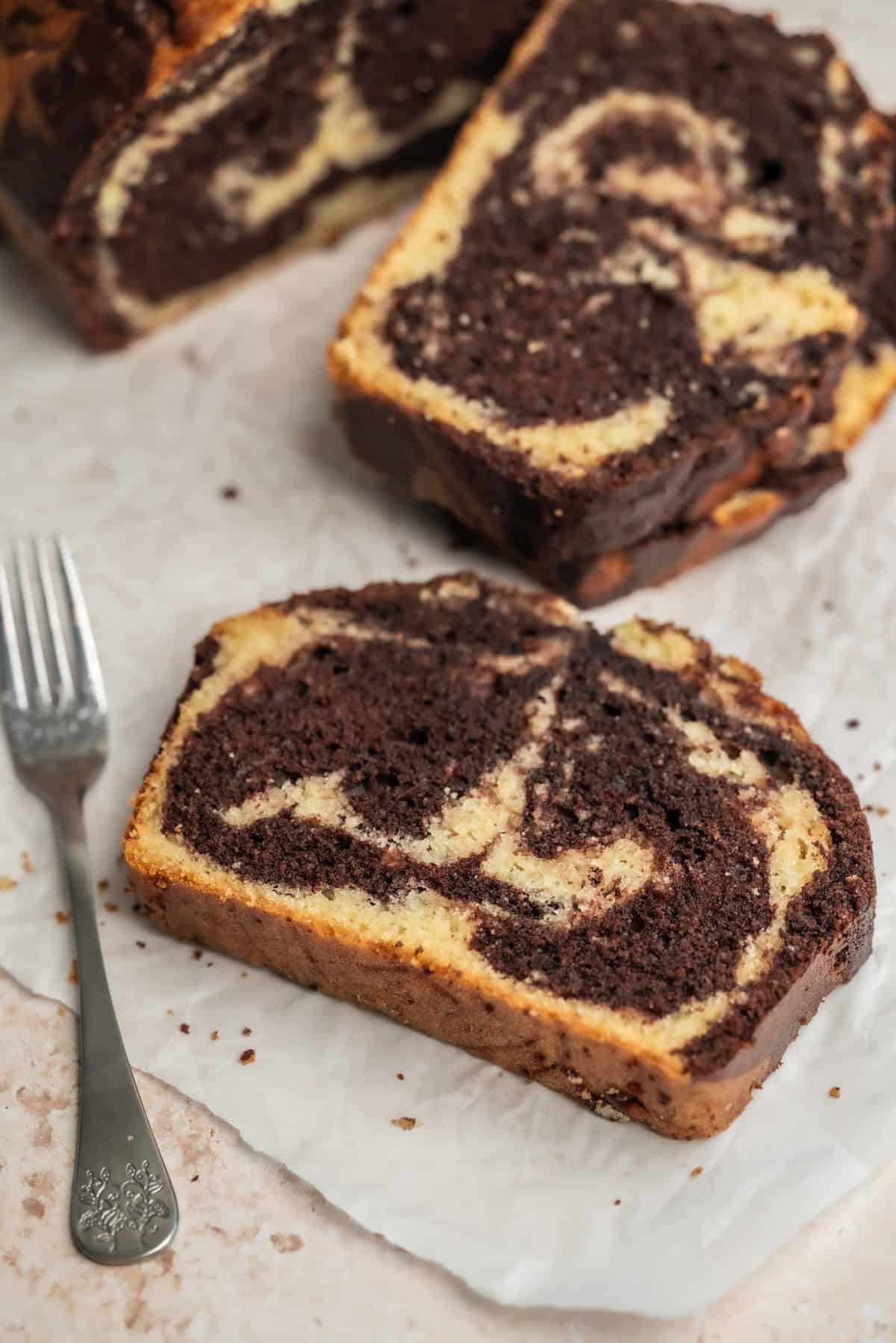
About this sourdough marble cake
This cake uses sourdough discard in the batter. The acid in the discard does two important things. It reacts with the baking soda to help with leavening, and it creates a softer, more tender crumb. It’s the same method I use in my sourdough discard coffee cake and other discard bakes.
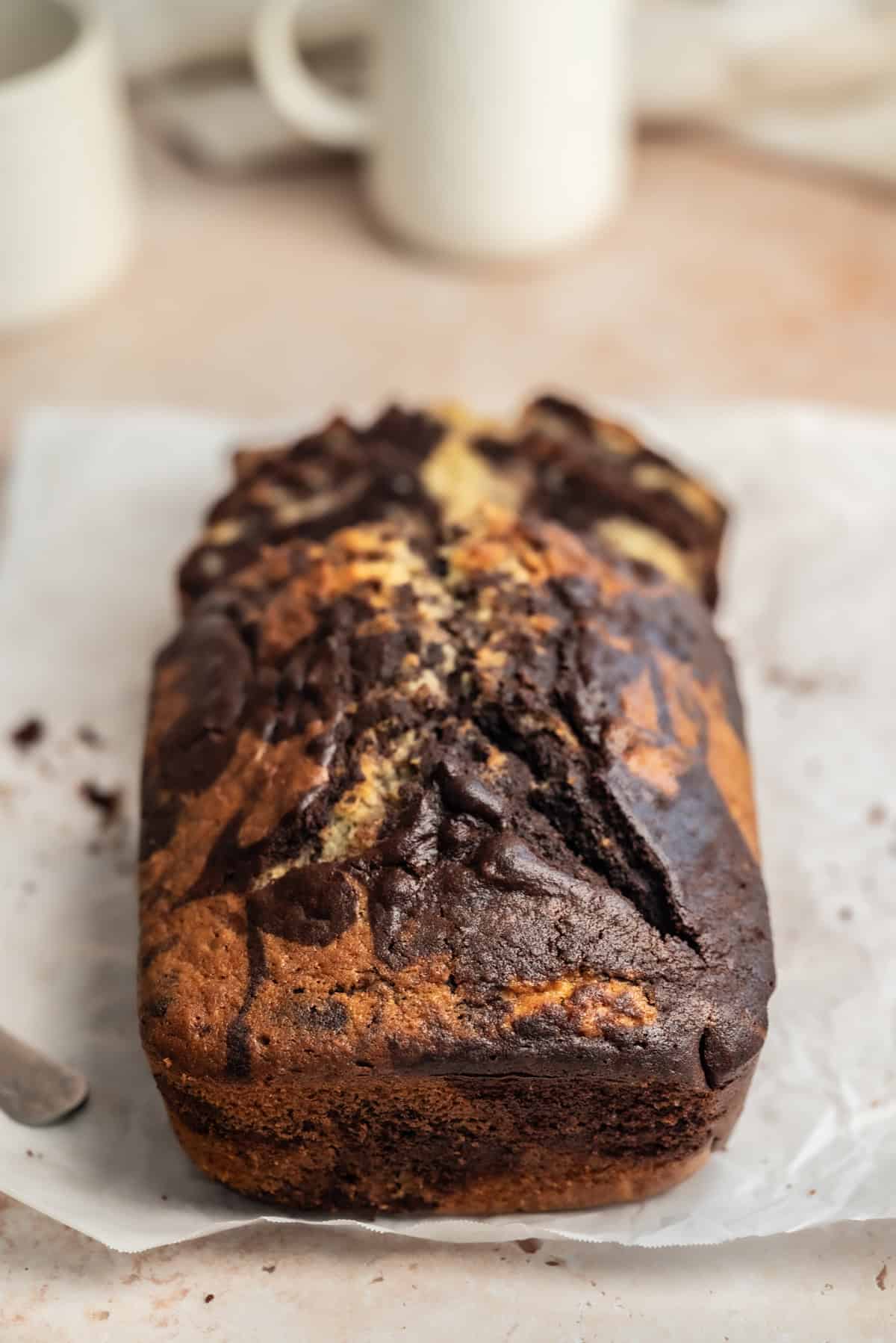
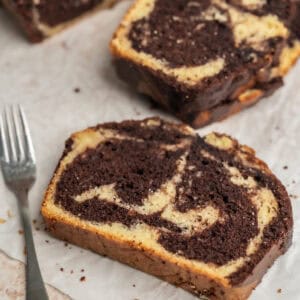
The marble effect comes from setting aside some of the vanilla batter and folding bloomed cocoa through it. A teaspoon of instant espresso powder added at the same time pushes the chocolate even further but it really doesn’t make the cake taste like coffee.
I use a combination of softened butter and a small amount of vegetable oil. The butter creams with the sugar for structure and flavour, while the oil stays liquid at room temperature and keeps the crumb soft for days. I like to ferment the batter overnight in the fridge before baking. This is optional, but the cold fermentation allows the flour to absorb more moisture from the batter and the slow ferment helps break down the proteins and starches in the flour, which can improve digestibility. If you want to bake it right away, you absolutely can.
Don’t have your own sourdough starter yet? Learn to make a homemade sourdough starter.
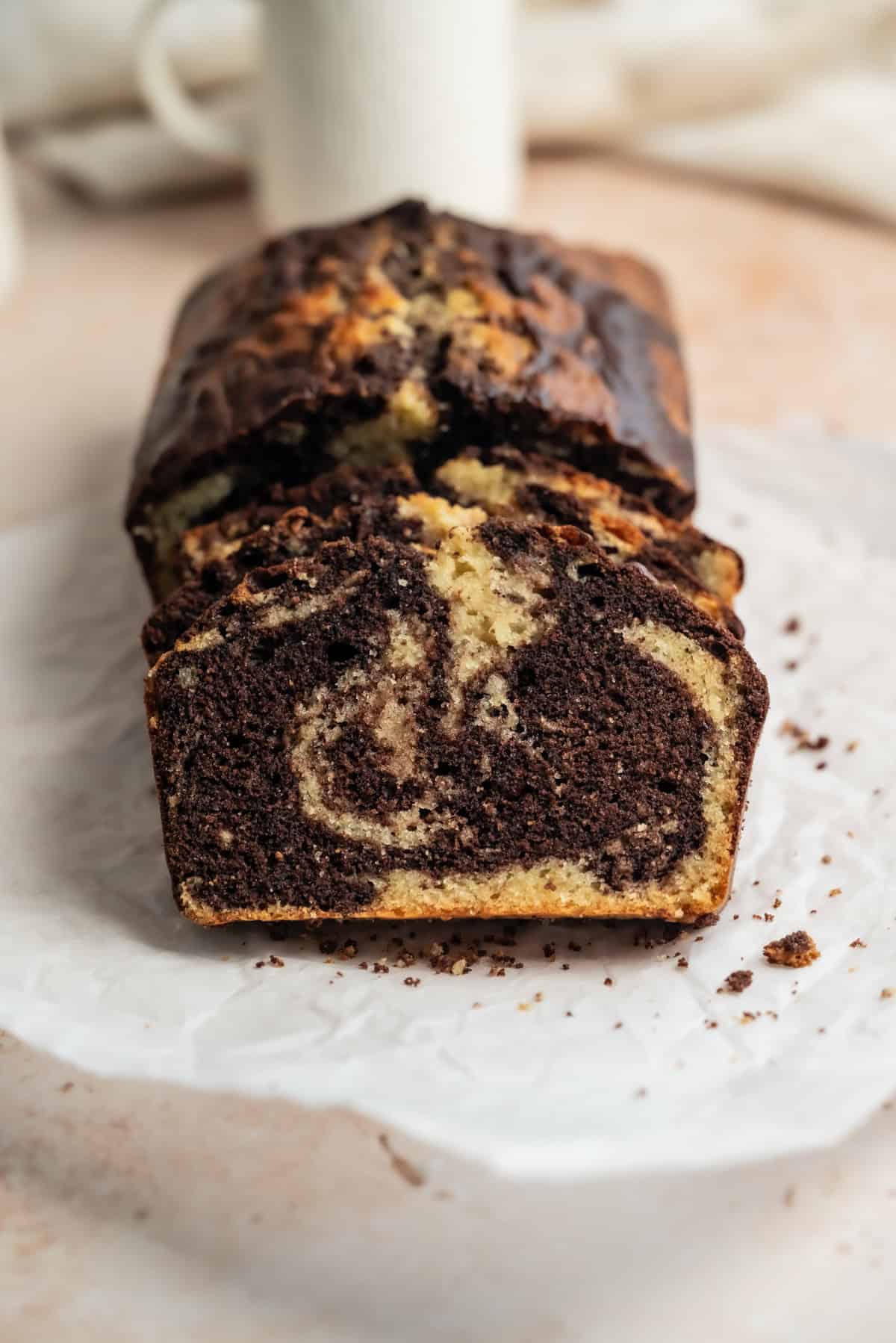
Key ingredients and why
- Butter and vegetable oil. Creamed together with the sugar to whip air into the batter for a lighter, more tender crumb. The oil stays liquid at room temperature and keeps the cake soft for days after baking.
- Granulated sugar. A standard white sugar so the vanilla batter stays pale and contrasts nicely against the chocolate swirl.
- Sourdough discard. Unfed discard works best as it’s more acidic, which reacts with the baking soda and gives a tender, slightly tangy crumb. An active starter will work too, the texture will just be a touch different.
- Natural yoghurt. Adds tenderness, tang, and richness. Buttermilk or sour cream are good substitutes if you don’t have yoghurt on hand.
- Whole milk. Just a small amount to thin the batter to the right consistency.
- Cocoa powder. Either natural or Dutch-processed works here. Natural cocoa gives a brighter chocolate flavour and a slightly better rise. Dutch-processed gives a darker, smoother chocolate. Use whichever you prefer.
- Instant espresso powder (optional). A small amount in the chocolate swirl deepens the chocolate flavour without making the cake taste of coffee.

A note on blooming the cocoa powder
Cocoa powder is a fairly dry ingredient on its own and benefits from being bloomed in hot liquid before going into a batter. Blooming cocoa is when you add it to a hot liquid so it dissolves the cocoa solids and releases its aromatic compounds, which deepens the chocolate flavour. It makes the chocolate taste deeper and more chocolatey rather than dusty or flat.
Method
- Cream the softened butter, vegetable oil and sugar together in a stand mixer on medium-high speed for around 4 minutes, until pale in colour and fluffy.
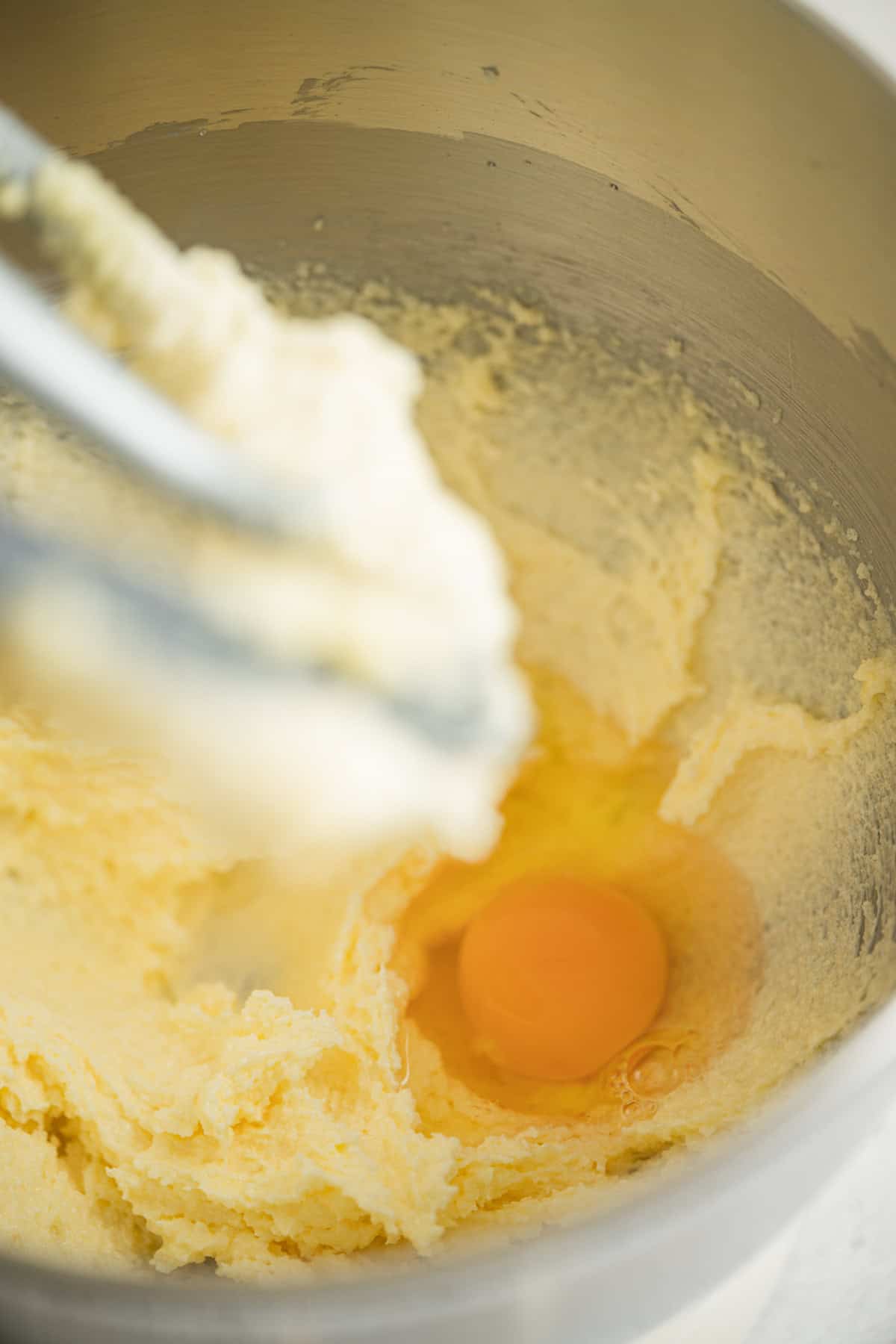
- Add the eggs one at a time, mixing well between each addition, followed by the vanilla.
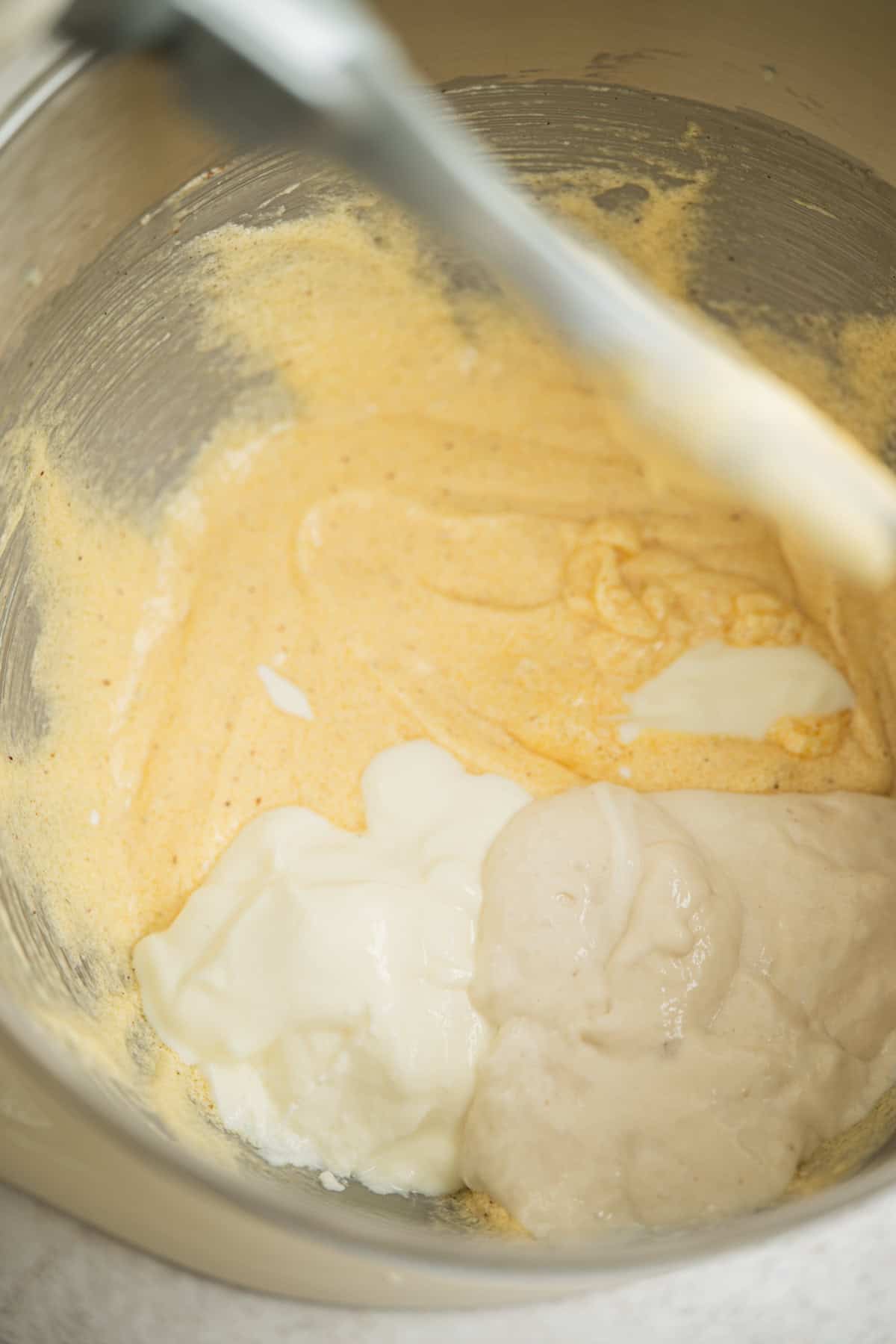
- Whisk in the oil, sourdough discard, and yoghurt until smooth. If the mixture splits, blend briefly with an immersion blender to bring it back together.
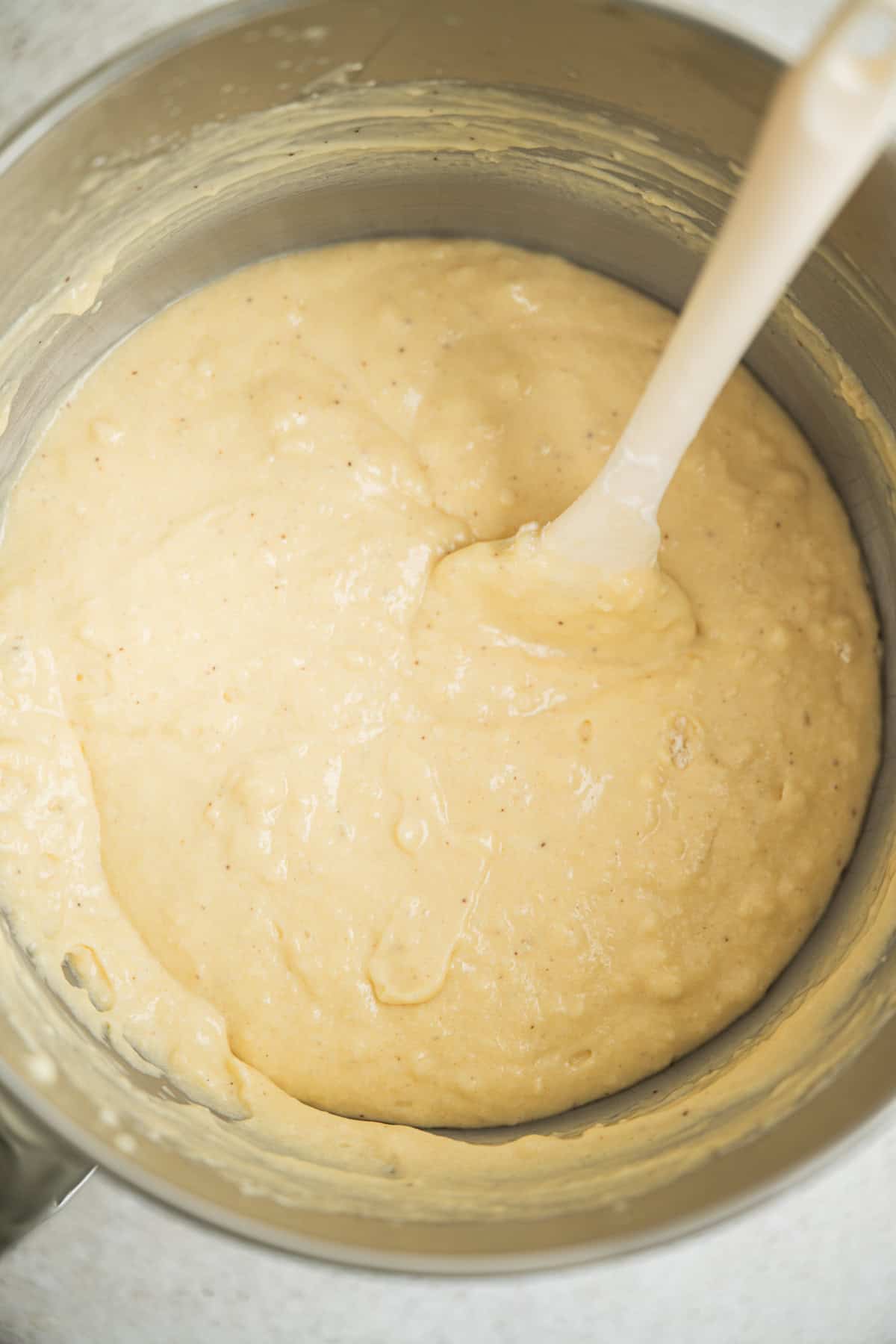
- Fold in the dry ingredients alternately with the milk in two additions, starting and ending with the dry.
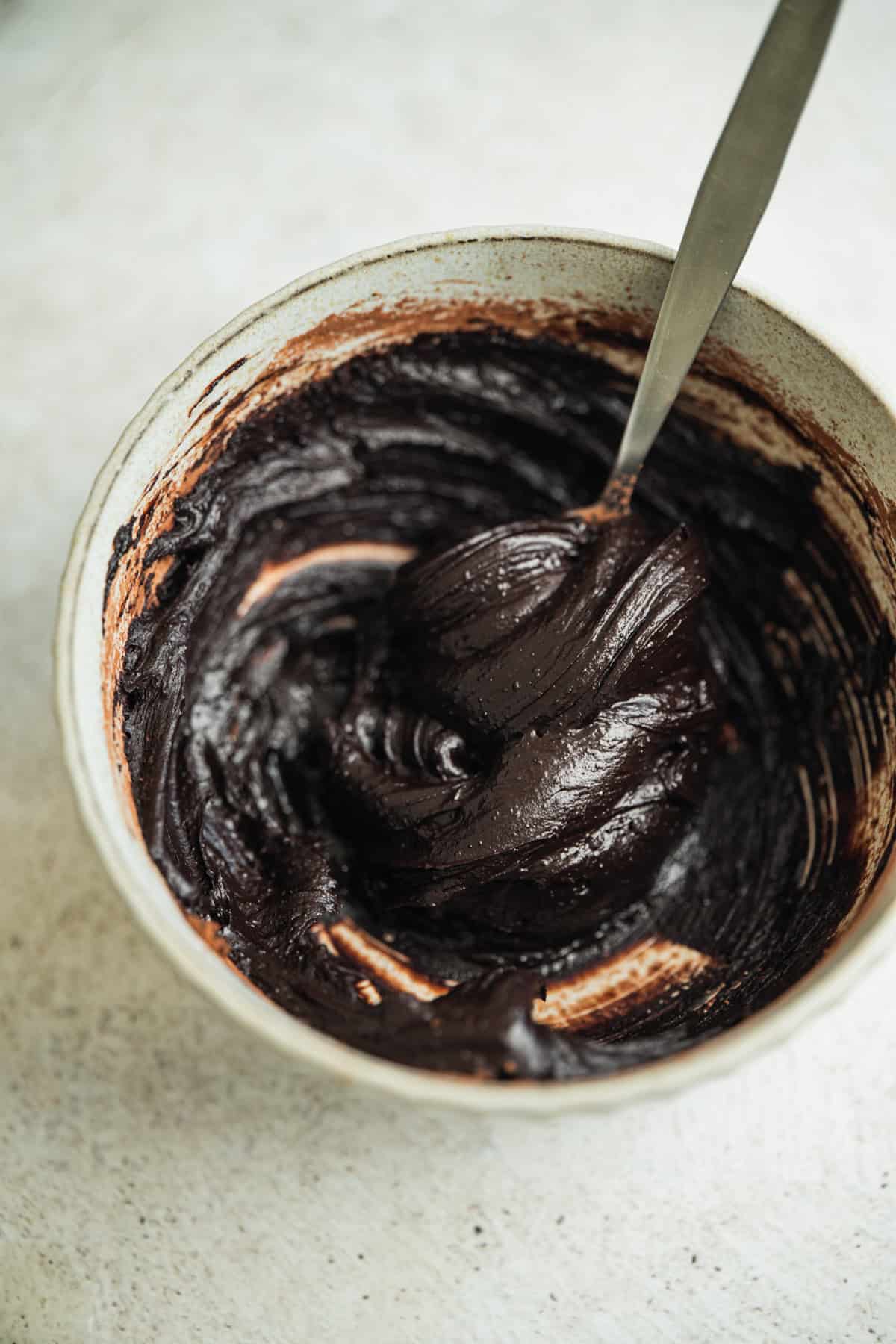
- Bloom the cocoa heating the milk till simmering and stirring in cocoa powder, sugar, and espresso powder, until it makes a smooth thick paste.
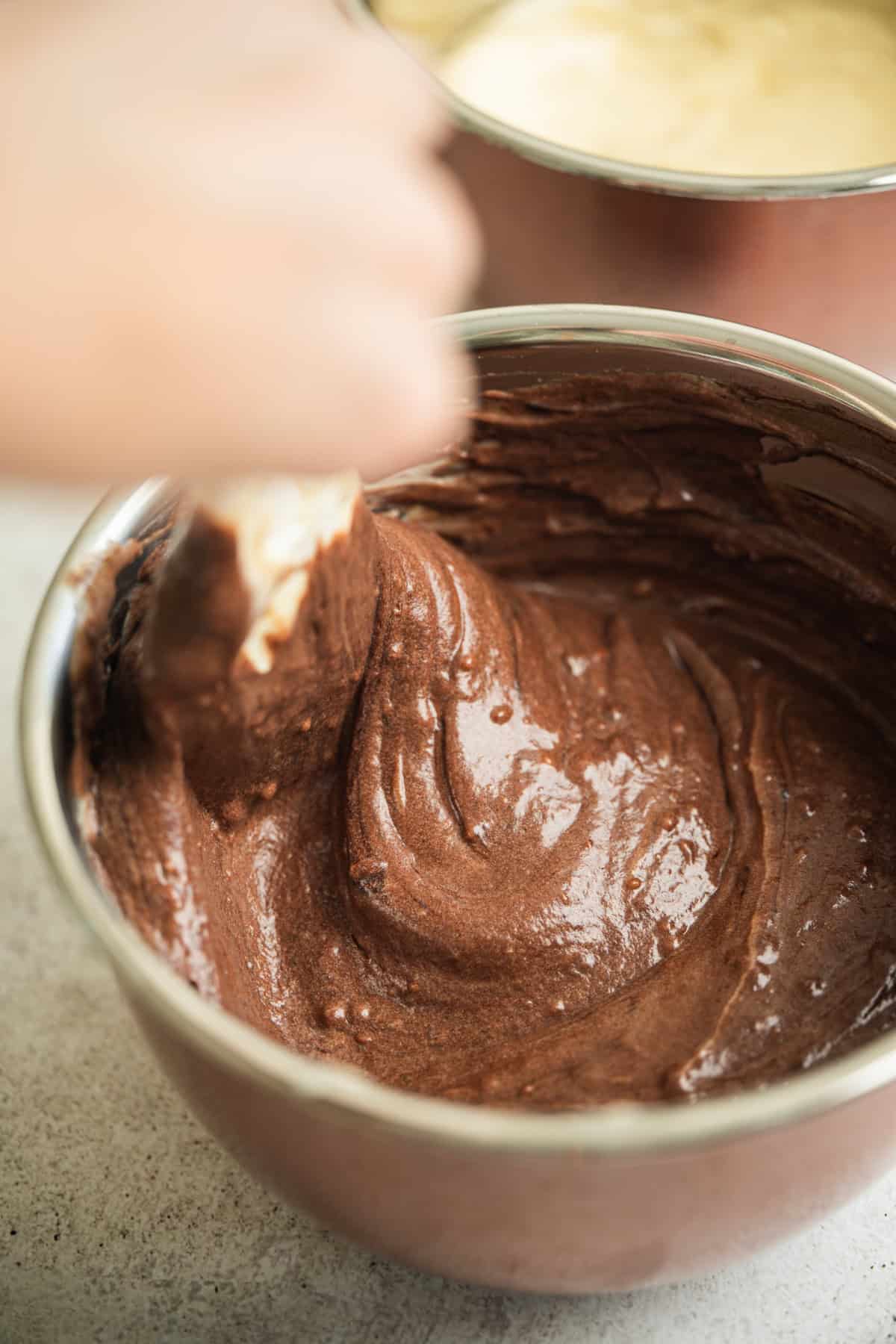
- Fold the bloomed cocoa mixture into just under half of the cake batter.
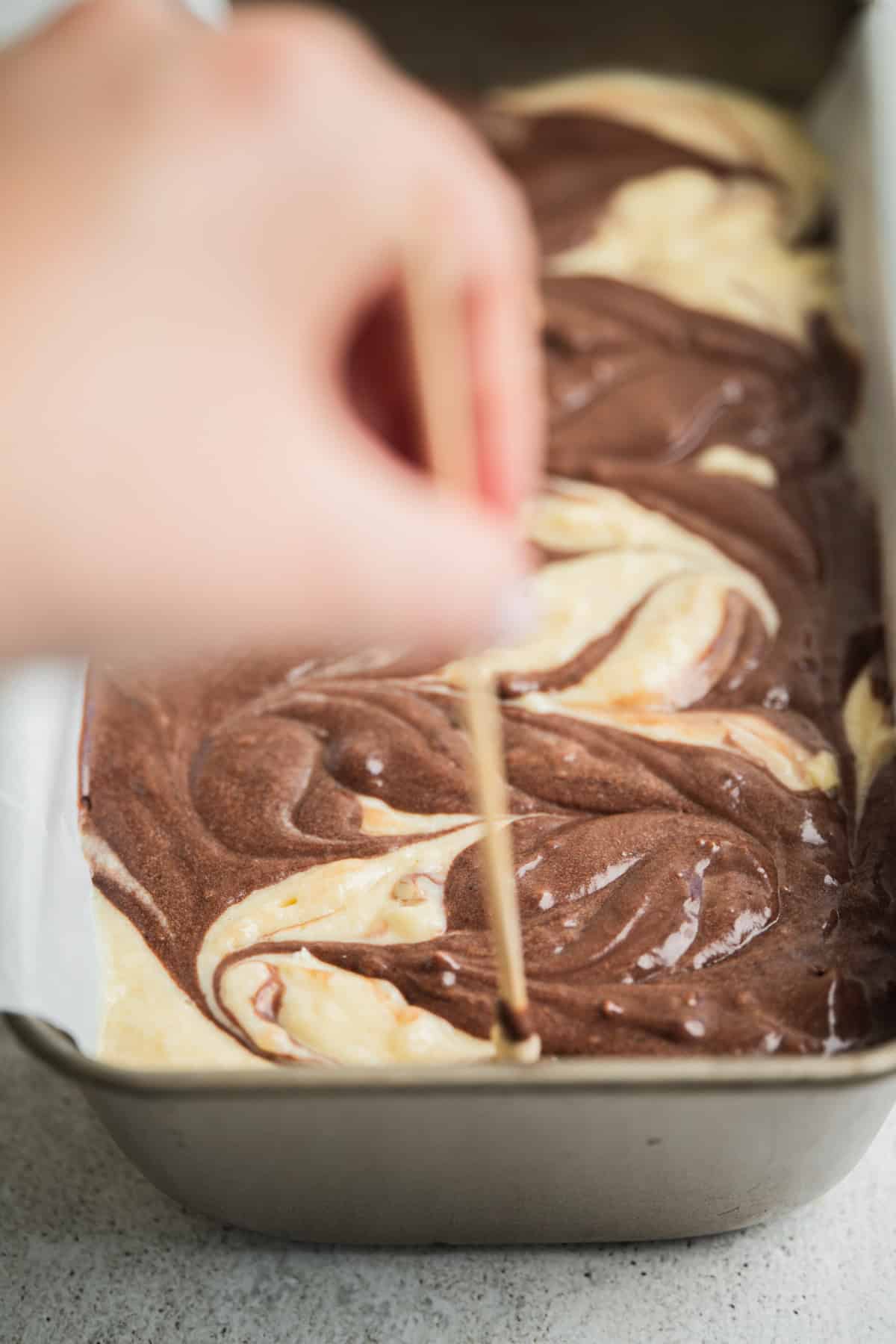
- Spoon alternating dollops of vanilla and chocolate batter into the prepared pan and swirl gently with a skewer or knife.
Cold-fermenting (optional)
Cover the pan tightly and place it in the refrigerator for 8 to 16 hours. The batter can be baked straight from the fridge, no need to bring it to room temperature first.
- Bake until a skewer inserted into the centre comes out clean, around 55 to 65 minutes. Tent loosely with foil after 40 minutes if the top is browning too quickly.
Tips
- Cream properly. Cream the butter, oil, and sugar properly to whip enough air into the mixture for the right crumb. The mixture should be visibly pale and fluffy.
- If the batter splits. If your sourdough discard or yoghurt is too cold when added, the creamed mixture can curdle and look broken or grainy. An immersion blender will bring it back together in a few seconds. To prevent it, take the discard and yoghurt out of the fridge an hour before baking.
- Don’t over-swirl. Three figure eights with a knife is plenty. Over-swirling muddles the two batters and you lose the marble pattern.
- Tent with foil. Loosely place a piece of foil over the top of the loaf after 40 minutes to stop the top from over-browning during the long bake.
- Test with a skewer. The cake is done when a skewer inserted into the centre comes out clean and the internal temperature reads around 200°F (95°C).
- Baking from cold. If you’ve cold-fermented overnight and are baking straight from the fridge, the cake will need an extra 5 to 10 minutes in the oven. Start checking at 60 minutes with a skewer.
Storing
Store the cake at room temperature in an airtight container for up to 4 days. The cake also freezes beautifully. Wrap tightly and freeze for up to 3 months.
Related recipes
- Sourdough Discard Recipes
- Sourdough Discard Coffee Cake
- Sourdough Lemon and Blueberry Scones
- Sourdough Apple Muffins with Brown Butter and Streusel
Sourdough Marble Cake
Ingredients
Cake batter
- 115 g unsalted butter softened
- 30 g vegetable oil
- 200 g granulated sugar
- 3 large eggs room temperature
- 1 tsp vanilla paste or extract
- 100 g sourdough discard room temperature
- 120 g natural yoghurt room temperature
- 220 g all-purpose flour
- 1 tsp baking powder
- 1/2 tsp baking soda
- 1/2 tsp salt
- 80 g whole milk room temperature
Chocolate swirl
- 30 g whole milk hot
- 25 g cocoa powder
- 25 g granulated sugar
- 1 tsp instant espresso powder optional
Instructions
- Grease and line a 9×5 inch (23x13cm) loaf pan with parchment paper, leaving an overhang so the loaf can be easily lifted out once baked.
- In the bowl of a stand mixer, cream together the softened butter, vegetable oil, and sugar on medium-high speed for around 4 minutes, until pale in colour and fluffy. Scrape down the sides of the bowl as needed. 115 g unsalted butter, 30 g vegetable oil, 200 g granulated sugar
- Add the eggs one at a time, mixing well after each addition, followed by the vanilla. 3 large eggs, 1 tsp vanilla paste
- Whisk in the sourdough discard and yoghurt until smooth. If the mixture looks split or grainy at this stage, blend briefly with an immersion blender to bring it back into a smooth emulsion. 100 g sourdough discard, 120 g natural yoghurt
- In a separate bowl, whisk together the flour, baking powder, baking soda, and salt. 220 g all-purpose flour, 1 tsp baking powder, 1/2 tsp baking soda, 1/2 tsp salt
- Fold the dry ingredients into the wet, alternating with the milk in two additions, starting and ending with the dry. Mix until just combined. 80 g whole milk
Chocolate swirl
- Heat the milk until steaming hot, then stir in the cocoa powder, sugar and espresso powder until it makes a smooth, thick paste. 30 g whole milk, 25 g cocoa powder, 25 g granulated sugar, 1 tsp instant espresso powder
- Stir a couple of tablespoons of the cake batter into the cooled cocoa paste to loosen it, then transfer just under half of the cake batter into the cocoa mixture and fold gently until evenly combined.
- Spoon alternating dollops of the vanilla and chocolate batter into the prepared pan. Use a butter knife or skewer to gently swirl the two together with a figure eight motion. Don't overdo it or you'll lose the swirl effect.
- If baking right away, preheat the oven to 350°F (180°C) while you finish swirling. If cold-fermenting, cover the pan tightly and place in the fridge overnight (see notes).
- Bake for 55 to 65 minutes, until a skewer inserted into the centre comes out clean and the internal temperature reads around 200°F (95°C). Tent loosely with foil after 40 minutes if the top is browning too quickly.
- Let cool in the pan for 15 minutes, then lift out using the parchment overhang and place on a wire rack to cool completely.

Can you use honey and maple syrup instead of sugar? And cacao powder instead of cocoa? Thanks!
Hi Sophia! I’m sorry, I’m not sure as I haven’t tested the recipe that way. Honey and maple syrup would change the moisture and texture of the cake, so I can’t say how well it would work. Cacao powder should be okay in place of cocoa, but it may taste a little stronger or more bitter.