Sourdough Swedish Cardamom Buns (Kardemummabullar)
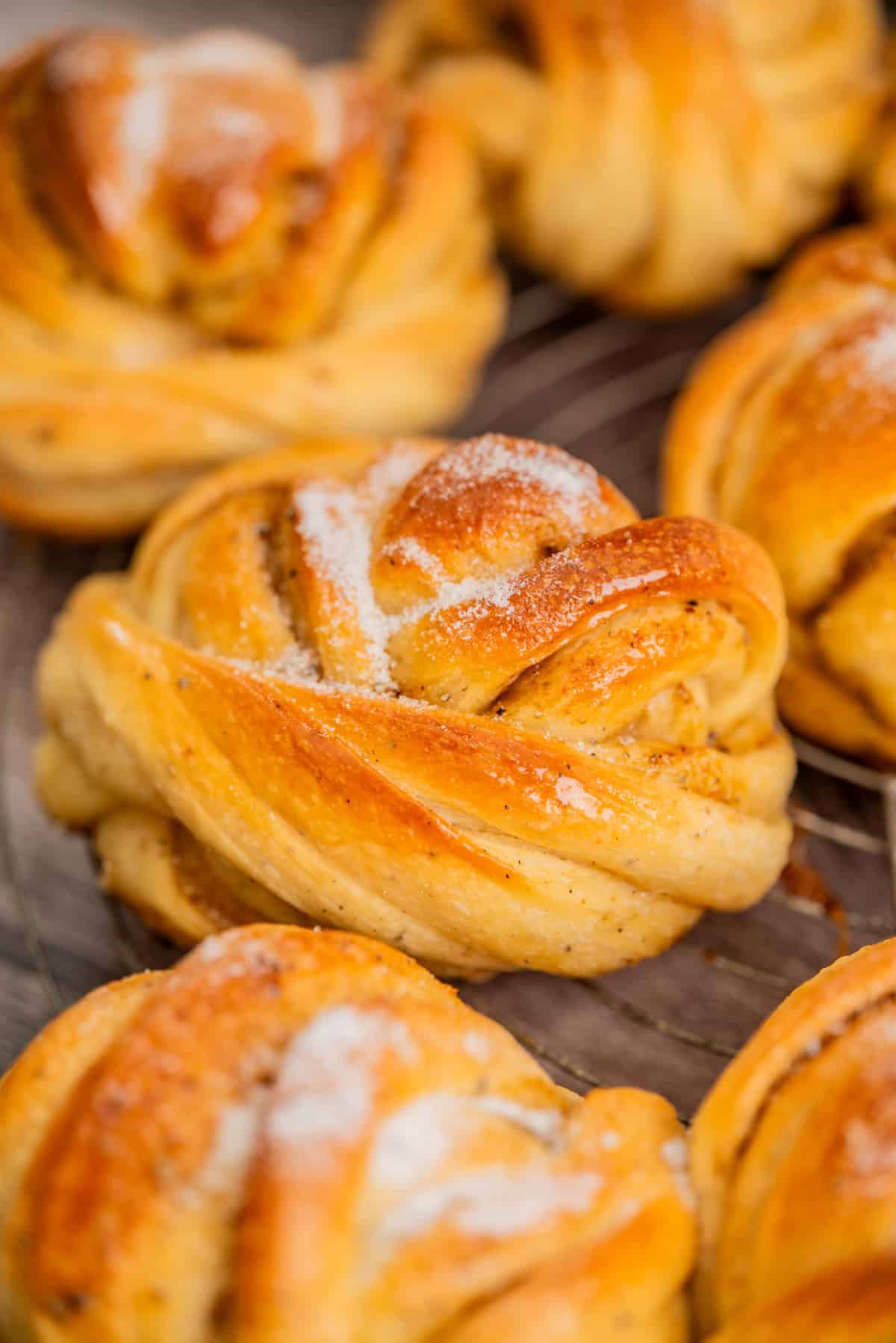
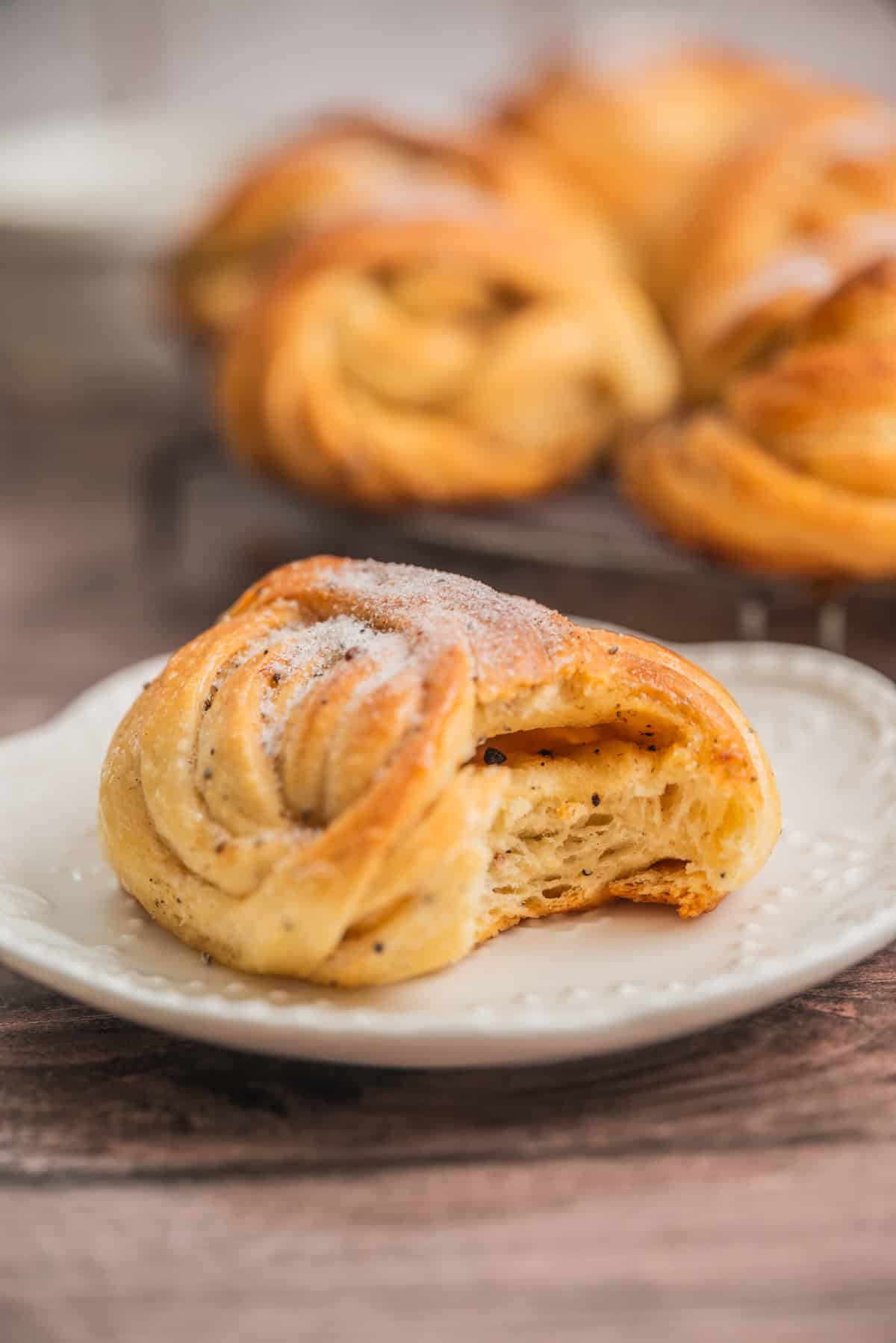
These sourdough Swedish cardamom buns are soft and so aromatic, with layers of butter and freshly ground cardamom folded through a sourdough sweet dough base. As the buns bake, the butter and sugar melt into the dough, and it creates lightly caramelised edges while the crumb stays tender and pull apart inside.
About these sourdough cardamom buns
These sourdough cardamom knots are made using my basic sourdough sweet dough which is a super versatile enriched dough that I use on quite a few sweet recipes on the site. It is made with a stiff sourdough starter. A stiff starter ferments more slowly and produces a milder acidity than a liquid starter. This keeps the dough strong and makes it easier to roll thinly, fold, and twist the knots without tearing.
Because the dough is naturally leavened, it has a soft texture and a gentle, rounded flavour that pairs beautifully with cardamom. This same sourdough sweet dough is also used in recipes like sourdough sticky buns and sourdough doughnuts, with small adjustments to shaping and filling.
If you are new to baking with sourdough, my sourdough hub has guides on starters, fermentation, and enriched doughs.

The role of cardamom: Freshly ground cardamom is key to the flavour of these buns. Grinding the seeds from whole pods gives a brighter and much better flavour than pre-ground cardamom.
Baker’s schedule
This dough uses a stiff sourdough starter, which can be fed either the night before or earlier on Day 1. In warmer conditions, feeding the starter in the morning usually works well. In cooler weather, an overnight feed is better.
Day 1
- Feed the stiff starter: In warm weather, this can be done early in the day while in cooler weather you can feed it overnight.
- Mix and knead the sourdough sweet dough
- Bulk ferment until lightly risen
- Refrigerate overnight
Day 2
- Roll, fill, and shape the buns
- Final proof
- Bake and finish
Timing will vary depending on temperature.
Bulk fermenting in winter
Bulk fermentation is the first rise after the dough is mixed. In cooler kitchens, yeast activity slows down more than bacterial activity. This means the dough can take a long time to rise while acidity continues to build.
For enriched sourdough buns like these, it is important to help the dough rise efficiently during bulk fermentation. Placing the dough in a warm spot encourages yeast activity so the dough gains volume without needing a long rise. Even though this first rise is kept fairly short, it plays an important role in setting up the dough for a good final proof. A turned-off oven with a mug of hot water inside creates a warm, slightly humid environment that works well.
Once the dough has increased in volume by about 30 to 40 %, it is ready to be refrigerated.
Method
- Feed the stiff starter and let it rise.
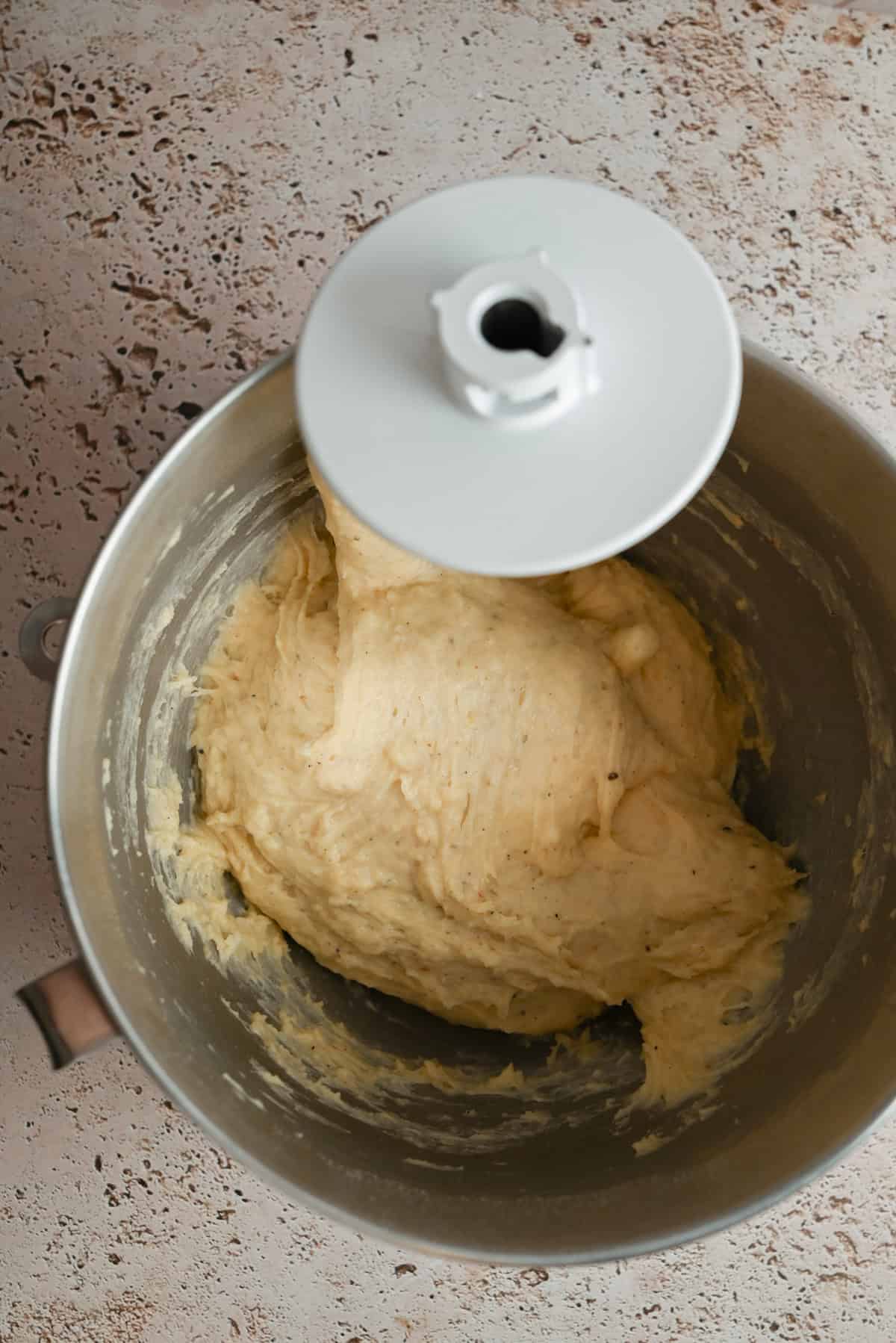
- Add all the ingredients except the butter to a stand mixer fitted with a dough hook. Mix on low speed for about 5 minutes to bring the dough together and begin gluten development.
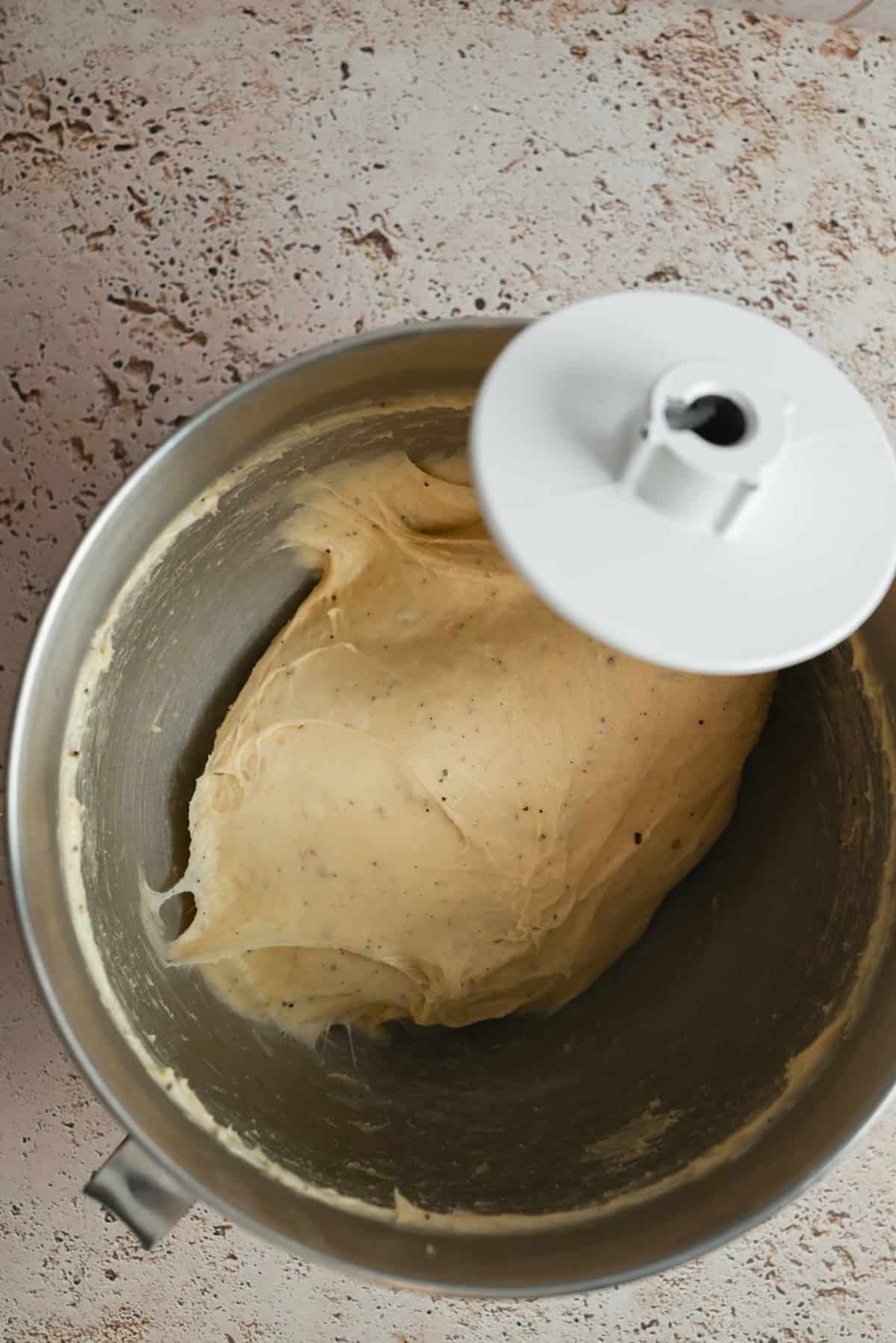
- Gradually add the butter, a few pieces at a time, then continue mixing on medium speed for 12-15 minutes, until the dough is smooth, strong, and glossy.
To check gluten development: Let the dough rest for 5 minutes, then stretch a small piece. It should stretch thin without tearing.
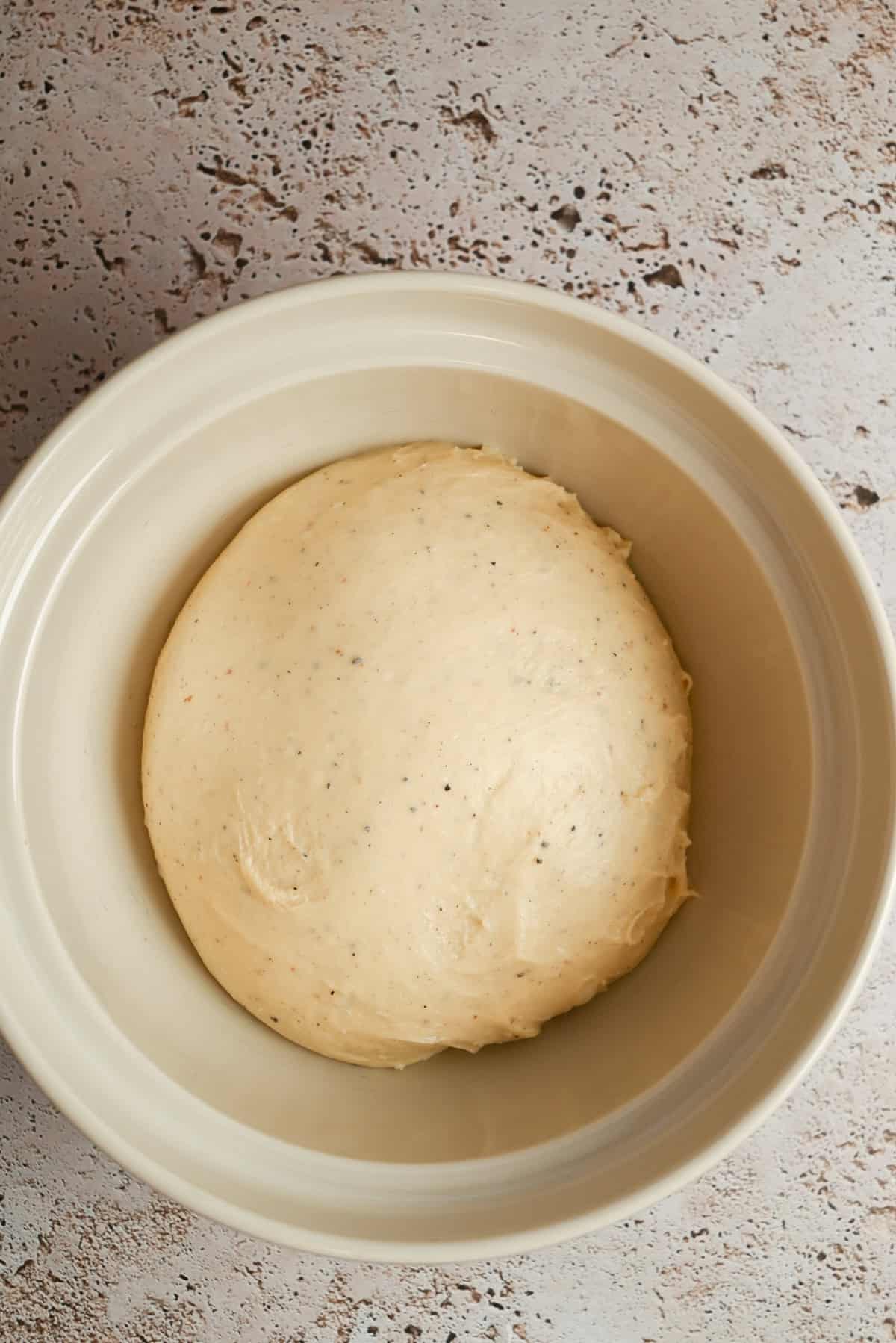
- Place the dough in a lightly greased bowl and let it rise in a warm spot until it has increased in volume by about 30 to 40%, then cover and refrigerate overnight.
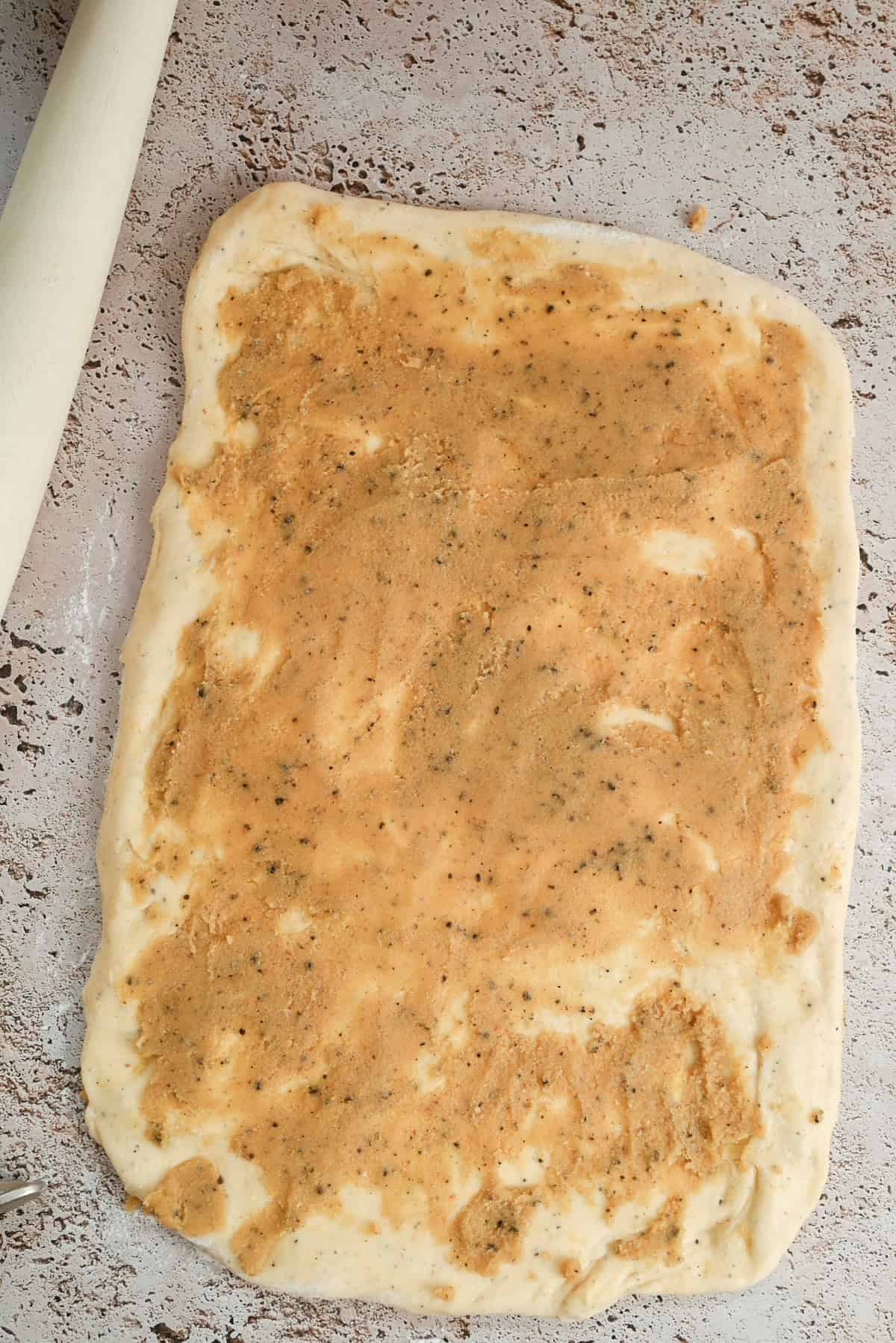
- The next day, roll it into a rectangle and spread with butter, sugar and freshly ground cardamom.
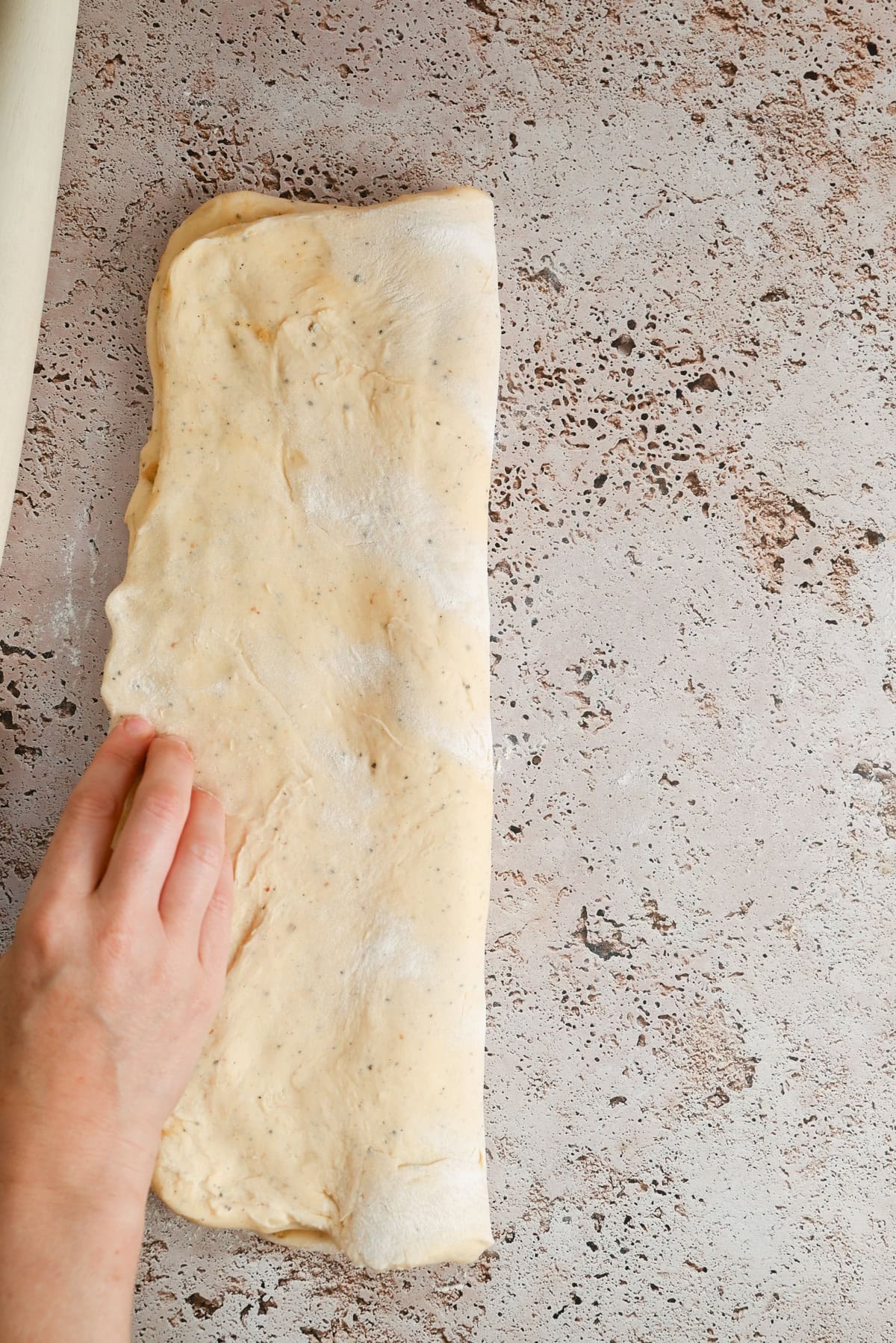
- Fold the dough in half to enclose the filling.
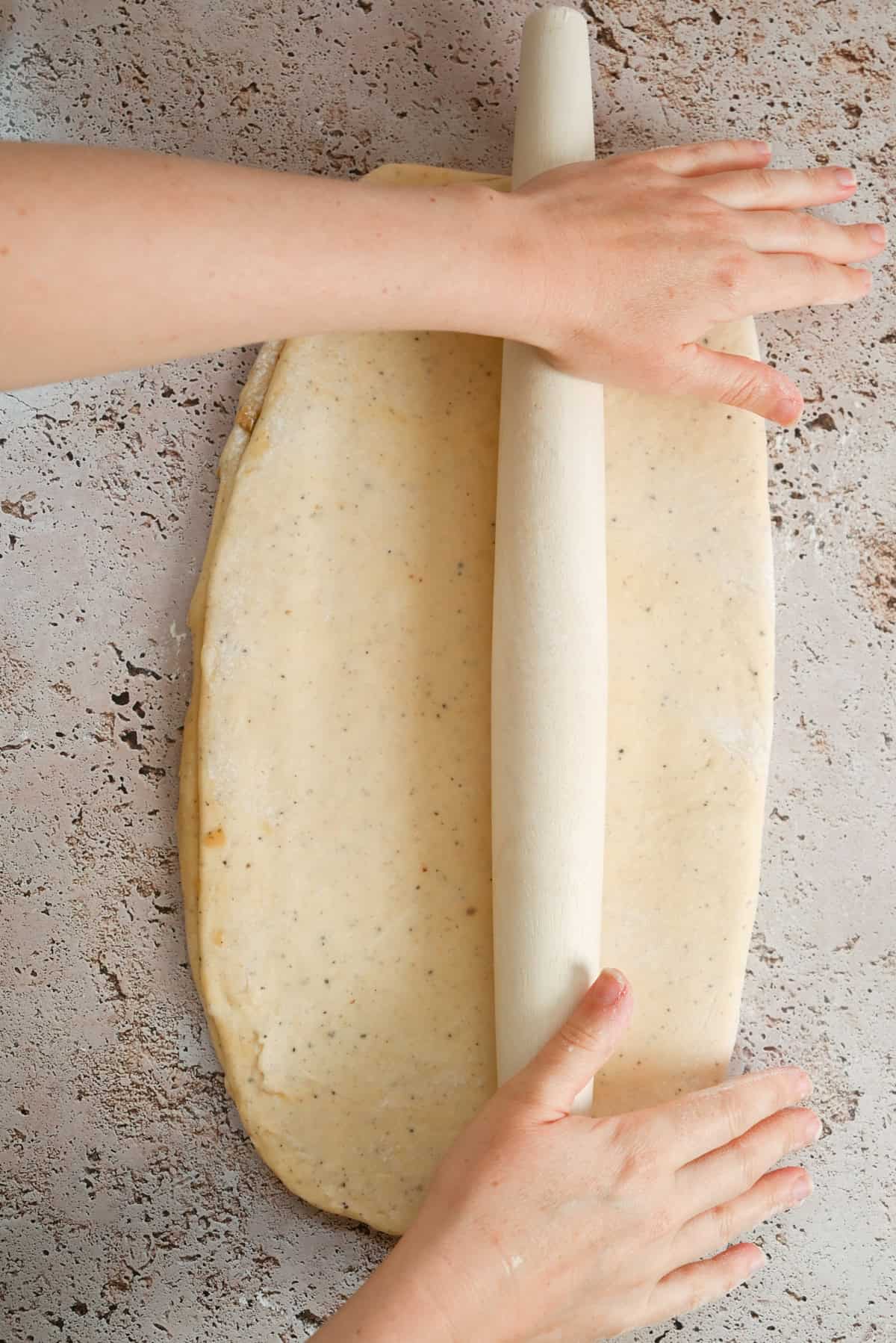
- Gently roll it out slightly to widen it and even out the thickness.
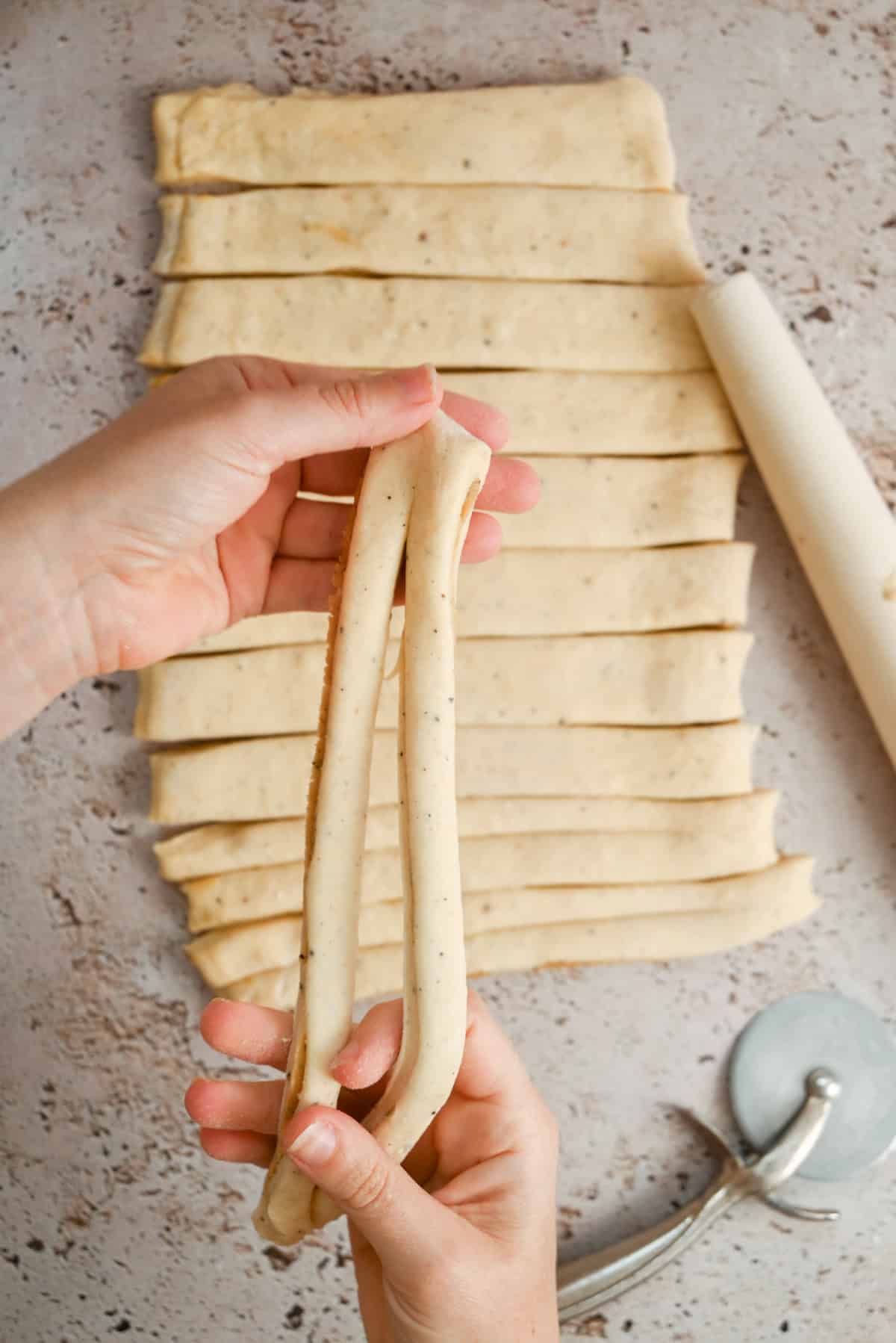
- Cut into long strips then take each strip and cut it lengthwise down the centre, stopping about 1–2 cm from one end so the strip stays connected.
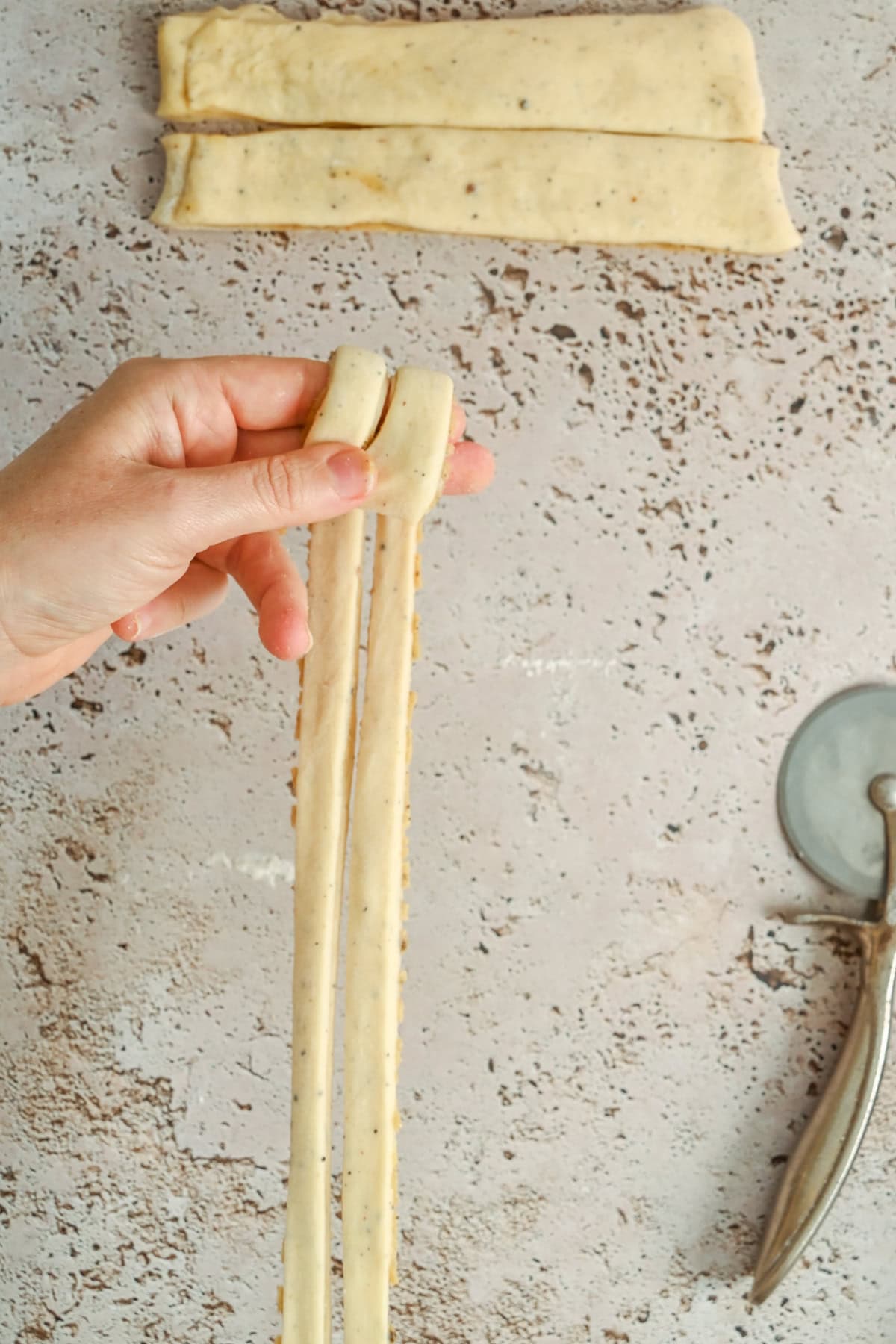
- Take one piece and lay it over your index and middle finger, with the two strands hanging down.
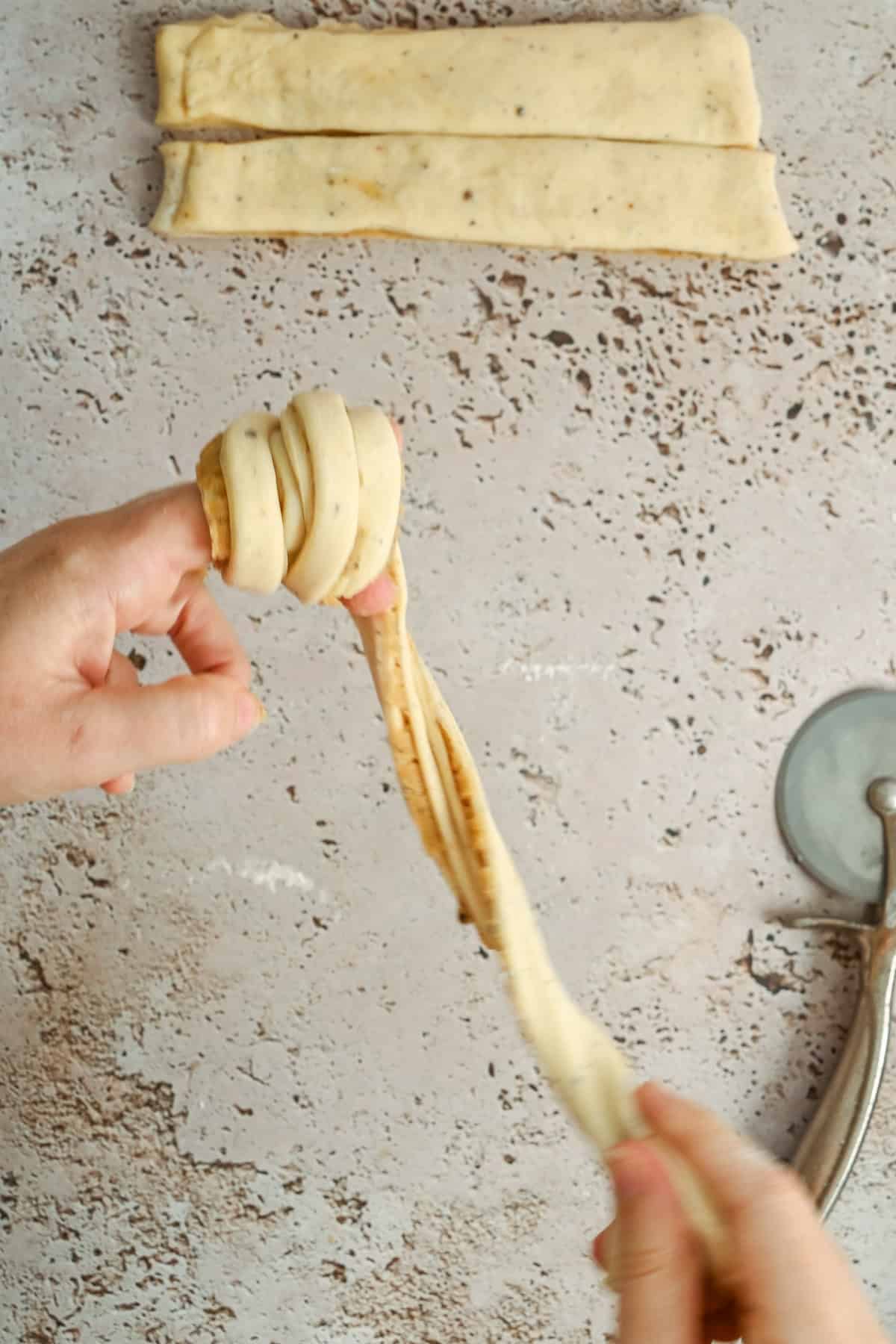
- Wrap the strip twice around your fingers, letting the twisted tails hang down below.
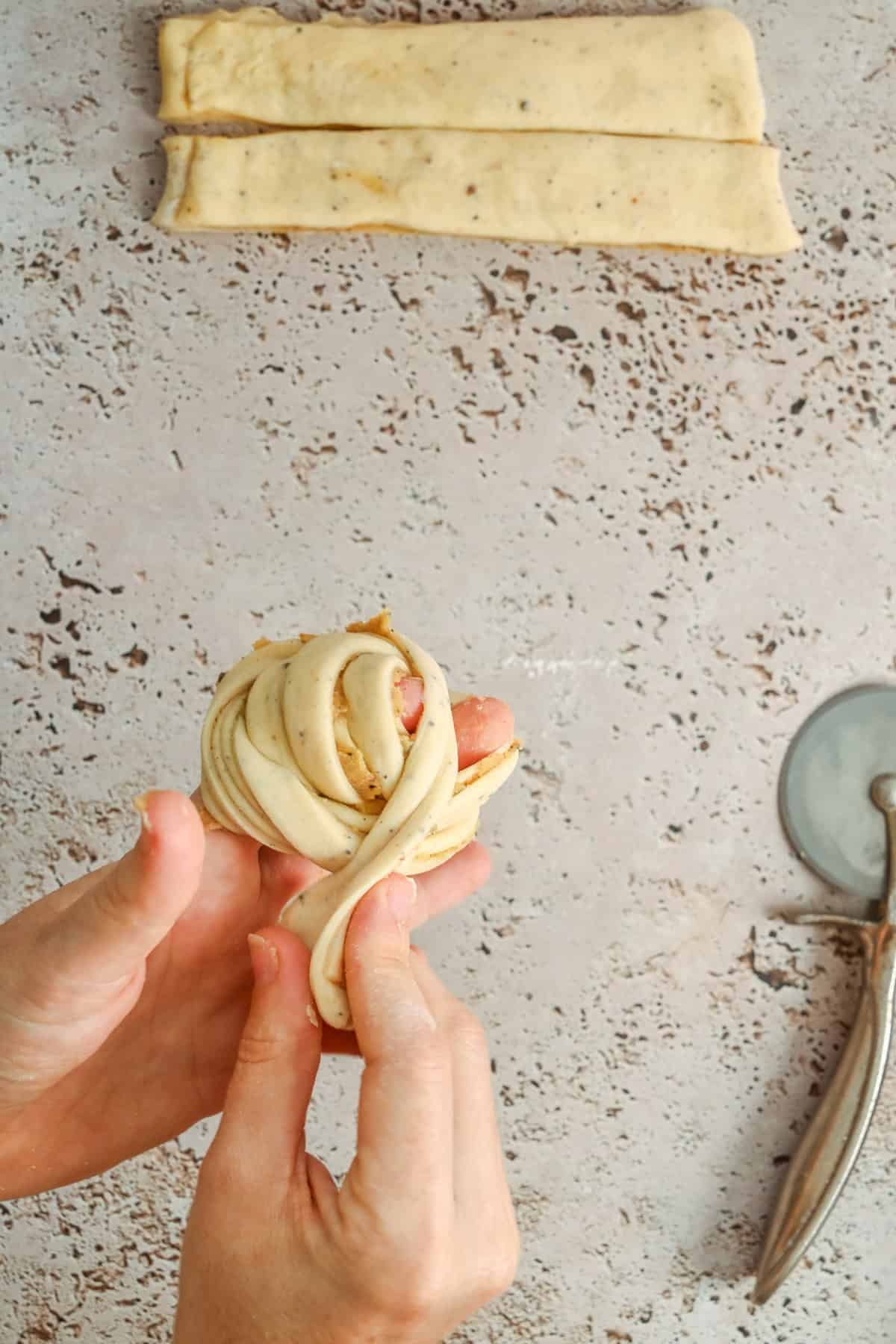
- On the final coil, hold the dough in place with your thumb, slide it off your fingers, and tuck the loose end underneath to secure it.
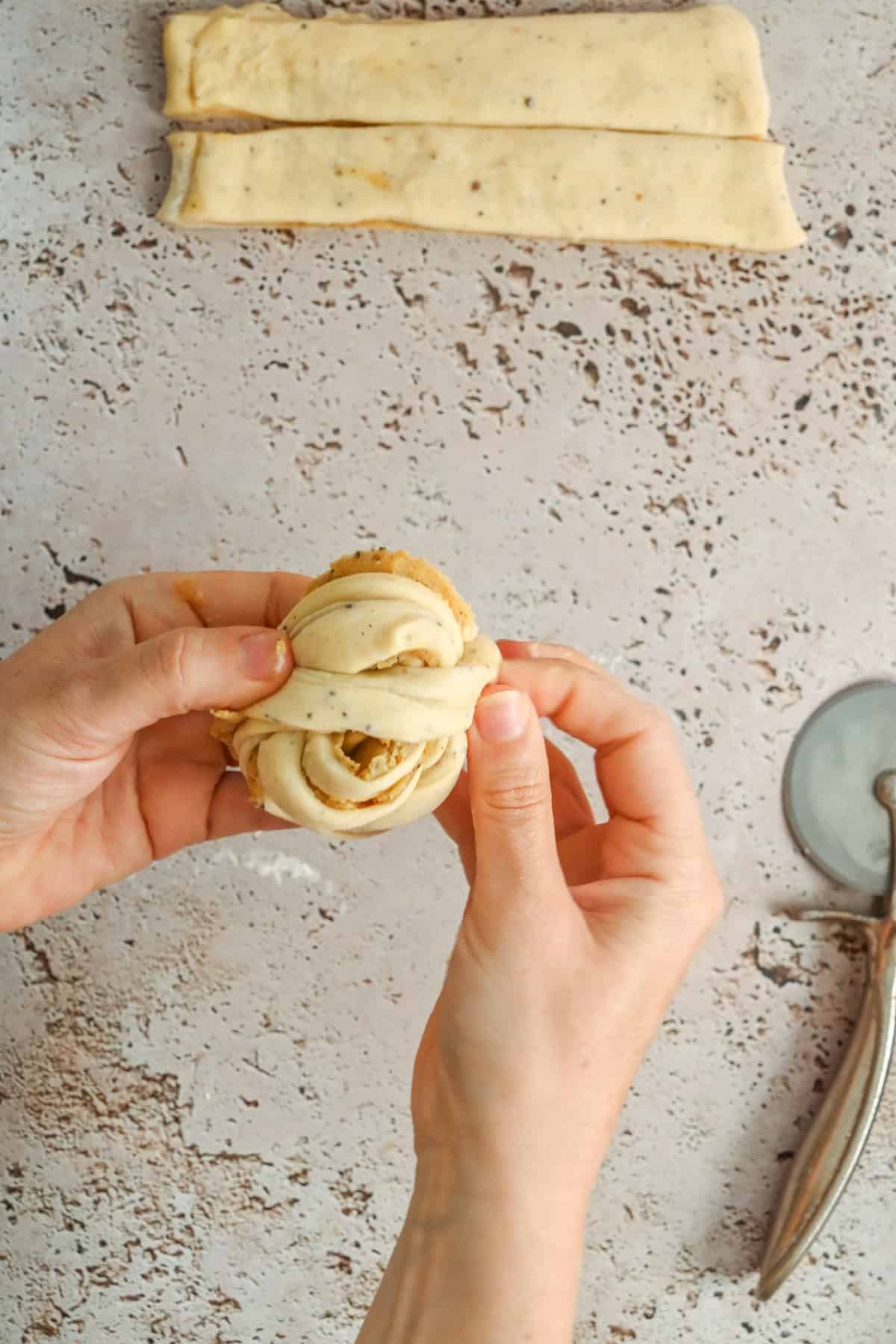
- This loose, layered shape is what gives Swedish cardamom buns their signature look once baked.
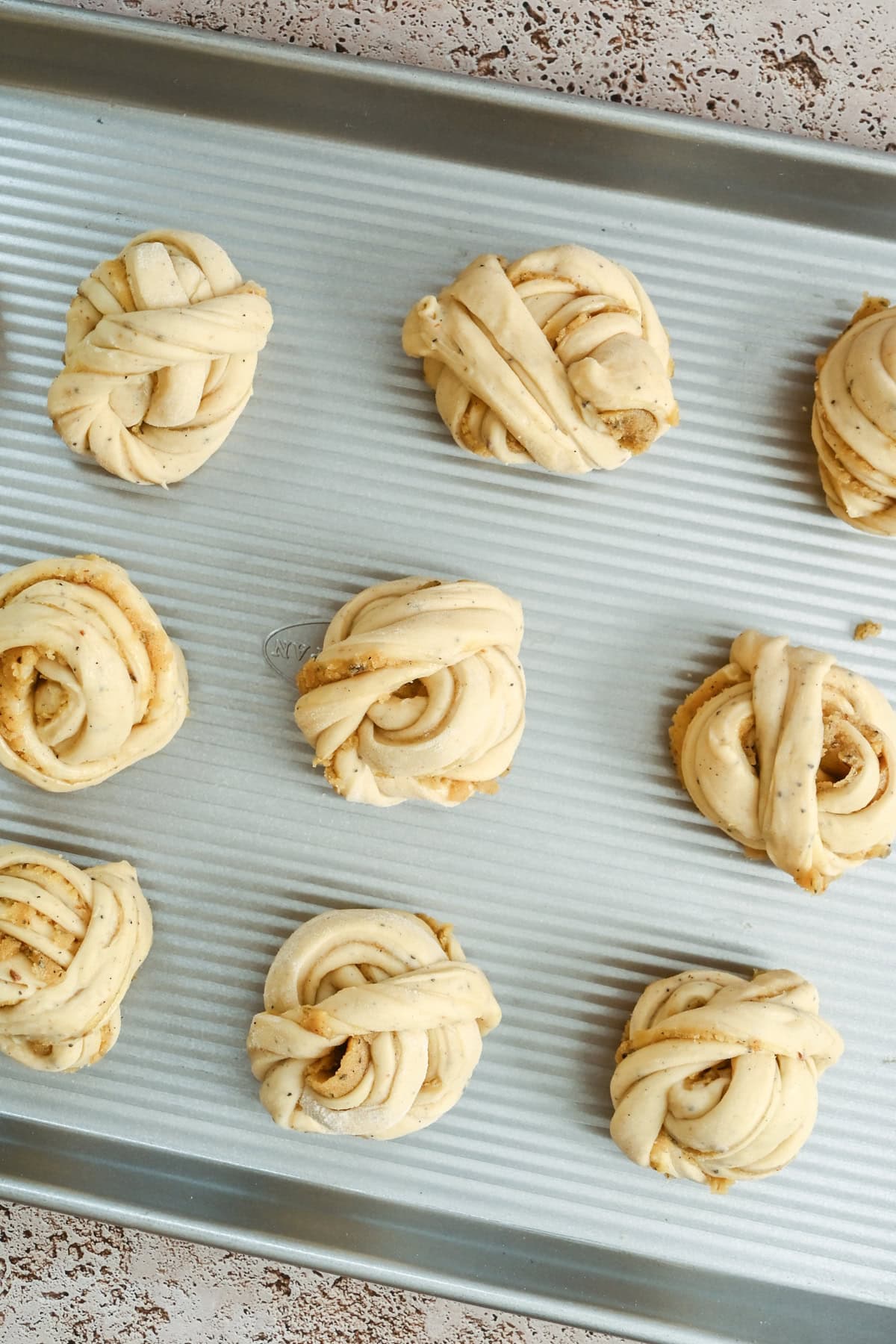
- Cover the buns lightly and let them proof in a warm spot until puffy.
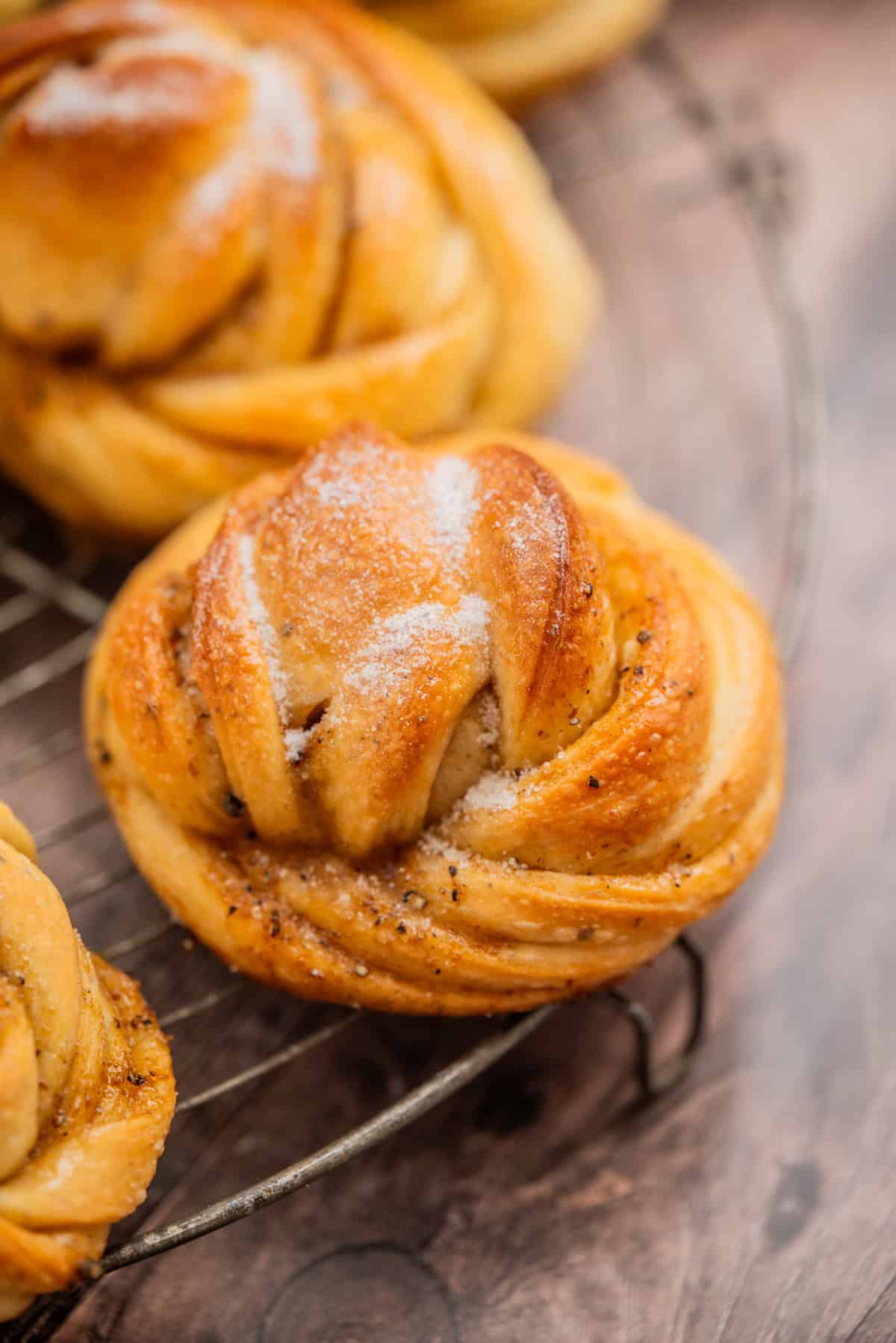
- Bake til golden, then brush them with warm sugar syrup then sprinkle with cardamom sugar.
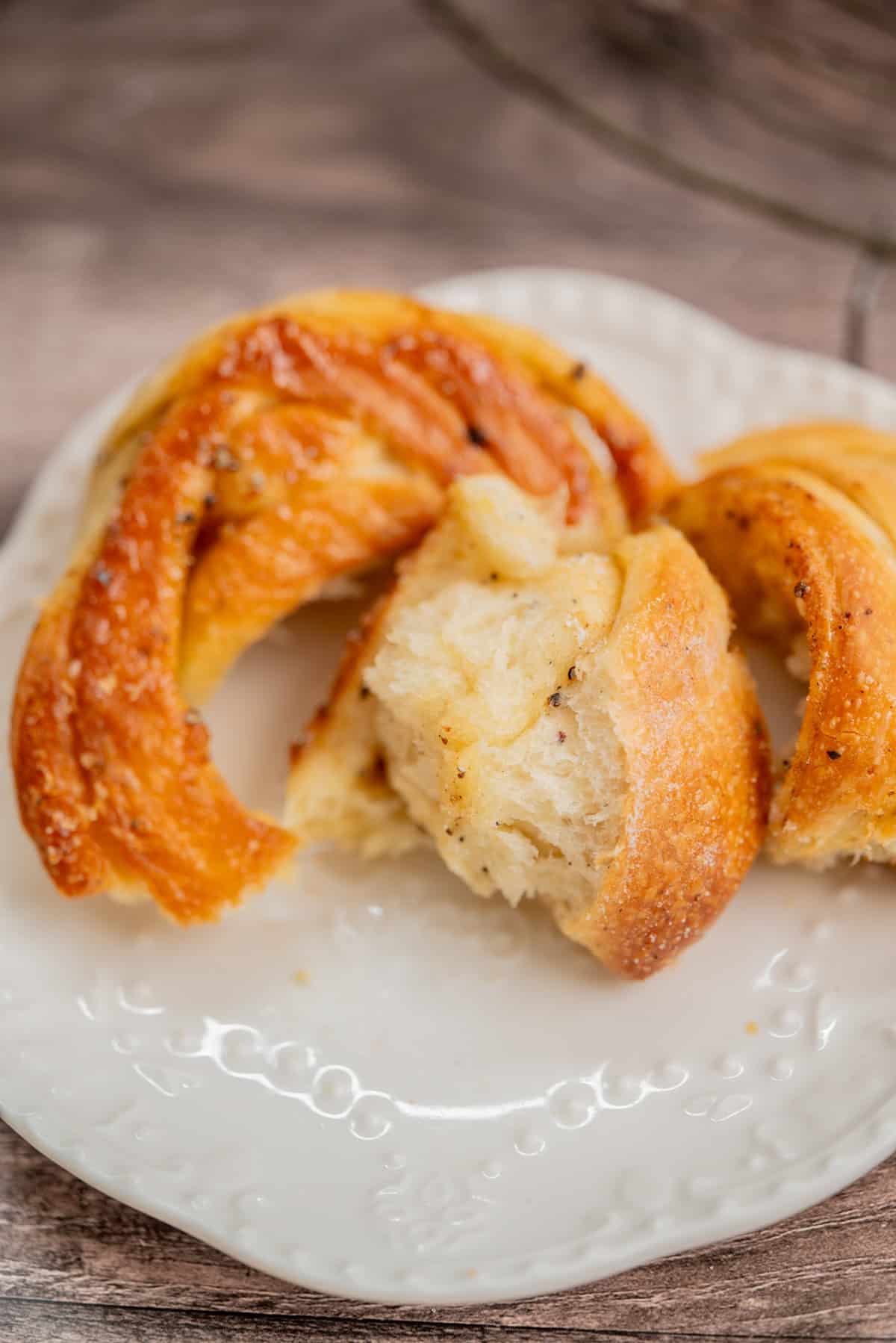
- Cool slightly before serving.

FAQs about sourdough Swedish cardamom buns
Related recipes
- Sourdough Pain au Chocolat
- Flaky Sourdough Croissants – With Step by Step Instructions
- Sourdough Kouign Amann
- Sourdough Danish Pastries
- Sourdough Liège Waffles
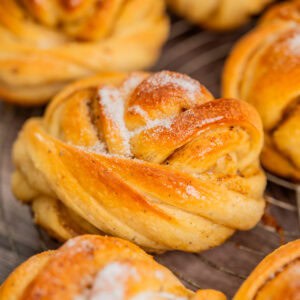
Sourdough Swedish Cardamom Buns (Kardemummabullar)
Ingredients
Stiff Sourdough Starter
- 30 g starter
- 60 g all-purpose flour
- 30 g water
Dough
- 500 g strong all-purpose flour with around 11% protein, or bread flour
- 50 g granulated sugar
- 2 large eggs
- 240 g milk
- All the stiff starter
- 2 tsp fresh cardamom seeds finely ground
- 8 g salt
- 85 g unsalted butter room temperature, cut into cubes
Filling
- 75 g unsalted butter very soft
- 100 g soft brown sugar
- 2 tsp fresh cardamom seeds finely ground
- pinch of salt
Syrup
- 60 g granulated sugar
- 60 g water
To finish
- Fine sugar + ground cardamom
Instructions
Make the stiff starter
- Combine the sourdough starter, flour, and water until a firm dough forms. Place it into a lightly oiled jar, cover loosely, and let it rise until domed and active. In cooler weather you can do this overnight the night before. 30 g starter, 60 g all-purpose flour, 30 g water
Mix the dough
- Add the flour, sugar, salt, cardamom, milk, eggs, and stiff starter to the bowl of a stand mixer fitted with a dough hook. Mix on low speed for 5 minutes until a thick dough forms. 500 g strong all-purpose flour, 50 g granulated sugar, 2 tsp fresh cardamom seeds, 2 large eggs, 240 g milk, All the stiff starter, 8 g salt
- With the mixer still running on low, add the butter gradually, a little at a time, allowing each addition to incorporate before adding more. 85 g unsalted butter
- Once all the butter is added, mix on medium speed for 12-15 minutes, until the dough is smooth, elastic, and glossy. The dough will be soft but should feel elastic and strong rather than sticky.
Bulk ferment
- Place the dough into a lightly greased bowl and cover. Let it rise in a warm spot at around 24-26°C (75-79°F) until it has increased in volume by about 30-40%. This usually takes 2-4 hours, depending on temperature. The dough should look slightly puffy and relaxed, not doubled.
- Once the dough has risen, cover it well and refrigerate overnight.
Shaping
- The next day, place the chilled dough on a lightly floured bench. Roll into a rectangle about 45 × 30 cm / 18 × 12 inches, roughly 3-4 mm / 1/8 inch thick.
- Mix together the butter, sugar, cardamom and salt into a spreadable paste. 75 g unsalted butter, 100 g soft brown sugar, 2 tsp fresh cardamom seeds, pinch of salt
- Spread the cardamom butter evenly over the dough, right to the edges. Fold the dough in half lengthwise to enclose the filling, then gently roll it slightly to widen and even out the thickness.
- Cut the folded dough into strips about 1.5 cm / 1/2 inch wide. Cut each strip lengthwise down the centre, stopping about 1-2 cm from the top so the strip stays connected.
- Take one strip and lay it over your index and middle finger, with the two strands hanging down. Twist the strands together, then wrap them twice around your fingers. Hold the coil in place with your thumb, slide it off your fingers, and tuck the loose end underneath.
- Place the shaped buns on lined baking trays, leaving space between them.
Final proof
- Cover the buns lightly and let them proof in a warm spot until puffy and relaxed. This usually takes 2 to 4 hours, depending on temperature. The buns are ready when they look puffy and a gentle press springs back slowly.
Baking
- Heat the oven to 190°C / 375°F.
- Bake the buns for 20-22 minutes, until golden brown and baked through. Baking time can vary depending on bun size and how tightly they are shaped. The buns should be deeply golden on top and set in the centre.
- While the buns are baking, heat the sugar and water together until the sugar has dissolved and it comes to a simmer. 60 g granulated sugar, 60 g water
- As soon as the buns come out of the oven, brush them generously with the warm syrup.Once slightly cooled, sprinkle with fine sugar and a little freshly ground cardamom.


I just finished mixing the dough. I have it set aside to start the bulk fermentation at room temperature, which is 79 degrees. Would I be able to skip the overnight bulk fermentation to speed up the process and leave it on the counter for 6-8 hours instead of putting it in the fridge?
Hey 🙂 you can skip the fridge proof and go right to shaping after the first rise (of around 40%)
Hi! Curious if these could be made in one day if you bulk ferment on the counter for longer instead of in the fridge? They look delicious, can’t wait to try!
Hey you can make them in one day! Bulk ferment until about 40%-50% and then you can go on to shaping 🙂
SUCH a good recipe! The buns came out perfect, so delicious. The only modifications I made were using salted butter in both the filling and dough, and adding vanilla bean to both the filling and topping. I also added cardamom, sugar, and a pinch of salt to the topping. I’d really recommend those additions if you have them on hand. They added such a nice depth of flavor, even though they’re not traditional. So good! Will definitely be making these again!
So happy you loved them!! 😀 thank you for your lovely review!
These worked out great ! It was fun to use sourdough starter instead of yeast – gives a little extra depth of flavour/texture. Not only are they delicious, my house smells heavenly as well.
So happy you loved them Amy! 😀 thank you for your review!
Hope you love the recipe as much as I do! 🙂