Creamy Espresso Fudge
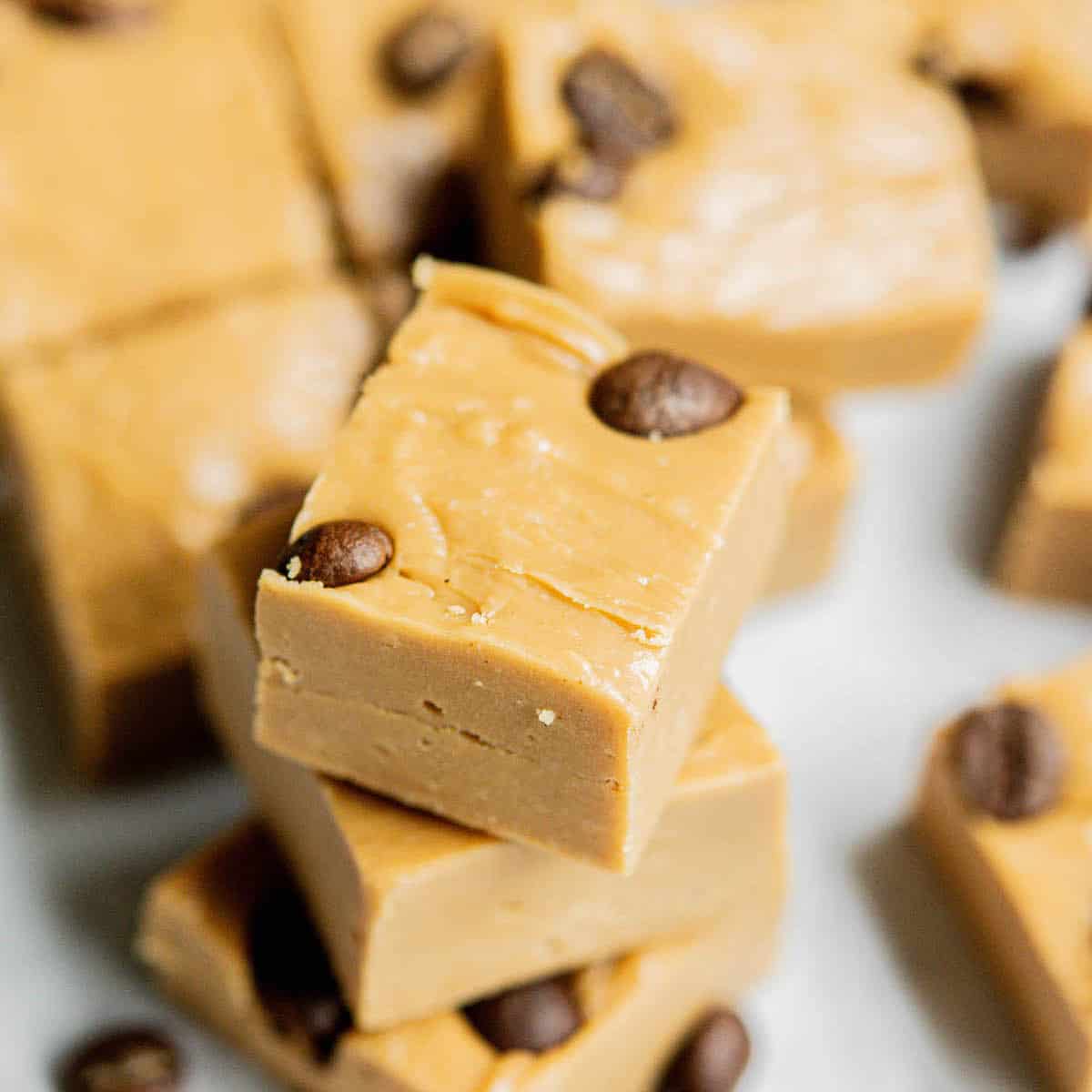
This espresso fudge is super creamy and perfect for coffee lovers. It has the best melt-in-the-mouth texture and makes a lovely edible gift.
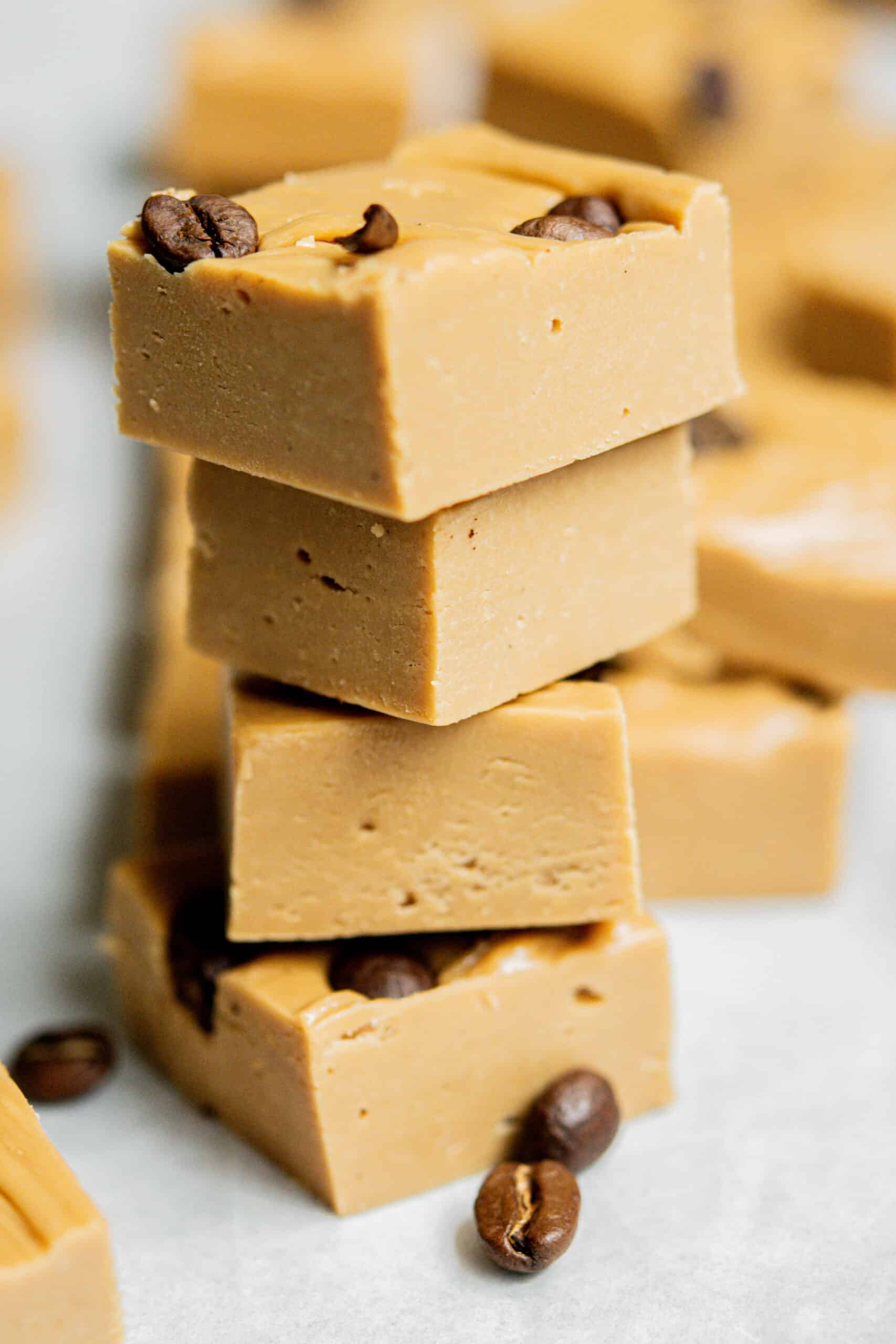
About this fudge
This fudge recipe must first be boiled on the stovetop or microwaved to get the correct consistency. Ideally, you will have a candy thermometer. However, if you don’t, I’ll also show you how to make it without one.
After that, it’s beaten until thick, then poured into the pan and topped with coffee beans for extra flavor and crunch. This, and Baileys fudge are two of my favourite homemade gifts to make!
Just a few ingredients
Method
- Line an 8×8 square pan (20x20cm) with parchment paper. Leave an overhang on the sides of the pan to easily lift the fudge out once set.
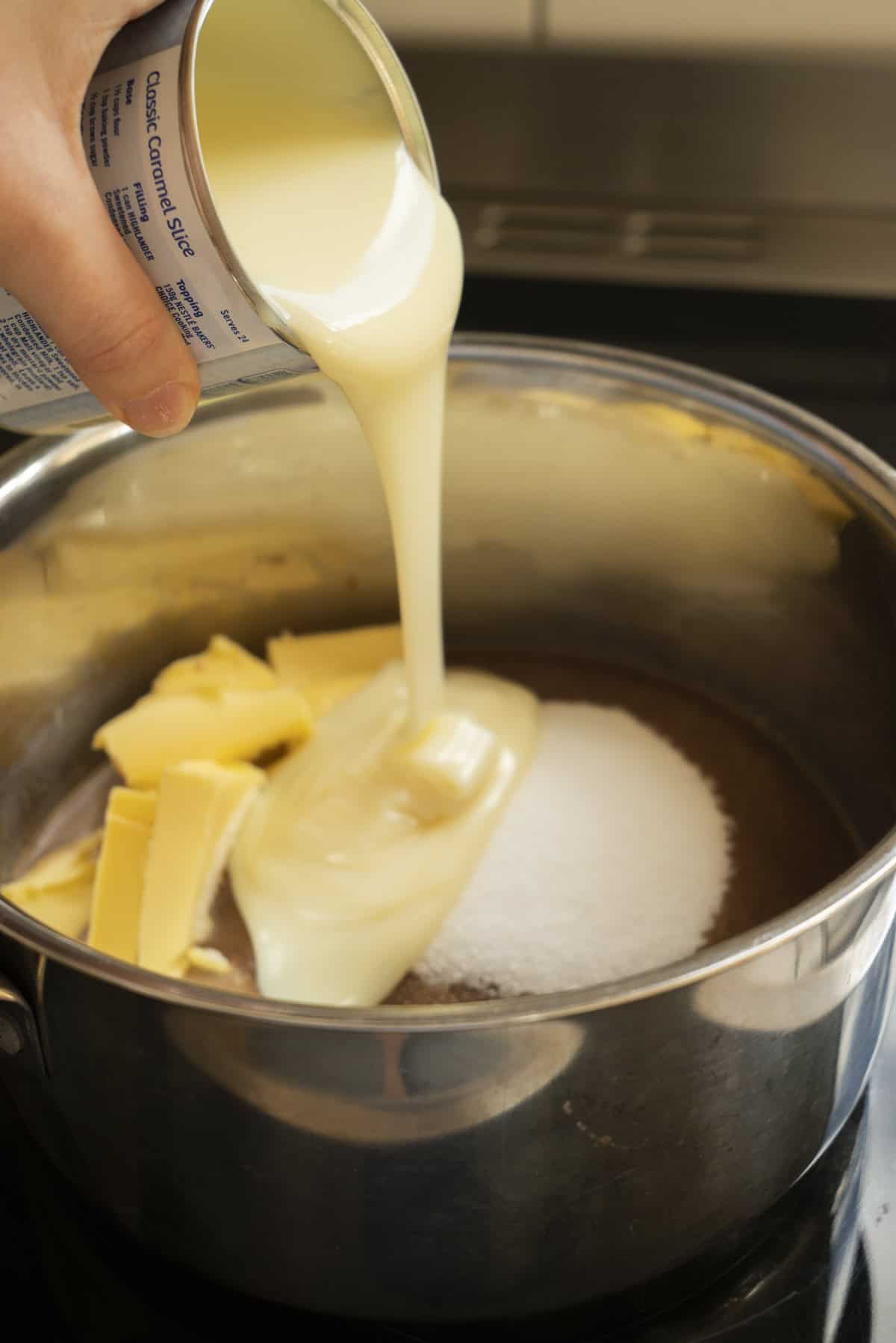
- In a heavy-bottomed saucepan, combine all the ingredients over medium-low heat.
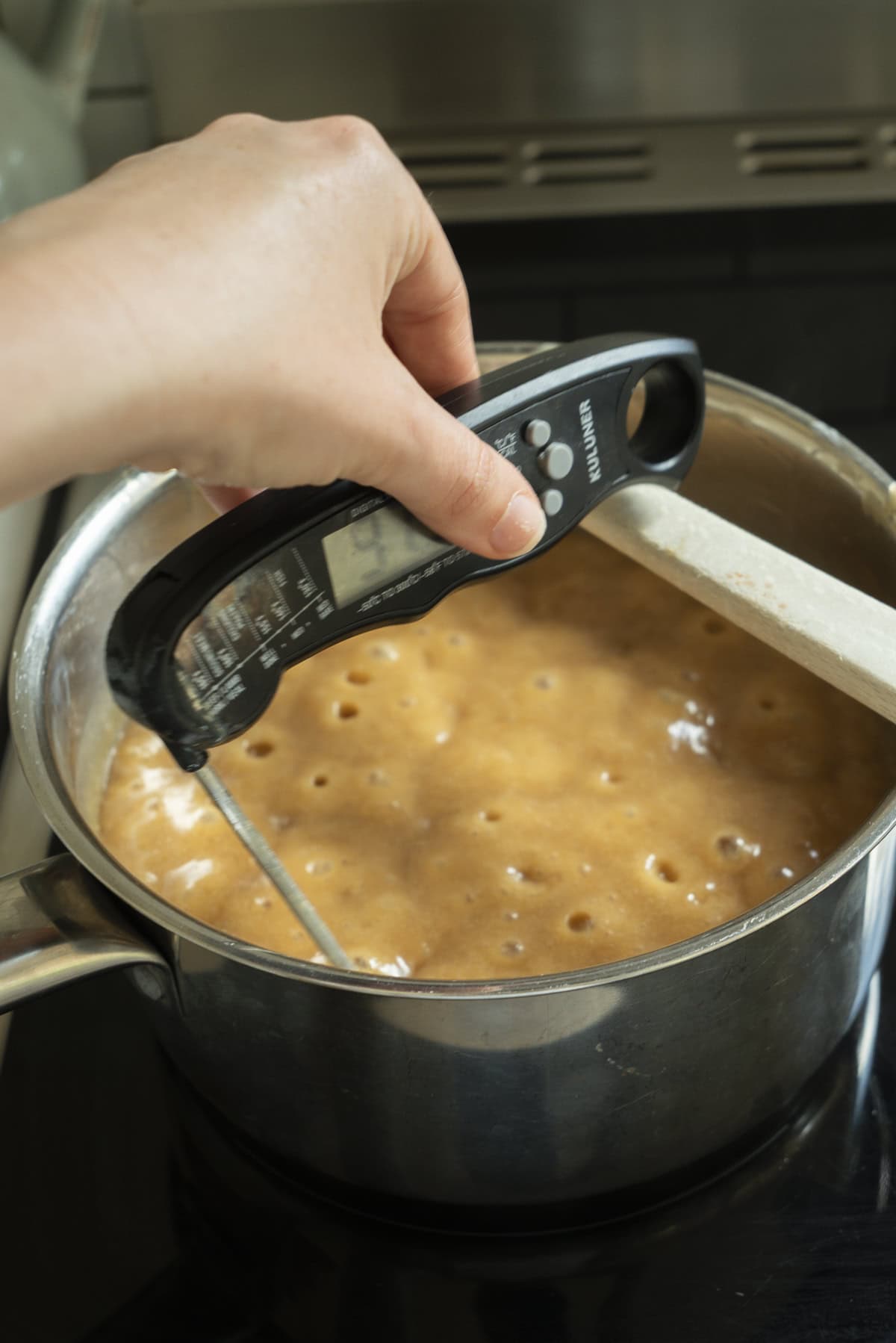
- Stir until the sugar dissolves, then bring to a boil. Keep it in a bubble while stirring, so it doesn’t burn until the mixture reaches the soft-ball stage, 115 °C / 240 °F.
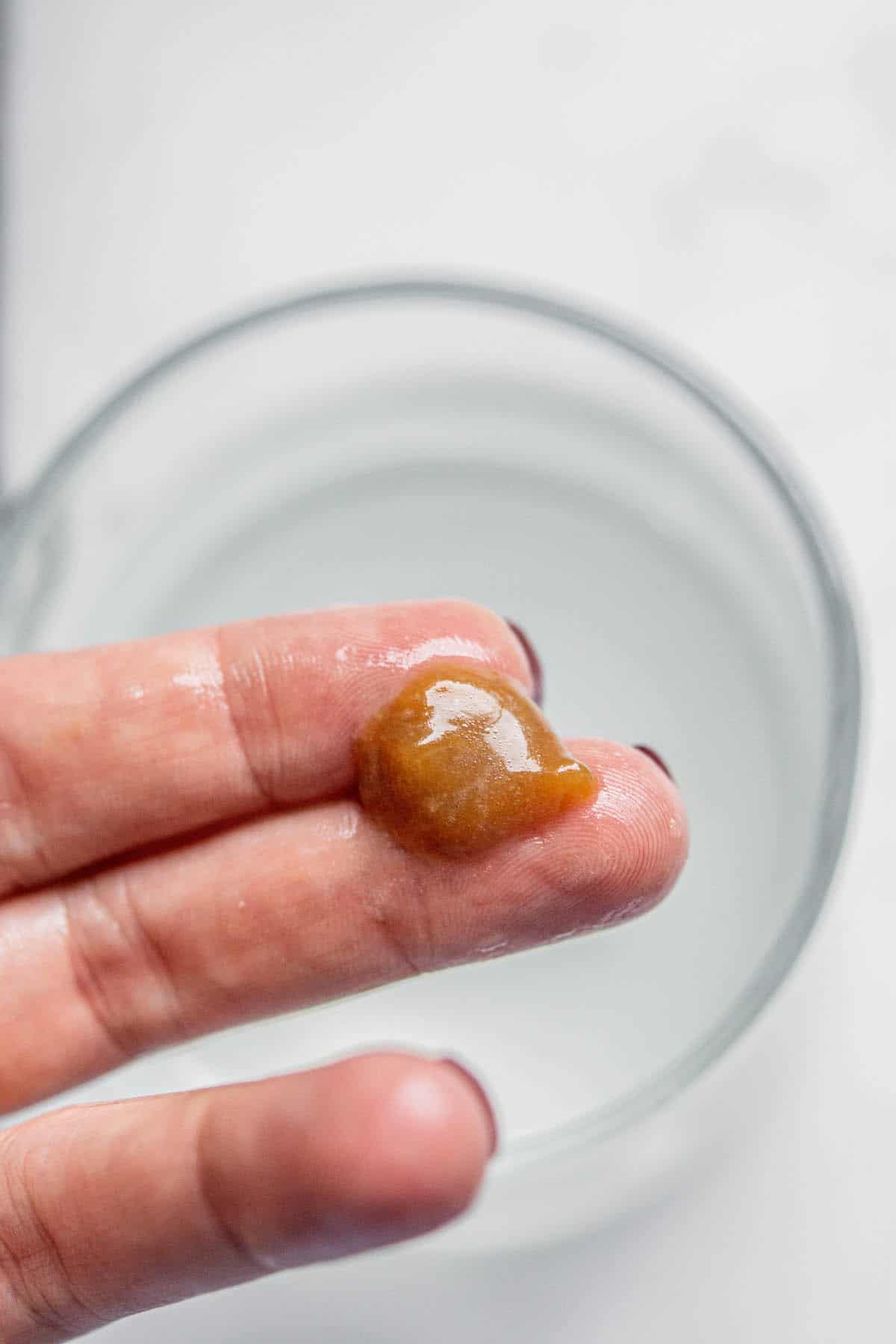
Testing without a sugar thermometer. Drop a small amount of the hot fudge mixture into a glass of ice-cold water. If it immediately forms a soft fudge ball, it’s ready. The fudge must be cooked to this stage, or it won’t set.
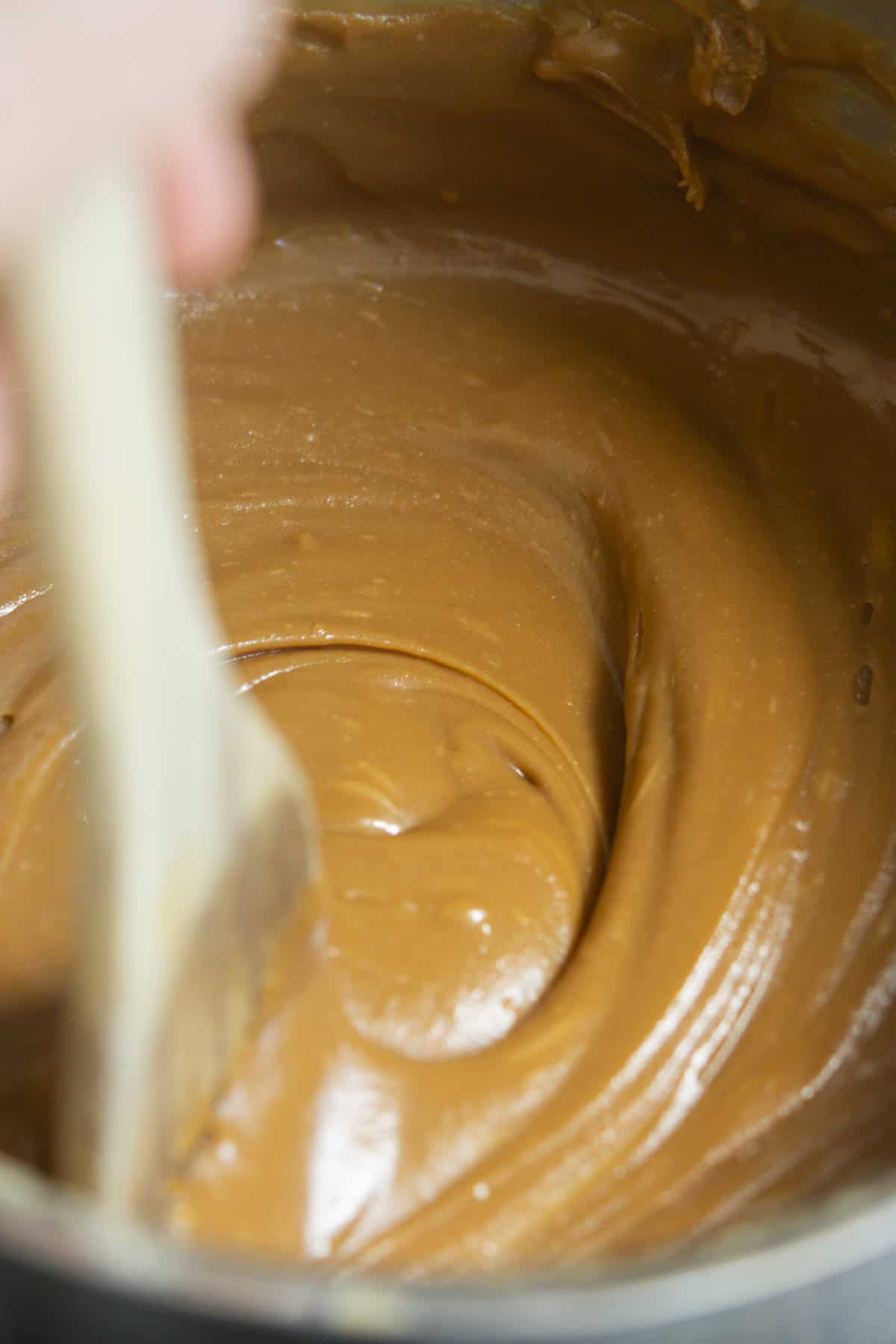
- Remove from heat and beat until it loses its gloss and becomes matte.

- Pour it into the prepared pan, smooth the top, and press on coffee beans.
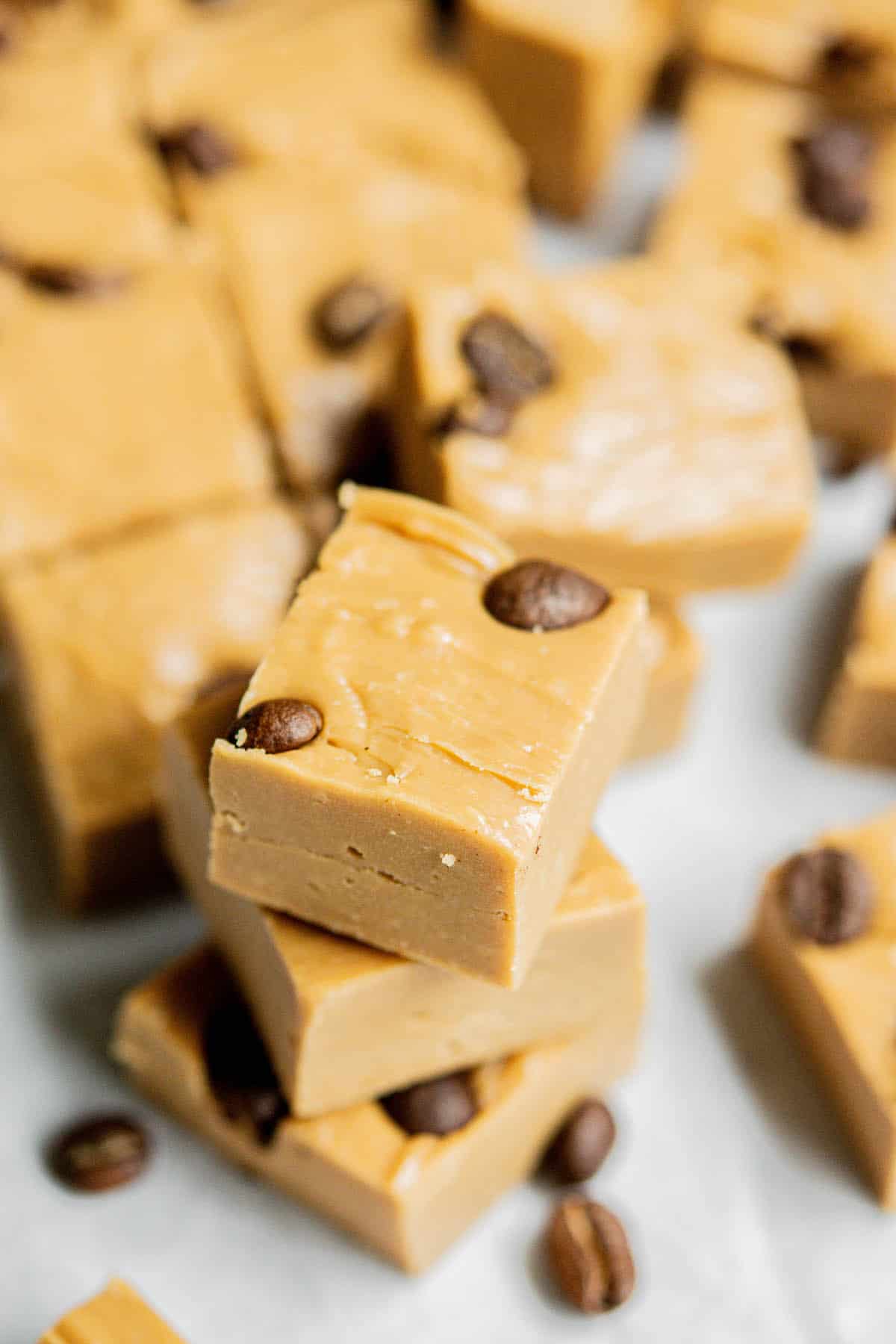
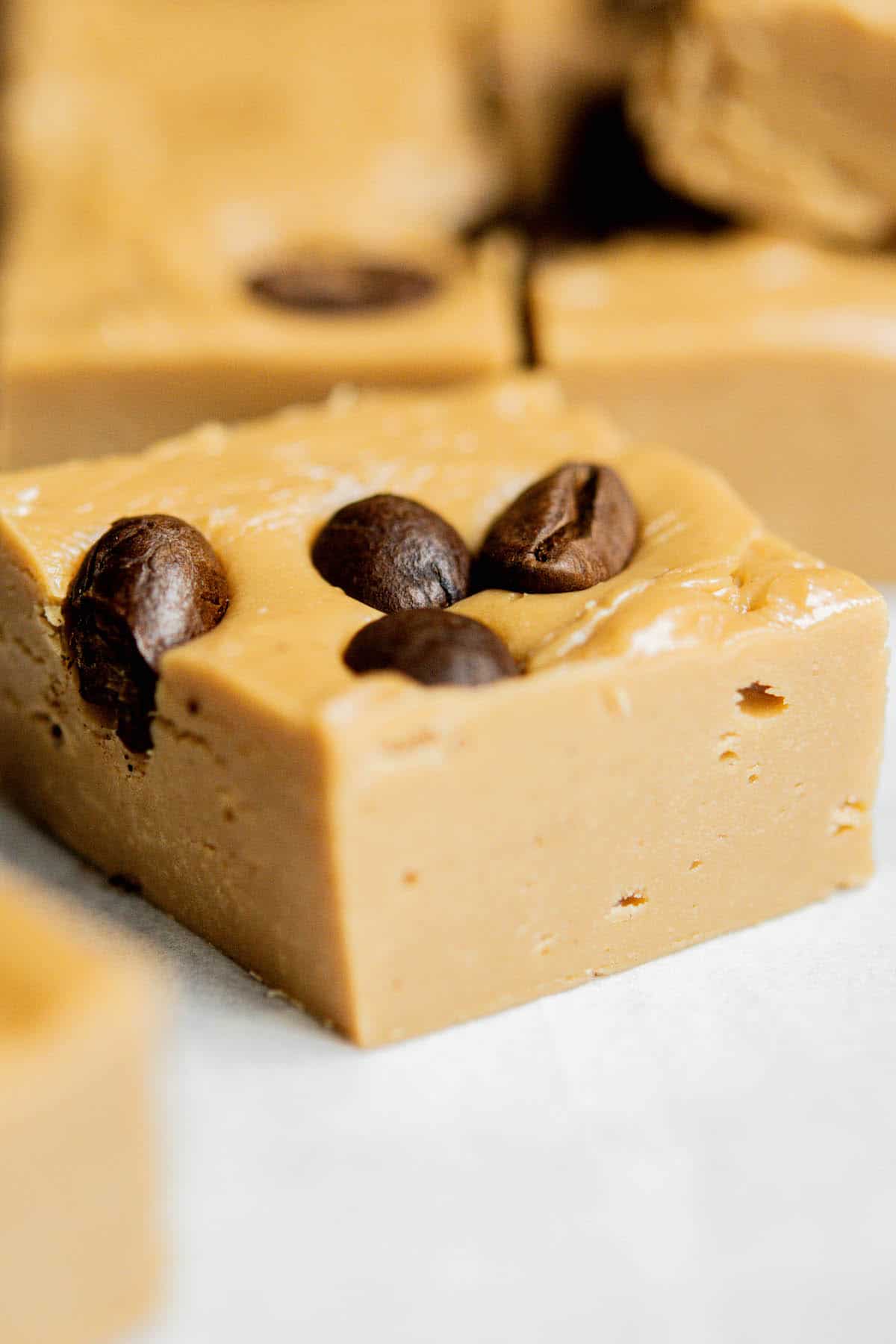
- Once set, cut into squares and store in a sealed container.
Microwave version
- In a very large microwave-safe bowl, add milk and espresso powder and heat for around 30-40 seconds and stir to dissolve the espresso powder.
- Add the sweetened condensed milk, brown sugar, salt and butter.
- Microwave the mixture uncovered for 10 minutes, stirring every minute. Take care because the mixture will bubble and get extremely hot. After around 8 minutes, test for soft ball stage by dropping a bit into ice-cold water or with a sugar thermometer.
- Once it reaches this stage, let it cool for 5-10 minutes then beat until matte. Pour it into the prepared pan, smooth the top, and press on coffee beans. Let it cool to room temperature.
FAQS
It’s likely it hadn’t been heated to the soft ball stage properly. You can try again by melting the fudge back down over low heat, with a tablespoon of milk. Bring it back to a bubble and cook until it reaches the soft ball stage. Then beat until matte.
If your fudge turns bitty, it’s usually because it was cooked a little too hot and the fat split from the sugar mixture. Cooking slowly and steadily helps keep the butter and sugar blended smoothly, resulting in a creamy texture. Don’t turn the heat up too high.
Store fudge in an airtight container at room temperature for 2 weeks, or refrigerated for up to 3 weeks.
Espresso Fudge
Ingredients
- 400 g soft brown sugar
- 395 g sweetened condensed milk
- 150 g whole milk
- 115 g butter salted or unsalted
- 1 tablespoon instant espresso powder
- 1/4 teaspoon of salt
- 1 teaspoon vanilla extract or paste
- Coffee beans for garnish
Instructions
- Line an 8×8 square pan (20x20cm) with parchment paper. Leave an overhang on the sides of the pan to make it easier to lift the fudge out once set.
- In a heavy-bottomed saucepan, combine the sweetened condensed milk, brown sugar, milk, butter, espresso, and salt.
- Cook over medium-low heat, stirring constantly until the sugar dissolves and the mixture boils. Keep it in a bubble while stirring, so it doesn't burn until the mixture reaches the soft-ball stage at 115 °C / 240 °F.
- Testing without a sugar thermometer: Drop a small amount of the hot fudge mixture into a glass of ice-cold water. If it immediately forms a soft fudge ball, it's ready. The fudge must be cooked to this stage, or it won't set.
- Remove from heat and stir in the vanilla extract. Let it cool for 5-10 minutes, then beat it with a wooden spoon or electric hand mixer until it loses its shine and becomes matte.
- Pour it into the prepared pan, smooth the top, and press on coffee beans. Let it cool to room temperature and set, around 3-4 hours.
- Cut into squares and store in a sealed container at room temperature for 2-3 weeks.
Notes
Tips
- Use a heavy pot: Thin pans can scorch easily while a thick base spreads heat evenly.
- Cook on low heat: Let the sugar dissolve slowly before it boils.
- Stir constantly if it’s catching. Keep it moving so nothing sticks or burns on the bottom.
- Let it boil slowly: Fast boiling can make the fudge grainy, bitty, or curdled.
- Be patient: It can take 15 to 20 minutes to reach the soft-ball stage (115 °C / 240 °F).
- If it stays glossy: It likely wasn’t cooked hot enough. Gently reheat, then cook a little longer; cool and beat again.




Mine turned out more like a soft caramel, than a typical fudge. I’m not sure if i didnt cook it long enough or what, i was definitely having issues getting it to temp. My thermometer wouldn’t go above 210F. I was hoping it would be the firmer, melty fudge, and less chewy caramel.
It sounds like the fudge didn’t quite reach the right temperature to set properly. For that firmer, melty texture, the mixture needs to hit around 240°F (the soft-ball stage). If your thermometer wasn’t reading above 210°F, it might not have been calibrated or fully submerged in the mixture, which could affect the reading. Another way to check is to drop a small amount of the cooked mixture into a bowl of extra cold, iced water. At the soft-ball stage, it should form a ball that’s firm but still pliable when you pick it up. If it dissolves or flattens, it needs more time.