Baileys Fudge
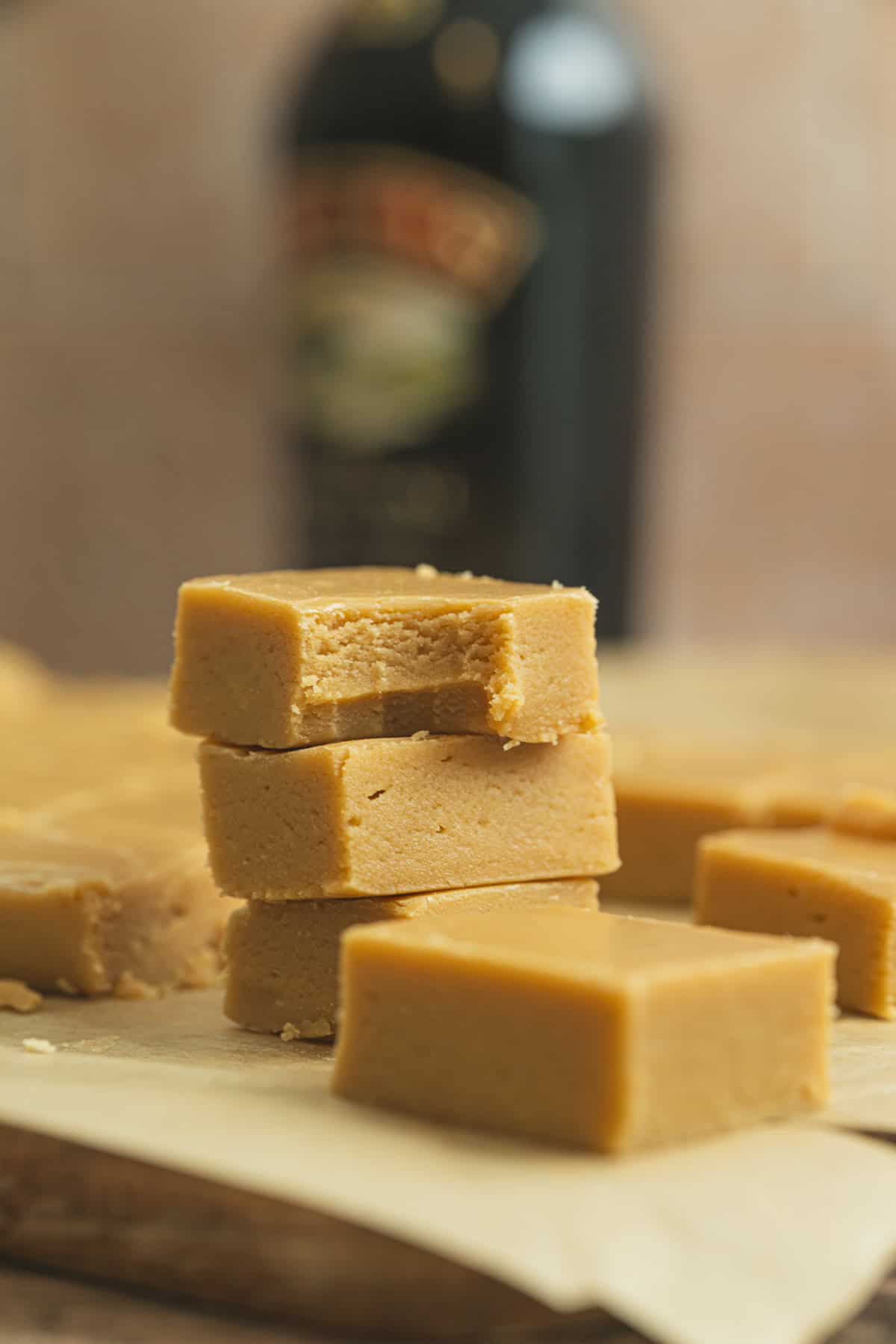
Baileys fudge is a creamy and sweet treat, spiked with Baileys Irish cream. Perfect for any time of year, but ideal for the holiday season or St. Patrick’s day celebrations. Homemade fudge makes a great gift!
About this recipe
This boozy Baileys fudge has the perfect creamy, melt-in-your-mouth texture.
It needs to be boiled first, either on the stove top or in the microwave, to get the correct consistency. Ideally, you will have a candy thermometer. However, if you don’t, I’ll show you how to make it without one, too. After that, it is beaten until thick, then poured into the pan to set.
Just a few ingredients
Method
- The key with this fudge is to cook it slowly. Don’t try to speed it up, or the mixture can curdle or turn grainy.

- Combine all the ingredients in a medium heavy-bottomed saucepan

- Cook over low-medium heat, stirring constantly until the sugar has dissolved and the mixture comes to a boil.

- Cook and stir until the mixture reaches the soft-ball stage, around 115 °C / 240 °F.
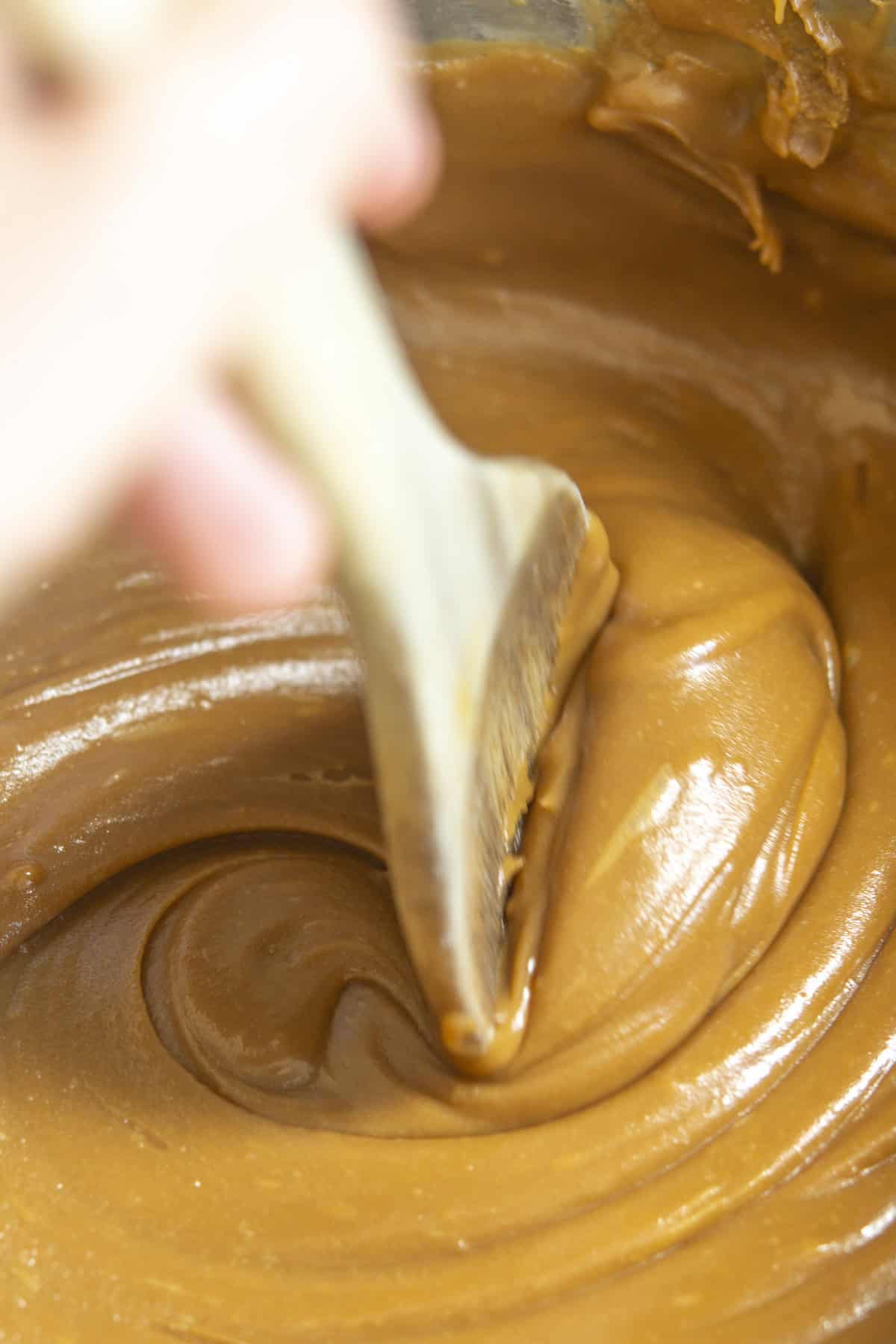
- Take off the heat and beat until the fudge loses its shine.

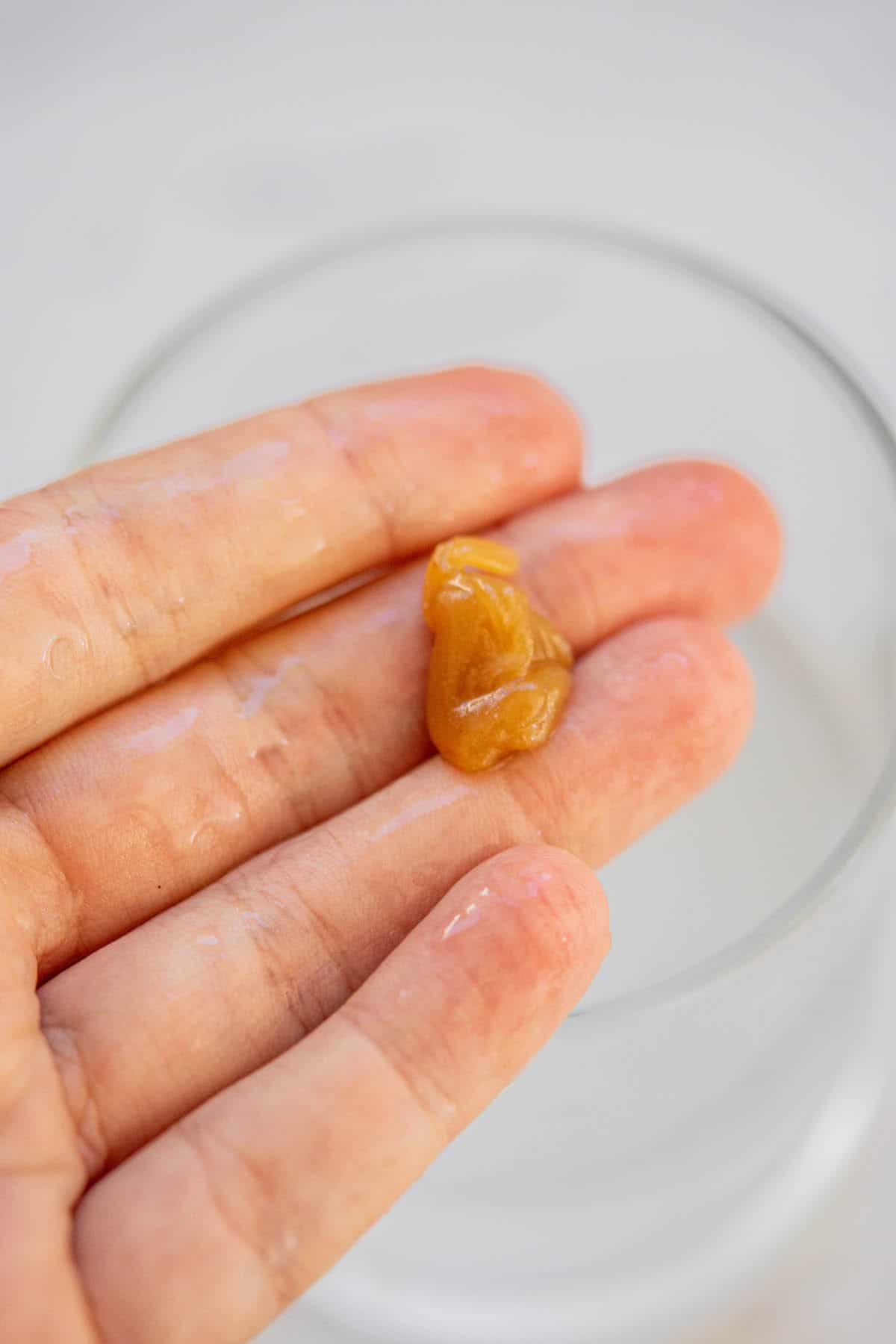
Testing without a sugar thermometer. Drop a small amount of the hot fudge mixture into a glass of ice cold water. If it immediately forms a soft ball, it’s ready. It’s essential the fudge is cooked to this stage or it won’t set.

- Pour it into the prepared pan.
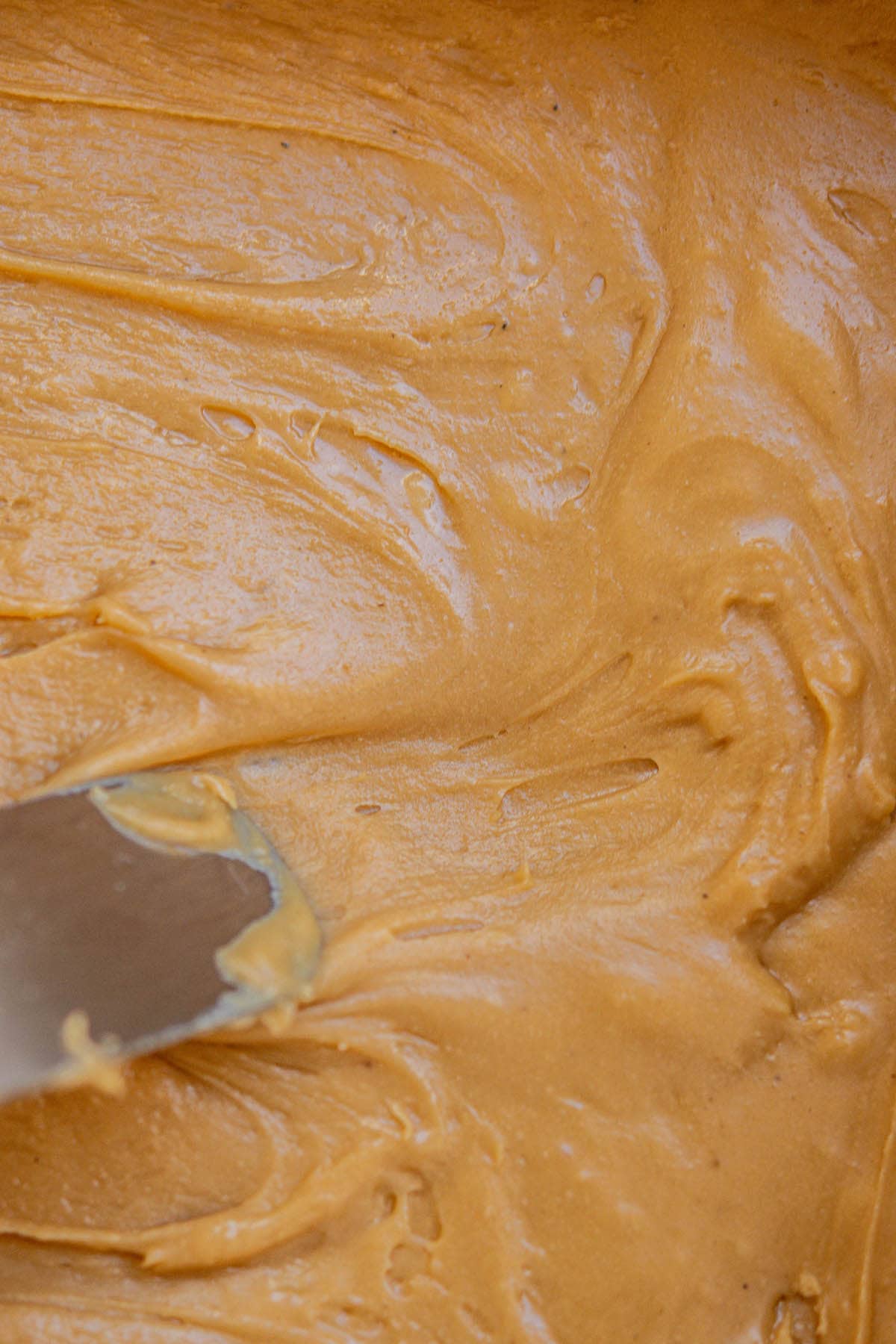
- Smooth out the top then let it cool and set at room temperature for around 3-4 hours.

Tips & Tricks
- Use a heavy pot: Thin pans can scorch easily while a thick base spreads heat evenly.
- Cook on low heat: Let the sugar dissolve slowly before it boils.
- Stir constantly if it’s catching. Keep it moving so nothing sticks or burns on the bottom.
- Let it boil slowly: Fast boiling can make the fudge grainy, bitty, or curdled.
- Be patient: It can take 15 to 20 minutes to reach the soft-ball stage (115 °C / 240 °F).
- If it stays glossy after ages of beating: It likely wasn’t cooked hot enough. Gently reheat and cook a little longer, then cool and beat again.

Microwave version
- In a very large microwave safe bowl, add sweetened condensed milk, sugar, Irish cream and butter.
- Microwave the mixture uncovered for 10 minutes, stirring every minute. Take care because the mixture will bubble and get extremely hot. After around 8 minutes, test for the soft ball stage by dropping a bit into cold water or with a sugar thermometer.
- Once it reaches this stage, let it cool for 5-10 minutes then beat until matte.
- Pour into the prepared pan, smooth the top, and let it cool to room temperature until set.
Variations
- Irish coffee fudge: Add a teaspoon of instant coffee to the fudge mixture for an Irish coffee twist. Or, make espresso fudge.
- Nutty baileys fudge recipe: Stir in chopped nuts before setting for added texture. The crunch of nuts is delicious with the creamy fudge texture.
For more candy ideas, try raspeberry chocolate truffles, or white chocolate lemon truffles!

FAQS
It’s likely it hadn’t been heated to the soft ball stage properly. You can try again by melting the fudge back down over low heat, with a tablespoon of milk. Bring it back to a bubble and cook until it reaches the soft ball stage. Then beat until matte.
If your fudge turns bitty, it’s usually because it was cooked a little too hot and the fat split from the sugar mixture. Cooking slowly and steadily helps keep the butter and sugar blended smoothly, resulting in a creamy texture. Don’t turn the heat up too high.
Store fudge in an airtight container at room temperature for 2 weeks, or refrigerated for up to 3 weeks.

Baileys Fudge
Ingredients
- 400 g soft brown sugar
- 395 g sweetened condensed milk
- 120 g Baileys Irish Cream
- 115 g butter salted or unsalted
- 60 g whole milk
- 1/4 teaspoon of salt
Instructions
- Line an 8×8 pan (20x20cm) with parchment paper.
- In a large saucepan, combine brown sugar, sweetened condensed milk, Baileys Irish cream, milk, butter, and salt.
- Cook over low-medium heat, stirring constantly until the sugar has dissolved and the mixture boils. Once dissolved, cook until the mixture reaches the soft-ball stage around 115 °C / 240 °F. Stir to stop it from burning at the bottom and don't turn up the heat high.
- Testing without a sugar thermometer: Drop a small amount of the hot fudge mixture into a glass of ice-cold water. If it forms a soft ball immediately, it's ready.
- Remove from heat and let cool for 5-10 minutes, then beat with a wooden spoon or an electric hand mixer until it loses its shine and becomes matte.
- Pour it into the prepared pan, smooth the top, and let it cool to room temperature for 3-4 hours.
- Cut into small squares. Store fudge in an airtight container at room temperature for 2 weeks or refrigerated for up to 3 weeks.
Notes
Tips
- Use a heavy pot: Thin pans can scorch easily while a thick base spreads heat evenly.
- Cook on low heat: Let the sugar dissolve slowly before it boils.
- Stir constantly if it’s catching. Keep it moving so nothing sticks or burns on the bottom.
- Let it boil slowly: Fast boiling can make the fudge grainy, bitty, or curdled.
- Be patient: It can take 15 to 20 minutes to reach the soft-ball stage (115 °C / 240 °F).
- If it stays glossy after beating for ages: It likely wasn’t cooked hot enough. Gently reheat, then cook a little longer; cool and beat again.