Sourdough Scones with Blueberries and Lemon
These sourdough blueberry scones are soft and tender. They’re filled with juicy plump blueberries, and lemon zest and topped with a lemon glaze.

About these scones
This is a sourdough starter discard recipe and the sourdough starter helps give them an extra tender crumb. They are light and soft with beautiful bursts of juicy blueberries. They use an easy recipe for tender scones that can be adapted to other flavors too. Simply swap out the blueberries and lemon and add your favorite add-ins!
The acid from the starter helps break down the flour gluten to make them tender scones. Often scone recipes use buttermilk, which is also acidic, to give this tenderness. In this sourdough scones recipe, a sourdough starter is the buttermilk substitute. Acid is often used in pastry dough too to help keep things flaky and tender and the perfect texture! The discard starter is not used for the leavening process in the scones. The scones use baking powder for the leavening part.

A few key ingredients
Method
- In a large mixing bowl combine the dry ingredients.
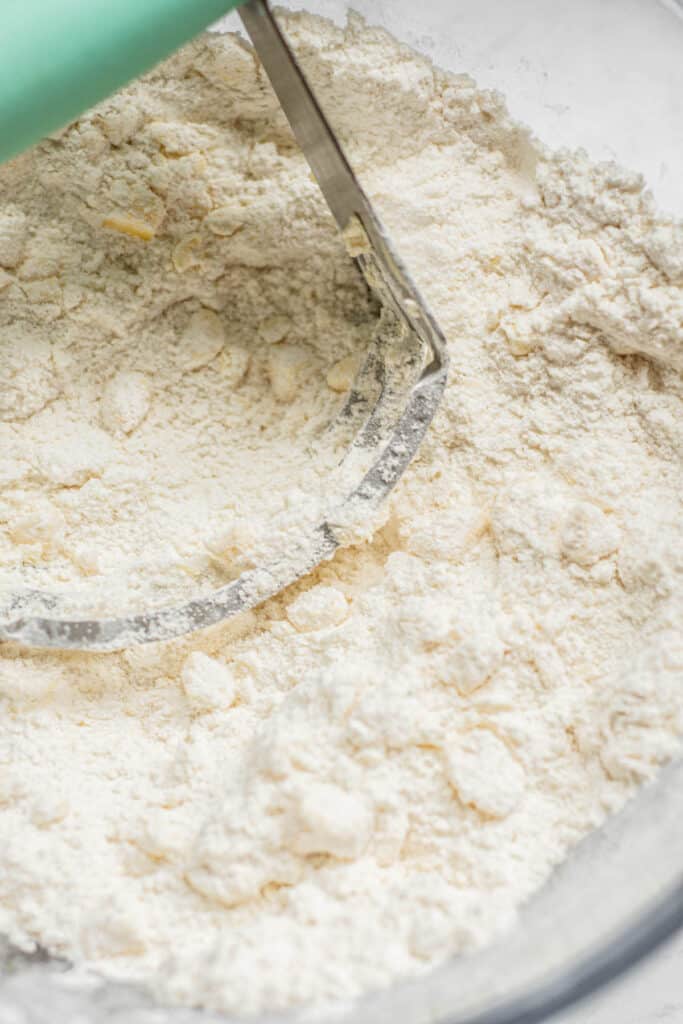
- Cut the butter into the flour until it resembles chunky bread crumbs, with a few pieces the size of peas throughout it.
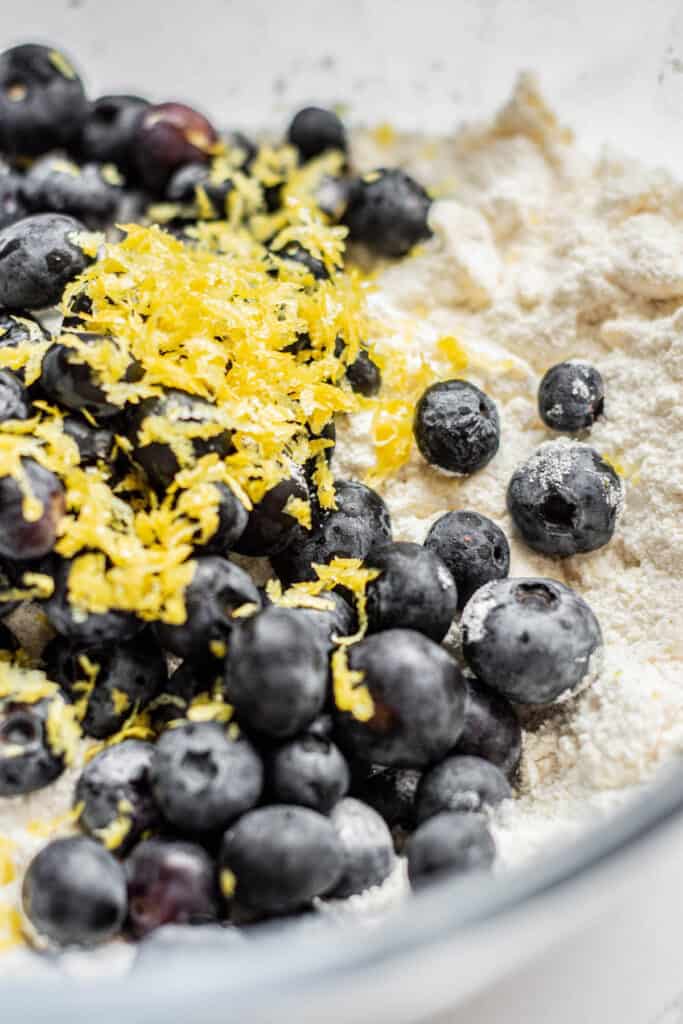
- Add in the blueberries and lemon zest and stir them throughout the flour to coat them.
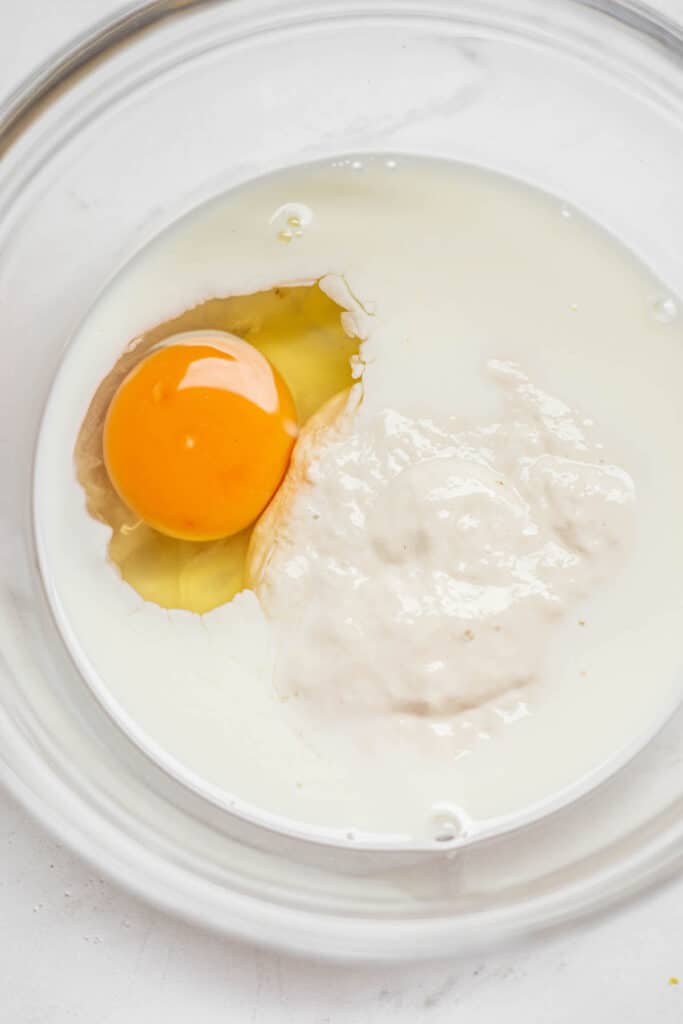
- In a separate large bowl, combine starter, egg, and 2 tablespoons of heavy cream or milk. Whisk until well combined.
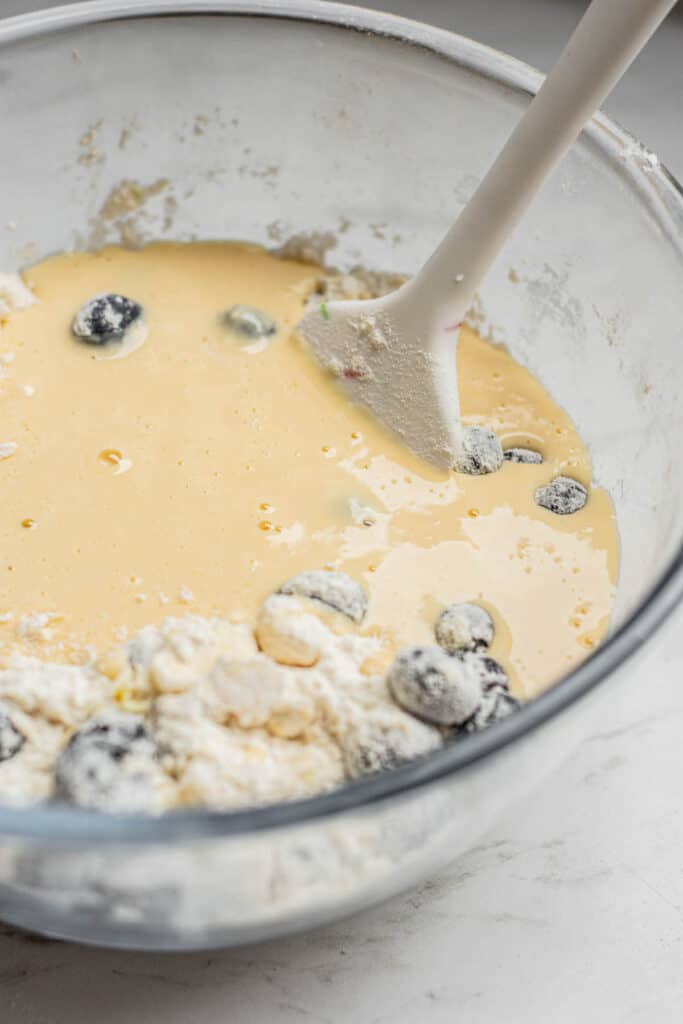
- Make a well in the middle of the dry ingredients and pour in the wet ingredients.
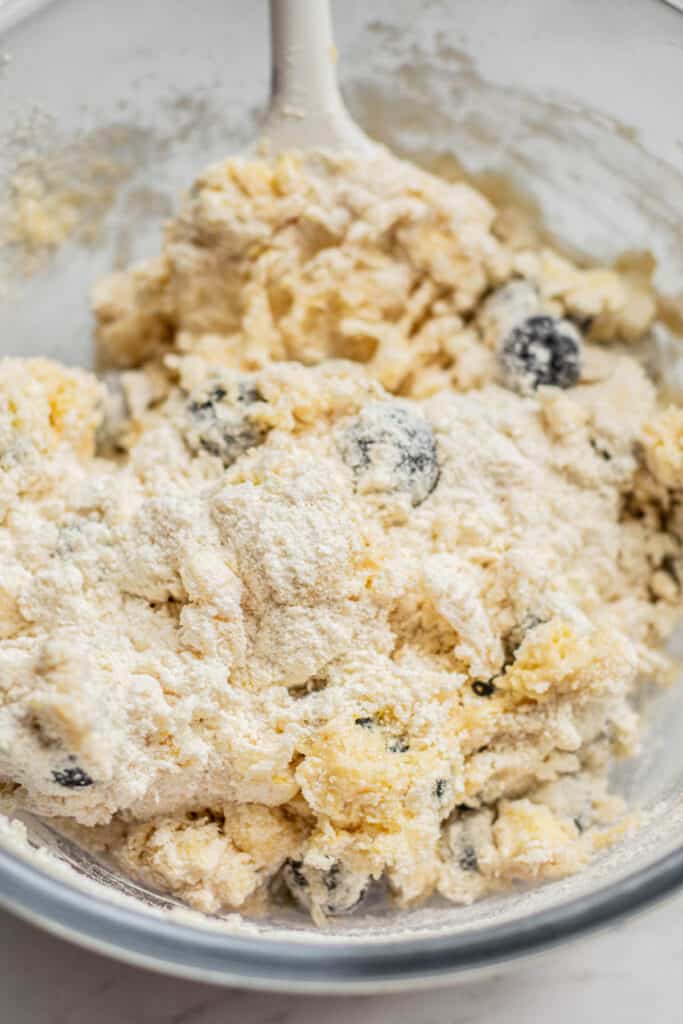
- Use a fork or rubber spatula to gently combine the mixture together, until it clumps together in a crumbly and shaggy dough.
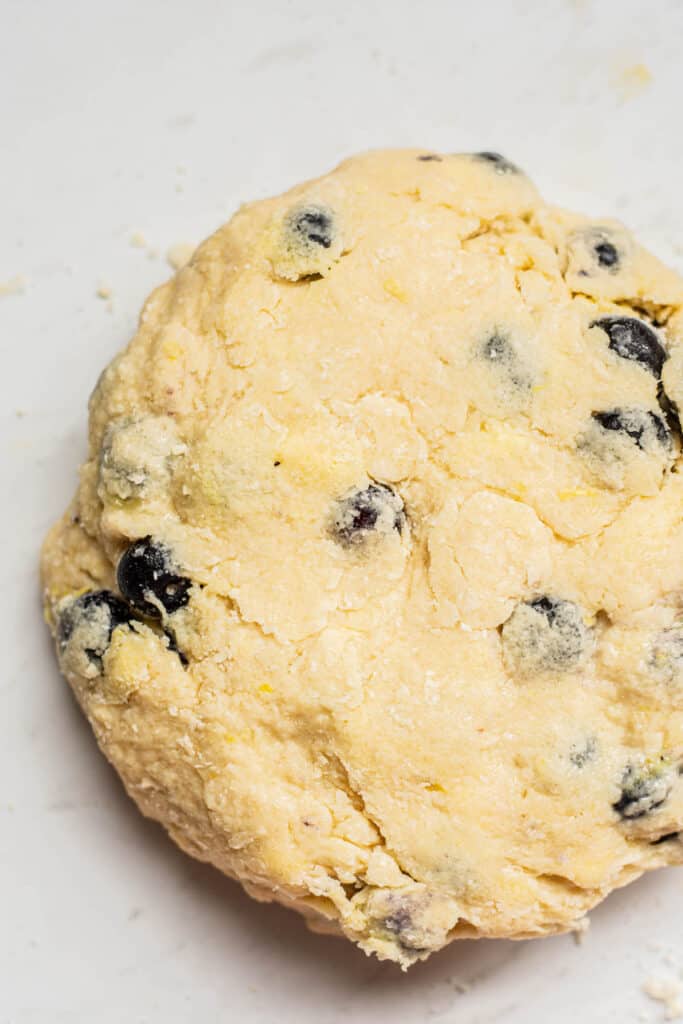
- Tip it into a lightly floured surface and gently fold it together with your fingers until it is combined into a circle.
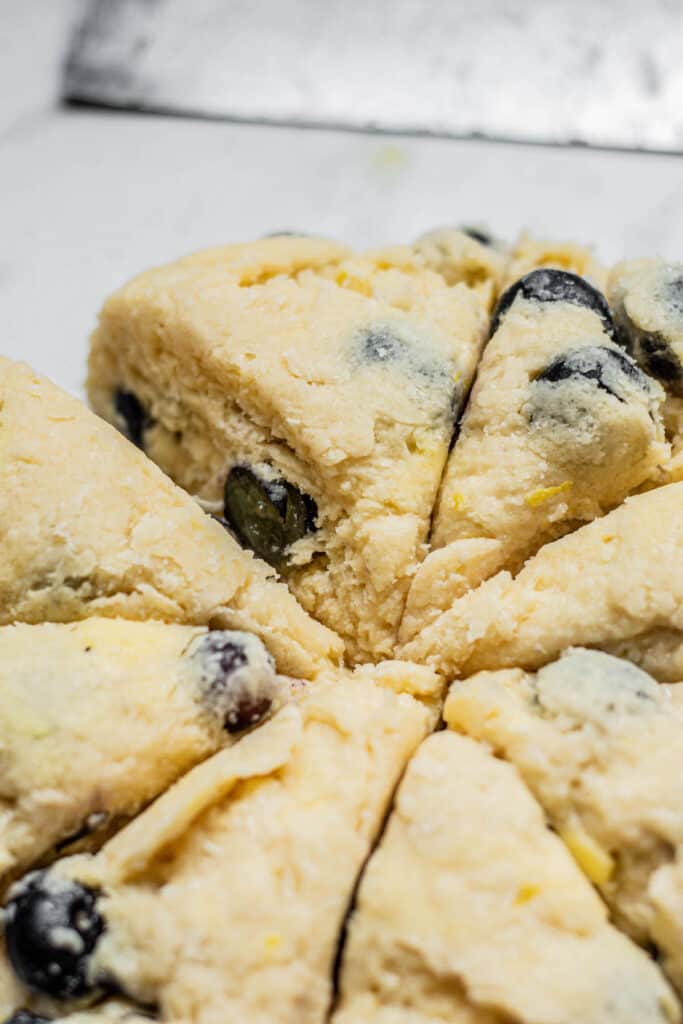
- Cut the circle into 8 wedge pieces.
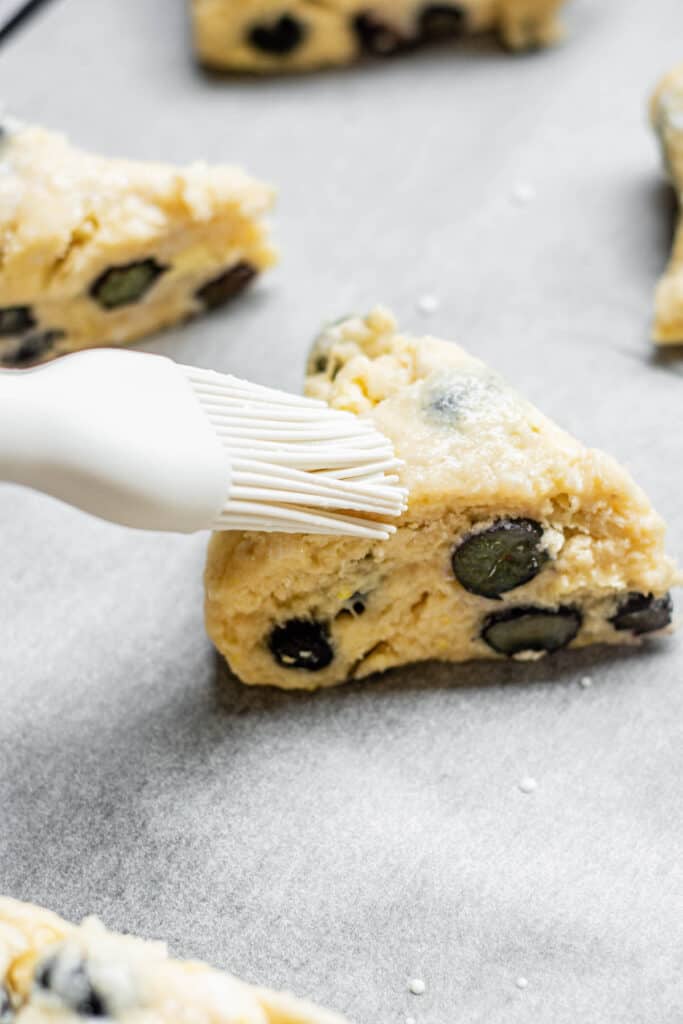
- Use a pastry brush to brush the tops of the scones with a little heavy cream or milk before baking.
- When the scones have baked, mix the glaze and drizzle it over the cooled scones.

Making scones in advance
The unbaked scones can be chilled in the fridge 12 hours in advance. Place them in an airtight container or cover them with plastic wrap. The unbaked scones can also be frozen in an airtight container. Bake them from frozen or let them thaw first in the refrigerator. If baking from frozen, add 2-3 minutes of baking time as needed.
Storing
Any leftover scones can be stored at room temperature for up to 3 days or in the fridge for up to 4 days. They can be reheated in the microwave or in a low-temperature oven until warmed through.
Baked scones can also be frozen for up to 3 months. Let them thaw at room temperature or in the refrigerator. They can be reheated in the microwave or in a low-temperature oven until warm.
Variations:
These blueberry sourdough scones use a basic scone recipe with basic ingredients that can be adapted to other flavors too. Instead of blueberry and lemon, you could try:

Sourdough Scones with Blueberry and Lemon
Ingredients
- 250 g all-purpose flour
- 100 g granulated sugar
- 2 ½ teaspoons baking powder
- ¼ teaspoon salt
- 100 g butter cold
- 150 g blueberries fresh or frozen
- 1 ½ Tbsp lemon zest
- 100 g discard sourdough starter
- 1 large egg
- 2-3 Tbsp heavy cream or milk, plus more for brushing
Lemon Glaze
- 1 ½ Tbsp fresh lemon juice
- 90 g powdered sugar
Instructions
- In a large bowl, combine the flour, sugar, salt, and baking powder and mix them well together. Cut the cold butter into cubes and add it to the flour. Use a pastry cutter to cut the butter into small pea-sized pieces. Alternatively, use a food processor to cut the butter into the flour.
- Add in the blueberries and lemon zest and toss to combine.
- Whisk together the sourdough starter, egg, and two tablespoons of heavy cream in a separate bowl.
- Make a well in the center of the flour mixture, then pour in the sourdough mixture. Use a fork to combine it into a shaggy dough that sticks together easily when pressed. If the mixture isn't coming together well, add a tablespoon of milk or cream if necessary, but the dough shouldn't be wet.
- Tip the shaggy dough onto a lightly floured surface and gently push it with your fingers until it is combined into a dough mound. Don’t over-knead the dough, or it will become tough. Press this into an 8-inch circle.
- Cut the circle into eight wedge pieces using a knife or dough scraper. Place the pieces on baking paper and pop them into the fridge while the oven preheats.
- Preheat the oven to 200°C/400°F.
- Brush the tops of the scones with a bit of heavy cream or milk.
- Bake the scones in the oven for around 20-25 minutes until golden brown around the edges. This timing depends on your oven. Some need longer; some need less. Once baked, leave the scones to cool before glazing.
Lemon glaze
- Add the lemon juice and enough powdered sugar until it makes a thick but pourable glaze. Drizzle it over the cooled scones.




These came out perfectly. Definitely my go-to scone recipe from here on out. Thanks!
Crisp, sweet delicious way to use discard
Crisp, sweet delicious way to use discard
Loved this! They came out soooo yummy. Thank you!
So happy to hear that Della!
I tried this recipe today, found the 2 ½ teaspoons baking powder made the whole batch bitter. Texture is quite nice though. Any suggestions on re-using this too-much-baking-soda bitter scones for other things, ie pie crust, crumble or …?
Hey Pauline, did you use baking soda? (since you stated “Any suggestions on re-using this too-much-baking-soda bitter scones for other things, ie pie crust, crumble or…”)
The recipe calls for baking powder not baking soda, and I can definitely see that so much baking soda made it bitter!
As for uses for bitter scones, I’m not sure sorry!
Great sounding recipe, but I don’t know how to cook with gram measurements…could you give the measurements in cups, etc?
Hey Carol 🙂 there are websites that will convert to cups for you if just type in the gram amount, however this can be quite unreliable as cup sizes differ per country and so does how people fill their cups. I always recommend a scale for consistency
When do you add the egg????
See step 4 🙂
Do you separate the wedges before baking?
Yup, space them an inch or 2 apart on a baking sheet 🙂
I’ve made this 4 times in the past 3 weeks for special occasions and everyone has loved them! I make them without blueberries inside and without the glaze on top for more of a tea scone type of scone, and also have used as low as 60g of sugar depending on who I’m making them for. I’ve found that I only need about 2-3 tbsp of milk total or else the dough becomes too sticky/soft to work with! These also freeze really well which is a huge plus.
I just made these, minus the glaze, because they are so great they don’t need this extra sugar. This will now be my go-to scone recipe, my go-to use of sourdough discard. They had a great crumb and were so moist and light!