No More Dense Sourdough – A Sourdough Guide
If your sourdough bread is dense, gummy, flat, or not rising the way it should, you are in the right place. This guide explains exactly why sourdough fails and how to fix the most common problems at home.
It’s hard to write an exact recipe with timings and temperatures as every environment is so different and there are so many variables. I think it’s best to understand what is actually happening while the sourdough is being made, and what is happening in your sourdough starter. Once you understand that you can tailor things to suit your individual spaces and loaves.
Why sourdough becomes dense or flat
Dense sourdough usually comes from one of these causes:
- A weak or acidic starter
- Under fermentation during bulk proof
- Over fermentation that collapses the dough
- Poor gluten development
- Dough that is too cold or too warm
- Incorrect hydration
- Shaping without enough tension
- Lack of steam in the oven
Don’t worry though, we are going to go through all of these with clear things to look for and easys fixes!
If you are just getting started with sourdough, my main Sourdough Hub is a great place to begin. It has all my starter guides, bread tutorials, and techniques in one spot.
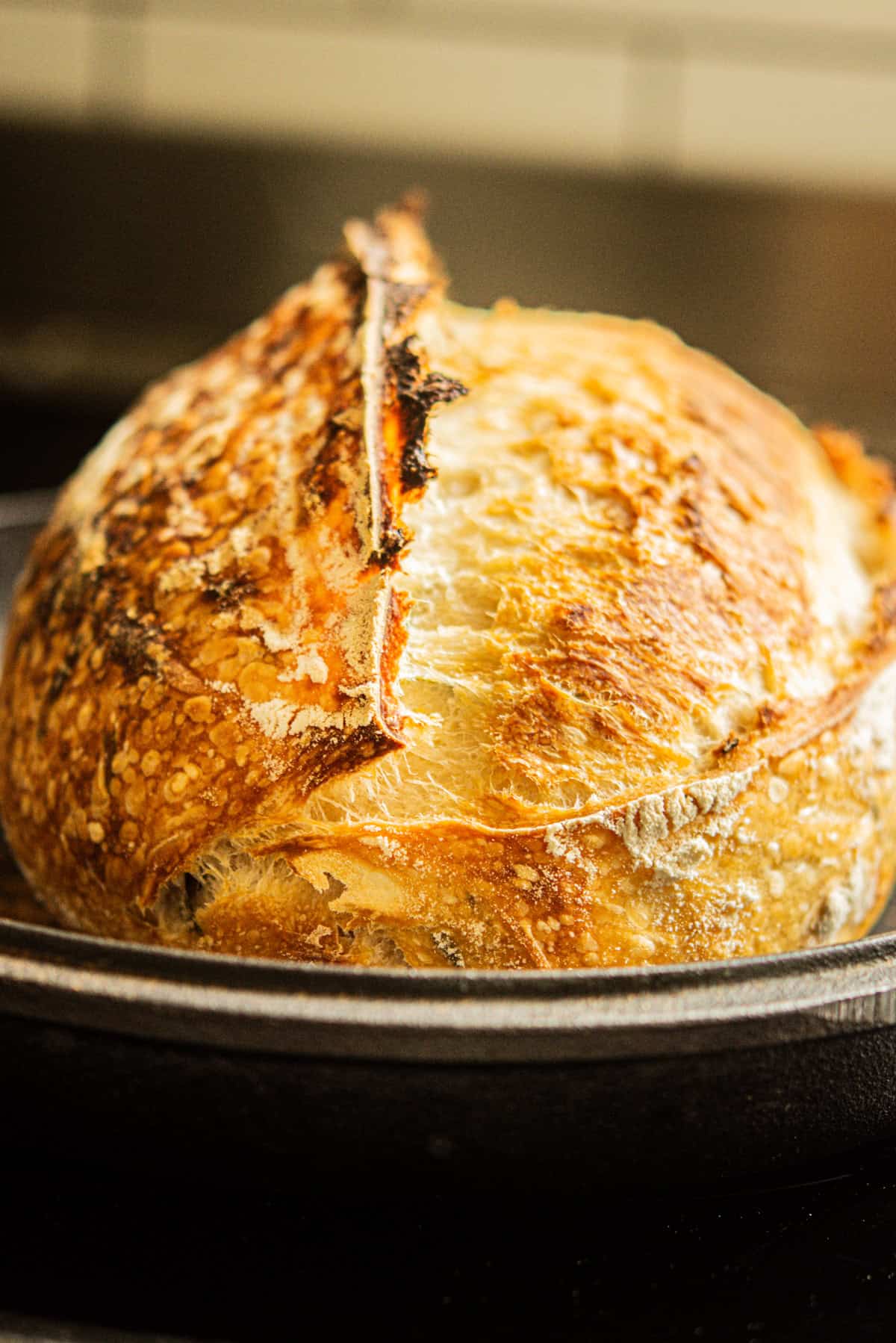
What causes dense sourdough bread
Dense sourdough almost always points to under fermentation or starter issues. When the yeast cannot produce enough gas, or the gluten network is not strong enough to hold that gas, the loaf bakes tight and heavy.
Signs of dense or under fermented sourdough:
- Tight crumb with gumminess
- Thick, chewy crust
- A few random large holes surrounded by dense areas
- Dough that felt stiff or slow during folding
If you see this, you are usually dealing with a starter that needs strengthening or a bulk ferment that did not go long enough.
Why your sourdough starter affects rise and texture
A healthy sourdough starter is the foundation of every good loaf. It contains wild yeast and lactic acid bacteria that ferment the dough. The yeast is responsible for rise, while the bacteria develop flavour.
A bubbly starter is not always a strong starter. Both yeast and bacteria create bubbles, but yeast is slower to grow. You need enough yeast activity to raise the dough.
If you want to dive deeper into starter care, feeding routines, or how to build strength over time, you can browse my Sourdough Starter Guides for step by step help.
How to know if your starter is strong enough
Your starter should be showing consistent, predictable growth. How fast it rises depends on the feeding ratio, but at a typical 1:2:2 feed, a healthy starter will:
- Double or triple in 4 to 6 hours at about 21°C / 70°F
- Smell fresh, slightly fruity or yoghurty
- Look airy and sponge like when you scoop into it
If it does not double at a 1:2:2 feed within 6 hours, the yeast colony is not strong enough yet.
Stiff starter vs liquid starter: which is better
Most people have a 100% hydration starter which means the starter is fed with the same amount (in weight) of flour and water and this is what I use in my NZ kitchen. However, this does not suit every environment. In really warm or humid rooms make liquid starters become acidic faster. When bacteria outrun the yeast, the starter collapses early and it will struggle to raise dough. In this case a stiff starter (about 50 to 65 % hydration) can be a good option, it will be more stable.
Benefits of a stiff starter
- Slower acid build up
- More predictable rise
- Stronger gluten structure
- Better performance in hot climates
- Milder flavour in the final bread
How to convert your starter to a stiff one
Feed it 1 part starter, 2 parts flour, and 1 part water. It should form a soft dough ball and rise slowly but steadily.
You can use a stiff starter directly or convert a small amount into a stiff levain.
Why sourdough starters become weak or acidic
A starter can become unbalanced for a few reasons:
- Too much seed starter in each feed (like 1:1:1 every time)
- Long gaps between feedings
- Warm rooms that speed up fermentation
- Chlorinated water
- Flour with low nutrient content

Note: The portion of starter you carry into a new feed is called the seed starter. If you always feed 1:1:1, that means you are keeping a large amount of old starter and giving it only a small amount of new food. The mixture becomes acidic faster, because the bacteria have already produced acid in the older starter. Smaller seed amounts, like 1:2:2 or 1:3:3, give the yeast more fresh flour to work through and help keep the acidity balanced.
See my guide on sourdough starter maintenance for more information.
Signs of an acidic starter:
- Strong, sharp smell
- Surface that sinks or wrinkles
- Thin or stringy texture
- Dough made with it becomes sticky and slack
Acidic starters like this are great in discard recipes such as pancakes. That’s because these recipes rely on the acid the bacteria produces. It reacts with baking soda to give the rise.
How to fix an unbalanced starter
Refresh it at a higher ratio
Feed it 1:3:3 for a few goes. This reduces the acidic part and gives yeast more fresh food.
Check your water
Some tap water contains enough chlorine to weaken yeast growth. Chlorine affects yeast more than bacteria, so the starter may become acidic and sluggish even if you feed it well. If chlorine might be the issue, switch to:
- filtered water
- boiled and cooled water
- water that has sat uncovered for a few hours
This gives yeast a better chance to grow.
Adjust for room temperature
In warm rooms, use higher feed ratios like 1:3:3 or 1:4:4, or switch to a stiff starter, which slows acid build up.
What is bulk fermentation and why it controls the crumb
The bulk ferment is the term for the fermenting and proofing of the dough will do at room temperature. Usually, there is some folding, or kneading of the dough that happens at this stage at the same time.
A dough that is under fermented will be dense. A dough that is over fermented will collapse or bake flat.
Signs your bulk ferment is ready
- Dough is about 40-50 percent bigger
- Surface looks smoother and slightly domed
- Bubbles form along the sides
- Dough feels airy and elastic
- Poke test: the indent fills halfway back slowly
A handy method to use is the aliquot method. This is where you take a small piece of your mixed dough and place it into a narrow glass or jar. Mark the starting point and let it rise alongside your main dough. Because the sides are straight and clear, you can see the rise better. Once the aliquot dough has increased by roughly 40-50% and shows bubbles along the sides, your bulk ferment is usually right on track.
The dough needs to proof for long enough if you want a light and open crumb. You need to give the yeast time to work through the sugars in the dough. As they do, they release carbon dioxide. The gluten structure that was built up during the autolyse and the folding will hold this gas in little pockets. This gives rise to the dough.
Temperature is key. Cool rooms slow fermentation and a warm rooms speed it up dramatically.
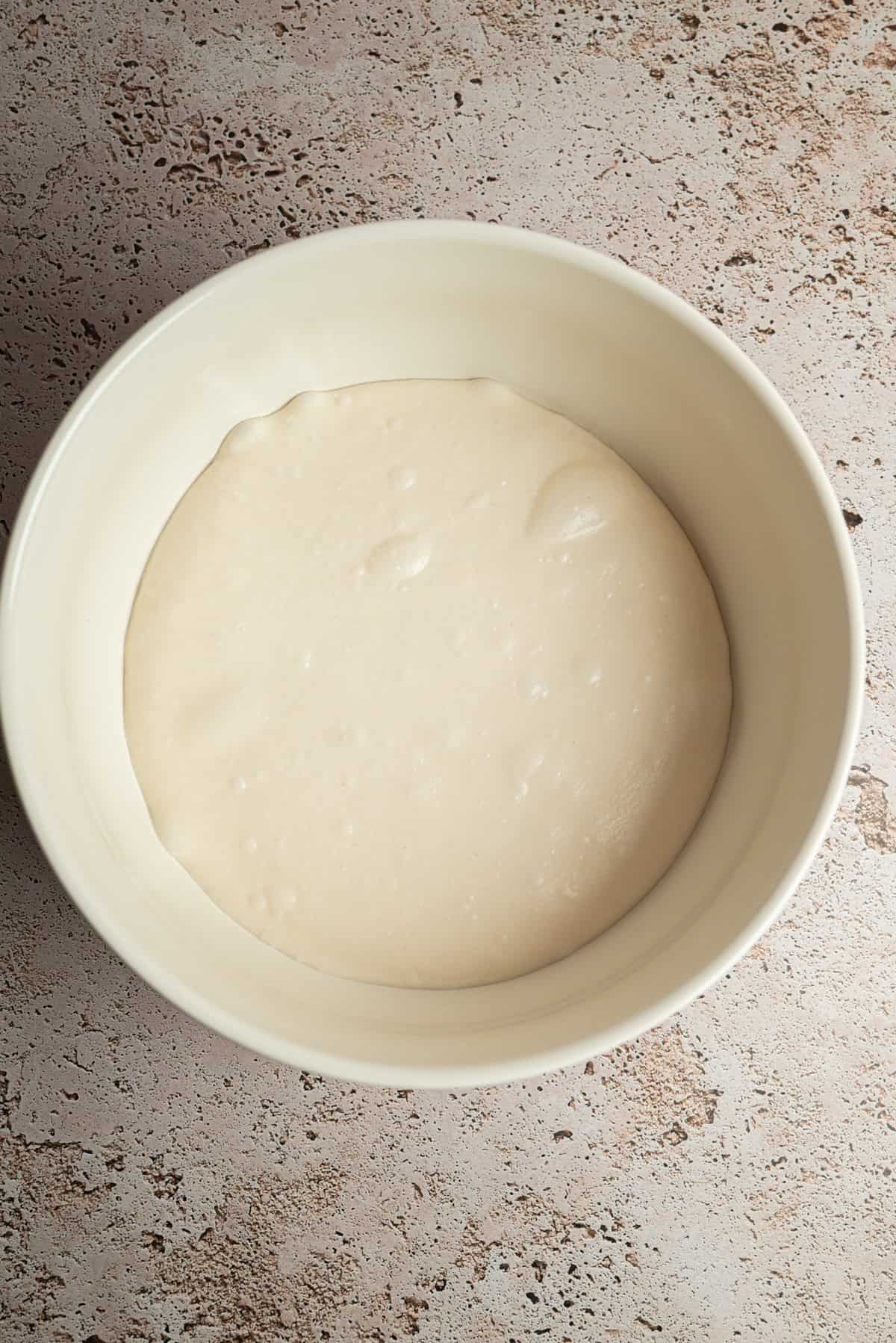
Under fermented sourdough: causes and fixes
Under fermentation is the number one cause of dense sourdough.
Causes
- Weak starter
- Dough too cold during bulk
- Not enough time for yeast to produce gas
Signs
- The dough feels tight, stiff, or firm during folds
- It does not look lighter or airier as it proofs
- The surface stays smooth with no signs of fermentation activity
- The dough tears easily when you try to stretch it
- After baking it’s dense or gummy with sporadic holes.
Fixes
- Use visual cues instead of the clock
- Strengthen your starter with consistent feedings
- Increase bulk ferment time
- Place the dough in a warmer place (but not above 26°C/79°F)
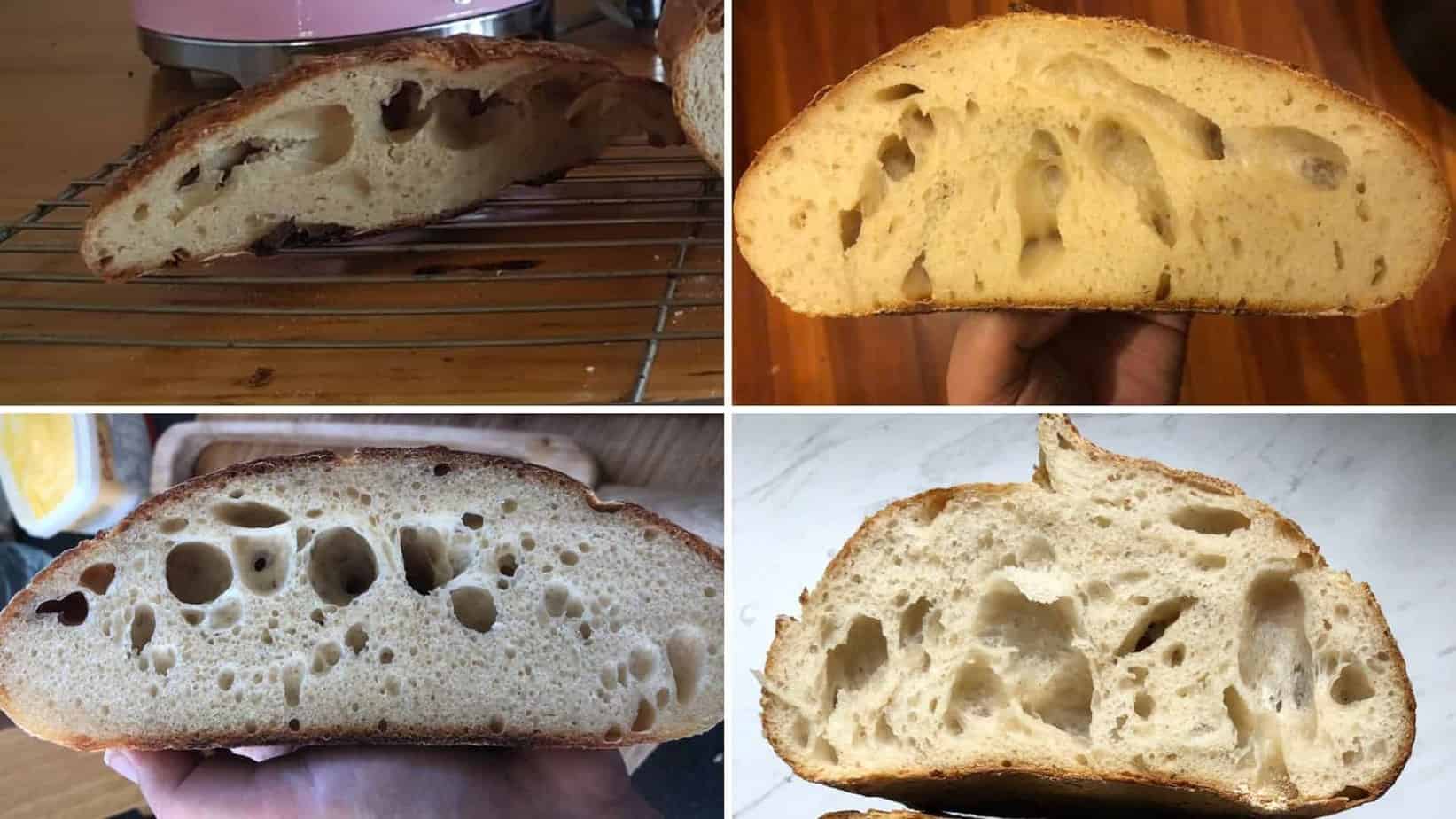
Over fermented sourdough: causes and fixes
Over fermentation happens when the yeast produces more gas than the gluten can hold. The dough becomes fragile and collapses easily.
Causes
- Very warm room
- Extended bulk fermentation
- Starter too acidic
- Dough forgotten in the fridge during cold proof
Signs
- Dough spreads and will not hold shape
- Dough sticks to banneton
- Bakes flat with little oven spring
Fixes
- Shorten bulk time
- Lower dough temperature
- Use less starter
- Refresh starter to reduce acidity
If you want a quick index of all troubleshooting topics in one place, you can jump to my Sourdough Troubleshooting Hub.
Hydration and flour choice: how they affect the crumb
Hydration controls how open or tight the crumb becomes.
- Higher hydration (75% and up) gives an open, lacy crumb.
- Lower hydration (68 to 72%) gives a tighter, more even crumb.
Flour type matters too. Strong white bread flour creates reliable gluten strength. Whole grain flours absorb more water and ferment faster, so they might need some adjustments.
When introducing different flours such as spelt flour, rye, wholemeal, etc, it helps to start with small amounts and work your way up. 10-15% of the total flour amount is a good place to start.
If you want to see how different hydrations behave in real dough, my Sourdough Bread section has a mix of beginner friendly loaves and more advanced formulas you can try.
If you want to see what a mid hydration dough feels like, my Beginner Sourdough Loaf is a great place to start.
What is autolyse and why it helps your dough
Autolyse is a rest period where flour and water are mixed and left to hydrate. This relaxes the dough, improves gluten development, and makes shaping easier.
Salt and starter are not added until after autolyse because salt tightens gluten and slows absorption.
A quick note on dough feel and ratios
When it comes to sourdough, the exact amount of water and flour is not the most important part. Honestly, I make bread by eye a lot of the time. I tip in the flour and water and mix until the dough feels right. Some days it ends up on the wetter side and some days not as much. So do not stress if your dough does not match someone else’s hydration level exactly. Sourdough recipes can sit anywhere between 65 and 80 % hydration. If your starter is healthy and not overly acidic, the dough can handle higher hydration surprisingly well.
Folding dough: how to build strength before proofing
Folding strengthens the gluten network so it can hold gas. Coil folds or stretch and folds work well.
What good dough strength feels like
- Dough lifts in one piece
- Surface looks smoother
- Dough feels bouncy
- It spreads less after each fold
If your dough stays watery or loose after several folds, look back at your starter.
In my recipe, I either stretch and fold or coil fold the dough fora few hours and then leave it to ferment further until it has reached the ideal proofed stage. I always use wet hands when I am folding my dough as it stops it from sticking to my hands. My dough is technically always sticky and wet, even if the videos I have of my folding don’t show that fully. However, I build up the structure in the dough so it holds together and becomes elastic.
It is normal for the bread dough to spread back out a bit after folding, especially with doughs that have higher hydration. However, you should feel a difference in texture as it develops.
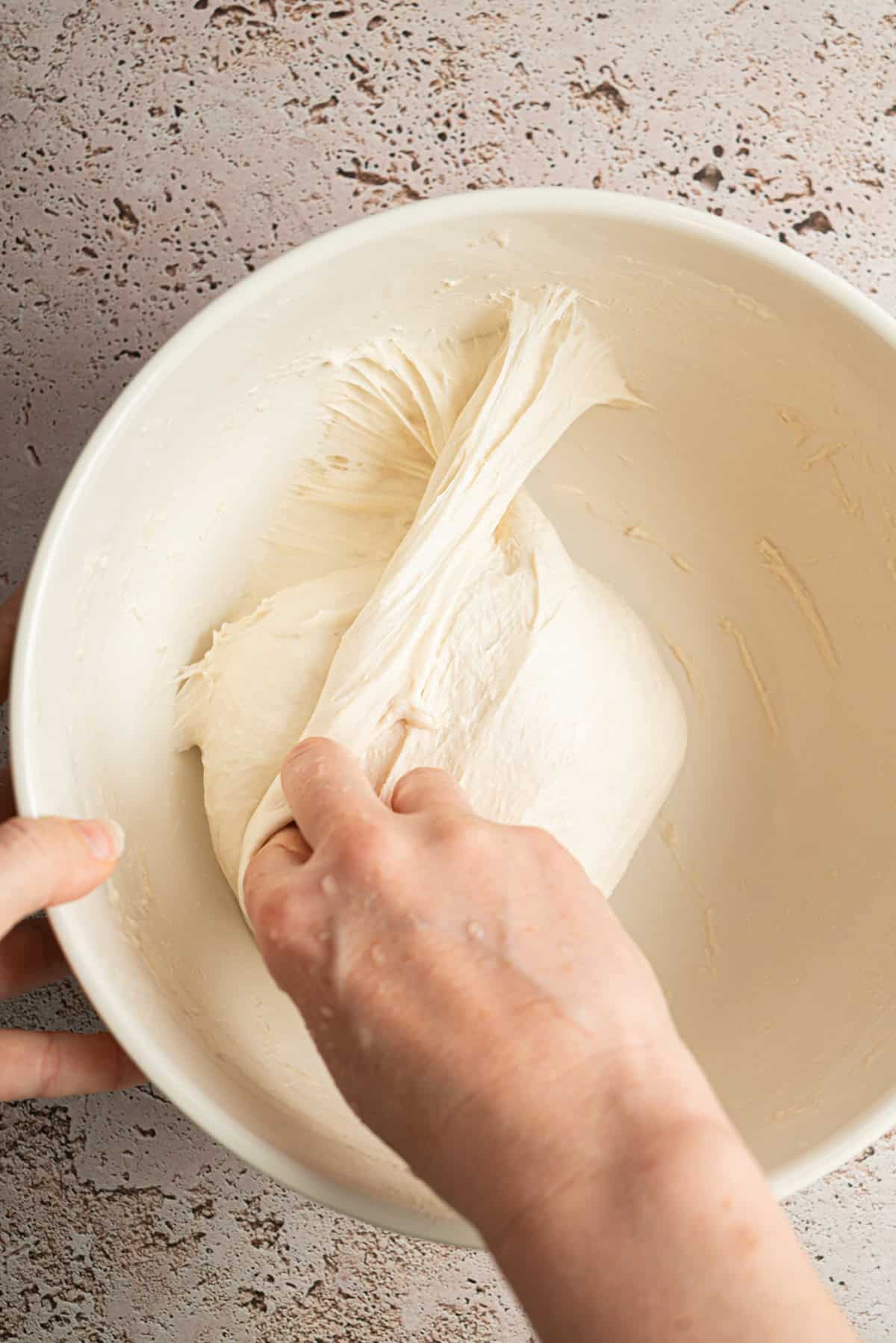
How to shape sourdough for better oven spring
Shaping creates surface tension, which helps the loaf rise up instead of out.
Good shaping feels like:
- The dough tightens as you drag it
- The surface becomes smooth
- It holds a rounded shape
If the dough tears, gluten is underdeveloped.
If you enjoy shaping or want to explore different dough styles, my Sourdough Rolls and buns and Enriched Dough hubs have lots of ideas and guides you can follow.
How to bake sourdough for maximum oven spring
Steam is essential. A preheated cast iron pot traps steam and helps the loaf expand before the crust sets.
Tips for better bake results
- Preheat your pot for at least 30 minutes
- Keep the lid on for the first stage of the bake
- Do not open the oven early
- Remove the lid to brown the crust
How to create steam without a Dutch oven
If you do not have one, you can still create great steam:
- Use a roasting pan with a lid
- Bake on a preheated stone or steel
- Add a tray with boiling water or ice cubes
- Cover the loaf with a large stainless steel bowl
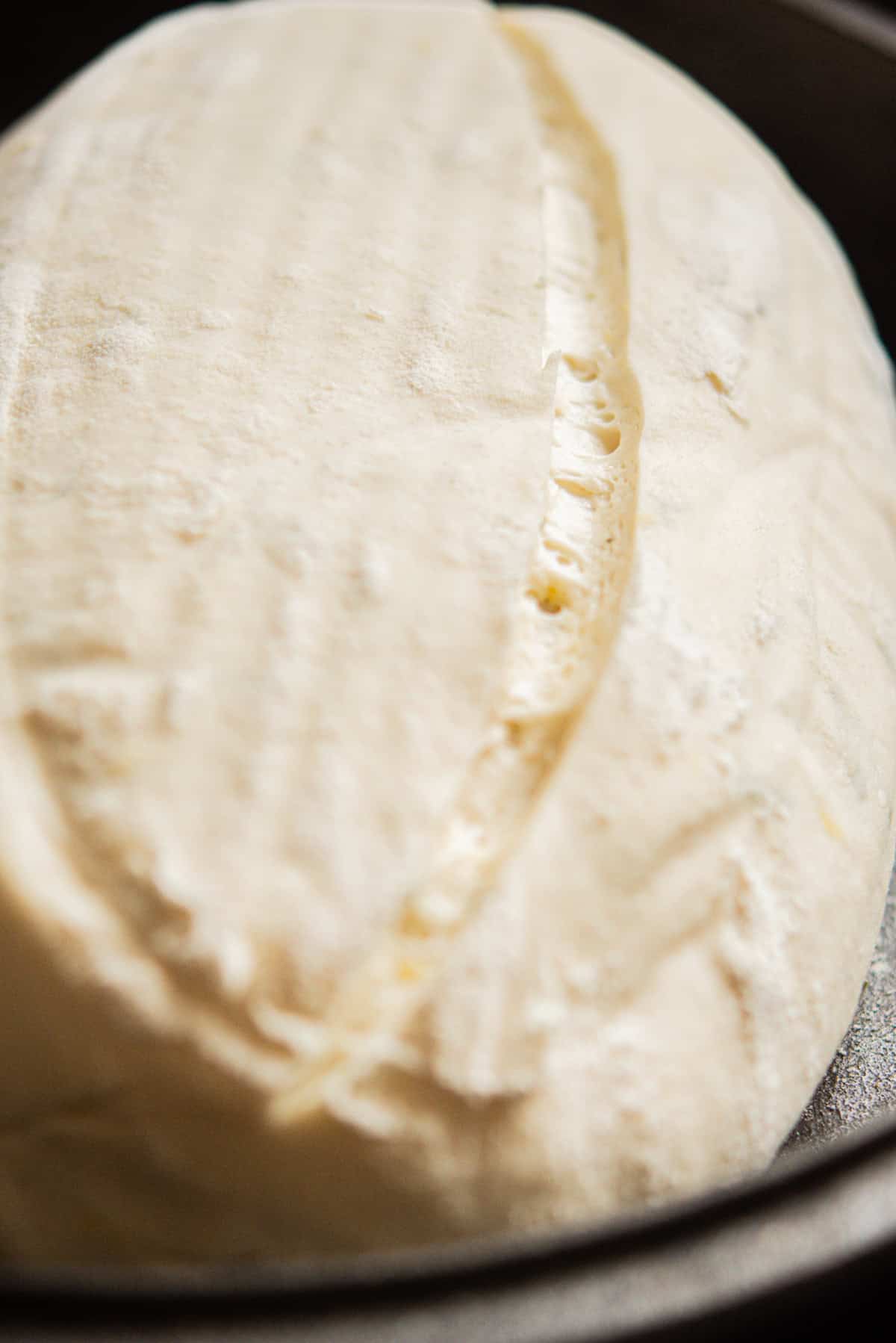
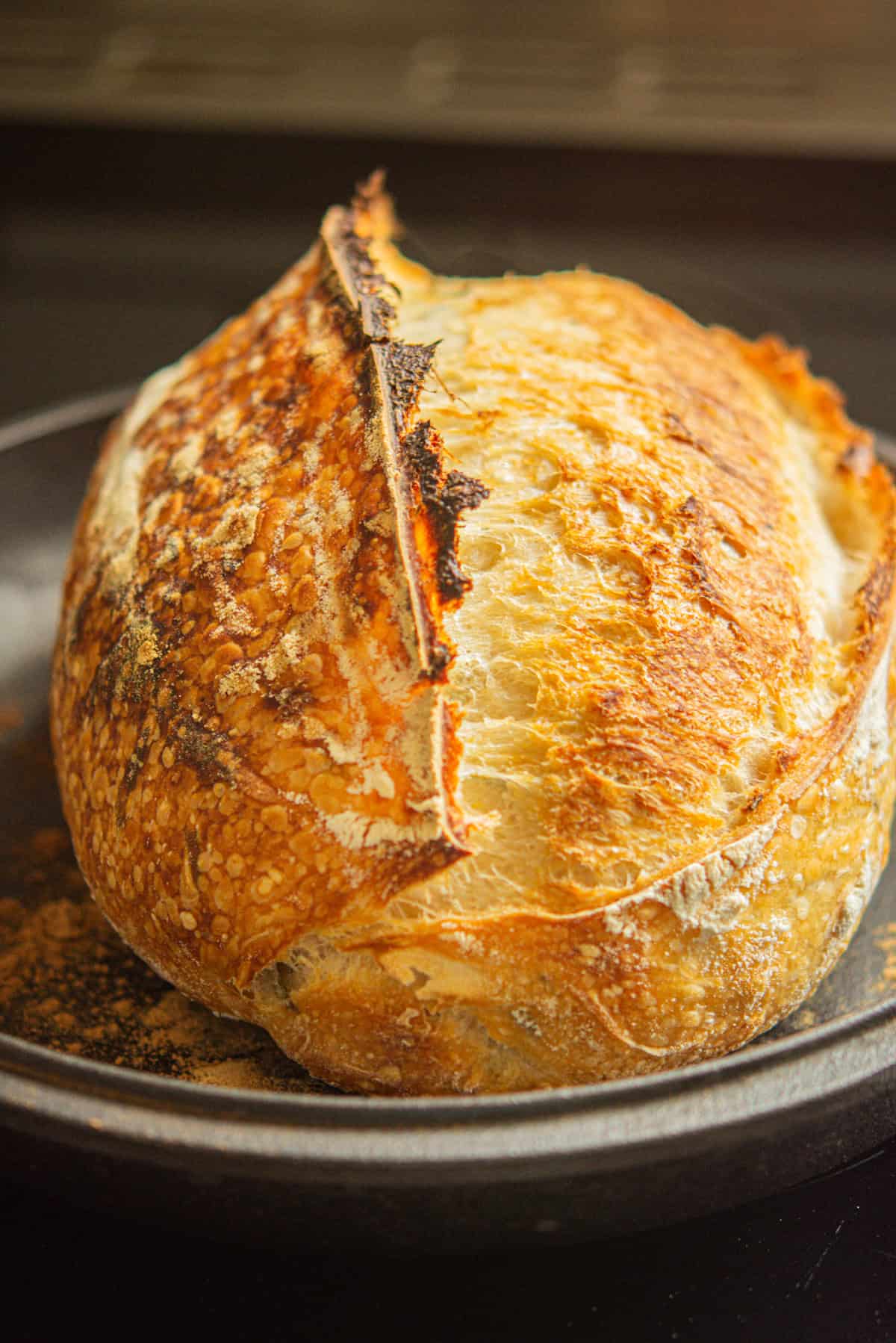
Scoring sourdough: how to get an ear
Scoring directs where the loaf will open.
- Use a razor sharp blade
- Decorative cuts stay shallow
- Main slash about 5 to 8 mm deep
- Slight angle for an ear to lift
Cold dough scores cleaner than warm dough.

FAQs about Sourdough
More reading
If you want to explore more sourdough topics, you can browse all of my hubs here:
Starters | Bread | Rolls | Enriched Dough | Laminated Dough | Sourdough Discard | Troubleshooting





Does Humidity affect Flour amount and The general feel of the dough??
Hi, would you address “hooch”? What do I do with my starter once it has formed this? It’s been the refrig for about 1 1/2 weeks. The hooch is about 1/2 thick.
Hey I would tip off that hooch and feed the starter. Even though it’s been refrigerated, feed it weekly at least to stop it running out of food and forming the hooch. Or feeding it a higher ratio, such as 1:3:3 could work too, if you want to to keep it in there for longer without feeds.
Hi Elien,
Can you please advise the right feeding ratio or what you would recommend when putting the starter into the fridge until the next bake as I am only baking once a week and worried I am not feeding it correctly. Cheers.
hey 😊 1:2:2 is fine
Hi Elien, your sourdough advice has been a lifesaver for this novice sourdough baker! My loaves aren’t quite there yet, but I don’t think I’m far off. When I feed my starter, do I just take out a bit and then feed it 1:1:1, or do I weigh the whole starter and go from there? Thank you 🙂
Hey that’s great to hear! :). I usually take out a portion and feed that, which keeps the amount manageable. I take out enough to use in my bread + have a little left over to re-feed for the next time.
My bread isn’t “sour “ enough. Doesn’t really taste like sour dough. What can I. Do?
Heya, if you extend the fridge proof time longer, that can help bring out the sour flavour 😊
Hello, Elien! How many hours should the dough stay in the fridge? There is a risk of over-proofed in the fridge? After that, the dough can be placed directly in the oven or it must be left at room temperature for a while?
Hey with my recipe you can keep it in the fridge up to 20 hours and yes placed directly in the oven from the fridge
I’m a Brazilian mother and I’ve learned a lot with your acknowledge in this quarantine. Thanks for sharing it with us.
I’m so pleased you’ve enjoyed my blog 💚
Thank you so much for sharing all this precious information. The recipes are great and sourdough has definitely neen the highlight of my lockdown thsnks to you. Quick question for you: is the dough supposed to rise after cold proofing? I’ve made my starter from scratch and my stsrter seem to be very inactive in the cold.
I’m glad you’re enjoying it! It’s not meant to rise much much once it’s in the fridge. The yeast will be slowed down a lot
Amazing! I think I’ve figured out my culprit – acidic starter!
I followed your instructions for starter and loaves (learning to watch the dough, not the clock) and have had awesome success. Thank you so much!
That’s awesome! I’m so happy to read this 😀
Hello…can you do this in a mixer?