Fermented Hot Sauce Recipe
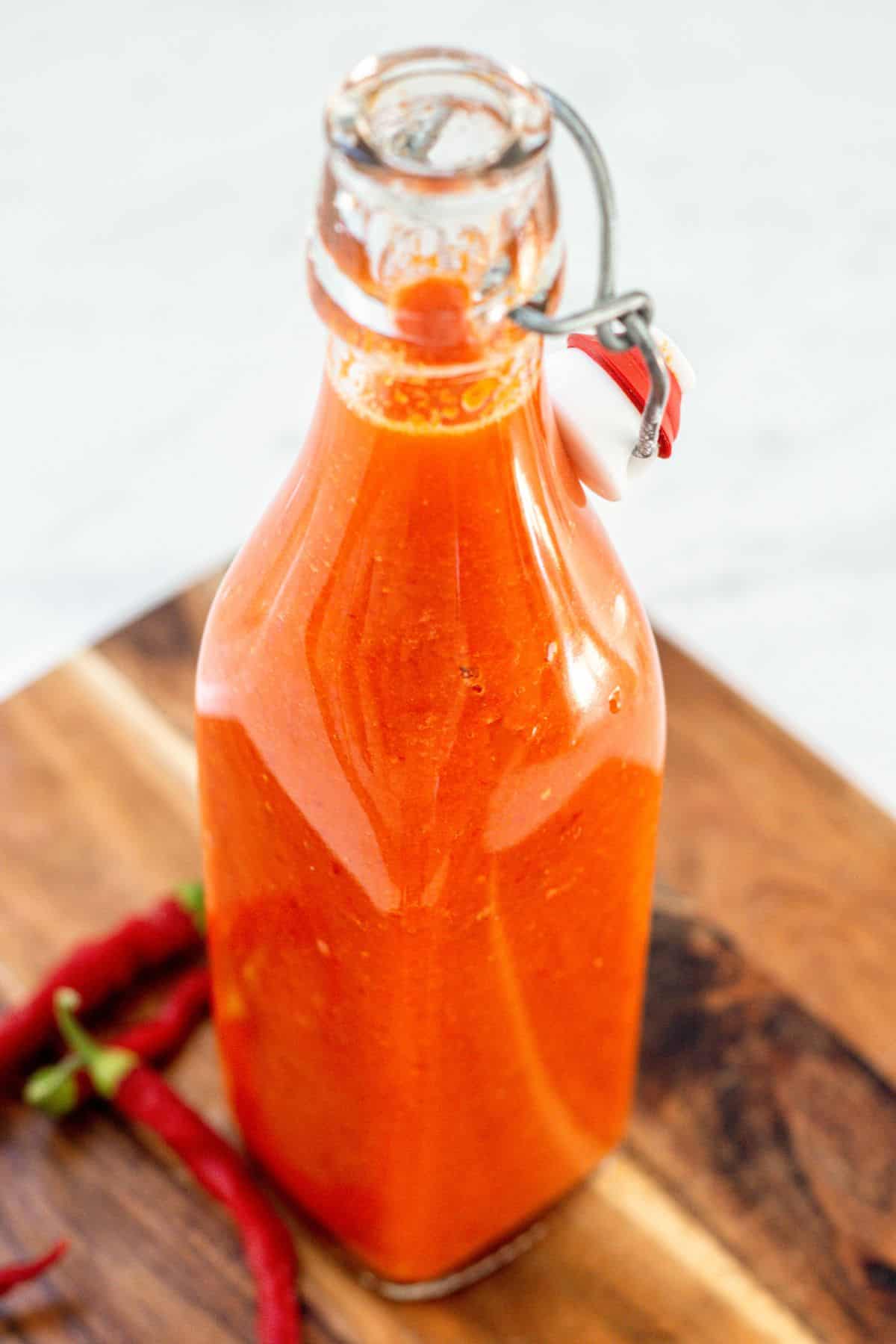
This homemade fermented hot sauce is made from chili, garlic, and onion. It’s tangy, spicy, and full of flavor, and it lasts for months in the fridge. Every year, I make a few bottles of this hot sauce: one for my family, a few for gifts, and one I always end up eating way too fast. If it’s fermented and stored properly, it can last up to 12 months refrigerated, ready to add delicious, tangy spice to meals


What is lacto-fermentation?
Lacto-fermentation is a natural preservation process that relies on beneficial lactic acid bacteria (mainly from the Lactobacillus family, like in sourdough starters). These bacteria convert the sugars and starches in the vegetables into lactic acid, creating that tangy, complex flavor you taste in fermented foods.
As they work, they create an acidic environment that keeps harmful bacteria out. So your sauce naturally preserves and becomes probiotic-rich.
The peppers ferment in a salt brine. The salt prevents unwanted bacteria from growing, while the good bacteria thrive.
- A 3-3.5% salt solution is perfect for chili ferments. For example, dissolve 15-17 g salt per 500 g of water.
- Use unrefined sea salt (without iodine or anti-caking agents).
For water, filtered is best, but tap water is usually fine if it’s not heavily chlorinated. You can leave tap water to sit uncovered overnight to allow the chlorine to dissipate.
Choosing your peppers
You can make this hot sauce as hot or mild as you like. Your choice of chili peppers will determine the heat level.
Mixing spicy and sweet peppers gives a great balance, plenty of flavour without blowing your head off.
Fermenting frozen chilis
You can use frozen chilis for this recipe, too. Since the sauce is blended at the end, frozen chili works just as well as fresh. Freezing softens vegetables, which matters for crunchy ferments (like pickles), but not for hot sauce.
Tools you’ll need
How to make fermented hot sauce
- Dissolve 15-17 g of unrefined sea salt in 500g of water. Warm the water slightly to help dissolve the salt, then let it cool to room temperature.
- Remove the stalks from the chilies (wear gloves if they’re hot!). Roughly chop the chilies, onion, and garlic. If you want a milder sauce, remove the seeds and white pith from the chilies.
- Pack the chopped vegetables into your jar, leaving about 2.5 cm / 1 inch of headspace. Pour over the cooled salt brine, making sure all vegetables are submerged. Use a spatula or spoon handle to release any trapped air bubbles. Add a clean fermentation weight to keep everything under the brine.
- If you have an airlock, attach it. Otherwise, screw on a lid loosely so gases can escape, or cover with a tea towel secured with a rubber band
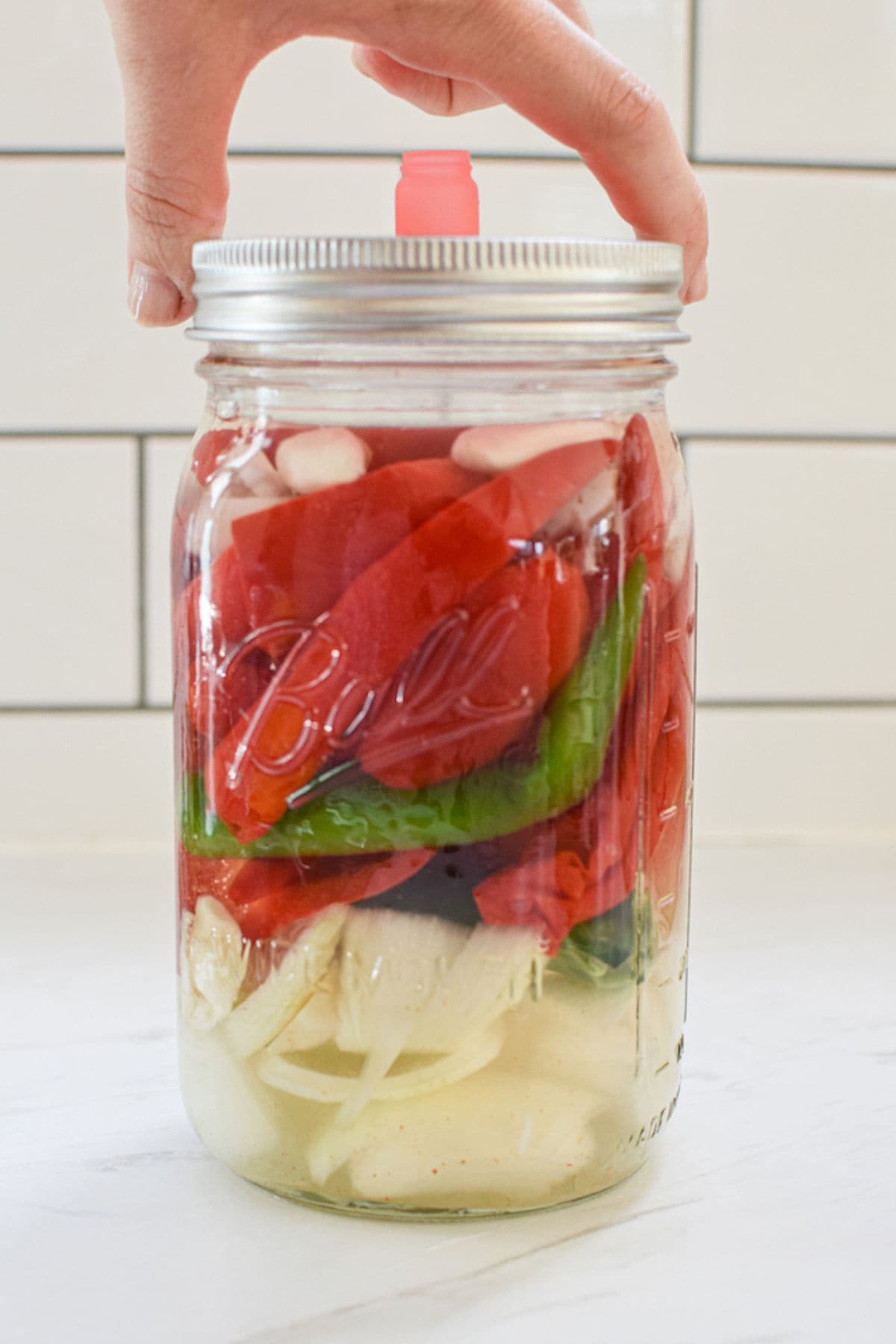
- Place the jar on a plate (in case it bubbles over) and store it at room temperature (18-24 °C / 65-75 °F), out of direct sunlight.
- Let it ferment for 10 to 14 days, depending on your room temperature.
- You’ll notice bubbles, cloudiness, and a mild tangy smell. These are all good signs that fermentation is happening. The chilies will lose some colour as they ferment.
Check for mould or kahm yeast
A thin white film (kahm yeast) is harmless. Just skim it off. If you see fuzzy mould in colours like black, green, or orange, discard the batch and start again. Mould usually indicates that the vegetables weren’t fully submerged or that the equipment wasn’t clean enough.
Blend and bottle
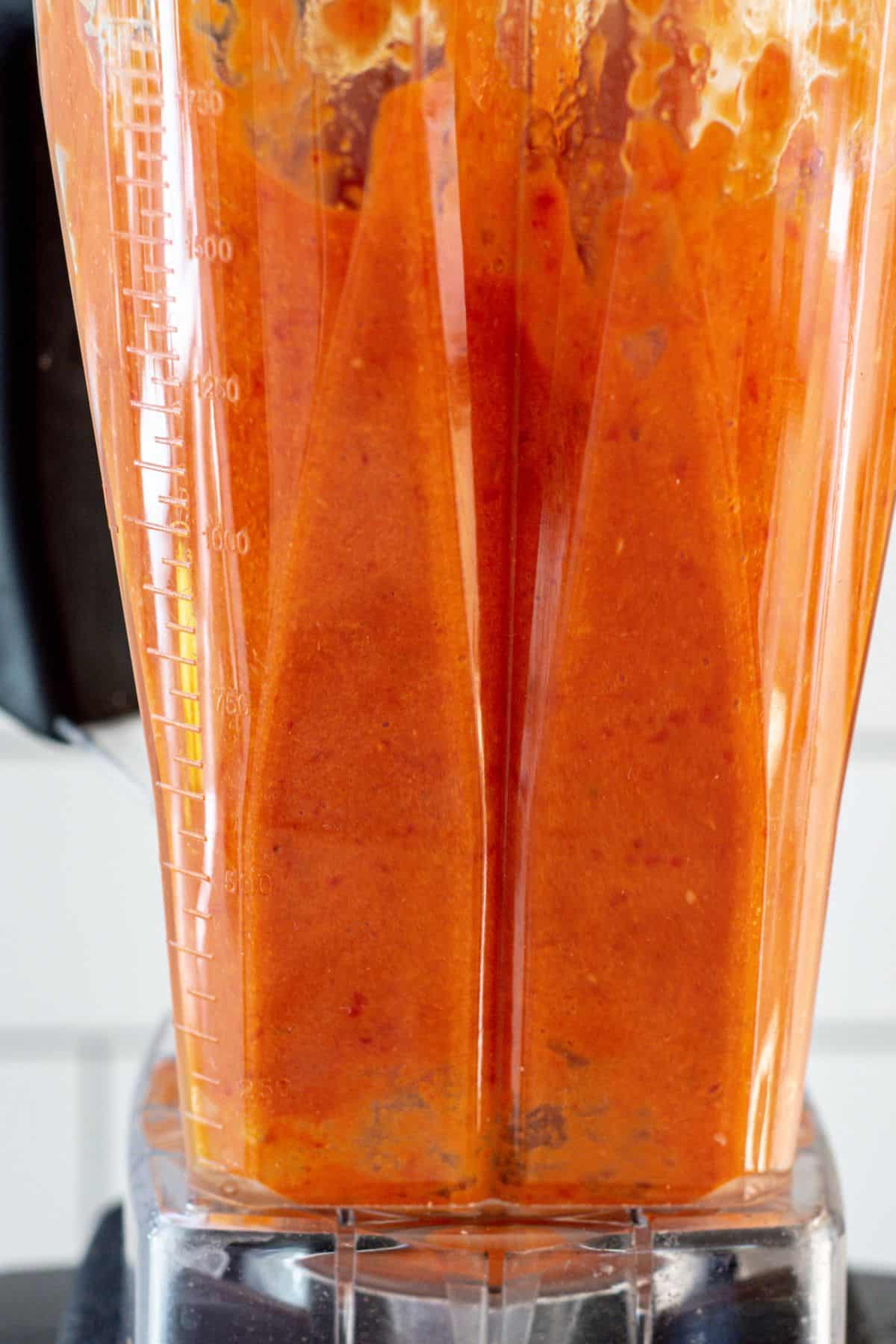
- Once fermentation is complete, strain the vegetables over a bowl, keeping the brine. Blend the vegetables until smooth, then add brine a little at a time until the sauce reaches your preferred thickness. Taste and adjust.
- You can stir in a splash of apple cider vinegar, lemon juice, or lime juice for extra tang, and a little sugar or honey if you prefer it slightly sweeter.
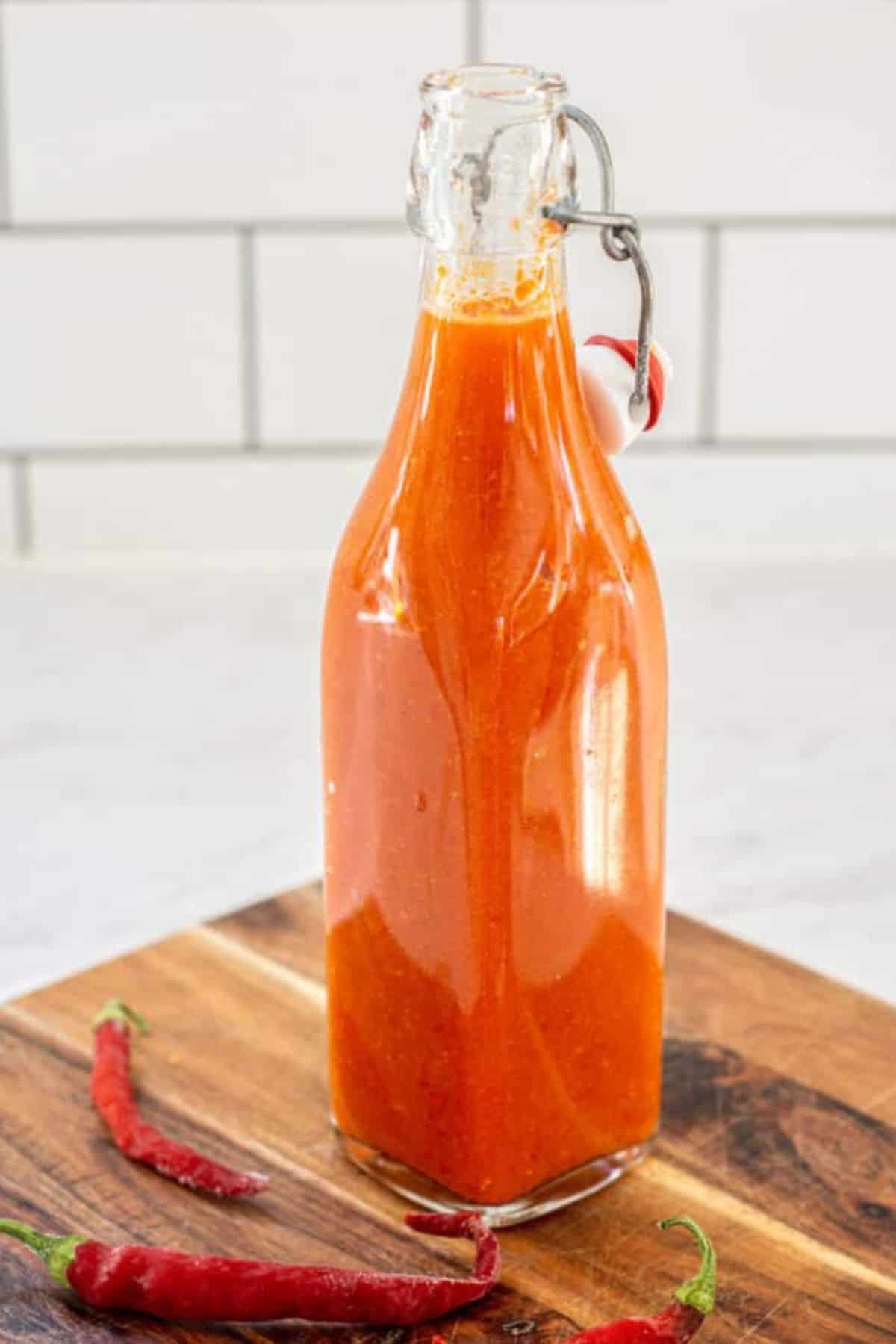
Troubleshooting & Tips
- Cloudy brine: normal. It’s a sign of active fermentation.
- Chilies losing colour: That’s to be expected.
- No bubbles: It might just be fermenting slowly in a cooler spot.
Related recipes

Fermented Chilli Sauce Recipe
Ingredients
- 500 g filtered water
- 15-17 g salt unrefined
- 300 g chillies or a mix of chillies and sweet peppers to lessen the spice
- 1 medium brown onion
- 5 cloves garlic
After blending
- lemon or lime juice optional
- sugar optional
Instructions
- Dissolve salt in the water, warming slightly if needed. Cool to room temperature.
- Remove stems and seeds (if desired) and roughly chop the chilies, onion, and garlic.
- Add the vegetables to a clean glass jar, leaving about 2.5 cm / 1 inch of headspace. Pour in the cooled brine, making sure everything is submerged. Add a fermentation weight.
- Cover with an airlock lid or a loose lid. Store at 18-24 °C (65-75 °F) out of direct sunlight for 10-14 days. Place the jar on a plate to catch any overflow.
- Strain the vegetables, reserving the brine. Blend the vegetables until smooth, adding brine as needed to reach your preferred thickness. Adjust flavour with vinegar, lemon or lime juice, or sugar if desired.
- Pour into clean bottles or jars, leaving 2-3 cm of headspace. Refrigerate. Open carefully, as gases may still build up. Shake gently before each use.
Notes
Notes
- A white film (kahm yeast) is harmless but any fuzzy coloured mould means discard and restart.
- Always keep vegetables submerged during fermentation to avoid spoilage.