Fizzy Fermented Ginger Beer With A Ginger Bug
This healthier homemade ginger beer is perfectly fizzy, has an excellent kick of ginger, and is packed with probiotics. It’s a ginger beer that’s naturally fermented. The fizziness and the probiotics come from a ginger bug. The ginger bug is made up of water, fresh ginger, and sugar.
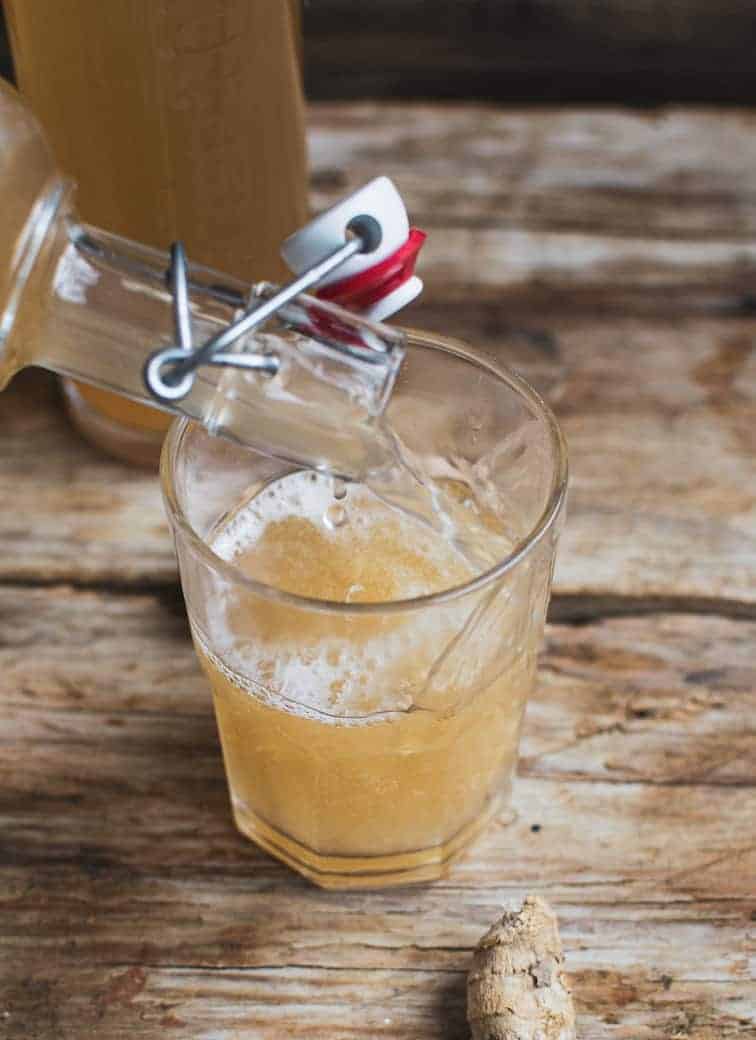
That’s the first thing that needs to be set up when making homemade ginger beer. Once the fermentation process is well underway and you’ve got it bubbling, you can make your own ginger beer whenever you like!
What is a ginger bug?
It is a jar of Lacto-fermented ginger and water. All you do is feed a bit of fresh ginger and sugar every day to a jar of water at room temperature until it starts bubbling away.
The bubbling in the bug is due to natural yeasts and the Lactobacillus bacteria which break down the sugars. The bacteria convert them into lactic acid which in turn, is responsible for the probiotics and good digestive health.
It’s the same bacteria that are in sourdough starter!
Both the wild yeasts and the bacteria create carbon dioxide which means this ginger bug will also carbonate your fermented drink so it’s so fizzy and delicious. There is no need for any gadgets like a soda stream. The ginger bug works as a starter culture which will then ferment the ginger beer you make with it. Before you can make the fermented ginger beer recipe you need to make a ginger bug.
What you need for a ginger bug
- Water – Filtered water
- Real ginger – Fresh ginger root is the main ingredient. Using it with the skin on, is fine. Preferably organic ginger. This can be grated ginger, sliced or chopped.
- Sugar – Granulated white sugar. This is the food for the bacteria. You can use another full-calorie sugar if you like such as raw sugar or coconut sugar. Don’t use low-calorie sweeteners such as stevia.
Water for fermenting
What water to use in fermenting can be a hot topic amongst fermenters. Some water sources can contain amounts of chlorine and other elements that could affect the fermenting process. Filtered water or tap water that has been boiled and left to cool is best to use.
Personally, I just use tap water. My tap water doesn’t seem to affect my ferments or sourdough starter, however, if you feel your tap water may hinder the process, it’s better to be safe than sorry and use filtered water.
How to make a homemade ginger bug
To make the ginger bug, start with pouring 500ml filtered water (2 cups of water) into a clean glass jar.
Add to it 3cm of freshly grated or chopped ginger (about two tablespoons) and two tablespoons of sugar. Stir it will. Cover the jar with a cloth and keep it at room temperature but out of direct sunlight.
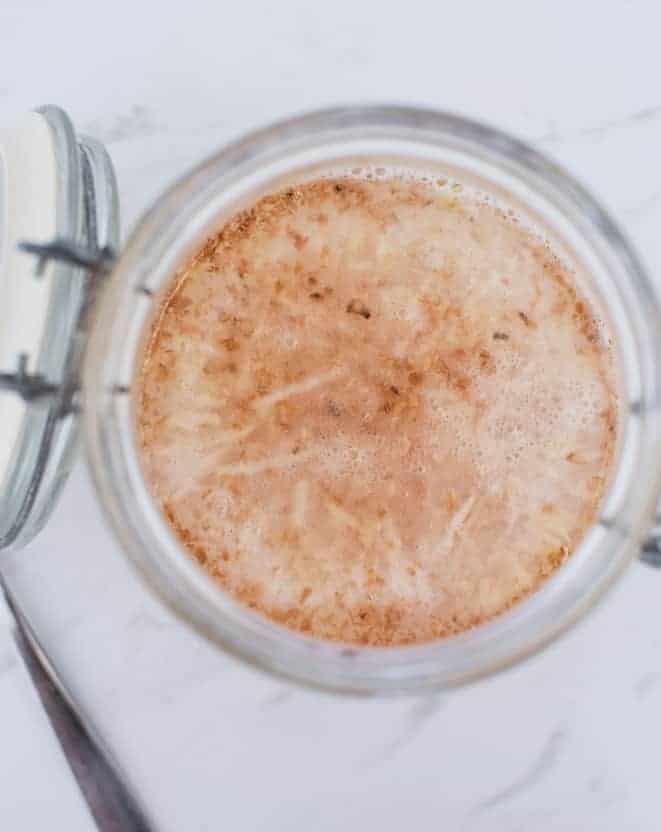
For the next 2-6 days, feed the jar a tablespoon of ginger and a tablespoon of sugar and give it a good stir every 24 hours. After about 3 days, you might see it start to bubble, and the ginger will rise to the top. This is a good sign. How long the whole fermentation process takes can depend on the warmth of your environment and many other factors.
Once your ginger starter is bubbling and active, it is ready to use. The next step is to make the ginger beer base.
Making fermented ginger beer
To make the fermented ginger beer you will need –
- Water
- Sugar – granulated sugar, raw sugar, or coconut sugar. Coconut sugar brings a lovely caramel color to ginger beer.
- Fresh ginger
- Lemon juice or lime juice
- Ginger bug – the strained ginger bug liquid
Ove high heat, heat the water, ginger, salt, and sugar until a simmer and the sugar has dissolved. Leave to cool to room temperature and let the ginger infuse in the water.
Strain the solids out of the liquid by pouring them through a fine mesh strainer. Add in the juice of the lemon or lime and the strained active ginger bug liquid. Pour into clean bottles, leaving at least 5cm (2 inches) of space between the ginger beer and the top of the bottle. Seal the bottles.
Check for carbonation after 3 days, especially in glass bottles to avoid them bursting. It might not be carbonated yet at this point though, it can take up to a week.
Once it is carbonated, store the bottles in the fridge to slow down further carbonation, but burp them daily.
Best bottles for ginger beer
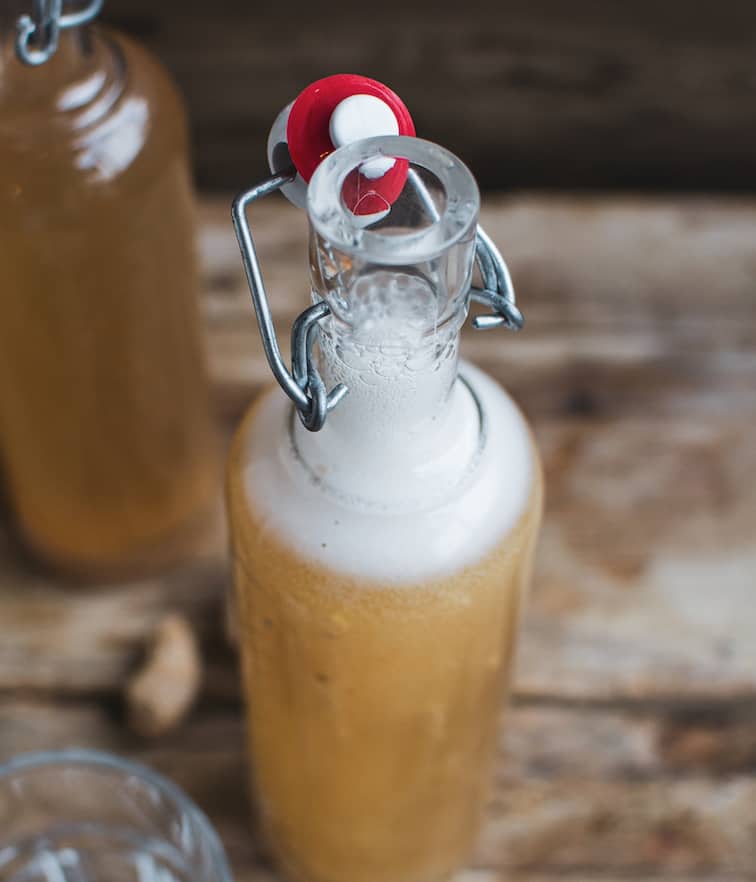
If you’re only making small amounts of fermented ginger beer at a time, and you keep an eye on them, then glass flip-top bottles are great. They have a good airtight seal and this helps carbonate the drinks quicker.
However, they run the risk of bursting if they’re not burped (opening the top to let the gas out) as the gases have no place to escape.
If you think you might forget to check your bottles or you plan to make a bulk amount, then plastic soda bottles are a safer bet. A plastic bottle will also need to be burped to avoid bursting, but at least if they burst they won’t smash.
Maintaining a Ginger Bug
Once you have used your bug, top it up with however much water as what you took to use for the ginger beer. Add in 2 tablespoons ginger and 2 tablespoons sugar. Stir it well. Now you can store it in the fridge in a sealed jar until you next use it.
Every week you can feed it 1 teaspoon of ginger and 1 teaspoon of sugar to keep it active, however, the ginger bug is pretty robust once made. I left mine in the fridge for 3 months before feeding it again a couple of times and it was just fine. It’s quite normal for the ginger sediment to accumulate at the bottom of the jar.
If you want to use it again, take it out of the fridge and feed it 2 tablespoons ginger and 2 tablespoons sugar at least 6 hours before you need it, so it is bubbling and active. If it has been dormant for a long it may need 2-3 feeds to become very active again.
Is there alcohol in fermented ginger beer?
There is a small amount of alcohol in this fermented ginger beer but not much at all. If you really want to know how much you can use a brewing hydrometer to test it.
How long does it take to get a fizzy ginger beer?
How long they take to carbonate depends on the strength of your bug, the amount of sugar added to the ginger beer base, the seal of the bottles, and the temperature of your environment. It can take 2-3 days or up to a week (sometimes even longer)
Once it is carbonated, store the bottles of probiotic ginger beer in the fridge to slow down further carbonation, and burp them daily.
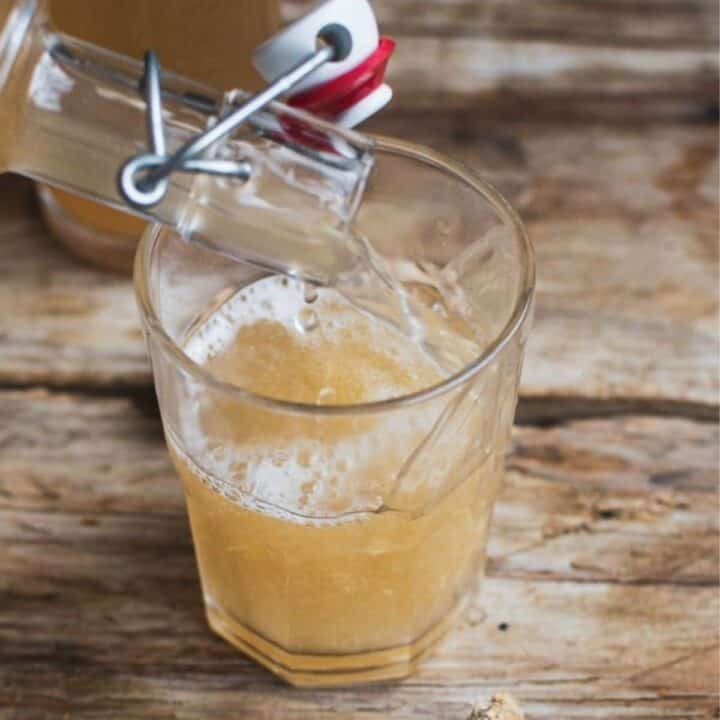
Healthier Ginger Beer
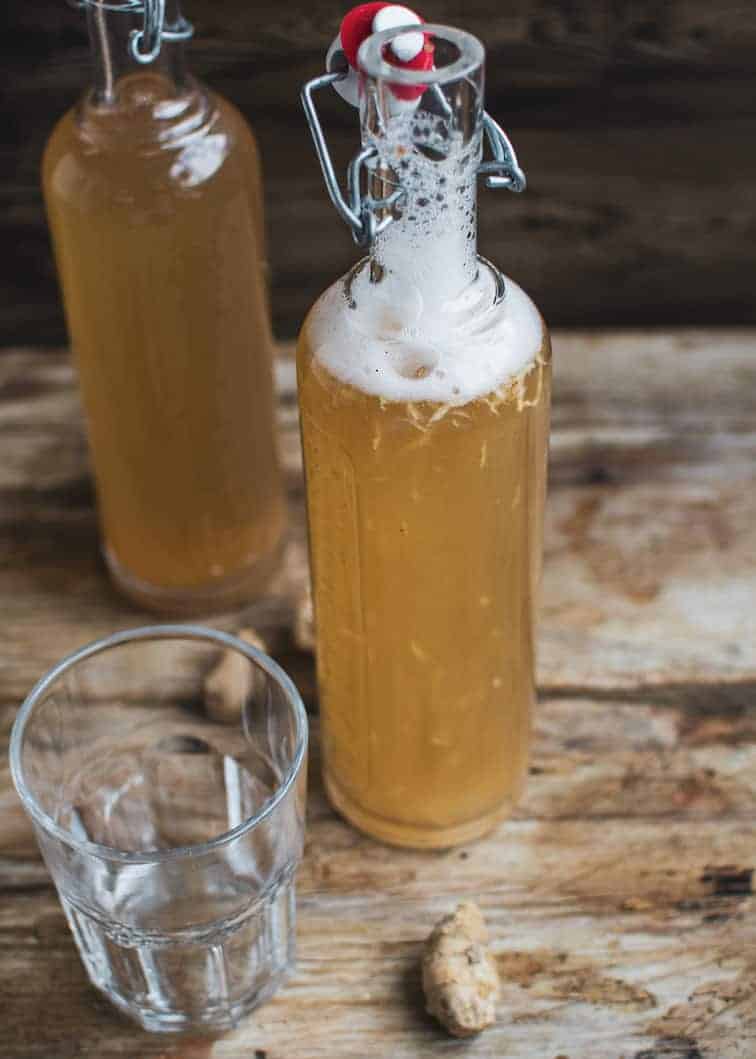
It’s perfectly fizzy, has an awesome kick of ginger and packed with probiotics.
Ingredients
Ginger bug - Day 1
- 500ml (2 cups) filtered water
- 2 Tablespooons fresh ginger
- 2 Tablespoons granulated sugar
Ginger bug feedings
- 1 Tablespoons fresh ginger
- 1 Tablespoons granulated sugar
Ginger beer
- 1.4 litres (1 1/2 quarts) water
- 150g (3/4 cup) granulated sugar or coconut sugar
- 2 Tablespoons fresh ginger, grated
- 60ml fresh lemon juice
- Pinch of salt (optional)
- 80ml (1/3 cup) strained ginger bug
Instructions
Making the ginger bug
- Pour 500ml of filtered water (2 cups) into a clean glass jar. Add two tablespoons of freshly grated or chopped ginger and two tablespoons of sugar. Stir it well. Cover the jar with a cloth and keep it at room temperature but out of direct sunlight.
- Every 24 hours, for the next 2-6 days (the timing will depend on your environment), feed the jar another tablespoon of ginger and sugar and stir it well. You might see it bubble, and the ginger will rise to the top. This is a good sign. How long the whole fermentation process takes can depend on the warmth of your environment, plus many other factors.
- Once your ginger starter is fizzy, it is ready to use. The next step is to make the ginger beer.
Ginger beer
- Heat the water, ginger, salt, and sugar until a simmer and the sugar dissolves. Leave it to cool to room temperature and let the ginger infuse into the water. Strain out the ginger. Add in the lemon juice and active ginger bug liquid.
- Pour the liquid into plastic or glass bottles, leaving a 5cm (2 inches) space between the ginger beer and the top. Seal them airtight. Check for carbonation after three days, especially in glass bottles, to avoid bursting. It might not be carbonated yet; it can take up to a week.
- Once it is carbonated, store the bottles in the fridge to slow down further carbonation, but burp them daily.
Notes
Ginger Bug Feedings
Ginger beer bottles
If you're only making small amounts of fermented ginger beer at a time, and you keep an eye on them, then glass flip-top bottles are great. They have a good airtight seal and this helps carbonate the drinks quicker.
However, they run the risk of bursting if they're not burped (opening the top to let the gas out) as the gases have no place to escape.
If you think you might forget to check your bottles or you plan to make a bulk amount, then plastic soda bottles are a safer bet. A plastic bottle will also need to be burped to avoid bursting, but at least if they burst they won't smash.
Nutrition Information:
Yield: 4 Serving Size: 1 gramsAmount Per Serving: Calories: 99Unsaturated Fat: 0gSodium: 11mgCarbohydrates: 26.5gSugar: 25.4gProtein: 0.2g

Hi HGH,
Love the blog! trying to make the bug myself now. Just a question.. what happens if you skip a feeding in the “bug” fase? I sadly had to skip two (fed her asap) but we are at day 8 and I see no clear bubbling. Smell is still okay.. but I have a lot of sugar on the bottom.
Should i continue?
Thanks in advance
Mx
Hey! I would just start feeding it again from now on and see how you get on 🙂
Where in your recipie does it tell us the amount of salt to use i must be blind!
Sorry! There was meant to be an optional pinch of salt in there to :). It’s been updated
So excited to try to make.
Can I make it in bulk ie.12 bottles at a time.
After I made to ginger bug, how much water can I use to make this.
Thanking you
dAZ
Would love to try this but I am uncertain where to get NZ grown organic ginger, as I understand imported ginger to be irradiated. Can you help with this? Thank you.
Hey I’ve successfully used ginger from the supermarket for this 🙂
You can’t grow ginger in NZ due to climate – try supermarket
hello again, patti here. I opened the bottle of ginger beer and it bubbled excitedly (well, maybe I was the one excited) but after straining out the ginger and rebottling it, I think I defizzed it all. did I kill it, or should I leave it out another day? it has been fermenting for about a week. should I feed it more sugar and let it build up again?
thanks for your help!
Hey Patti, I’ve not rebottled mine before after the initial bottling so I can’t be sure, but I’d say a little more sugar and another ferment could be the way to go!
Does this have alcohol in it ?
It may have trace amounts of alcohol in it but I don’t know how much
hi! I just started my ginger bug today and I am very excited and hopeful. before I get to the stage of making the ginger beer itself, I am wondering if there is a reason you choose to separate into two bottles? I have a 64 oz beer growler and I am wondering if I can use that?
kindly,
patti
Hey Patti, you can definitely make one large bottle instead of 2 🙂
Hi I’ve been feeding the bug from scratch for 11 days now but still no sign of fermentation I have a sourdough starter on the go so understand the process.Temperature in the kitchen is pretty good so is there something else I can do to help fermentation.Thanks Thirsty Terry
Hey Terry, if it is taking that long I would start again, a new batch. Not sure what is going on with your current one, but 11 days is a bit long! If you can, use organic unpeeled ginger.
I taste tested my first batch made with white sugar and it went down a treat with all, it was beautiful. So now just bottling a batch with Coconut Sugar to try.
Thanks so much for sharing your fabulous recipes.
Hey thank you for this, verry neat.
just wondering is there a way to have them not as sweet and more dry?
sounds too easy but is it less sugar the answer?
Hey it will become less sweet the longer it ferments. If it’s already fizzy, open it to let some of the gases out, but then close and let it ferment longer to use up more of the sugar